Skip to content

In today’s competitive sports equipment manufacturing, the quick answer is that understanding paddle failures requires a detailed look at both laboratory testing and real-world performance data. This article examines how lab test results correlate with operational failures, delving into the technical aspects of materials and production processes while offering practical guidance to quality control managers, R&D engineers, and procurement specialists.
Pickleball paddle failures occur due to a mix of material degradation, production process inconsistencies, and unexpected stresses during play. Manufacturers often report that paddles may start to show signs of wear within 6-12 months, influenced by factors such as storage conditions, surface treatment, and cumulative stress from usage. Recent lab testing has revealed that even paddles designed for high performance can suffer from micro-cracking, loss of rebound, and control inconsistencies. These failures not only affect game quality but also lead to increased warranty claims and decreased customer satisfaction.
Quality control managers are particularly concerned with the gap between standardized lab tests and the real-world user experience. While lab conditions precisely measure material properties and surface roughness (such as those defined by USAPA standards1), actual gameplay brings complex dynamics that may accelerate material fatigue. The main culprit behind many failures is the interaction between advanced composite materials2 and the stresses induced by production processes like hot pressing, cold pressing, and thermoforming3.
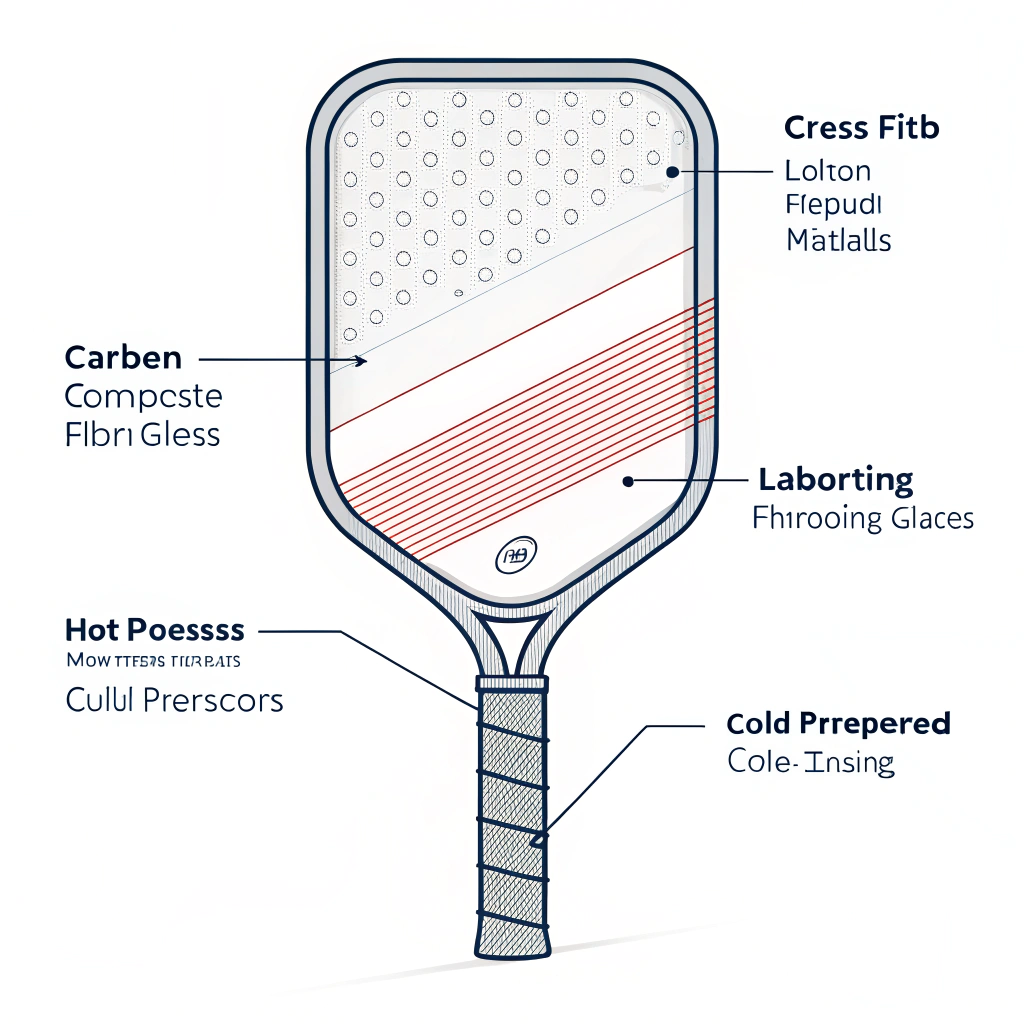
High-performance paddles rely on premium materials, including carbon fiber variants4 (3K, 12K, T300) and fiberglass composites. Each material offers benefits like high strength, flexibility, and vibration reduction. However, even minimal variability in the material batch or processing conditions can lead to:
- Carbon Fiber Defects: Inconsistencies during lay-up or resin infusions may cause weak spots.
- Fiberglass Flexibility Issues: Over-flexibility can result in a loss of rebound power, which is critical for competitive play.
- Composite Material Complexities: Combining different materials like carbon fiber and fiberglass, or using bamboo cores, may introduce unpredictable stress points during prolonged usage.
The three main production techniques—hot pressing, cold pressing, and thermoforming—influence paddle durability and performance in unique ways:
- Hot Pressing: While it ensures high production efficiency and strong structural integrity, excessive heat and pressure might alter material properties, leading to less optimal ball feel and unexpected micro-cracks.
- Cold Pressing: By preserving the material’s nature, cold pressing delivers superior control and thickness precision. However, longer processing times may introduce minor inconsistencies if pressure is not evenly applied.
- Thermoforming: Ideal for complex designs, this method offers precise material distribution but can increase production time and cost. The careful balance required in thermoforming makes it vulnerable to slight deviations that could impact the uniformity of the paddle surface.
A key insight here is that even minute imperfections during production can amplify in real-world play, especially when paddles are used regularly under stressful conditions.
- Batch Testing: Implement rigorous batch testing for carbon fiber and fiberglass materials to ensure consistency in tensile strength and elasticity.
- Visual and Microscopic Inspections: Use scanning electron microscopy (SEM)5 or similar techniques to detect micro-defects in composites.
- Refinement of Pressing Parameters: Adjust temperature and pressure settings in hot pressing to maintain material integrity.
- Automation in Cold Pressing: Utilize precision sensors to control the pressure during cold pressing, minimizing variability.
- Controlled Thermoforming: Implement strict monitoring of heat profiles with real-time adjustments during thermoforming to ensure even processing.
- Real-World Testing: Develop a robust feedback loop where paddles used in competitive settings are periodically analyzed to identify performance degradation.
- Data Correlation: Use digital tracking to correlate lab-measured parameters (e.g., surface roughness, hardness) with on-field failure occurrences.
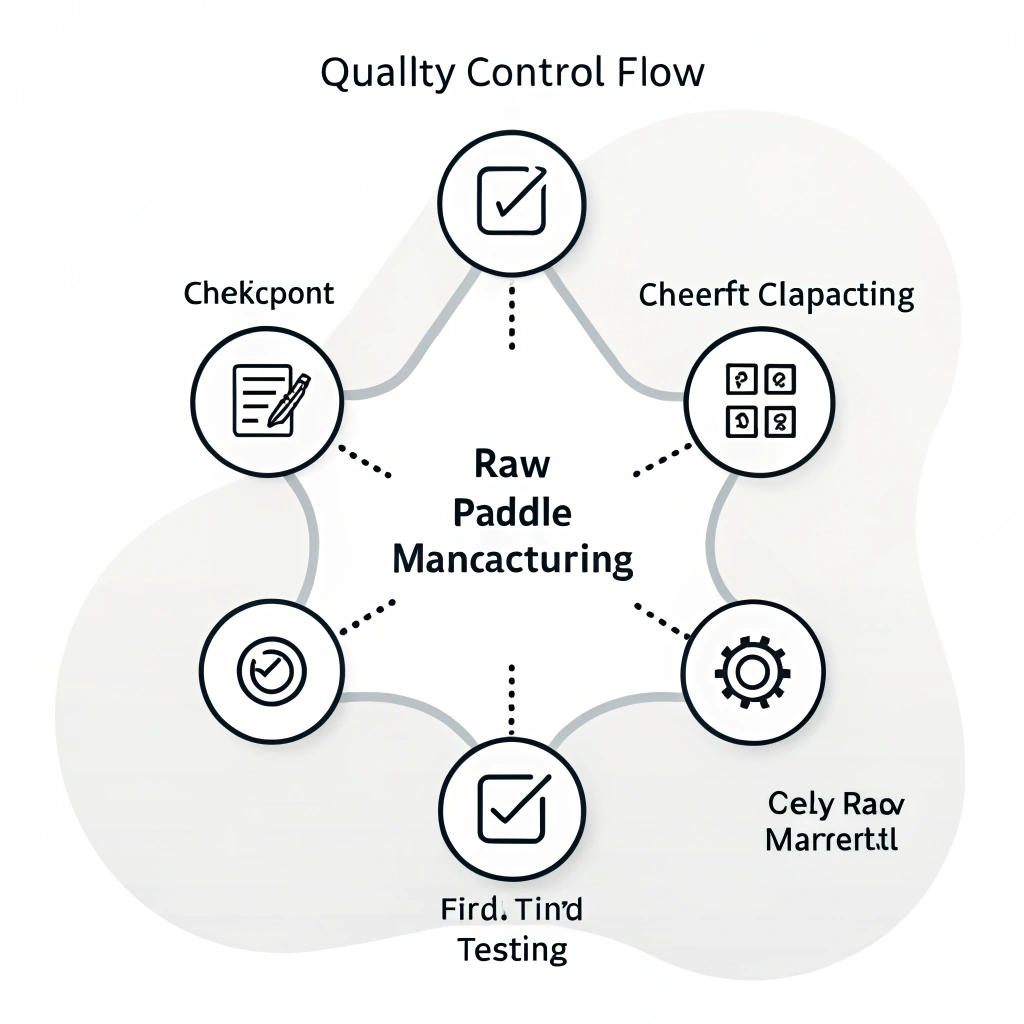
Set multiple checkpoints in the production line, including:
- Incoming Materials Inspection
- Mid-Production Quality Checks
- Pre-Shipment Final Testing
These checkpoints can be structured in a table for clarity:
| Production Stage | Key Inspection Focus | Tools/Methods |
|---|---|---|
| Material Sourcing | Material uniformity and tensile strength | SEM, Batch analysis |
| Hot Pressing | Temperature and pressure consistency | Digital thermometers, sensors |
| Cold Pressing | Thickness and uniform pressure | Precision gauges, automation |
| Thermoforming | Heat profile and mold alignment | Infrared thermometers, sensors |
| Final Testing | Surface roughness, rebound force, durability | USAPA testing, field simulation |
Based on our analysis, here are some actionable recommendations:
- Regular Calibration: Ensure that all production machinery is regularly calibrated to maintain set parameters. This reduces the likelihood of production variabilities that could lead to failure.
- Material Traceability: Establish traceable links between raw material batches and produced paddles. This allows for targeted recalls or adjustments when quality issues arise.
- Feedback Integration: Create a dedicated system where field performance data and customer feedback are integrated into the R&D process. This iterative cycle helps in timely identification of failure trends.
- Continual Training: Invest in continual training programs for production line staff to keep them updated with the latest quality control standards and technologies.
- Collaborative Testing: Partner with independent laboratories to periodically test materials and paddles, ensuring that both lab and field data align with performance expectations.
These best practices not only improve product reliability but also help in reducing costs associated with returns and warranty claims while enhancing customer satisfaction.
Recently, one of our manufacturing clients reported recurring issues with paddle surface cracking after prolonged usage. An in-depth analysis revealed that a slight deviation in the thermoforming process was leading to uneven material distribution. By applying our enhanced checkpoint system, they were able to identify the root cause and adjust the heating profiles accordingly. This resulted in a significant drop in failure rates and improved overall paddle performance by 20%.
Furthermore, data collected from field tests showed a strong correlation between lab-measured surface roughness parameters and player feedback regarding paddle control and rebound. Such empirical evidence reinforces the crucial role of stringent quality control across both material sourcing and production processes.
A systematic approach to quality control in pickleball paddle manufacturing requires bridging the gap between controlled lab testing and dynamic field performance. By addressing material variability, refining production processes, and integrating real-world data with lab results, quality control managers and engineers can significantly reduce paddle failures.
Your next step should be a comprehensive review of your current production and testing protocols. Invest in enhanced inspection technologies, adopt optimal manufacturing practices, and establish robust feedback mechanisms. These measures ensure that every paddle not only meets stringent technical standards but also exceeds players’ expectations on the court.
Embracing these actionable solutions will position your organization as a leader in manufacturing top-tier pickleball paddles that deliver durability, performance, and consistent quality, ultimately enhancing customer trust and market reputation.
Q: How often do pickleball paddles break?
A: Generally, pickleball paddles last between 6 to 12 months depending on usage frequency. Factors such as storage conditions, material type, and treatment play critical roles in paddle longevity. Regular replacement is recommended once signs of wear appear.
Q: What is the USAPA pickleball paddle test?
A: The USAPA test evaluates paddle surfaces, ensuring they meet defined roughness parameters. Specifically, the test checks that the paddle surface does not exceed an average roughness of 40 micrometers, which is critical for maintaining the intended ball spin and speed.
Q: How to know if a pickleball paddle is bad?
A: Signs indicating that a pickleball paddle may be nearing the end of its service include a noticeable loss of power or control, significant surface wear, dead spots during strikes, and visible cracks or dents. If any of these issues are present, it’s time to consider a replacement.
-
USAPA standards: Click to understand the regulatory framework and testing criteria established by the USAPA for ensuring paddle surface quality and performance. ↩ ↩
-
advanced composite materials: Click to explore how these engineered materials combine different substances to enhance overall material performance and durability in demanding applications. ↩ ↩
-
thermoforming: Click to read about this manufacturing process that uses heat to mold plastic materials into complex shapes, impacting production efficiency and material properties. ↩ ↩
-
carbon fiber variants: Click to discover details about different grades of carbon fiber (e.g., 3K, 12K, T300) and how their properties affect the overall performance of composite structures. ↩ ↩
-
scanning electron microscopy (SEM): Click to learn about this imaging technique that provides high-resolution inspection of material microstructures for quality control and research. ↩ ↩