Skip to content

Short answer: For procurement managers shortlisting an OEM/ODM manufacturer1 for private‑label pickleball paddles, prioritize factories that demonstrate controlled use of core materials (3K/12K/T300 carbon fiber2, E‑Glass fiberglass, honeycomb cores like Nomex or polymer), clear mastery of hot pressing / cold pressing / thermoforming3, reliable quality systems (ISO, AQL), realistic MOQ4 and lead time commitments, and transparent landed‑cost terms (FOB/CIF5, tooling, sampling). Use a multi‑stage sampling and audit checklist to reduce risk before placing a commercial order.
Why this decision matters now
- Pickleball demand is surging globally; choosing the wrong factory means delayed launches, higher returns, inconsistent play feel, and brand damage.
- You are evaluating suppliers at the consideration stage: you already know paddle basics. Now you need an actionable way to compare capabilities, costs, and reliability so you can shortlist and issue RFQs.
How to frame the supplier selection problem
- Core question: Which factory will deliver consistent paddle performance, on time, at a predictable total cost?
- Key tradeoffs: material quality vs. price, production method vs. tactile feel, MOQ vs. flexibility, certification vs. lead time.
- Goal: pick 1–2 suppliers for pilot orders and long‑term scaling.
Core differences at a glance
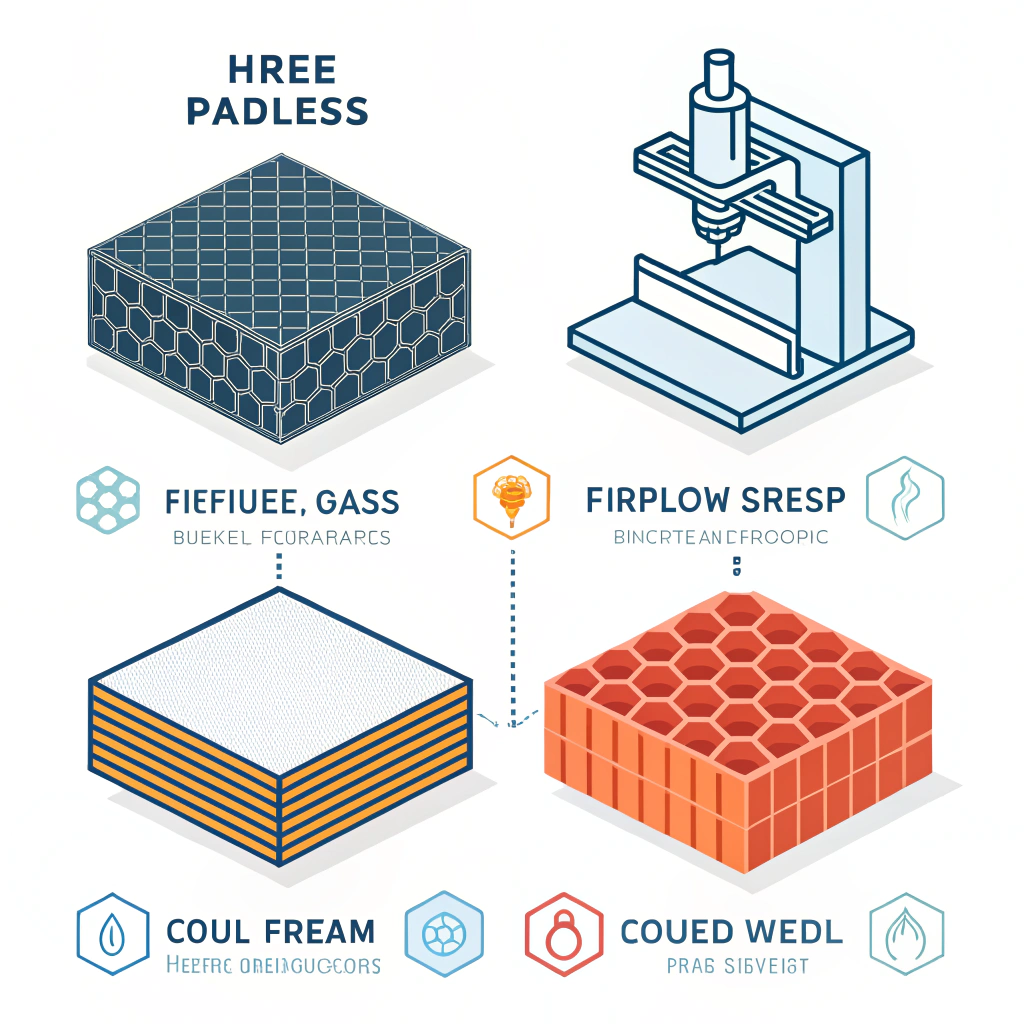
- Material and core choices drive playability and durability. The most common high‑value combos:
- Carbon fiber (3K / 12K / T300): more power + stiffness; 12K and T300 give higher hardness and durability for competitive paddles.
- Fiberglass (E‑Glass): wider sweet spot, more control and feel; often used in mid‑range paddles.
- Honeycomb cores (Nomex / Aluminum / Polymer): affect weight, shock absorption and feel; Nomex = durable & firm, polymer = elastic and forgiving.
- Production method informs consistency and feel:
- Hot pressing: fast, strong, suited for large runs of performance paddles.
- Cold pressing: better for fine control and preserving material properties; slower.
- Thermoforming: best for complex shapes and premium custom designs; higher cost.
Detailed supplier comparison table
| Dimension | Critical questions to ask | What strong capability looks like | Red flags |
|---|---|---|---|
| Materials | Which carbon/fiberglass types and suppliers do you use? Can you supply certificates of raw material? | Uses 3K/12K/T300, E‑Glass; raw material traceability; COA available | Vague material names, no COA |
| Core options | Which cores — Nomex/Aluminum/Polymer/honeycomb pulp? Sample swatches? | Lab testing on core density, compression set data | Only one core option; no test data |
| Pressing methods | Do you have hot press / cold press / thermoforming lines? Cycle times? | Dedicated hot presses + cold press stations; experienced operators; tooling dept | Single press type only; outsourcing presses |
| Process control | How do you control thickness, glue spread, curing temp? | SPC records, process SOPs, traceable batch numbers | No SPC, no SOPs |
| Quality systems | ISO9001, AQL, internal lab, sample retention? | ISO9001, documented AQL (e.g., ISO2859‑1), in‑house testing | No certification, no AQL |
| Capacity & lead time | Monthly output, peak capacity, lead time for 10k/50k units | Clear capacity chart; sample timeline; realistic lead times | Overpromised lead times |
| MOQ & pricing | MOQ per SKU, tooling costs, unit price tiers | Flexible MOQs, clear tooling amortization, price breaks at volumes | Hidden tooling; high MOQ with no flexibility |
| Compliance | Export compliance, CE/REACH, CPSIA, Prop65 capability | Familiar with CE, REACH, CPSIA testing houses | No compliance knowledge |
| Custom printing | On‑demand print, full‑wrap, UV or heat transfer? | In‑house digital/UV print, PMS color matching, 1–2k MOQ for custom art | Printing outsourced, poor color control |
| Logistics & terms | FOB/CIF options, lead times, export docs | Exports by sea/air, clear INCOTERMS, FOB port, experience with freight forwarders | Unclear shipping terms |
How to evaluate materials and manufacturing in practice
- Request sample packs that demonstrate material variants: 3K carbon + polymer core, 12K carbon + Nomex, E‑Glass + polymer core. Ask for identical shape/weight targets.
- Insist on a sample specification sheet: target weight ± grams, balance point (mm from handle end), grip size, core density (kg/m3), surface roughness, and edge finish.
- Ask for technical data: tensile strength, modulus (for carbon fibre), core compression set after X cycles, and laminate peel strength.
- Play tests: organize blind play tests with internal or external players to score feel, pop, control, and vibration. Use scoring matrix.
QC checklist for incoming production
- Pre‑production
- Approve final drawings, BOM, and pre‑production samples (PPS).
- Confirm color codes (PMS), print files with die lines, and edge tape details.
- Tooling approval: test molds and press templates.
- In‑process
- Check lamination cure temp/time logs.
- Thickness gauge every X units and record SPC charts.
- Random sample peel tests (adhesive bond) and adhesion pull tests.
- Final inspection
- Visual: paint/print defects, delamination, edge frays.
- Dimensional: weight, balance, length, grip diameter.
- Functional: impact test, rebound/power test, and accessory check (covers, packaging).
- QC standards
- Use AQL sampling (commonly 2.5/4.0 for quality levels) and document non‑conformance history.
- Retain samples from each lot for warranty/claims.
Testing matrix (recommended basic tests)
| Test | Why it matters | Acceptable criteria |
|---|---|---|
| Weight tolerance | Player experience & packaging | ±3–5 g depending on paddle |
| Balance point | Handling feel | +/- 5 mm target |
| Lamination peel | Durability | No delamination under defined load |
| Impact/endurance | Longevity | No cracks after X impacts |
| Surface friction (spin) | Play performance | Customer benchmark vs. reference paddle |
Sample strategy and timeline
- Step 1: NDA + RFQ with detailed specs (1 week)
- Step 2: Engineering sample (prototype) — 2–3 versions (2–4 weeks) — pay for tooling if required
- Step 3: Pre‑production sample (PPS) from intended production line (1 week)
- Step 4: Pilot run (small batch) for QC validation and market testing (3–6 weeks)
- Step 5: Full production ramp with staggered shipments (depending on MOQ)
Negotiation levers for best commercial terms
- MOQ: negotiate a pilot MOQ (e.g., 500–1,000 units per SKU) and scaled MOQs later. Offer a phased commitment: initial smaller order + option to scale.
- Tooling cost: amortize tooling across forecast volume; propose cost‑sharing or refundable tooling deposits if volumes hit milestones.
- Lead time: lock priority production windows in contract and consider premium air shipping for initial stock if market window is short.
- Price: breakpoints (2k/5k/10k) with clear per‑unit pricing and packaging costs.
- Payment terms: typical is 30% deposit, 70% before shipment or irrevocable LC at sight; negotiate 60/40 or staged payments tied to milestones.
- Incoterms: FOB preferred for control; clarify who handles customs, duties, and insurance. Validate landed cost with a sample calculation: Unit price + packaging + freight + duties + inland delivery.
Factory audit checklist (on‑site or third‑party)
- Certifications: ISO9001, BSCI/Sedex for social compliance, ROHS/REACH awareness; sample lab accreditations.
- Equipment: presence of hot press machines, cold press stations, thermoforming lines, CNC mold shop, printing lines.
- Quality lab: thickness gauges, tensile testers, peel testers, environmental test chamber.
- Workforce: trained operators, engineering support, QC team with defined roles.
- Capacity & scheduling: current orders, peak capacity, backup plans for machine downtime.
- Traceability & documentation: batch records, COAs, material IRs.

Common commercial and legal items to include in your contract
- Product specification annex (weight, balance, artwork, tolerances).
- Tooling ownership and amortization schedule.
- Sample approval procedure: define PPS sign‑off and subsequent changes.
- Warranty & defects: repair/replacement terms, warranty period, return logistics.
- Payment & penalties: late delivery penalties, quality failure remediation.
- Intellectual property: ownership of artwork and assurance of no IP infringement.
- Force majeure and exit clauses for long‑term stability.
When to select hot press vs cold press vs thermoforming
- Hot pressing: choose when you need fast production, high structural strength, and high-volume runs for performance paddles.
- Cold pressing: choose when the tactile feel and material properties are critical (e.g., custom composite layups).
- Thermoforming: choose for premium shapes, custom molds, or unusual thickness profiles. Expect higher tooling costs.
Recommended questions to ask during RFQ (shortlist stage)
- Which materials and suppliers do you source for carbon/fiberglass? Can you provide COAs?
- Which pressing methods are available on site? Can you produce the PPS on the intended line?
- What are your MOQ, tooling cost, and lead times for 1k / 5k / 10k units?
- What internal QC tests do you perform and can we witness them?
- Do you have references for private‑label brands you currently supply?
- What are your export terms (FOB/CIF), and typical freight lead times?
Decision recommendation checklist (pick one supplier for pilots)
- Supplier passes material and process capability checks.
- Provides detailed sample timeline and produces acceptable PPS.
- Shows stable capacity and has documented QC procedures (AQL).
- Agrees to flexible MOQ for pilot + clear tooling amortization.
- Offers reasonable payment terms and transparent FOB landed cost.
Next steps (actionable)
- Send a structured RFQ with a spec sheet and ask for COAs, sample timelines, MOQ, tooling quote.
- Plan a factory audit or third‑party inspection and request on‑site test witness.
- Approve PPS only after lab verification and blind play tests.
- Negotiate contract terms that protect delivery schedules, tooling investment, and IP.
- Start with a pilot batch and stagger larger production.
People Also Ask
Q: What is the best pickleball company?
A: “Best” depends on needs. Brands like Joola, Selkirk, CRBN, and Gearbox are often cited for premium consumer paddles. For B2B sourcing, choose a supplier who can meet your material, process, quality, and customization needs rather than a brand name alone.
Q: What are the 5 P's of pickleball?
A: The common mnemonic used by players is Patience, Placement, Positioning, Poaching, and Power. For procurement context, focus on product, price, plan, production, and partnership when selecting suppliers.
Q: Is pickleball growing or declining?
A: Pickleball is currently growing rapidly—participation has seen strong year‑over‑year increases. Expect continued demand growth, which makes choosing a reliable manufacturing partner and planning capacity and lead times especially important for new product launches.
-
OEM/ODM manufacturer:Read to understand the difference between OEM (manufacturer builds to your design) and ODM (manufacturer provides design/engineering), and the commercial implications for IP, tooling ownership, lead times, and quality control — helping you decide which engagement model matches your brand strategy. ↩︎ (https://www.inflowinventory.com/blog/difference-between-oem-vs-odm/) ↩
-
3K/12K/T300 carbon fiber:Read to compare fiber tow counts and grades (3K vs 12K vs T300) and learn how tow size, tensile strength and modulus affect paddle stiffness, weight, and durability—critical when specifying layups for target play characteristics. ↩︎ (https://www.joysentsport.com/blogs/all/carbon-surface-grades-explained-t300-t700-and-what-they-mean?srsltid=AfmBOoqkFadH7o3e7TiyUGEMX5hbQrHStf5J1A0fBut7usHVZr2Tj6rO) ↩
-
hot pressing / cold pressing / thermoforming:Read to see how each forming method impacts cycle time, laminate consolidation, void content, and tactile feel, and when to choose one process over another based on volume, cost, and product complexity. ↩︎ (https://nexpickleball.com/advanced-bonding-agents-for-pickleball-paddle-layers/) ↩
-
MOQ:Read to learn negotiation strategies around minimum order quantities, phased pilots, tooling amortization, and how MOQs affect unit economics and inventory risk for scaling a private‑label product. ↩︎ (https://www.netstock.com/blog/how-minimum-orders-quantities-moqs-impact-inventory-management/) ↩
-
FOB/CIF:Read to understand these Incoterms and how they change who pays for freight, insurance, and customs — essential for calculating landed cost, comparing supplier quotes, and deciding the most cost‑effective logistics approach. ↩︎ (https://www.investopedia.com/ask/answers/020215/what-difference-between-cif-and-fob.asp) ↩