Skip to content

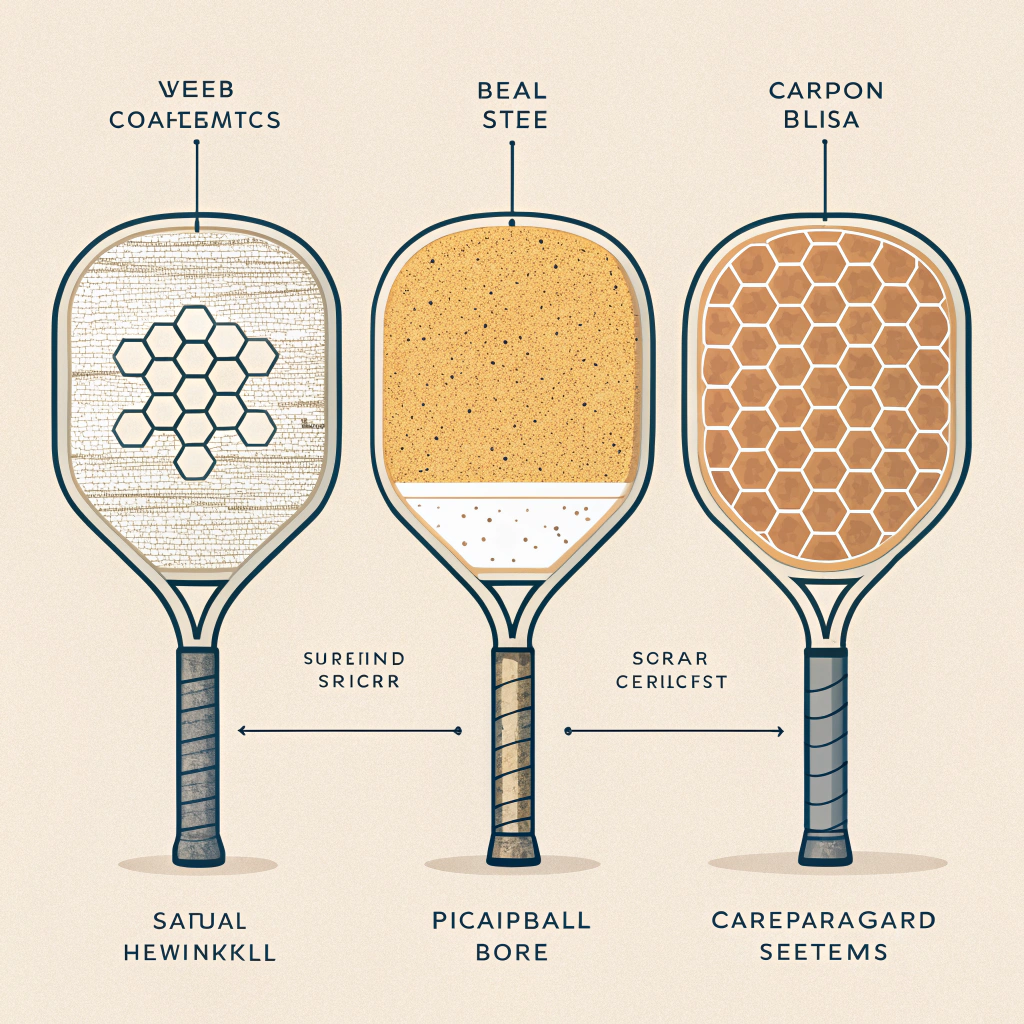
Quick answer: For outdoor play prioritize durability and weather resistance over marginal gains in feel — choose a paddle with a UV-stable face (carbon or treated fiberglass), a polymer honeycomb1 or aluminum core (for moisture and abrasion resistance), midweight construction (about 7.3–8.3 oz) for broad player acceptance, and a manufacturing process and surface finish proven to resist UV, heat and court abrasion. Also verify MOQ2, lead times, and on-demand print options before approving SKUs.
Why outdoor play changes paddle choice
Outdoor courts expose paddles to a combination of UV light, heat cycles, sand/grit abrasion, and more frequent impacts. Indoor-optimized paddles can lose surface texture, delaminate, or change feel when used persistently outdoors. For B2B buyers selecting SKUs or negotiating OEM runs, the goal is consistent on-court performance over the product life cycle while keeping cost-per-play and returns low. That means choosing materials, cores, and processes that resist UV and abrasion, specifying test metrics on product sheets, and locking in predictable supply parameters (MOQ, lead time, QC).
Key performance criteria for outdoor paddles
- Durability: face adhesion, resistance to delamination, consistent stiffness over time.
- UV resistance: minimal color/surface breakdown and retained coefficient of friction after UV exposure.
- Abrasion resistance: surface texture that lasts on gritty courts; low loss in spin-generation after Taber-style abrasion3.
- Weight and balance: outdoor players prefer midweight paddles for combined power and control; maintain spec tolerance ±0.1 oz.
- Grip durability and water management: grips that don’t absorb moisture or degrade in sun.
- Pop/feel consistency: minimal change in rebound force after heat and humidity cycles.
- Noise and local rules: ensure paddle meets any noise limits for clubs/municipal courts.
- Commercial metrics: MOQ, lead time, unit cost tiers, custom print capability, warranty terms.
Materials deep dive: faces and composites
Below are common face materials and their outdoor pros/cons with expected outdoor lifespan under regular recreational use.
- 3K Carbon Fiber
- Pros: good strength-to-weight, nice rebound, durable surface when properly coated.
- Cons: less stiff than higher tow counts; surface may need stronger UV coating.
- Outdoor lifespan: 2–5 years (varies by coating quality and usage).
- 12K Carbon Fiber
- Pros: higher thread density = harder surface, improved impact resistance and abrasion tolerance.
- Cons: slightly heavier feel; requires quality resin matrix and UV-stable clearcoat.
- Outdoor lifespan: 3–6 years with proper surface treatment.
- T300 Carbon Fiber
- Pros: excellent tensile strength for thin faces; good balance of light weight and durability.
- Cons: performance depends on resin and manufacturing process.
- Outdoor lifespan: similar to 3K/12K depending on finishing.
- Fiberglass (E-Glass)
- Pros: wider sweet spot, forgiving touch, typically lower cost; can be UV-treated.
- Cons: softer surface — more prone to abrasion and visible wear on rough courts.
- Outdoor lifespan: 1.5–4 years depending on abrasion exposure.
- Carbon-Fiberglass Composite
- Pros: blends power and forgiveness, can be tuned for outdoor toughness.
- Cons: complexity in manufacturing; bonding must be robust for weather cycles.
Surface treatment matters more than face material alone. UV-stable resins and topcoats (UV absorbers, anti-yellowing additives) significantly extend usable life. A paddle with a high-quality clearcoat and printed layer sealed under protective resin will retain texture and appearance longer.
Core options explained: polymer honeycomb vs Nomex vs aluminum
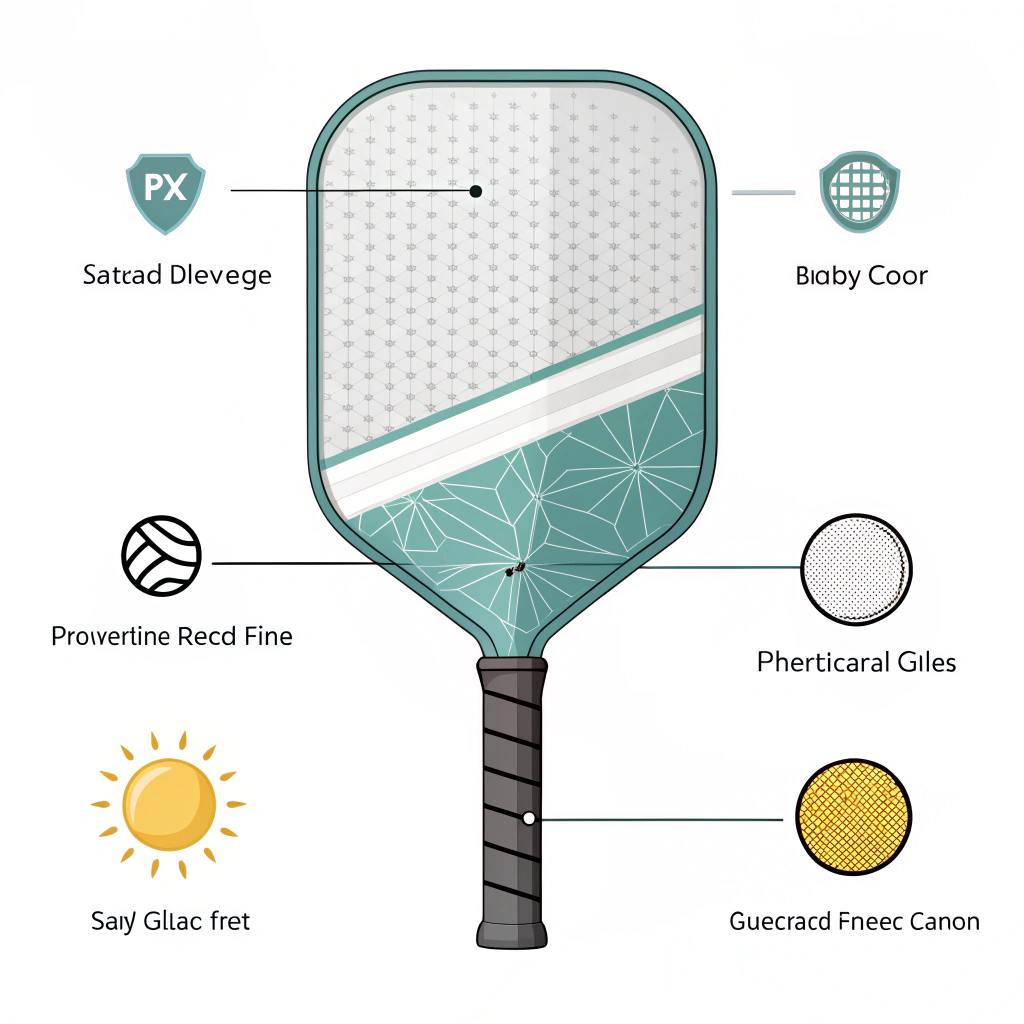
- Polymer (PP/PE-based) honeycomb
- Outdoor strengths: excellent moisture resistance, lower vibration, good elasticity (comfortable feel), and high resistance to delamination.
- Weaknesses: can compress over extremely heavy repeated impacts; formulation matters.
- Recommendation: Best for recreational and club paddles sold for outdoor courts; preferred by many retailers for low return rates.
- Nomex honeycomb
- Outdoor strengths: rigid, hard feel; historically used in high-performance paddles for power.
- Weaknesses: more sensitive to moisture ingress and edge impacts if not well-sealed; heavier and can be brittle under repeated sand/impact abuse.
- Recommendation: Use for tournament-level paddles intended for outdoor use only when paired with robust edge sealing and surface treatments.
- Aluminum honeycomb
- Outdoor strengths: good power and durability; resists compression.
- Weaknesses: potential for corrosion if edges are poorly sealed; slightly higher cost and weight.
- Recommendation: Good mid/high-end outdoor paddles if edge sealing and anodizing/coating are handled properly.
Practical recommendation by user level:
- Recreational/retail bulk: polymer honeycomb + carbon/fiberglass composite face (cost-effective, weather resistant).
- Club/academy: polymer core or aluminum core with sealed edge + high-durability face.
- Tournament outdoor: 12K or T300 carbon face + aluminum or sealed Nomex core, but demand higher QA and sealing.
Manufacturing impact: hot pressing vs cold pressing vs thermoforming
How a paddle is made affects long-term stability outdoors:
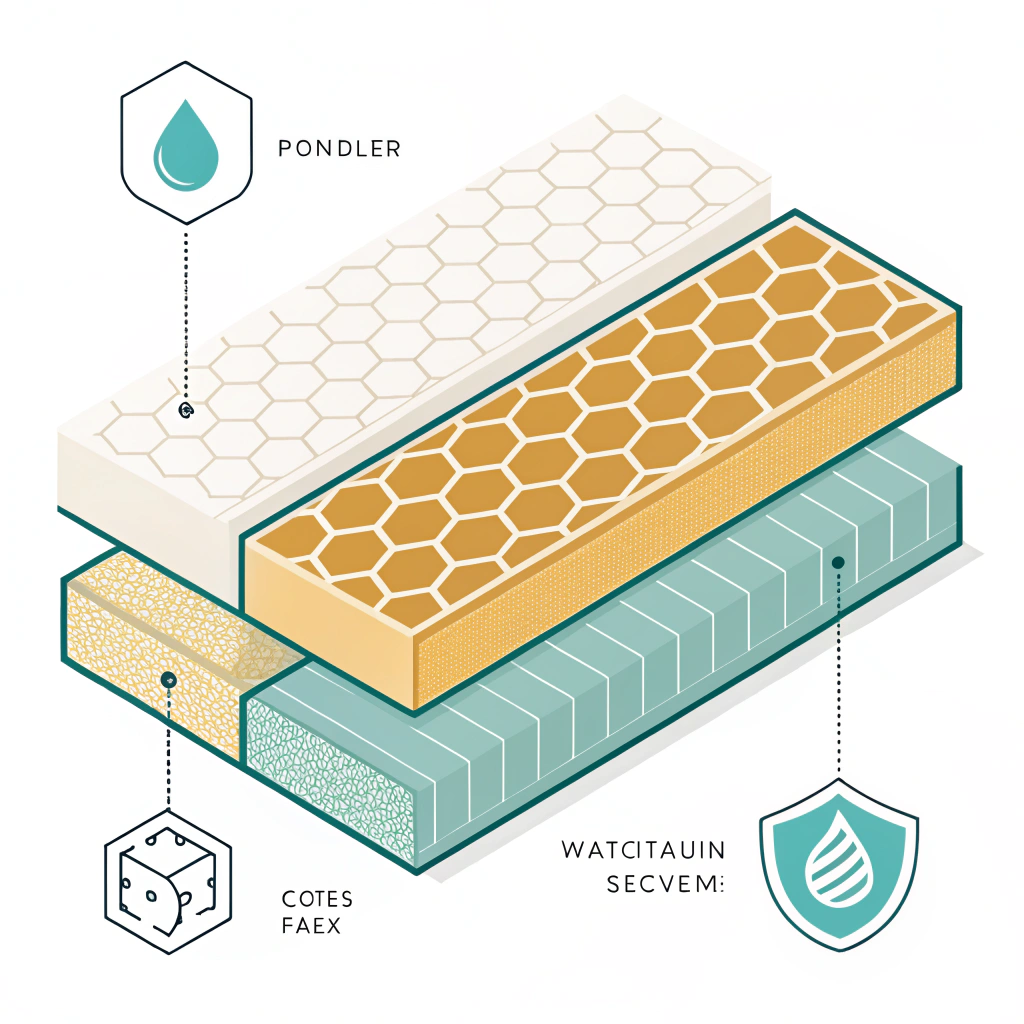
- Hot pressing
- Produces strong, well-consolidated laminates with excellent adhesion.
- Pros: high structural integrity, repeatable density, good impact resistance.
- Cons: higher equipment cost; heat can alter some resin properties so surface coatings must be engineered for outdoor UV.
- Best use: high-volume runs where consistent core-to-face bonding is required.
- Cold pressing
- Maintains resin chemistry closer to nominal in some layups; can produce different feel.
- Pros: better control for certain composites; retains material properties leading to preferred ball feel.
- Cons: slower cycles; requires tight pressure control.
- Best use: mid-to-high end paddles where feel is prioritized.
- Thermoforming
- Useful for complex shapes and precise thickness mapping.
- Pros: excellent for designing balance and thickness distribution; can create durable edge transitions that resist delamination.
- Cons: longer cycle time and higher tooling costs.
- Best use: premium or custom paddles where shape and thickness profiling are important.
For outdoor durability prioritize processes that guarantee strong face-core bonding and reliable edge sealing. Hot pressing with post-press UV-stable coating or thermoforming with sealed edge transitions are both excellent choices. Ask suppliers for bonding strength metrics (peel strength4 in N/cm) and process control documentation.

Practical specs to list on a B2B product sheet
Include measurable specs buyers can use to compare SKUs:
| Item | Typical spec / acceptable range |
|---|---|
| Weight | 7.0 – 8.5 oz (198–241 g); tolerance ±0.1 oz |
| Balance | Head-light / Neutral / Head-heavy (mm from grip) |
| Face material | 3K / 12K / T300 Carbon, E-Glass, Composite |
| Core material | Polymer honeycomb / Nomex / Aluminum |
| Surface texture | Grain pattern description; roughness in Ra if measured |
| UV resistance | Accelerated UV test result (ASTM G1545 hours to ΔE>3 or loss of COF) |
| Abrasion resistance | Taber cycles to X% COF loss or visual wear rating |
| Edge sealing | Type (urethane, TPU sleeve) and adhesion rating |
| Grip sizes | 4.0 in / 4.25 in / 4.5 in |
| Warranty | e.g., 12-month limited (delamination, manufacturing defects) |
| MOQ | e.g., 300–1,000 units (specify tier pricing) |
| Lead time | e.g., 30–75 days depending on tooling and print |
| Printing | On-demand digital print, full-color sublimation, or pad printing options |
Key technical tests to demand: UV-aging (ASTM G154 or equivalent), Taber abrasion cycles, peel strength, impact shock test (drop or force impact), and batch weight/balance statistics.
QC and testing checklist for buyers
Request these artifacts and sample tests before placing production orders:
- Initial pilot samples from the same production line and process.
- Test report: accelerated UV exposure results (hours and measured ΔE/color change; COF before/after).
- Abrasion testing: Taber or equivalent showing cycles to 10–20% loss of COF or visual wear threshold.
- Peel/bond strength: face-to-core adhesion in N/cm.
- Environmental cycling: heat/humidity cycles (-20°C to 60°C) and post-cycle performance check.
- Play-testing report: 50–100 rally sessions with standardized players, note changes in feel and surface.
- Batch consistency data: weights, balance point distribution, grip size variance.
- Edge-seal inspection: cross-section photos showing edge adherence.
- Packaging and shipping tests: drop test results, humidity exposure in containers.
Ask suppliers to include high-resolution photos and serial-numbered sample labels so you can trace production batches.
Sourcing & commercial considerations
- OEM vs OBA: OEM (fully branded and built-to-spec) allows full control over specs and print. OBA (original brand assembler) can be faster and cheaper but limits design freedom.
- Custom printing: On-demand full-color printing under a protective resin layer reduces surface wear on graphics. Confirm UV ink fade metrics and color matching processes (Pantone references).
- Pricing tiers: negotiate price breaks at logical MOQ thresholds (example: 300, 600, 1,000 units). Include premiums for special cores, higher-count carbon, or thermoformed shapes.
- Packaging & logistics: consider protective sleeves and bulk carton specs to avoid edge damage. Factor in freight time, port congestion, and seasonal demand—plan orders 60–90 days ahead for peak seasons.
- Warranty and RMA: clearly define what constitutes a warranty claim (delamination, manufacturing defect) vs normal wear.
- Minimum order strategy: for new SKUs, start with a smaller pilot MOQ (e.g., 300 units) to test market response then scale.
Short recommendation matrix
| Use case | Face | Core | Weight | Edge sealing | Recommended MOQ |
|---|---|---|---|---|---|
| Recreational outdoor retail | Composite (carbon+fiberglass) or fiberglass with UV coat | Polymer honeycomb | 7.3–7.9 oz | Urethane seal or TPU sleeve | 500 |
| Club / academy | 3K or T300 carbon face | Polymer or aluminum honeycomb | 7.5–8.3 oz | Robust bonded edge + sleeve | 300–600 |
| Tournament-level outdoor | 12K or T300 carbon | Aluminum or sealed Nomex | 7.8–8.5 oz | Multi-layer edge seal + post-cure coating | 600+ |
CTA for B2B readers: sample request checklist and what to ask your manufacturer
Sample request checklist to send to suppliers:
- Production method (hot/cold/thermoforming) and photos of the production line.
- Face and core material specifications (resin types, carbon tow counts).
- Pilot sample(s) with serial number, two colorways, and three weight trims (light, mid, heavy).
- Lab test reports: UV aging (ASTM G154), Taber abrasion, peel strength, and environmental cycling.
- Packaging sample and full SKU sheet with MOQ, unit price per tier, lead time, and tooling fees.
- Print samples: on-demand printing proof under topcoat and accelerated fade test report.
What to ask NEX Pickleball (how we help):
- We manufacture using hot pressing, cold pressing and thermoforming, letting you choose the process that fits the feel/durability profile you want.
- Face options: 3K, 12K, T300 carbon, E-Glass fiberglass, and carbon–fiberglass composites.
- Core options: polymer honeycomb, aluminum, and sealed Nomex runs for competitive paddles.
- On-demand full-color printing with protective resin layer; we control color and UV stability.
- QC: we provide batch-level weight/balance stats, peel strength reports, UV aging and abrasion testing on request.
- Typical MOQ: flexible starting at 300 units for pilot runs; scalable pricing tiers and predictable lead times (provided at RFQ stage).
- We offer customization on grip sizes, weight ranges, and edge sealing methods to match your market needs.
Send this checklist with your RFQ to get pilot pricing and timeline.
People Also Ask
Is it better to have a heavier or lighter pickleball paddle?
- Midweight paddles (about 7.3–8.3 ounces) offer the best balance of power, control and maneuverability for most outdoor players. Lighter paddles (<7.3 oz) improve swing speed and control but reduce raw power; heavier paddles (>8.3 oz) increase power but reduce quickness and may fatigue players faster. For B2B buyers, offer a primary midweight SKU and two trim weights (light and heavy) to cover wider customer preference.
-
polymer honeycomb: Read this to understand how polymer (PP/PE) honeycomb cores are constructed, why they resist moisture and delamination, and what formulation choices affect compression and longevity — useful for selecting cost-effective outdoor cores. ↩ Back to usage ↩
-
MOQ: Read this to learn how minimum order quantities affect unit pricing, lead time negotiation, and pilot strategies (tiered pricing, ramp plans) so you can set realistic SKUs and procurement plans. ↩ Back to usage ↩
-
Taber-style abrasion: Read this to learn how Taber abrasion testers work, how cycles correlate to real-world wear (COF and visual loss thresholds), and how to specify meaningful abrasion metrics on product sheets. ↩ Back to usage ↩
-
peel strength: Read this to learn what peel strength (N/cm) measures in a face-to-core bond, typical acceptable ranges, and test methods — critical to specifying resistance to delamination in outdoor cycles. ↩ Back to usage ↩
-
ASTM G154: Read this to understand accelerated UV aging test parameters (UV exposure hours, irradiance, ΔE/color metrics), how to interpret lab reports, and what thresholds indicate acceptable outdoor UV resistance. ↩ Back to usage ↩