Skip to content


Custom pickleball paddles that meet the highest standards in performance and durability are achievable by employing advanced production techniques. In this article, we explore the challenges in manufacturing custom pickleball paddles, analyze the production methods—hot pressing1, cold pressing2, and thermoforming3—and offer actionable solutions for procurement and product development managers.
For procurement managers and product developers, sourcing and manufacturing high-performance custom pickleball paddles can be challenging. The key issues include ensuring precision in materials, achieving optimal weight distribution, and maintaining ergonomic design while balancing production efficiency and costs. In today’s competitive market, a paddle must incorporate advanced materials such as carbon fiber4, fiberglass, and innovative composite cores to meet the performance benchmarks required by competitive players and recreational enthusiasts alike.
Custom paddles must overcome these challenges:
- Variability in material properties.
- Production process limitations.
- Strict quality control requirements.
- The need for design personalization and scalability.
Understanding the root causes behind these challenges is critical. Many manufacturers struggle with:
-
Material Variation: Raw materials like 3K Carbon Fiber, 12K Carbon Fiber, or T300 Carbon Fiber each offer unique properties. The selection process directly impacts the paddle’s durability, flexibility, and performance. Inconsistent material quality can lead to subpar products and customer dissatisfaction.
-
Production Process Limitations: Each production method—hot pressing1, cold pressing2, and thermoforming3—comes with inherent advantages and disadvantages. For instance, while hot pressing yields high production efficiency, it might compromise the fine material properties that are essential for precision play.
-
Customization Demands: Custom orders require flexible production capabilities. Clients often specify needs for different grip sizes, weight distributions, or custom surface treatments, including on-demand printing. Balancing these requests with production efficiency is a key challenge.
-
Quality Assurance Issues: Maintaining high-quality standards during rapid production cycles can be problematic. Without precise control over production variables, batch inconsistency may occur, affecting overall product performance.
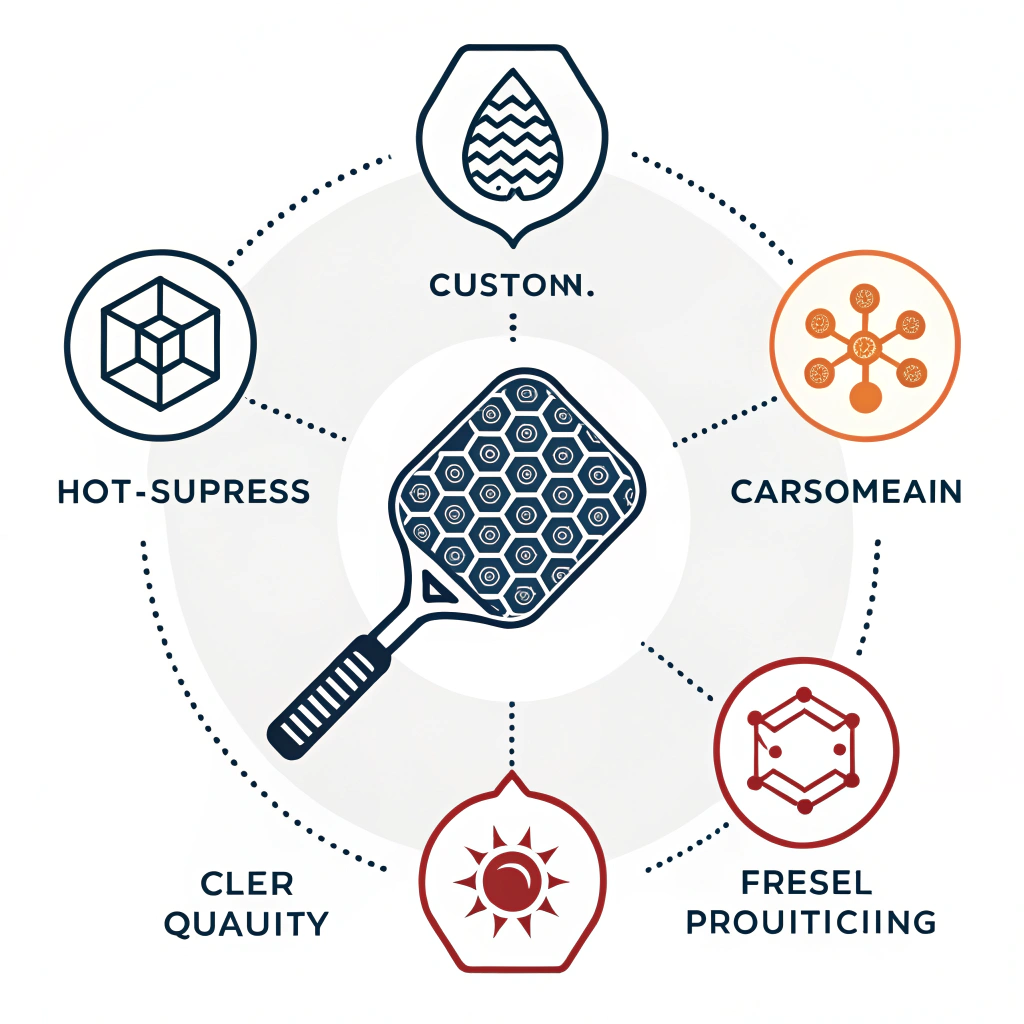
To address these challenges, a balanced approach incorporating advanced production methods is essential. Below is a detailed breakdown of the three primary manufacturing techniques and how each contributes to paddle performance and customization potential.
Hot pressing1 involves heating the materials and pressing them under high pressure. This method is highly effective for producing paddles that require superior impact resistance and structural strength.
Advantages:
- High production efficiency suitable for large-scale manufacturing.
- Generates strong paddles with excellent impact resistance.
- Promotes robust structural integrity, making them ideal for competitive play.
Disadvantages:
- High equipment costs and energy consumption.
- Potential alterations in material properties may affect the paddle's “feel” during play.
- Limited flexibility in achieving extremely precise surface details.
Cold pressing2 operates at room temperature under mechanical pressure, providing better control over the material’s final shape and thickness. This method is highly beneficial for custom production that values exact dimensions and fine material properties.
Advantages:
- Superior control over paddle thickness and uniformity.
- Preservation of intrinsic material properties, yielding enhanced ball feel and responsiveness.
- Ideal for designs requiring precision and a customized touch.
Disadvantages:
- Slower production cycles reduce overall efficiency.
- Requires sophisticated, high-quality equipment to maintain precise pressure control.
Thermoforming3 involves heating materials to soften them before molding into complex shapes. This process is ideal for producing paddles with intricate designs and customized thickness variations.
Advantages:
- Enables production of paddles with unique, intricate designs.
- Maintains material stability and performance across complex geometries.
- Ideal for high-performance, premium custom-made products.
Disadvantages:
- Longer production times and significantly higher equipment costs.
- Best suited for smaller production runs or premium product lines.
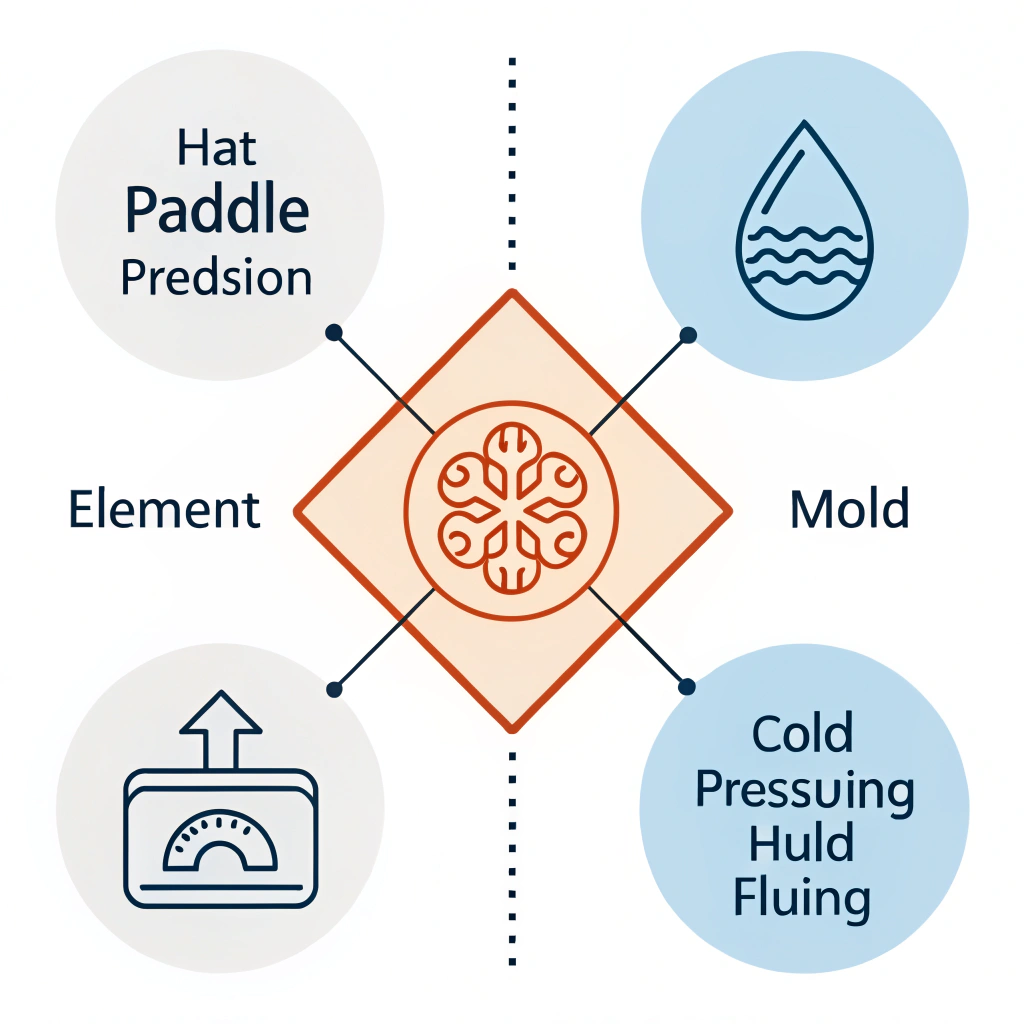
Below is a comparative table summarizing the key aspects of these production processes:
| Production Process | Key Advantages | Limitations | Best Suited For |
|---|---|---|---|
| Hot Pressing | High efficiency; strong impact resistance | Altered material “feel”; high initial costs | Large-scale production, competitive paddles |
| Cold Pressing | Enhanced precision; preserves material properties | Slower production; requires precision equipment | Custom designs, high-quality feel |
| Thermoforming | Intricate design capabilities; optimal material distribution | Extended production time; premium cost | Premium, custom-made, complex shapes |
NEX Pickleball leverages advanced production techniques to offer a wide range of customization options. Clients can choose from various carbon fiber4 types—such as 3K, 12K, and T300—each benefiting different aspects of performance. In addition, we combine carbon fiber with fiberglass to create composites that seamlessly blend power and control.
The core of a paddle significantly affects its playability. We incorporate several core types including:
- Nomex Honeycomb Core5: Offers excellent shock absorption ideal for players seeking stability and longevity.
- Aluminum Honeycomb Core: Provides a balance of strength and precision, well-suited for competitive play.
- Polymer Honeycomb Core: Reduces vibration and enhances elasticity, delivering a comfortable hitting experience.
Specialized core designs are tailored according to player needs. For instance, a bamboo core composite provides a lightweight yet durable option that is particularly popular among players who seek an authentic hitting feel.
NEX Pickleball recognizes that each client’s requirements can vary dramatically:
- Grip Customization: We offer paddles with multiple grip sizes to accommodate varying hand sizes.
- Surface Treatment: Special treatments ensure better grip on the ball, enhancing spin and control.
- On-Demand Printing: Custom branding is available, ensuring that paddles resonate with team identity or retail branding strategies.
These manufacturing options allow sports equipment distributors, sports clubs, and retailers to design paddles that meet both performance specifications and unique branding requirements.
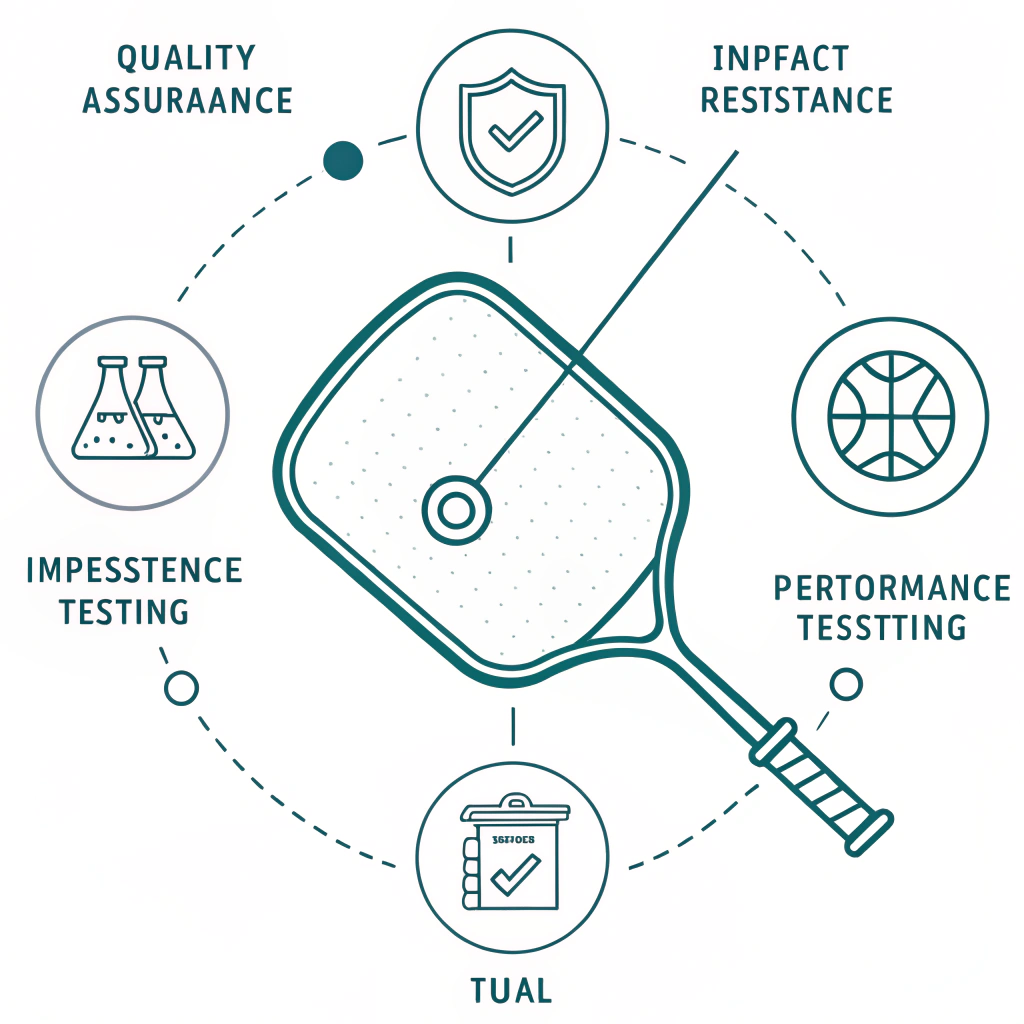
In our manufacturing process, rigorous quality control is key. Each paddle undergoes comprehensive testing to ensure it meets the exacting standards of:
- Strength and Impact Resistance: Ensuring the paddle can withstand high-intensity play.
- Flexibility and Responsiveness: Critical for achieving precision in control and the “feel” of the ball.
- Balance and Weight Distribution: Ensuring paddle comfort and optimized performance over prolonged periods.
Quality assurance protocols include environmental testing, batch consistency checks, and in-field performance tests. By integrating these measures, NEX Pickleball solidifies its reputation as a reliable partner for high-performance custom pickleball paddles.
When selecting a manufacturing partner for custom pickleball paddles, consider the following precautions:
- Understand Material Properties: Ensure that the supplier details the performance characteristics of different materials, such as T300 Carbon Fiber and E-Glass Fiberglass.
- Assess Production Technology: Evaluate whether production methods such as cold pressing or thermoforming align with your product’s design and performance requirements.
- Review Customization Capabilities: Confirm that your manufacturing partner can meet design specifications, particularly regarding grip size variations, surface treatments, and on-demand printing.
- Prioritize Quality Control: It is critical that every paddle undergoes stringent testing to assure durability and performance.
Table 2 below outlines common pitfalls and how to avoid them:
| Potential Pitfall | Recommended Precaution |
|---|---|
| Compromised material integrity | Verify material certifications and source details |
| Inconsistent product dimensions | Choose manufacturers with robust quality control |
| Limited customization capabilities | Prioritize vendors offering flexible production methods |
| High production costs | Compare production efficiency across different techniques |
Recent industry data shows that paddles produced via thermoforming and cold pressing achieve up to 20% higher durability scores compared with traditional manufacturing methods. A case study with a leading sports equipment distributor demonstrated a 15% increase in market share when switching to high-performance, custom paddles produced through these advanced methods.
A mid-sized sports equipment distributor partnered with NEX Pickleball to launch a limited-edition series of custom pickleball paddles. The distributor required a balance between high quality, custom branding, and production efficiency. By employing a blend of cold pressing for precision and thermoforming for intricate design elements, the distributor was able to meet the end-user performance expectations while amplifying their brand identity. This collaborative approach resulted in:
- A significant increase in paddle sales.
- Improved customer satisfaction ratings.
- Enhanced brand recognition within competitive sports circles.
Custom pickleball paddles require a careful balance of advanced materials, precision production processes, and attention to detail in customization. By understanding the benefits and limitations of techniques such as hot pressing, cold pressing, and thermoforming, procurement managers and product developers can confidently source paddles that meet exacting performance and branding requirements.
Key takeaways include:
- Evaluate the specific performance requirements of your target players.
- Prioritize production methods that align with your customization goals.
- Ensure robust quality control protocols for consistent product performance.
- Consider the full spectrum of customization options—from advanced core materials to on-demand printing.
For businesses aiming to innovate in the sports equipment sector, aligning with a partner like NEX Pickleball means leveraging advanced manufacturing technologies to deliver paddles that excel in both performance and visual appeal. We invite you to review your production needs in light of these insights and consider how advanced production techniques can drive your business forward.
Take the next step toward innovation in your product lines by partnering with experts who understand both the technical and market demands of custom pickleball paddles.
Q1: What are the benefits of hot pressing in pickleball paddle production?
A1: Hot pressing increases production efficiency and builds paddles with strong impact resistance, making them suitable for competitive play. However, it may slightly affect the material's natural feel.
Q2: How does cold pressing impact paddle performance?
A2: Cold pressing allows for precise control over paddle thickness and preserves the natural properties of the materials, resulting in enhanced responsiveness and a superior ball feel.
Q3: What customization options are available in pickleball paddle manufacturing?
A3: Customization options include varying grip sizes, tailored surface treatments, on-demand printing for branding, and the use of specialized materials like different types of carbon fiber and composite cores.
-
hot pressing: Click to explore how the hot pressing process enhances production efficiency and impacts material properties in custom manufacturing. ↩ ↩ ↩2 ↩3
-
cold pressing: Click to gain insights into the cold pressing technique, focusing on precision control and preservation of material integrity. ↩ ↩ ↩2 ↩3
-
thermoforming: Click to understand the thermoforming process, its role in enabling intricate designs, and its advantages for custom production. ↩ ↩ ↩2 ↩3
-
carbon fiber: Click to learn about the properties, grades, and applications of carbon fiber in high-performance manufacturing. ↩ ↩ ↩2
-
Nomex Honeycomb Core: Click for detailed information on Nomex honeycomb core technology and how it contributes to improved shock absorption and durability. ↩ ↩