Skip to content

Quick Answer: NEX Pickleball offers a comprehensive, high-performance manufacturing solution for pickleball paddles by integrating advanced production techniques—hot pressing, cold pressing, and thermoforming1—with premium materials like carbon fiber2, fiberglass, and composites3. This holistic approach ensures superior performance, customization, and durability for B2B partners seeking reliable, scalable manufacturing of innovative sports equipment.
In today’s competitive sports equipment market, procurement managers and business development executives must carefully evaluate manufacturers to ensure that the products not only meet performance expectations but also align with market demand trends. When it comes to high-performance pickleball paddles, the production process is as critical as the final design. NEX Pickleball, a leading manufacturer based in Jiaxing, Zhejiang, focuses on advanced production techniques and quality materials to deliver paddles that combine durability, precision, and optimal playing experience. This article explores the challenges of sourcing premium pickleball paddles and explains our solution-oriented approach, providing detailed insights into our manufacturing processes, material choices, and quality control measures.
Procurement managers for sports equipment distributors are often faced with the challenge of ensuring that the pickleball paddles they source can support both competitive play and recreational use. Key procurement concerns include:
• Consistency in quality and structural integrity
• Robust production processes that support high-volume manufacturing
• Material flexibility that provides the optimal balance between power, control, and comfort
• Customization capabilities that cater to unique branding or performance demands
Many manufacturers struggle to balance production efficiency with the precision needed to craft paddles that meet the rigorous standards of competitive outdoor and indoor sports.
The challenges in manufacturing premium pickleball paddles can be traced to several factors:
-
Material Variability: Choosing the right material has a significant impact on paddle performance. Materials such as carbon fiber2 come in various forms—3K, 12K, and T300—each offering distinct benefits and limitations. Similarly, fiberglass and composite materials (like bamboo core or honeycomb core) present unique challenges in terms of control, power, and vibration dampening.
-
Production Process Complexity: The three primary production techniques—hot pressing, cold pressing, and thermoforming1—each have inherent advantages and disadvantages. The selection of the appropriate process depends on the desired paddle characteristics, production volume, and overall cost management. For instance, while hot pressing can yield high-efficiency production with robust performance, it might compromise certain material properties needed for optimal ball feel.
-
Quality Consistency: In a B2B partnership, ensuring consistent product quality across large production runs is vital. Inconsistent paddle performance can lead to reputational risks and increased returns, negatively impacting the distributor or retailer’s brand image.
-
Customization and On-Demand Production: As the market evolves, the demand for personalized products has increased. From custom paddle weights to on-demand printing for branding, the ability to provide tailored solutions is essential for capturing market share and establishing long-term relationships with resellers and sports organizations.
To address these challenges, NEX Pickleball has developed a solution-oriented manufacturing approach that leverages advanced production techniques and premium material options. Our process can be broken down into the following core components:
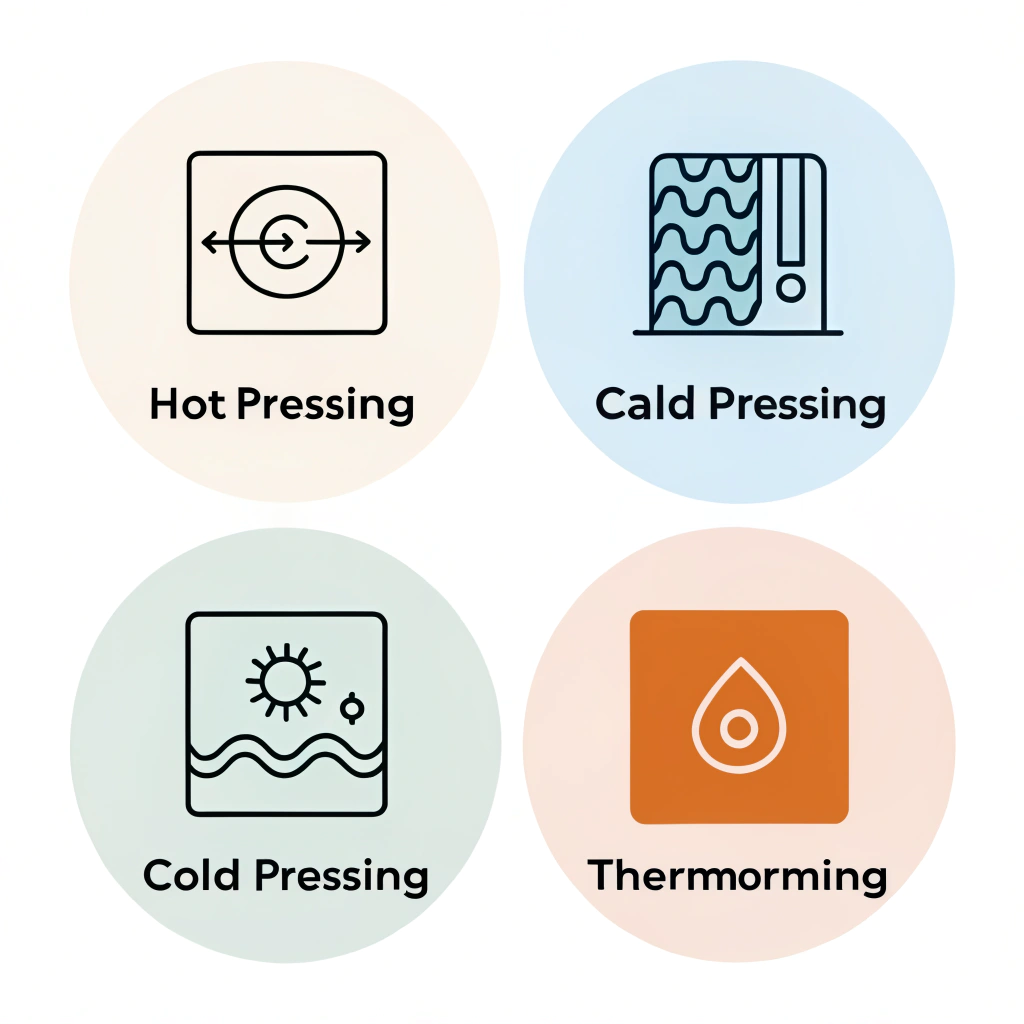
We employ three main production processes, each carefully selected based on the specific design and performance requirements:
Hot Pressing:
• Involves heating and applying pressure to mold the paddle materials.
• Advantages:
– High production efficiency ideal for large-scale manufacturing
– Yields sturdy paddles with excellent impact resistance
– Enhances structural integrity for high-performance applications
• Disadvantages:
– May slightly alter the material’s innate properties, impacting tactile feedback
– Requires significant capital investment in specialized equipment
Cold Pressing:
• Uses mechanical pressure at room temperature ensuring the paddle maintains its inherent material properties.
• Advantages:
– Provides precise control over paddle thickness and overall structure
– Maintains the natural characteristics of materials, delivering a superior ball feel and responsiveness
– Ideal for producing paddles that require an intricate balance of control and power
• Disadvantages:
– Extended production cycles may affect scalability
– High precision control demands state-of-the-art machinery
Thermoforming:
• Involves heating materials until they soften, then forming them using pre-designed molds for intricate designs.
• Advantages:
– Allows creation of paddles with complex shapes and balanced material distribution
– Enhances paddle stability and overall performance
– Suitable for premium products and customizable orders
• Disadvantages:
– Longer production times and higher equipment costs
– Most applicable to limited-run, high-end or custom paddle orders
Below is a comparative table summarizing these production methods:
| Production Process | Key Advantages | Limitations |
|---|---|---|
| Hot Pressing | High production speed; robust impact resistance; strong structural integrity | Material properties may be altered; high equipment cost |
| Cold Pressing | Precise control; preserves material properties; excellent tactile feel | Longer production cycles; requires advanced machinery |
| Thermoforming | Intricate design capability; uniform material distribution; ideal for customization | Extended production time; higher operating costs |
The choice of materials is a fundamental factor in paddle performance. At NEX Pickleball, we use a range of premium materials to ensure every paddle meets the specific needs of players at all levels:
Carbon Fiber Options:
• 3K Carbon Fiber:
– Offers exceptional strength and flexibility
– Provides a high rebound force while reducing vibration
• 12K Carbon Fiber:
– Features higher thread density leading to a smoother paddle surface
– Enhances hardness and durability, making it ideal for competitive play
• T300 Carbon Fiber:
– Combines superior tensile strength with low weight
– Delivers a balanced performance aligning power with precision
Fiberglass:
• Utilized for its excellent elasticity and ball control.
• E-Glass Fiberglass is particularly popular for providing a wide sweet spot and enhanced durability, providing a reliable alternative or complement to carbon fiber.
Composite Materials:
• Combining different materials (such as carbon fiber and fiberglass composites3) ensures paddles that offer both power and control.
• Bamboo Core Composites and Honeycomb Cores4 provide lightweight yet highly impact-resistant options, where the honeycomb design further enhances shock absorption.
Integrating these materials allows us to tailor each paddle for specific performance attributes. This is especially important for clients who require customization options, such as on-demand printing5 to include branding elements or unique design specifications tailored for team or retail distribution.
Ensuring consistency in quality is paramount to sustaining a strong B2B partnership. NEX Pickleball implements rigorous testing and quality control protocols at every stage of the production process:
• In-Process Inspection: During each production phase, quality engineers monitor paddle dimensions, weight distribution, and surface texture to ensure every unit aligns with stringent performance standards.
• Post-Production Testing: Finished paddles undergo comprehensive performance testing, where factors such as impact resistance, vibration dampening, and material durability are examined.
• Custom Order Verification: For tailored paddle designs, special attention is given to customization requests to verify that each paddle meets the client’s specifications precisely.

By combining these meticulous checks with advanced manufacturing processes, we maintain a level of product uniformity that instills confidence in our B2B partners. This consistency also enables bulk orders with minimal variation, a critical advantage for distributors and team branding projects.
The sports equipment market is evolving, and customization has become a key driver in purchasing decisions. Whether it’s a personalized design for team branding or a specific grip size for enhanced ergonomic comfort, NEX Pickleball offers flexible options to meet diverse customer needs:
• Custom Paddle Options: Clients can specify design elements such as weight, balance, and grip size.
• • On-Demand Printing5 Services: Tailor paddle surface designs with logos, slogans, or unique graphics that reflect the client’s branding.
• Adaptable Material Combinations: Leverage our expertise in material science by requesting custom blends of carbon fiber, fiberglass, or composites to optimize paddle performance for different playing styles and conditions.
Our commitment to customization allows businesses to not only meet market demands quickly but also to establish a strong brand identity through high-quality, personalized sports equipment.
For B2B partners looking to secure a reliable manufacturing source for pickleball paddles, here are some actionable recommendations:
- Evaluate your performance requirements: Identify key performance metrics (power, control, durability) and choose material combinations and production techniques that align with these goals.
- Consider customization needs: If branding or specialized paddle designs are important, opt for a manufacturer who offers on-demand printing and customizable specifications.
- Assess production scales and timelines: Balance your need for rapid production with the necessity of precision and quality. For high-volume manufacturing with consistent output, a robust process like hot pressing might be ideal; however, tailoring orders might benefit more from cold pressing or thermoforming.
- Review quality assurance processes: Ensure that your manufacturing partner implements in-depth quality control measures. Look at case studies or product testing data that demonstrate their commitment to consistent performance.
- Initiate discussions on custom solutions: Engage your supplier in dialogue about your specific requirements. Experienced manufacturers like NEX Pickleball offer consultation services that ensure your unique needs are met through detailed production planning.
Below is a simple checklist table to guide your decision-making process:
| Action Item | Consideration Point | Recommendations |
|---|---|---|
| Performance Goals Assessment | Desired paddle power, control, and durability | Choose optimal material & process combo |
| Customization Needs | Branding, grip size, weight, design specifications | Leverage on-demand printing and custom orders |
| Production Volume & Timelines | Required production speed vs. precision and quality | Opt for hot pressing for volume; cold pressing/thermoforming for customization |
| Quality Control Verification | Testing protocols and consistency in output | Review case studies and testing data |
| Supplier Expertise | Years of experience, technical capabilities | Partner with industry leaders like NEX Pickleball |

NEX Pickleball’s solution-oriented approach ensures that our pickleball paddles not only excel in performance but also provide the scalability and customization options essential for modern sports equipment distributors. By integrating advanced production techniques—hot pressing, cold pressing, and thermoforming1—with a rigorous selection of premium materials such as carbon fiber2, fiberglass, and composites3, we deliver paddles that consistently meet high performance and quality standards.
Our commitment to quality control through stringent in-process and post-production inspections, combined with the flexibility to tailor products for bespoke requirements, positions us as a reliable partner for long-term B2B relationships. The detailed understanding of material science and production efficiency that we bring to every paddle is designed to help you enhance your product offerings, maintain a competitive edge, and satisfy end-users’ expectations across varied playing styles and environments.
For procurement managers and business development executives, choosing NEX Pickleball means partnering with a manufacturer that not only meets the demands of today’s competitive sports landscape but also pioneers innovative solutions that drive the future of pickleball paddle production. We encourage you to explore how our manufacturing capabilities can support your business growth and deliver the performance excellence your customers expect.
Q: What brand of pickleballs are used in tournaments?
A: The ONIX Dura Fast-40 pickleball is widely recognized as a tournament standard due to its patented design and high-performance attributes.
Q: What 3 sports was pickleball invented from?
A: Pickleball was inspired by tennis, badminton, and ping pong, blending elements from each to create its unique style.
Q: What pickleball do the pros use in tournaments?
A: Professional players most often use the ONIX Dura Fast-40 pickleball, valued for its fast performance and consistent quality in competitive play.
-
Thermoforming: Explore this article to learn about the thermoforming process, its role in creating complex shapes, and how it balances material distribution for optimized product performance. ↩ ↩ ↩2 ↩3
-
Carbon Fiber: Read the article to understand the properties and benefits of carbon fiber in high-performance applications, including its strength-to-weight advantages and versatility in sports equipment manufacturing. ↩ ↩ ↩2 ↩3
-
Composites: Discover how composites combine different materials to achieve a balance of strength and flexibility, and why they are crucial for manufacturing durable sports equipment. ↩ ↩ ↩2 ↩3
-
Honeycomb Cores: Learn about honeycomb core technologies, their benefits in terms of lightweight strength and shock absorption, and their application in high-impact sports equipment. ↩ ↩
-
On-Demand Printing: Gain insights into on-demand printing technologies for personalized manufacturing, exploring its impact on branding and product customization strategies. ↩ ↩ ↩2