Skip to content

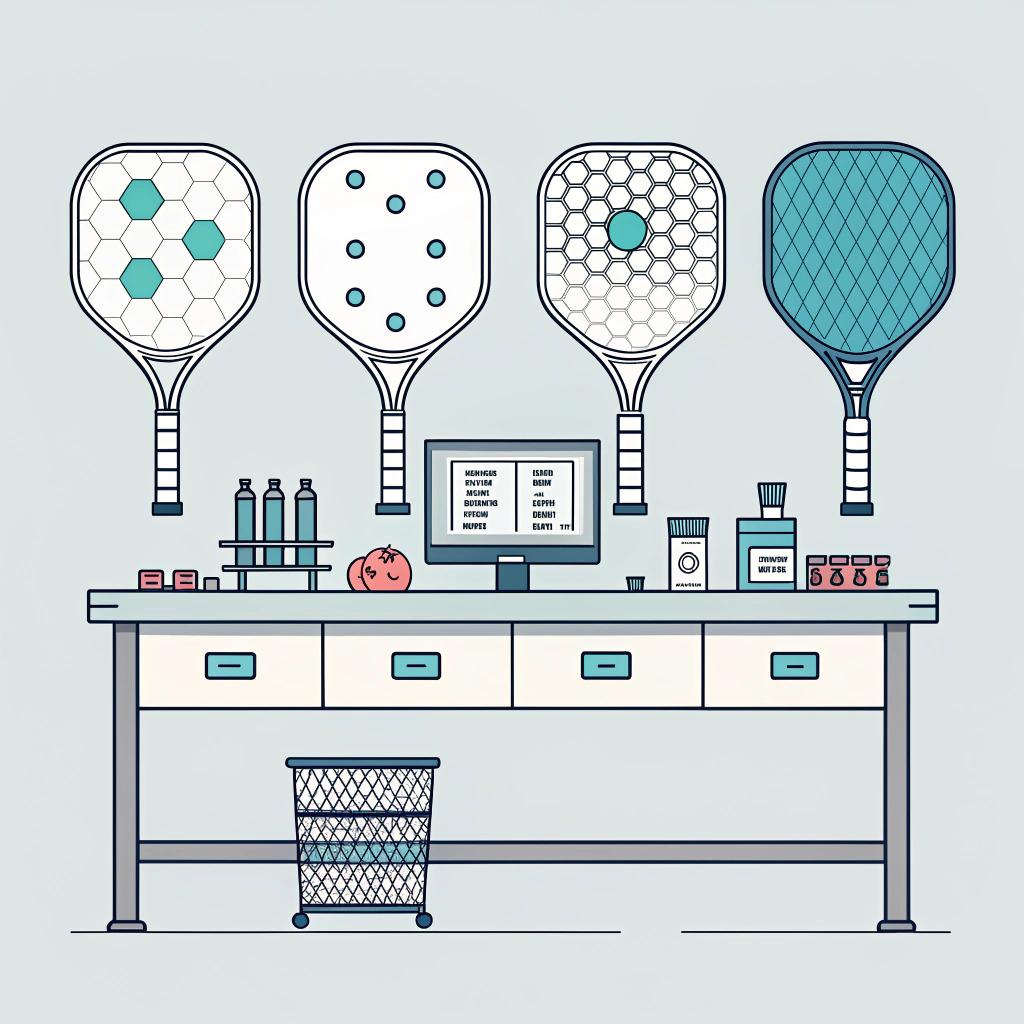
Control-focused pickleball paddles prioritize materials, core thickness, face texture, and balance to reduce unwanted power and increase touch—typically a polymer honeycomb1 or thicker core (14–16mm+), a softer face material (fiberglass or tuned carbon composite), midweight build (approx. 200–225 g / 7.0–7.9 oz), and a head-light to neutral balance point. These choices, combined with manufacturing methods such as cold pressing2 or thermoforming3, deliver consistent feel, lower rebound, and improved short-game control.
Why this guide
This article helps product managers and procurement leads choose the right specs and supplier trade-offs when shortlisting paddles for a “control-focused” product line. It compares materials, cores, surface textures, and manufacturing processes and gives actionable spec ranges, test metrics, and supplier questions to include in RFQs.

Section: The buyer’s dilemma
You need paddles that favor accuracy, touch, and consistency for resets, drops, and dinks—not maximum power. But “control” is produced by combinations of material, geometry, and manufacturing. The choice affects cost, MOQ, repeatability, and how customers perceive the product on the court.
Key variables that determine control
- Face material: stiffness and surface uniformity affect rebound and spin.
- Core type and thickness: determines energy absorption and dwell time4.
- Paddle weight and balance point: affects maneuverability and perceived control.
- Sweet spot size and surface texture: defines forgiveness and spin potential.
- Manufacturing process: influences consistency, feel, and production costs.
Section: Quick material and manufacturing overview
- Carbon Fiber (3K, 12K, T300): stiff, strong, quick rebound. When used with a thicker core or softer face layup it can be tuned for control. Carbon gives precise feel at the sweet spot but can be less forgiving if combined with thin cores.
- Fiberglass (E-Glass): more flexible, wider sweet spot feel, better touch on soft shots—often preferred for control-focused recreational and mid-level competitive paddles.
- Composite faces (carbon + fiberglass): balance stiffness and feel; ideal when you want both responsiveness and softer touch.
- Polymer Honeycomb Cores: higher elasticity, greater vibration damping, softer feel—excellent for control and comfort.
- Nomex / Aluminum cores: Nomex (hard and responsive) provides power and durability but can feel “poppy”; aluminum offers a balance but less vibration damping.
Manufacturing impact on feel and reproducibility
- Cold pressing: preserves fiber and resin properties, enabling better tactile feel and consistent thickness control—favored for control paddles where subtlety matters. Slower production time, higher tooling precision required.
- Hot pressing: faster, higher production throughput, creates stiffer laminates—good for power-focused, high-volume lines. Can change resin curing profile and stiffness.
- Thermoforming: useful to shape ergonomics and tune local thickness for balance control (e.g., thicker perimeter for a larger sweet spot). Often used for premium or custom runs.
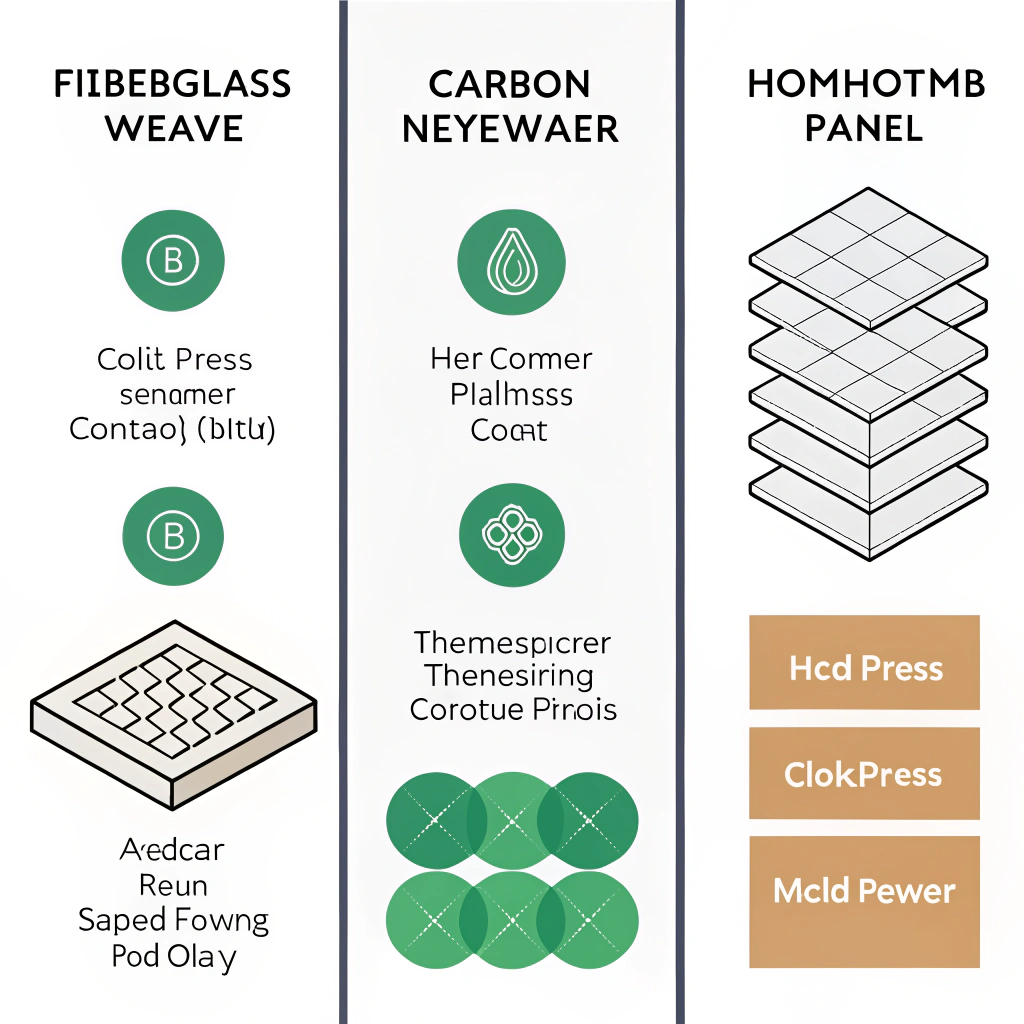
Comparison table: material, core, and manufacturing trade-offs for control-oriented paddles
| Feature | Best for control | Trade-offs / procurement notes |
|---|---|---|
| Face: Fiberglass (E-Glass) | Softer touch, larger forgiving sweet spot | Slightly less raw power; good for beginner-to-intermediate markets |
| Face: Carbon (T300, 3K) tuned | Precise feel, consistent response when layered with flexible resin/ply | Higher cost; requires careful core pairing to avoid too much pop |
| Composite face (C+FG) | Balanced feel + responsiveness—adjustable via layup | Custom layup options increase MOQ and lead time |
| Core: Polymer honeycomb (14–16mm) | Dwell time increases control; strong vibration damping | Slightly heavier or thicker; good for recreational and control lines |
| Core: Nomex (14mm) | Durable, stable weight distribution | Feels firmer—may reduce soft touch on dinks |
| Core thickness | 14–16mm+ favors control | Thicker core = less power, more damping |
| Weight | 200–225 g (7.0–7.9 oz) midweight | Lighter increases maneuverability but less stability; heavier increases power |
| Balance | Neutral to slightly head-light | Improves maneuverability and quick hands at the net |
| Pressing method | Cold press or thermoform for best feel | Lower throughput, higher per-unit cost |
| Tolerances to request | ±0.5 mm thickness, ±3 g weight, balance ±2 mm | Ensures consistency across batches |
Section: Specific spec ranges to include in RFQs (control-focused)
- Core type: Polymer honeycomb (preferred) or aluminum honeycomb for firmer option. Specify core density if possible (e.g., high-density polymer for stability).
- Core thickness: 14–16 mm typical; consider 16 mm if you prioritize blocks and resets over power.
- Face material: E-Glass fiberglass or carbon-fiberglass composite (state weave: 3K or T300 carbon outer ply with fiberglass underneath for feel).
- Paddle weight: 200–225 g (7.0–7.9 oz) with +/- 3 g tolerance.
- Balance point: neutral to slight head-light; specify distance from handle end (e.g., 100–105 mm from butt).
- Grip size: 4.0”–4.25” (circumference) depending on intended market—offer two grip-size SKUs if possible.
- Surface texture: micro-texture roughness to enable spin but avoid harsh grit—request measured Ra5 or grit particle size range.
- Edge design: specify edge guard thickness and bonding method to reduce dead spots.
Section: Manufacturing and quality-control asks to include in RFQ
- Press method used (hot/cold/thermoform) and its process parameters (temperature, cycle time).
- Resin system & cure profile if carbon is used (to evaluate stiffness/feel).
- Core bonding method and adhesive type (two-part epoxy vs film adhesive).
- Tolerances: weight, balance, thickness as above.
- Testing data: provide lab results on average rebound, damping (vibration), and deflection under known load. Ask for sample batch measurement reports.
- Finish requirements: UV print, protective coatings, and on-demand printing options.
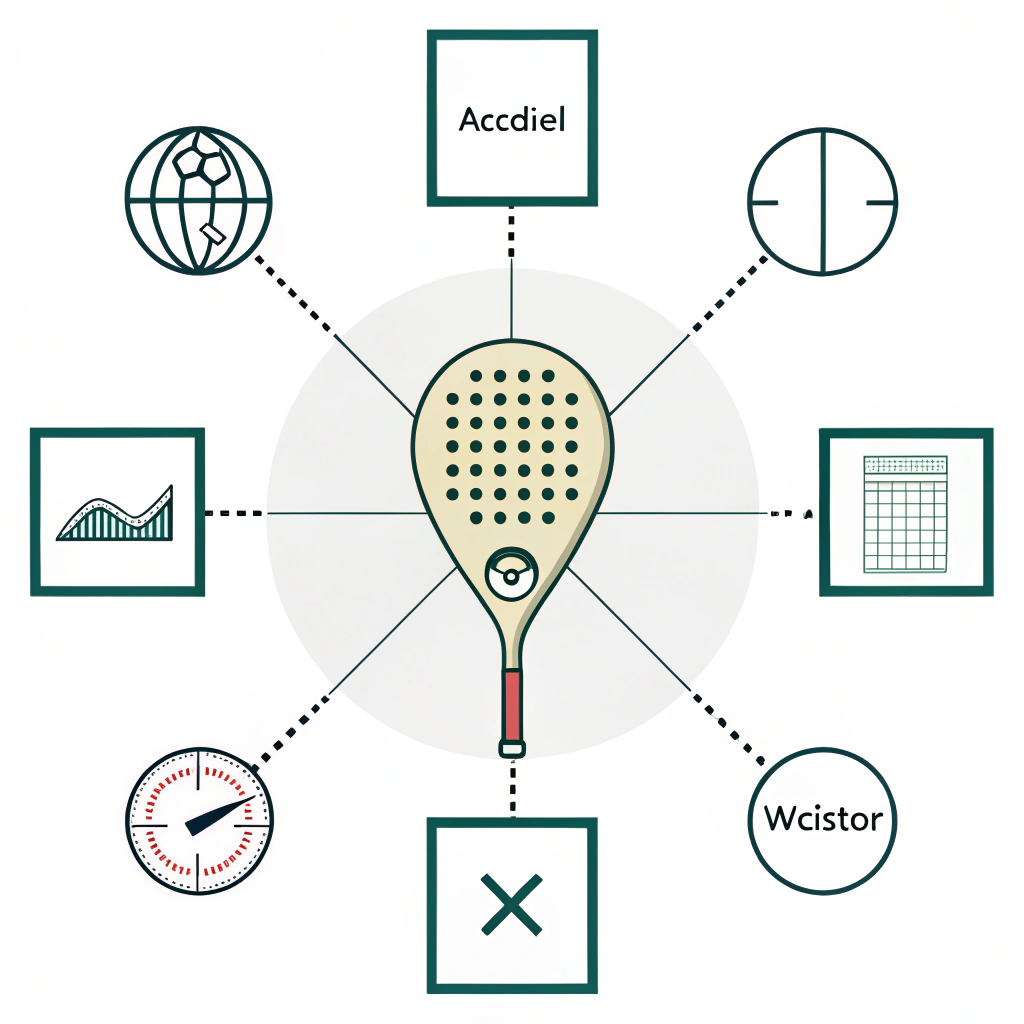
Section: Test metrics that matter for control
When shortlisting, request quantified test data rather than subjective claims.
- Dwell time / deflection: measure paddle face deflection (mm) under a standardized impact force.
- Rebound measure: average outgoing ball speed for a standardized incoming speed; lower rebound = more control.
- Vibration damping: measured as acceleration (g) at the handle or via damping ratio.
- Sweet spot map: measurement grid showing specific impulse or outgoing speed across face—larger consistent zones = easier control.
- Weight & balance verification: batch reports with variance.
- Surface roughness (Ra) and spin generation (rpm under standardized strike).
Section: Production & procurement considerations
- MOQ and sample policy: typical OEM MOQ varies—expect 300–1,000 units per SKU for custom graphics and layups. Ask suppliers about pilot runs and sample lead time.
- Lead times: custom layup and thermoforming extend lead time; cold-pressed premium runs will be slower than hot-pressed high-volume models. Typical lead time for production runs: 6–12 weeks depending on customization and capacity.
- Cost drivers: face material (carbon > composite > fiberglass), core type (Nomex vs polymer), pressing method (cold press > hot press for cost), and surface printing/UV options.
- On-demand print and customization: if team-branded or seasonal designs matter, ensure supplier supports digital/UV on-demand printing and confirm minimums and color accuracy.
- Traceability: require batch IDs and material certificates (e.g., carbon weave batch, resin lot, core batch) for quality control.
Section: Practical sample plan for procurement leads
- Define 2–3 target spec sets: entry control (fiberglass + polymer 14mm), mid control (C+FG + polymer 14–16mm), premium control (carbon outer, fiberglass inner + polymer 16mm, cold-pressed).
- Request 3 prototypes per spec for in-house testing (net play, dinks, drives) and lab tests.
- Require company-supplied test reports for each prototype (weight, balance, rebound, damping).
- Run a blind player evaluation (6–12 intermediate/advanced players) to evaluate perceived control and consistency.
- Use results to finalize one SKU for a small pilot production (300–500 units) before scaling.
Section: Supplier questions to include in your RFQ
- Which pressing method will you use for this build and why?
- Can you provide sample test reports for rebound, damping, and measured tolerances?
- What is the MOQ per SKU for custom layup and custom graphics?
- Can you supply proof-of-materials (carbon weave, core batch) and process parameters?
- Do you offer on-demand printing and what are the color consistency tolerances?
- What are typical lead times for samples and production?
Case note (what to expect in the market)
Control-focused paddles often appear in midweight ranges with thicker polymer cores and fiberglass faces or hybrid layups. This combination results in slower ball exit velocity on soft shots but more reliability for touch plays. Many brands choose composite faces to keep visual marketing aligned with performance and to differentiate SKU tiers by layup and pressing method.
Summary and recommended next steps
- Prioritize polymer honeycomb cores at 14–16mm and consider fiberglass or carbon+fiberglass faces for optimal control feel.
- Specify midweight builds (200–225 g) and a neutral to slightly head-light balance.
- Ask suppliers for cold-press or thermoformed production for the best tactile control and require detailed test reports with each sample.
- Run a staged procurement: prototypes → lab + player testing → small pilot → scale.
Action items for procurement leads right now
- Prepare RFQ with the spec ranges above and the QC metrics requested.
- Ask shortlisted suppliers (including NEX Pickleball) for lead times, MOQ, and the exact pressing method they will use.
- Order three prototype variants and run a structured evaluation to pick the final SKU mix for your control-focused line.
People Also Ask
Q: Are thicker pickleball paddles better for control?
A: Generally, yes—thicker cores (around 14–16mm or more) increase dwell time and absorb ball pace, which reduces outgoing speed and improves blocks, resets, and soft shots. Thicker cores also improve vibration damping, helping players feel the ball. The trade-off is reduced raw power and slightly larger overall paddle volume.
Q: What paddle material is best for control?
A: For control, fiberglass faces or carbon-fiberglass composites paired with a polymer honeycomb core are common choices. Fiberglass provides softer touch and a forgiving sweet spot; a carbon-fiberglass hybrid can offer precise feel while retaining some softness. The core type and thickness and the pressing method (cold-press or thermoform) matter as much as the face material for final control characteristics.
-
polymer honeycomb: Read to understand honeycomb cell structure, density options, and how polymer cores affect vibration damping, durability, and feel — information that helps you set core-density and cell-size specs in RFQs. (Return to term) ↩
-
cold pressing: Read to learn how cold-press processes influence resin cure, fiber integrity, and tactile feedback, and why this method is often specified for premium control paddles despite lower throughput. (Return to term) ↩
-
thermoforming: Read to see how thermoforming is used to tune local thickness and ergonomics (e.g., perimeter builds) and the trade-offs in tooling and per-unit cost for custom runs. (Return to term) ↩
-
dwell time: Read to get a clear definition and measurement methods for dwell time (face deflection and contact duration), why it matters for control, and how to request standardized test data from suppliers. (Return to term) ↩
-
Ra: Read to understand surface roughness (Ra) metrics, how Ra correlates with spin generation and feel, and what numeric Ra ranges or grit-size specs to ask suppliers for in RFQs. (Return to term) ↩