Skip to content


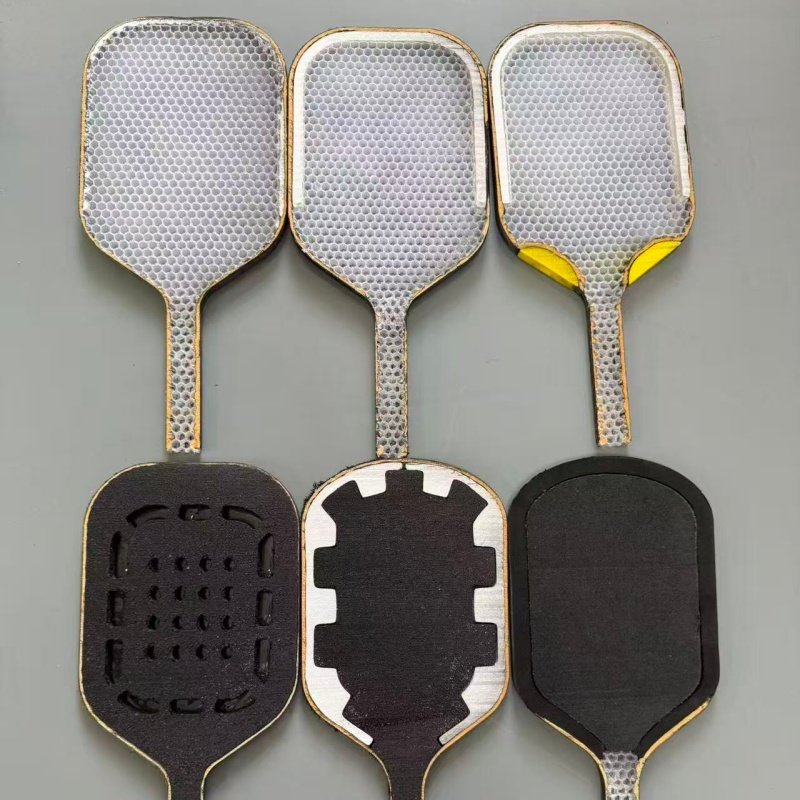
Many players struggle with paddle choice. Wrong paddles limit control and power. I solve this by explaining what makes a paddle truly suitable for professional-level play.
A pickleball paddle suitable for professional players combines advanced materials, balanced weight distribution, high spin capability, and consistent control. These features allow players to generate power while maintaining precision and quick reaction during competitive matches.
Understanding paddle design helps players make smarter decisions. Let me walk through key factors that influence performance.
How to choose a pickleball paddle for beginners
New players often buy paddles randomly. This leads to poor control and frustration. I always recommend learning the basics of paddle selection first.
Beginners should choose pickleball paddles with moderate weight, wide sweet spots, and balanced control. Composite or polymer honeycomb core paddles1 often provide the best learning experience and help players develop proper technique.
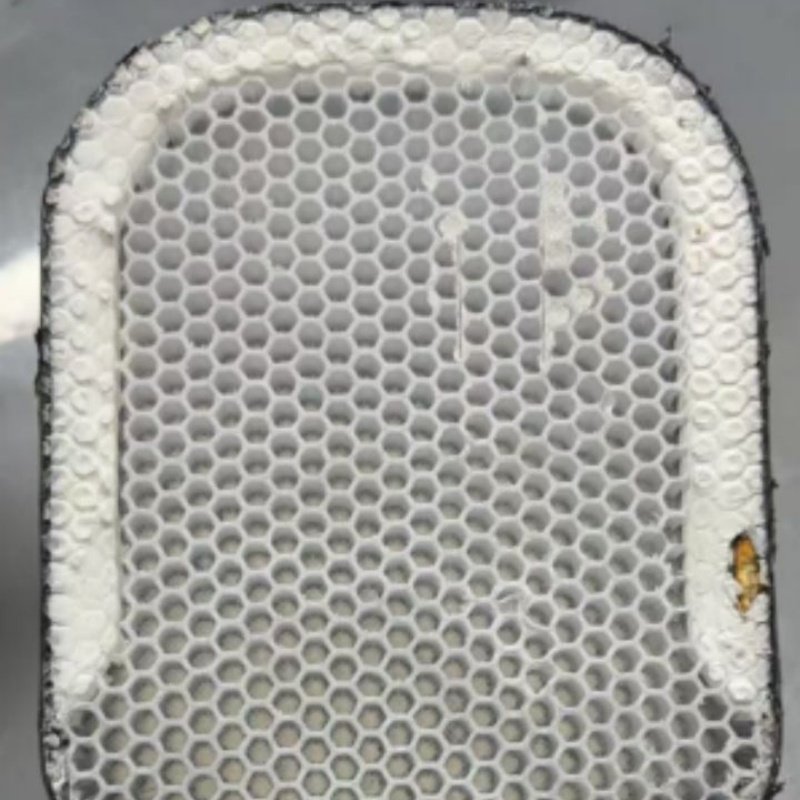
When I speak with new pickleball players and retailers, I notice a common issue. Many beginners focus on brand names instead of paddle structure. In reality, paddle design matters more than brand marketing.
Key factors beginners should consider
From my experience in manufacturing paddles at NEX Pickleball, beginners should focus on four simple aspects.
| Factor | Recommended Range | Why It Matters |
|---|---|---|
| Weight | 7.3 – 8.2 oz | Easier control and less arm fatigue |
| Paddle Shape | Wide body | Larger sweet spot hitting area2 |
| Core Material | Polymer honeycomb | Softer feel and better control |
| Surface Material | Fiberglass or composite | Balanced power and spin |
A paddle that is too heavy can cause arm strain. Many new players develop elbow pain because they start with power-focused paddles.
Control vs power for beginners
Another mistake beginners make is choosing paddles designed for power hitters. Power paddles reduce forgiveness and control.
| Paddle Type | Pros | Cons |
|---|---|---|
| Control Paddle | Better accuracy | Less raw power |
| Power Paddle | Strong drives | Harder to control |
| Balanced Paddle | Good mix of both | Slight compromise |
For beginners, I always suggest starting with a balanced paddle. Once players improve their technique, they can move to specialized paddles.
Grip size also matters
Grip size is often ignored, but it affects comfort and injury prevention.
| Grip Size | Hand Size |
|---|---|
| 4" | Small hands |
| 4.25" | Medium hands |
| 4.5" | Large hands |
A grip that is too large reduces wrist movement. A grip that is too small causes excessive squeezing and fatigue.
In my experience working with global retailers, helping beginners choose the right paddle greatly improves long-term interest in the sport.
Best what makes a pickleball paddle suitable for pro players
Many paddles work well for casual players. Professional players, however, need much more precision and performance.
Professional pickleball paddles prioritize advanced materials, optimized weight balance, textured surfaces for spin, and consistent sweet spots to support high-speed competitive gameplay.
Professional players approach paddle selection differently from beginners. Instead of focusing on comfort alone, they focus on performance metrics.
At NEX Pickleball, I often see that professional athletes evaluate paddles based on control response, spin potential, and stability during fast rallies.
Performance characteristics of pro paddles
Professional paddles usually follow certain design standards.
| Feature | Typical Pro Paddle Range | Performance Benefit |
|---|---|---|
| Weight | 7.8 – 8.5 oz | Balance of power and control |
| Core Thickness | 13mm – 16mm | Stability and feel |
| Surface Texture | Carbon fiber or raw carbon fiber paddle surface3 | Increased spin |
| Shape | Elongated | Extended reach and leverage |
The elongated shape is especially popular among advanced players. It gives extra reach and improves serve power.
Spin generation and surface technology
Spin is one of the most important elements in professional pickleball.
Raw carbon fiber surfaces have become extremely popular because they increase friction between the ball and paddle.
| Surface Type | Spin Potential | Durability |
|---|---|---|
| Fiberglass | Medium | Moderate |
| Carbon Fiber | High | High |
| Graphite | Medium | High |
Professional players rely on spin to control drops, drives, and passing shots.
Balance and swing weight
Another critical factor is paddle swing weight measurement4. Two paddles may weigh the same but feel completely different during play.
| Paddle Balance | Advantage | Disadvantage |
|---|---|---|
| Head Heavy | Strong drives | Slower reaction |
| Handle Heavy | Faster hands | Less power |
| Even Balance | Versatile performance | Slight compromise |
Most professional players prefer an even balance or slightly head-heavy paddle for aggressive play.
From my manufacturing perspective, achieving perfect balance requires precise internal core structure and strict production control.
Types of pickleball paddle materials
Many people ask me about paddle materials. The truth is that materials determine most of the paddle’s performance characteristics.
Pickleball paddles typically use graphite, fiberglass, or carbon fiber surfaces combined with polymer, aluminum, or Nomex honeycomb core structure5. Each material combination affects power, control, durability, and player feel.
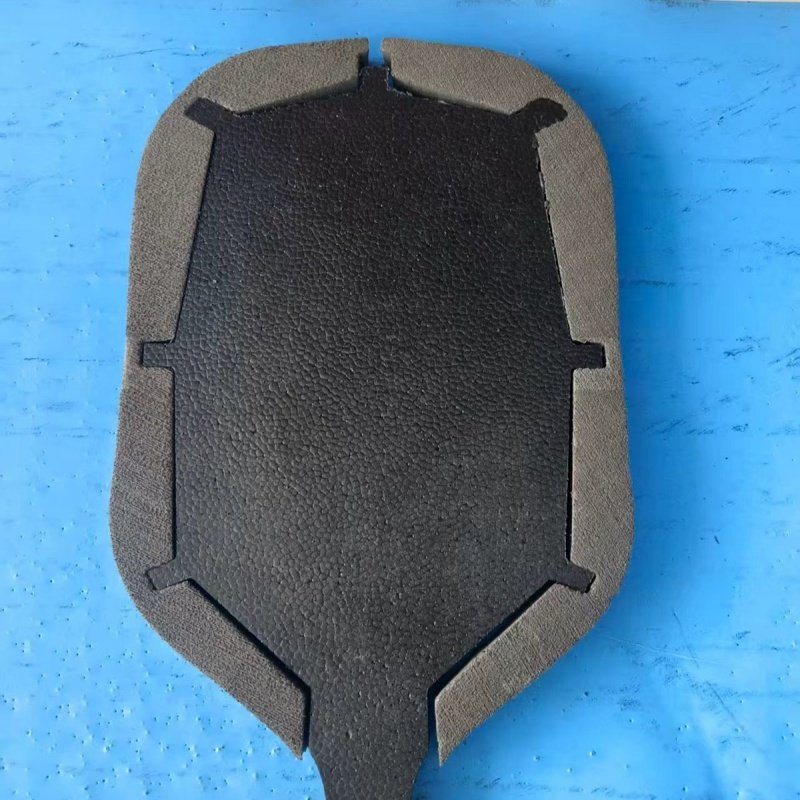
Understanding paddle materials helps players make smarter decisions. In manufacturing, material choice directly affects paddle behavior.
Paddle face materials
The paddle face controls ball contact and spin generation.
| Material | Key Characteristic | Typical Player Type |
|---|---|---|
| Graphite | Light and responsive | Control players |
| Fiberglass | Flexible and powerful | Aggressive players |
| Carbon Fiber | Strong and textured | Competitive players |
Carbon fiber has become one of the most requested materials in recent years. Many pro-level paddles now use raw carbon surfaces for spin enhancement.
Core materials
The core is the internal structure that controls feel and impact response.
| Core Type | Structure | Performance |
|---|---|---|
| Polymer | Plastic honeycomb | Soft feel and quiet |
| Nomex | Hard honeycomb | Strong power |
| Aluminum | Metal honeycomb | Lightweight control |
Polymer cores dominate today’s market. They provide excellent vibration control and durability.
Material combinations and their effects
Different combinations create very different playing experiences.
| Surface | Core | Result |
|---|---|---|
| Fiberglass | Polymer | Power with comfort |
| Graphite | Polymer | Control and touch |
| Carbon Fiber | Polymer | Spin and consistency |
From my experience running a paddle factory, the most balanced design for most players is carbon fiber or fiberglass combined with a polymer honeycomb core.
Material innovation continues to shape paddle development every year.
Best type of pickleball paddle material
Players often ask me a simple question: what is the best paddle material? The answer depends on playing style and skill level.
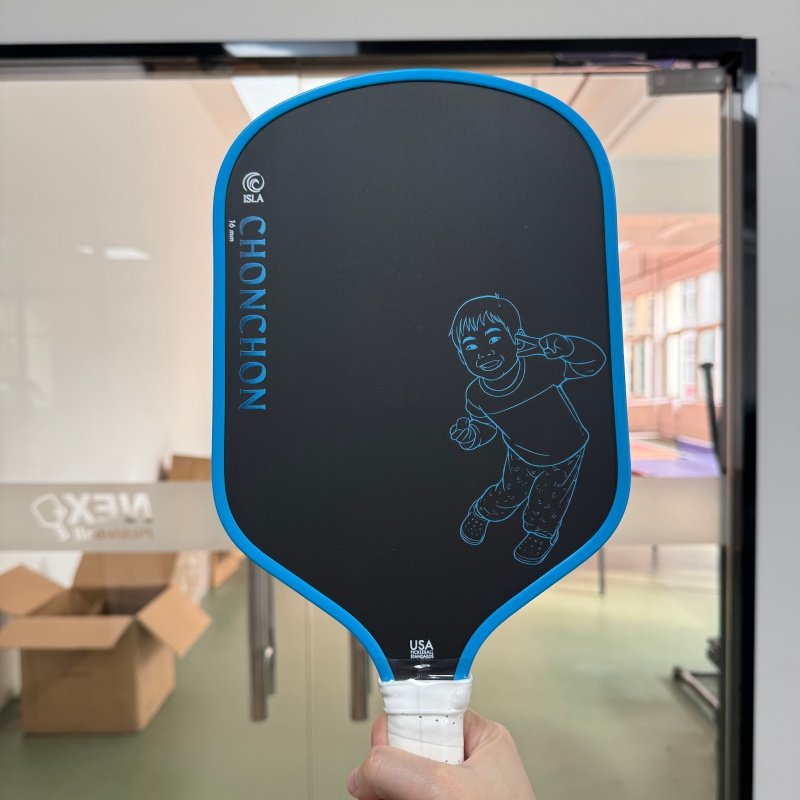
Carbon fiber combined with a polymer honeycomb core is widely considered the best paddle material for advanced players because it delivers excellent spin, durability, and consistent control.
In recent years, the pickleball industry has seen rapid material innovation. Many manufacturers experiment with hybrid constructions.
Carbon fiber paddles
Carbon fiber has become the most popular material in professional paddles.
| Advantage | Description |
|---|---|
| High spin | Rough surface grips the ball |
| Strong durability | Resistant to wear |
| Consistent feel | Stable across shots |
Many competitive players choose raw carbon fiber surfaces for maximum spin control.
Fiberglass paddles
Fiberglass remains a strong option for players who prefer power.
| Advantage | Description |
|---|---|
| Strong rebound | Helps generate power |
| Lower cost | More affordable |
| Flexible surface | Forgiving feel |
However, fiberglass surfaces usually produce slightly less spin than carbon fiber.
Graphite paddles
Graphite paddles were once the standard in pickleball.
| Advantage | Description |
|---|---|
| Lightweight | Easy maneuverability |
| Precise control | Clean ball response |
| Durable | Long lifespan |
Today, graphite paddles are still popular for control-oriented players.
Choosing the best material for different players
The best material depends on player goals.
| Player Level | Recommended Material |
|---|---|
| Beginner | Fiberglass + Polymer |
| Intermediate | Graphite + Polymer |
| Advanced / Pro | Carbon Fiber + Polymer |
As a manufacturer, I always remind buyers that paddle construction matters more than just one material. The layering process, core density, and surface texture all influence final performance.
That is why high-quality manufacturing and strict quality control remain essential for producing professional-grade pickleball paddles.
Conclusion
Professional pickleball paddles combine advanced materials, balanced weight, spin-focused surfaces, and precise construction to deliver power, control, and consistent performance.
-
Understand how polymer honeycomb cores improve paddle control and reduce vibration. ↩
-
Learn what the sweet spot means and how it affects paddle forgiveness. ↩
-
Discover why raw carbon fiber surfaces generate more spin in modern paddles. ↩
-
Understand how swing weight influences paddle speed and reaction time. ↩
-
Learn how Nomex honeycomb cores impact paddle power and durability. ↩