Skip to content

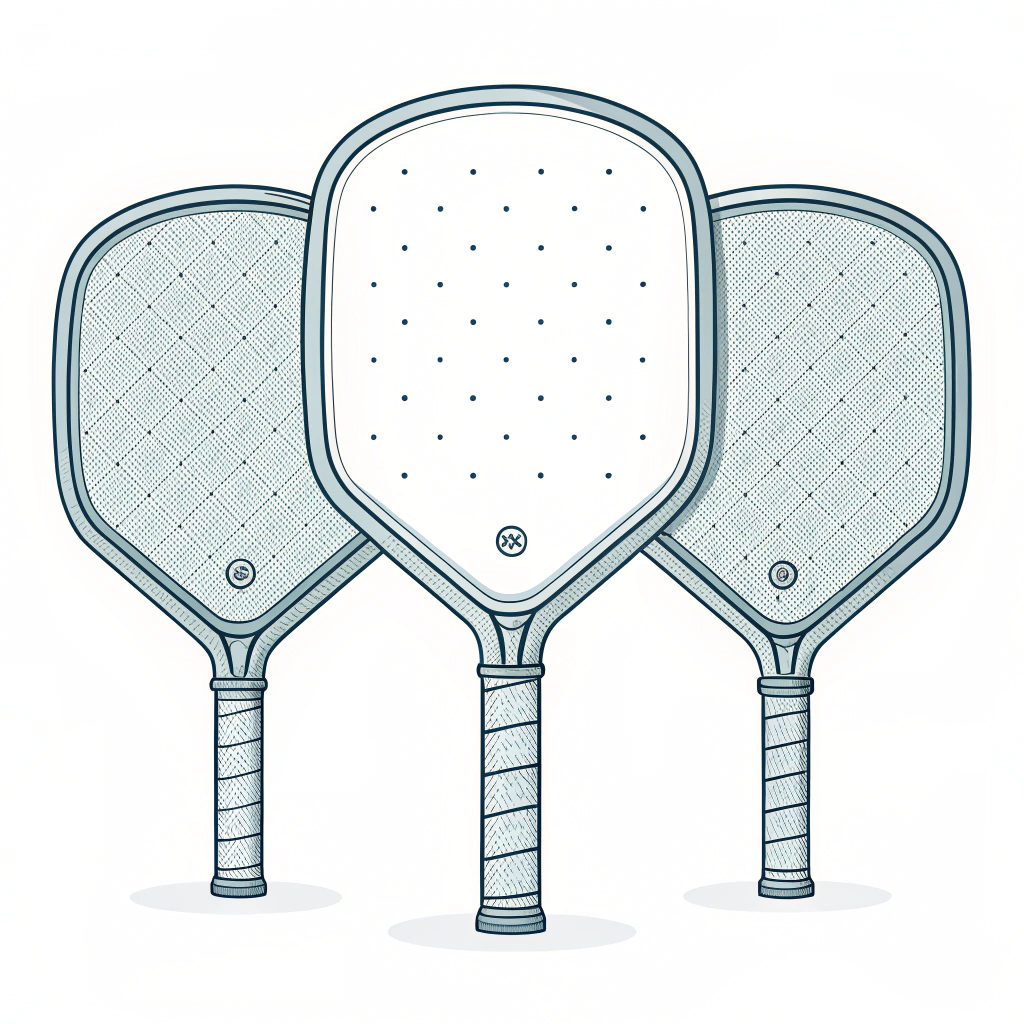
Quick answer: For B2B product planning, target three core weight tiers—Light (≤205 g / ≤7.2 oz), Mid (206–225 g / 7.3–7.9 oz) and Heavy (≥226 g / ≥8.0 oz)—and select face material, core type, balance point1 and production method to match the player archetype, SKU price tier and manufacturing constraints. Specify weight tolerances (±3–5 g) and swing-weight2 targets per SKU rather than only absolute mass to ensure consistent on-court performance.
Procurement and product teams must balance three competing goals:
- Player performance: control vs power vs feel.
- Manufacturability: repeatable processes, yield and cost.
- Commercial fit: SKU differentiation, pricing, and inventory complexity.
You should aim to cover distinct player archetypes (Beginner / Recreational, Intermediate / Club, Advanced / Pro) with clearly defined weight—and supporting material/process—specs so purchasing, R&D and marketing speak the same language.
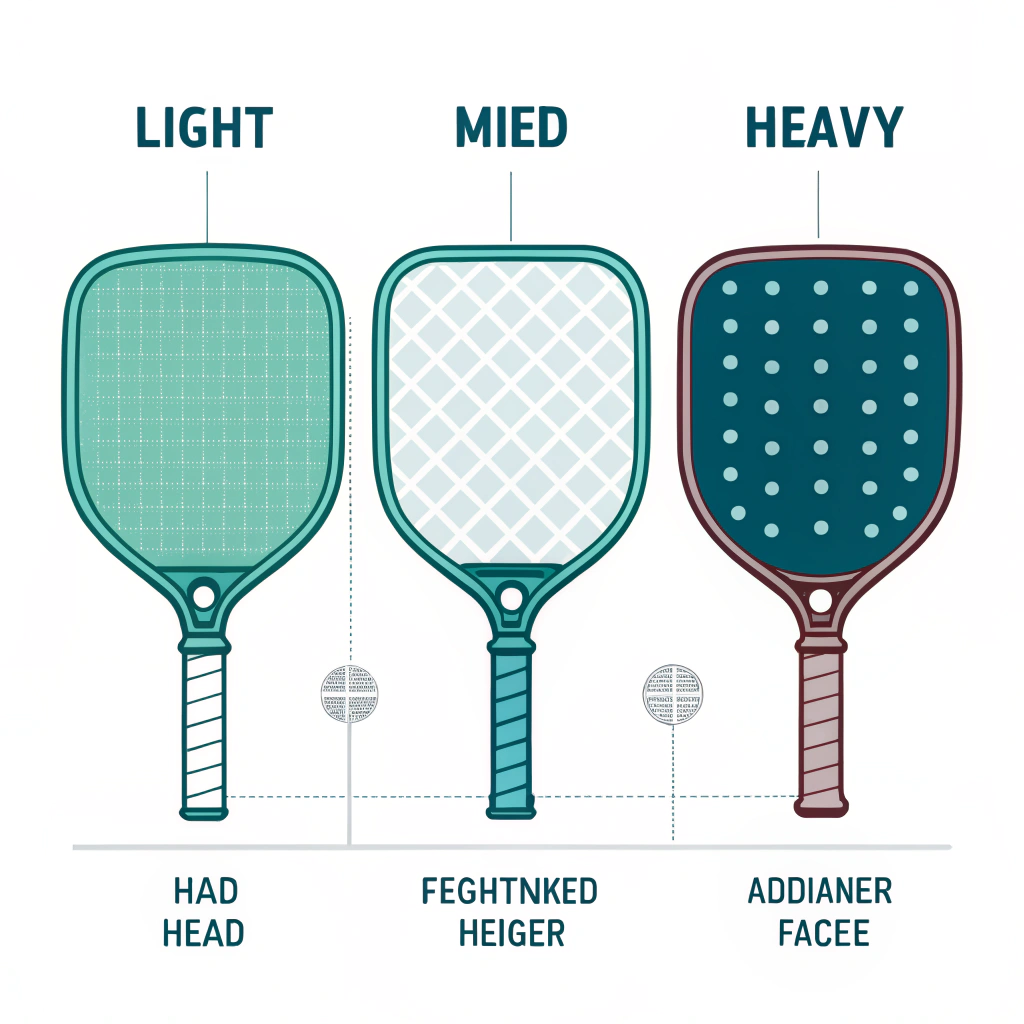
This quick comparison translates common player needs into concrete specs.
| Tier | Typical mass (g / oz) | Play emphasis | Recommended core | Recommended face | Production method | Notes |
|---|---|---|---|---|---|---|
| Light | ≤205 g (≤7.2 oz) | Control, maneuverability, reduced fatigue | Polymer honeycomb | Fiberglass or thin 3K carbon | Cold press or thermoforming | Larger sweet spot, softer feel; less raw power |
| Mid | 206–225 g (7.3–7.9 oz) | Balanced power/control | Polymer or aluminum honeycomb | 3K or 12K carbon / composite | Cold press (precision) or hot press3 | Most versatile SKU; broad market appeal |
| Heavy | ≥226 g (≥8.0 oz) | Maximum power, stability | Aluminum or Nomex honeycomb4 | 12K carbon or carbon-fiberglass composite | Hot press (structural strength) | Higher rebound; increased arm load/fatigue risk |
Key definitions:
- Balance point / weight distribution: handle-heavy vs head-heavy affects maneuverability and perceived power.
- Swing-weight: rotational inertia that players feel; for B2B specs include swing-weight targets as well as static mass.
Absolute mass is a starting point. Two paddles at 215 g can feel different depending on:
- Balance point (measured from butt cap; e.g., 84–90 mm from butt)
- Handle length and grip mass
- Face stiffness and core density
Specification example for an intermediate SKU:
- Mass: 215 g ±4 g
- Balance: 88 mm ±2 mm
- Swing-weight: 1100–1250 g·cm² (target range)
- Primary face: 3K carbon, 0.5 mm
- Core: polymer honeycomb, 9 mm
- Process: cold press with secondary thermoforming for cosmetic features
Include these three target metrics in BOMs and technical drawings to avoid mismatched expectations between R&D and manufacturing.
-
Face materials
- Carbon Fiber (3K, 12K, T300): higher stiffness-to-weight ratio → thin faces possible, higher rebound and consistency. 12K & T300 are stiffer/heavier; used in performance/pro paddles.
- Fiberglass (E-Glass): more flexible, greater sweet spot, lower raw power; cheaper and forgiving for recreational players.
- Composite faces (carbon + glass): tuned balance of power and control; useful for mid-tier SKUs.
-
Core types
- Polymer honeycomb: light, elastic, reduces vibration; preferred for recreational to mid players.
- Aluminum honeycomb: denser, adds weight and power, but increases cost.
- Nomex honeycomb: high stiffness and durability; good for heavy, competition-focused paddles but increases vibration unless paired with compliant faces.
-
Production methods
- Hot pressing: highest structural integrity, better for heat-cured resins and dense cores (Nomex, aluminum) — tends to produce heavier, very durable paddles. Higher CAPEX, faster cycles in volume.
- Cold pressing: preserves material properties, better tactile feel, more control over exact thickness — suited for precision mid-tier paddles; slower cycle but lower thermal stresses.
- Thermoforming: adds complex shapes and local thickness variation; useful for ergonomic handles or reinforced sweet spots; more costly and slower.
Manufacturing note: weight targets must include adhesive and finish layers. Expect +3–8 g for graphics, varnish and edge tape.
Offer a 3–4 SKU ladder to simplify inventory while covering customer needs.
Option A — 3-SKU ladder (high simplicity)
- SKU A: Recreational Light
- Mass: 200 g ±4 g
- Core: Polymer 8–9 mm
- Face: E-Glass
- Process: Cold press
- Positioning: entry price, high sweet spot, low fatigue
- SKU B: Allround Mid
- Mass: 215 g ±4 g
- Core: Polymer/aluminum hybrid 9 mm
- Face: 3K carbon or carbon-glass composite
- Process: Cold press or controlled hot press
- Positioning: mainstream retail
- SKU C: Performance Heavy
- Mass: 235 g ±5 g
- Core: Aluminum or Nomex 9–10 mm
- Face: 12K carbon or T300
- Process: Hot press
- Positioning: pro/competitive
Option B — 4-SKU ladder (better market coverage)
- Add a light-control (≤195 g) paddle for youth/elderly markets or "tour lite" variant.
Include minimum order quantities (MOQs) and pricing tiers in your PO:
- Prototype run: 50–100pcs per SKU
- Initial commercial MOQ: 500–1,000pcs per SKU (depends on customization like on-demand print)
- Typical OEM MOQ: 2,000–5,000pcs for lower unit cost
Define acceptance criteria in the contract:
- Mass tolerance: ±3–5 g
- Balance tolerance: ±2–3 mm
- Surface finish: no delamination, voids, or resin streaks
- Adhesion: peel test for face-to-core bond
- Performance checks: rebound test (ball speed off paddle), flex test at specified load, swing-weight measurement for random sample (AQL 2.5 or 4.0 depending on tier)
- Durability: impact/durability cycle test (e.g., 5000 repeated hits), edge-tape adhesion test
Request first article inspection (FAI) and pilot batch to confirm weight distribution and swing-weight feel before full production.
- Heavier paddles increase torque at the wrist and elbow during quick volleys and can exacerbate tendonitis in overuse scenarios. Provide ergonomics guidance per SKU—recommended grip sizes and suggested mass for demographic segments.
- Offer a “reduced swing-weight” variant (head-light balance) to reduce perceived heaviness while keeping some mass for power.
- Document recommended target groups: e.g., adults 18–45 competitive players → mid/heavy; seniors/novice → light.
- Face material costs (high → low): T300/12K carbon > 3K carbon > carbon-glass composite > fiberglass.
- Core costs: Nomex > aluminum > polymer.
- Process costs: Hot press (high) > thermoform (medium to high) > cold press (medium).
- Expect unit cost delta between light polymer-fiberglass and heavy Nomex-carbon to be 2–3x depending on volumes.
- Provide MSRP bands for your buyers: recommend retail price multipliers per unit cost and brand positioning.
- SKU name and target mass (g and oz) with tolerance.
- Balance point (mm from butt) and allowable tolerance.
- Swing-weight target range.
- Core type, face layup (fiber type and orientation), thicknesses.
- Production method and any heat treatments.
- Cosmetic options (on-demand print, colours) and added mass allowances.
- MOQ, sample pricing, tooling charges.
- QC tests and AQL for production runs.
- Packaging, labeling, and lead-times.
For a focused B2B product line, adopt a 3-SKU ladder—Light (≤205 g), Mid (206–225 g), Heavy (≥226 g)—and specify not only mass but balance point and swing-weight targets. Match face and core materials to the weight tier and pick manufacturing processes that ensure repeatability for that tier (cold press for mid-range precision; hot press for heavy competition paddles). Define explicit tolerances and QC tests in the RFQ and plan MOQs that allow for both testing and economical production.
Q: How heavy should my pickleball paddle be?
A: Most players use paddles between roughly 204 g (7.2 oz) and 241 g (8.5 oz), but for product planning use three tiers: Light ≤205 g for control and less fatigue, Mid 206–225 g for balanced play, and Heavy ≥226 g for maximum power. Always specify tolerances (±3–5 g) and include balance/swing-weight targets.
Q: Is it better to have a lighter or heavier pickleball paddle?
A: Lighter paddles (≤205 g) favor maneuverability and control and reduce arm fatigue; heavier paddles (≥226 g) deliver more power and stability but can increase fatigue and injury risk. Mid-weight paddles balance the two and suit the largest market. The “better” choice depends on player archetype and intended retail positioning.
Q: Is 8.2 oz heavy for a pickleball paddle?
A: 8.2 oz (≈233 g) sits at the upper end of the medium range or into the heavy range depending on your classification. It's typical for players seeking additional power; procurement should consider whether the paddle’s balance and swing-weight match the intended feel, and include ergonomic guidance for end users.
-
balance point: Read the article to understand how balance point (handle‑heavy vs head‑heavy) affects maneuverability, perceived power and swing‑weight — and how to specify the measurement (mm from butt cap) so suppliers deliver the intended feel. ↩ ↩
-
swing-weight: Reading will explain swing‑weight measurement (rotational inertia), why two paddles with the same mass can feel different, and how to set target ranges in SKU specs to ensure consistent on‑court performance. ↩ ↩
-
hot press: The linked article outlines hot‑pressing benefits and constraints (structural integrity, suitable resins/cores, CAPEX and cycle times) to help buyers choose the right production method for heavy/performance paddles. ↩ ↩
-
Nomex honeycomb: Learn about Nomex core properties — stiffness, durability, vibration characteristics and trade‑offs vs polymer/aluminum cores — so you can decide when the higher cost is justified for performance SKUs. ↩ ↩