Skip to content

EPP material on pickleball paddles usually refers to an EPP core, made from Expanded Polypropylene foam1. Compared with traditional PP honeycomb, Nomex2, or aluminum cores, EPP is lighter, has better vibration dampening, and offers a softer, quieter feel. It is well-suited for mid-price or beginner/intermediate paddles, as well as “comfort” or “control” focused products. For brands, EPP is a flexible option when you want lower weight, more forgiveness, and a quieter sound, without going into the very low-cost segment.
In pickleball, EPP usually means Expanded Polypropylene used as the core material of the paddle.
- Expanded = the polypropylene is made into a foam with many small, closed cells.
- Polypropylene (PP) = a common thermoplastic polymer, already widely used in PP honeycomb cores.
EPP is not a face material (like carbon fiber or fiberglass). It is the inner core that sits between the two paddle faces. Because it is a foam, it behaves differently from traditional PP honeycomb, even though they share the same base chemical.
Short definition you can use in your spec sheets or website:
“EPP core (Expanded Polypropylene) is a lightweight, closed-cell polymer foam used inside pickleball paddles to reduce vibration, lower weight, and offer a softer, more controlled feel.”
Understanding the production method will help you judge feasibility, consistency, and cost with suppliers.
EPP starts as small pre-expanded beads of polypropylene. Each bead contains many tiny gas-filled cells. These beads can be:
- Different densities (low density = softer, more damping; high density = firmer, more power)
- Different bead sizes, affecting surface smoothness and consistency
Most EPP cores are produced by foam molding3, not by making a sheet and then machining a honeycomb.
Typical steps:
- Beads loading into a mold the size of the paddle core.
- Steam / heat is applied.
- Beads expand further and fuse together into a solid foam block with the desired density and shape.
- The molded core is cooled, demolded, and then trimmed to final outline and thickness.
This is similar to EPP used in helmets, automotive parts, and protective packaging.
Once the EPP core is ready, it is bonded with the face materials (carbon fiber, fiberglass, composite) by:
- Hot pressing (heating + pressure)
- Cold pressing (room temperature pressure with adhesive)
- In some advanced builds, with thermoforming4 of the face shells around the foam core
At NEX Pickleball, we work with hot pressing and cold pressing for EPP cores, depending on the desired stiffness, feel, and cost.
Many buyers ask: “Is EPP just another way to say PP core?” The answer is no.
Both are based on polypropylene, but the structure is completely different:
| Feature | EPP Core (Expanded PP Foam) | PP Honeycomb Core (Traditional Polymer) |
|---|---|---|
| Internal structure | Closed-cell foam, fused beads | Hexagonal honeycomb cells |
| Stiffness | Softer, more flex | Stiffer, more rigid |
| Rebound / power | Moderate, controlled, “damped” | Strong, crisp, higher rebound |
| Vibration dampening | Excellent | Good, but less than EPP |
| Sound | Quieter, more muted | Louder, “pop” sound |
| Weight | Very light (depending on density) | Light to medium light |
| Thickness options | Flexible (foam slab can be cut to many thickness) | Standardized (typical 10–16 mm range) |
| Tolerance / warpage resistance | Good, foam distributes stress | Good, but edges and thin walls can be sensitive |
| Cost (core material) | Similar or slightly higher than basic PP honeycomb | Widely available, cost-efficient |
| Best use cases | Comfort, control, vibration-sensitive players | All-around, power, high-performance thermoformed |
Key takeaway: EPP is about “soft control and comfort”; PP honeycomb is about “crisp power and standard performance.”
For a brand, the real question is not the chemistry, but what kind of play experience EPP supports.
Below are the main performance dimensions.
EPP is very light. This helps:
- Hit popular 7.5–8.0 oz targets even with larger heads.
- Maintain head-light or neutral balance, which many beginners and intermediates prefer.
If you plan a larger sweet spot design or oversize shape, EPP can help you grow the surface area without making the paddle too heavy.
This is where EPP has a clear advantage:
- The foam structure absorbs impact energy.
- Less high-frequency vibration reaches the player’s hand.
- Perceived feel is smooth, forgiving, and easy on the arm.
This makes EPP attractive if you are:
- Targeting tennis elbow / arm-sensitive players.
- Selling to older players or beginners who value comfort.
- Positioning a model as “arm-friendly” or “low-vibration”.
With the same face material and thickness:
- EPP tends to play softer with more dwell time on the face.
- Players feel more control at the net and on dinks.
- Power on drives and smashes is adequate but not extreme.
You can compensate by:
- Using stiffer faces (e.g., 12K or T300 carbon fiber instead of fiberglass).
- Slightly reducing core thickness to increase stiffness.
- Tuning the EPP density to a firmer spec.
But in general, if your positioning is “pure power paddle,” EPP is not the first choice. If your positioning is “control + consistency,” it is a good option.
Due to its foam structure, EPP paddles:
- Produce a softer, less sharp sound than many Nomex or PP honeycomb paddles.
- Are often perceived as quieter, which can be a selling point in noise-sensitive communities.
This is useful if your distribution includes:
- Facilities with noise complaints.
- Senior communities or clubs with strict guidelines.
To help you in spec comparison and line planning, here is a high-level comparison.
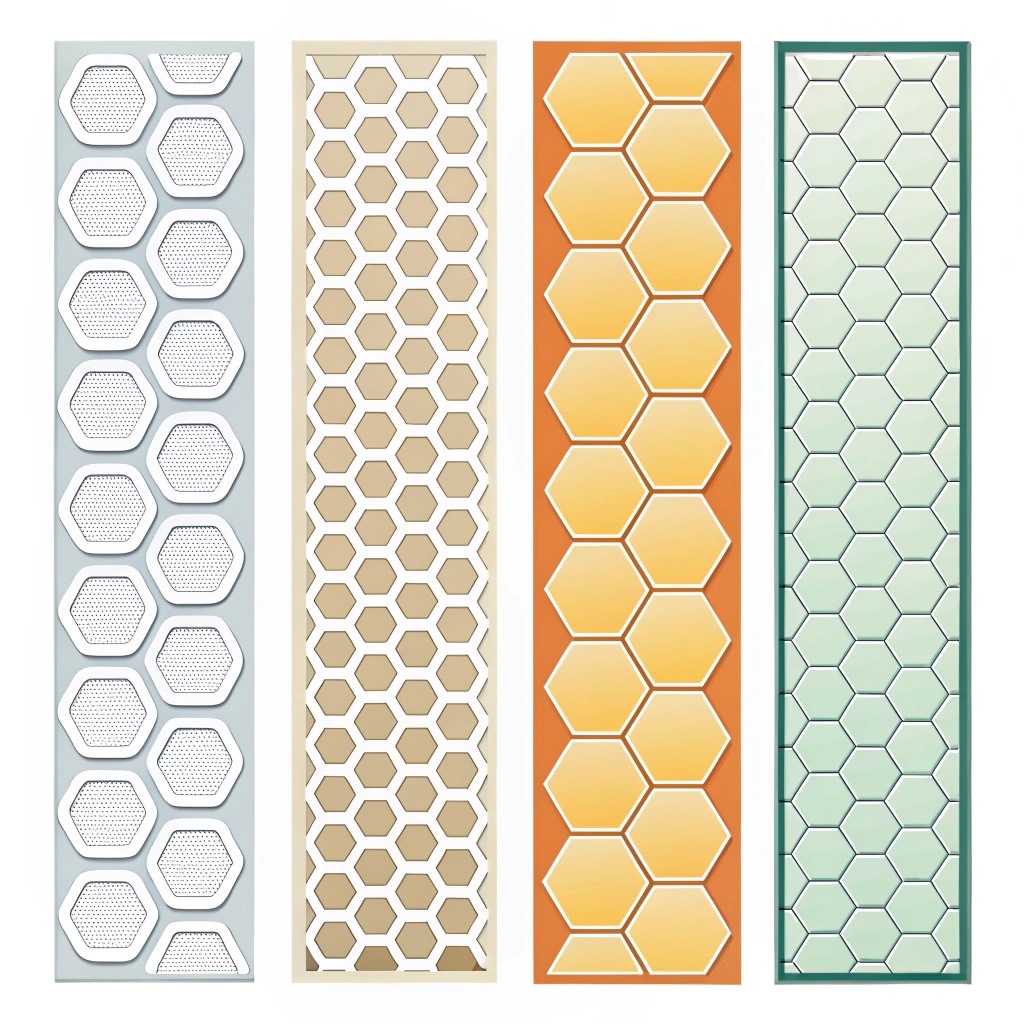
| Core Type | Feel & Sound | Power | Control / Touch | Vibration Dampening | Typical Price Segment | Ideal Player Type |
|---|---|---|---|---|---|---|
| EPP (Expanded PP) | Soft, quiet, muted | Moderate | High | Excellent | Entry to mid, comfort line | Beginners, intermediates, arm-sensitive |
| PP Honeycomb | Crisp, moderate noise | Medium to high | Medium to high | Good | Mid to higher | All-round, performance, thermoformed |
| Nomex Honeycomb | Very crisp, loud “pop” | High | Medium | Lower | Performance, sometimes niche | Power hitters, ex-tennis, aggressive play |
| Aluminum Honeycomb | Solid, distinct feel | Medium | Medium to high | Medium | Niche / specialty | Players wanting unique feel, control |
| Polymer Foam (non-EPP) | Varies, usually soft/quiet | Low to medium | Medium | Medium to high | Budget to lower mid | Recreational, price-sensitive |
If you look at your product line:
- Below EPP: very cheap basic polymer foam cores for entry-level supermarket paddles.
- Beside EPP: PP honeycomb paddles for balanced all-round play.
- Above EPP: premium thermoformed carbon fiber + PP honeycomb for advanced players seeking maximum power and spin.
EPP is ideal for:
- A mid-range or “comfort-focused” line.
- A control paddle under your brand where you still want a real technical story (vs basic foam).
Because NEX Pickleball manufactures using hot pressing, cold pressing, and thermoforming, we see how EPP behaves across these methods.
- Good for consistent quality and higher production efficiency.
- Heat and pressure help achieve a strong bond between face and EPP core.
- Best choice if you want mid- to large-volume OEM with stable results.
Trade-offs:
- Too high temperature can slightly change foam micro-structure.
- We calibrate temperature, time, and pressure to keep the feel within spec.
- Good when you want to preserve maximum foam elasticity.
- Can provide slightly softer feel and more dwell time.
- Useful for special control models or small runs where feel tuning is critical.
Trade-offs:
- Longer production cycle.
- Higher requirements on adhesive quality and pressure control.
Full thermoforming (like premium unibody carbon paddles) is less common with EPP cores because:
- EPP is foam; it does not provide the same structure as rigid PP honeycomb for a full thermoformed shell.
- Most brands that pay for thermoforming want maximum power and stiffness, which fits PP honeycomb more than soft EPP.
That said, hybrid constructions are possible (for example, EPP layers combined with honeycomb or special edge structures), and we can discuss custom solutions if you are exploring new tech.
In our factory experience:
- EPP cores have excellent impact resistance; they are commonly used in automotive components for energy absorption.
- They resist crushing and permanent deformation under normal sporting loads.
- For paddle use, main failure risks come from:
- Edge impacts (falls on the ground).
- Delamination if bonding is poor.
With good process control, we see durability comparable to standard PP honeycomb in typical amateur play.
If you plan EPP models with an OEM, key QA points include:
- Core density check (to ensure weight and stiffness are on target).
- Bond strength test between EPP and face.
- Flatness and warpage after pressing.
- Weight and balance tolerance across batch.
At NEX Pickleball, every paddle undergoes standard strength, flex, and rebound testing as part of our QC system.
USAPA approval5 does not target “EPP” specifically; it focuses on:
- Face roughness and texture.
- Paddle size, shape, and thickness.
- Power and deflection limits.
- Surface material rules.
EPP is a core material, so as long as the entire paddle meets USAPA rules, EPP core paddles can be approved. If you are planning a competition-legal line, we can help coordinate sample submission and testing.
EPP paddles are well-suited for:
- Beginners: forgiving, soft feel, easier control.
- Older players: lighter weight and lower vibration.
- Recreational club players: want comfort and control more than raw power.
- Players with arm or shoulder sensitivity.
If your brand language includes words like “comfort, arm-friendly, soft feel, control, quiet,” EPP supports that narrative well.
Of course, the final retail price depends on:
- Face material (fiberglass vs carbon).
- Cosmetics (graphics, edge guard, grip).
- Brand margin and distribution channels.
But broadly:
- With fiberglass face + EPP core:
- You can target entry-mid price (for example, US$50–90 retail).
- With carbon fiber face + EPP core:
- You can build a mid-range control paddle (for example, US$80–120 retail), especially if you emphasize comfort and vibration dampening.
For premium thermoformed carbon power paddles at US$150+, PP honeycomb cores are usually more aligned with market expectations today.
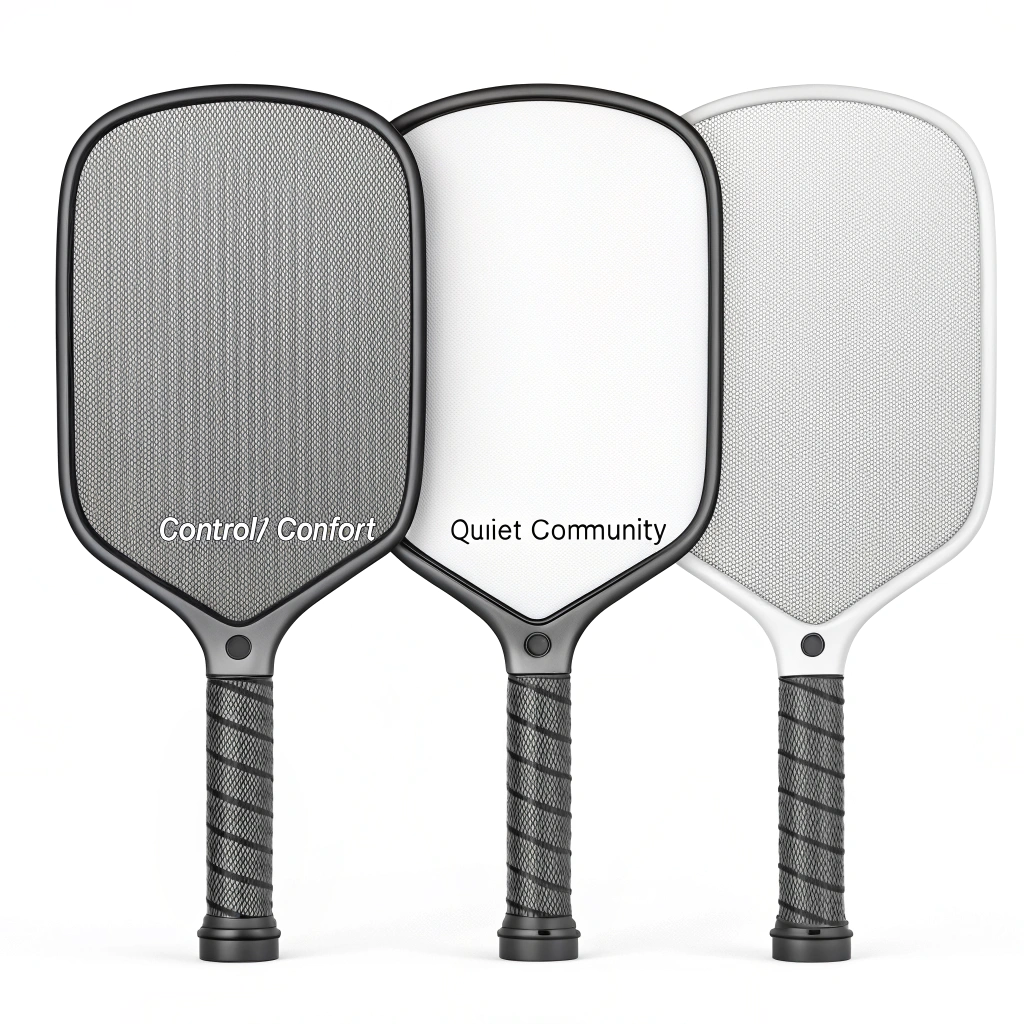
Here are a few product concepts where EPP works particularly well:
-
“Comfort Control Carbon” Series
- 3K or T300 carbon fiber face
- EPP core tuned for arm comfort
- Story: arm-friendly performance, control at the net, reduced vibration
-
“Quiet Community” Fiberglass Series
- Fiberglass face (E-glass) for a generous sweet spot
- EPP core for noise reduction
- Story: ideal for community courts where noise is a concern
-
“Lightweight Starter” Line
- Hybrid composite or fiberglass face
- Thin-to-medium EPP core for very low weight
- Story: easy to swing, confidence-building paddle for new players
At NEX Pickleball, we can adjust:
- EPP density
- Core thickness
- Face material and layup
- Grip size and balance
to help you cover different price tiers and player segments without needing a complete redesign for each model.
For most modern performance paddles, carbon fiber is considered the best surface material because it offers an excellent balance of stiffness, spin potential, durability, and control at a relatively low weight. Many advanced and pro-level paddles use 3K, 12K, or T300 carbon fiber faces for this reason.
Graphite (a form of carbon) and fiberglass are also widely used: graphite/carbon gives a crisp, controlled feel, while fiberglass tends to offer a bit more pop and a larger sweet spot at lower cost. The “best” surface depends on your target player—control-focused and competitive players typically prefer carbon, while recreational players often enjoy fiberglass for its forgiveness.
EPP core refers to Expanded Polypropylene foam used as the internal core of the paddle. It is a lightweight, closed-cell polymer foam that absorbs impact energy, reduces vibration, and lowers overall paddle weight. In play, an EPP core creates a softer, quieter, more controlled feel compared to many traditional honeycomb polymer cores, making it a strong choice for comfort-focused, beginner, or intermediate paddles.
-
Expanded Polypropylene foam: Reading more will help you understand its mechanical properties, energy absorption, and tuning options by density, so you can specify cores that match your target feel, weight, and durability. ↩ ↩
-
Nomex: A background article will clarify what Nomex aramid paper is, how Nomex honeycomb is manufactured, and why it creates such a crisp, loud, power-oriented playing response versus polymer options. ↩ ↩
-
Foam molding: Additional resources can show you process parameters, tooling considerations, and common defects, enabling better discussions with OEMs about cost, cycle time, and quality control. ↩ ↩
-
Thermoforming: Learning the basics of thermoformed paddle construction will help you compare unibody carbon builds to pressed laminates in terms of stiffness, durability, and price positioning. ↩ ↩
-
USAPA approval: Reviewing the official approval criteria will clarify test methods, performance limits, and documentation requirements, so you can plan compliant product specs and certification timelines. ↩ ↩