Skip to content

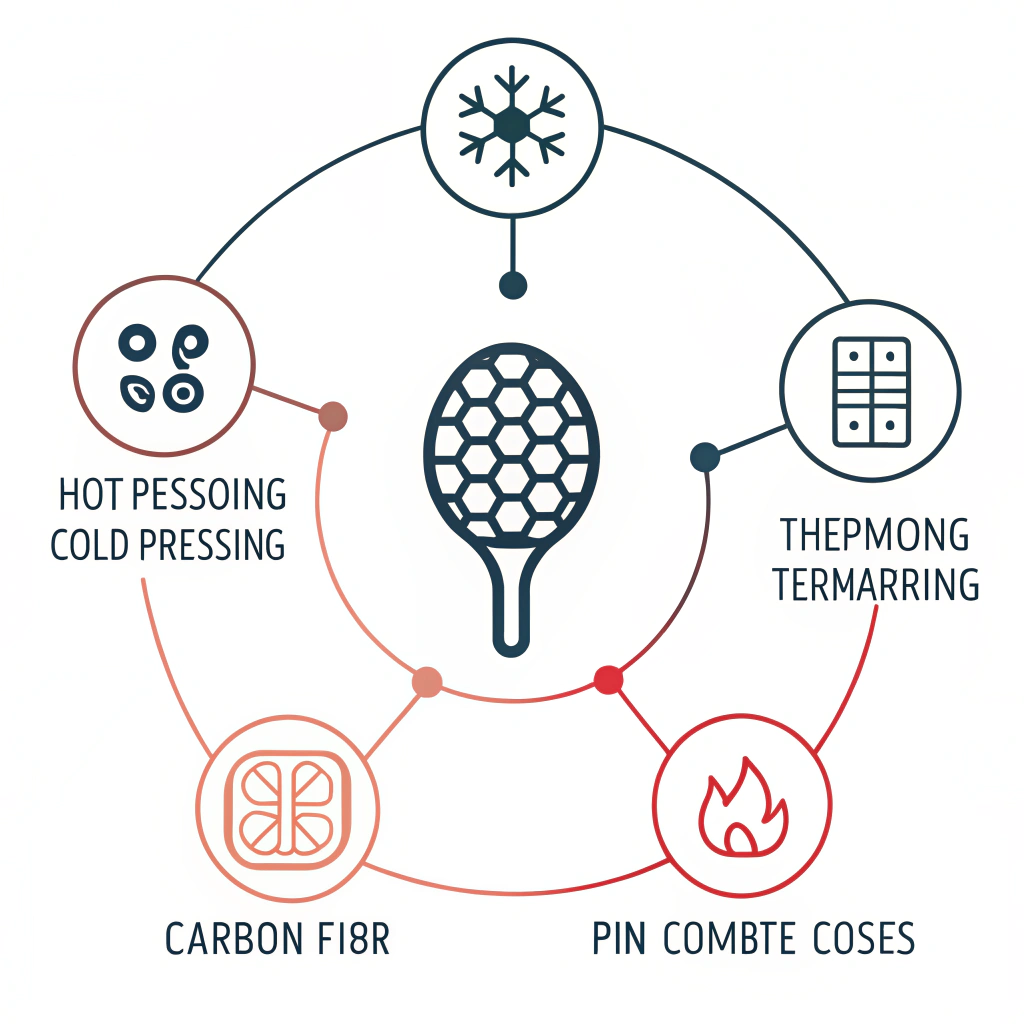
In this article, we quickly answer the key question: What are the technical differences between various materials and manufacturing processes for high-performance pickleball paddles, and how can these differences guide your procurement decisions? We compare the production techniques, including hot pressing1, cold pressing2, and thermoforming3, while examining materials—from different types of carbon fiber4 to composite cores—to provide you with actionable insights into selecting the best paddle for your needs.
For technical buyers and product managers in the sports equipment industry, selecting the optimal pickleball paddle requires detailed knowledge of both material properties and manufacturing processes. The performance, durability, and cost-effectiveness of a paddle are largely influenced by the production method and the materials used. With increasing competition in the market, businesses are faced with the challenge of balancing factors such as strength, rebound force, control, and vibration reduction in paddle manufacturing. This article explores the detailed differences between materials like 3K carbon fiber, 12K carbon fiber, T300 carbon fiber, and other composites such as fiberglass and bamboo core materials, as well as the three main production techniques: hot pressing, cold pressing, and thermoforming.
The core challenge arises from the fact that slight variations in mechanical properties can significantly affect paddle performance. Several factors contribute to this challenge:
-
Material Variability:
- Carbon Fiber Types: Different carbon fibers provide varying strength, flexibility, and durability. For example, 3K carbon fiber is known for its excellent balance between strength and rebound force, while 12K carbon fiber has a denser weave for increased hardness.
- Composite Materials: The use of composite materials (such as carbon-fiber/fiberglass composites) can merge the benefits of distinct materials to achieve both power and control.
- Core Materials: The internal core (nomex, aluminum, or polymer honeycomb) plays a significant role in dictating the paddle’s vibration damping and impact absorption.
-
Manufacturing Processes:
- Hot Pressing1: This process uses heat and pressure to create a rigid structure. It is efficient for mass production and yields paddles with excellent structural integrity.
- Cold Pressing2: Operating at room temperature under pressure, cold pressing preserves the intrinsic properties of the materials, ensuring precise control and a superior ball feel.
- Thermoforming3: By heating materials to a softening point, thermoforming allows the creation of intricate designs and uniform material distribution. However, it demands longer production times and more costly equipment.
The interplay between these materials and processes is complex. Understanding how each element affects performance can be the deciding factor in selecting a paddle that offers both durability and a competitive edge.
Below is a table that provides a quick comparison of the three primary manufacturing processes:
| Production Process | Advantages | Disadvantages | Best Suited For |
|---|---|---|---|
| Hot Pressing | - High production efficiency - Excellent impact resistance - Strong structural integrity | - Altered material properties - Requires significant equipment investment | High-volume manufacturing for strong, durable paddles |
| Cold Pressing | - Precise control over thickness - Preserves material properties - Superior ball feel | - Longer production cycles - Demands high-quality precision equipment | Paddles where control, touch, and responsiveness are critical |
| Thermoforming | - Ability to form intricate designs - Maintains stability through uniform material distribution | - Longer production time - Higher equipment cost | Premium or custom-made paddles with complex design requirements |
Understanding the pros and cons of each process helps in aligning product performance with the end-user requirements.
Different materials used in paddle manufacturing offer diverse performance attributes. The following table summarizes key aspects of each major material type:
| Material Type | Key Properties | Typical Application | Notes |
|---|---|---|---|
| 3K Carbon Fiber | - Strength and flexibility - High rebound force | Competitive paddles with balanced performance | Excellent for players requiring a mix of power and comfort |
| 12K Carbon Fiber | - Higher thread density - Smoother surface and hardness | High-impact environments and competitive play | Ideal for paddles demanding extra resistance to impacts |
| T300 Carbon Fiber | - Outstanding tensile strength - Lightweight performance | High-level competition where both agility and strength are prioritized | Balances lightweight feel with robust performance |
| Fiberglass (E-Glass) | - Enhanced ball control - Wider sweet spot | Recreational and intermediate-level paddles | Offers a softer, more cushioned hit |
| Bamboo Core Composite | - Lightweight and highly impact-resistant - Clear hitting feel | Long-duration play and durability focused designs | Popular in paddles that prioritize longevity and consistent performance |
| Honeycomb Core (Nomex Honeycomb5 / Aluminum / Polymer) | - Superior shock absorption - Vibration reduction | Diverse applications depending on required balance between control and power | Choice depends on the balance between control (polymer) and precision (aluminum) |
These material differences are essential when developing products that meet the diverse needs of professional and recreational players.
When evaluating which manufacturing process and material selection best suit your paddle requirements, consider the following checklist:
-
Define Performance Goals:
- Are you targeting high rebound force and power, or is control and precision more important to your customers?
- Do players require enhanced vibration damping for longer play sessions?
-
Consider Production Efficiency vs. Customization:
- For mass production where cost and durability are paramount, hot pressing1 is an excellent choice.
- If a premium tactile feel and customization are more critical, cold pressing2 or thermoforming3 may offer significant benefits.
-
Material Selection:
- Carbon Fiber Variants: Use 3K for a balanced performance and 12K when maximizing hardness for competitive play.
- Composite Options: Combine carbon fiber with fiberglass to blend power and control.
- Core Materials: Select Nomex or polymer honeycomb cores to reduce vibration while ensuring strong impact resistance.
-
Balance Cost and Performance:
- Evaluate the investment in machinery for processes like thermoforming against the premium price that the end-user might pay.
- Use composite solutions to offer mid-range products that can capture recreational and competitive segments.
-
Quality Control:
- Implement rigorous testing routines to ensure each paddle meets defined performance criteria.
- Consider the consistency of material properties and the precision of the manufacturing process during evaluation.
Consider a scenario where your target market includes both competitive players and serious amateurs. In this case, drafting a product that leans on 12K Carbon Fiber for its superior impact resistance and hardness may be optimal. To address the longer production cycle issue, integrating a dual-process approach—using cold pressing2 for the final shaping alongside a preliminary hot pressing1—could yield a paddle that successfully combines strength and precise control.
Furthermore, integrating a Nomex Honeycomb Core into the paddle can serve dual purposes: ensuring long-lasting durability and reducing vibration, which is critical during extended matches. By carefully testing and validating these combinations, you can produce a high-performance paddle that resonates with both speed-oriented and precision-focused players.
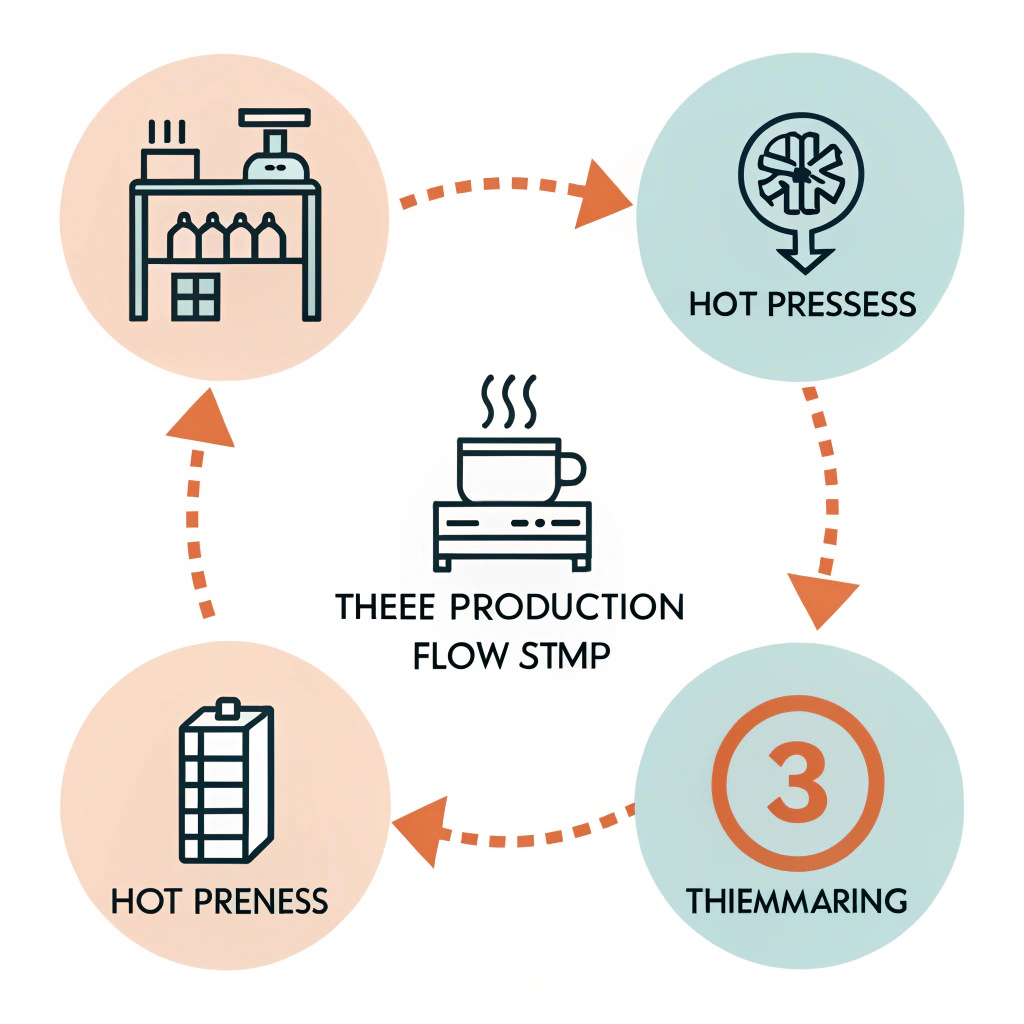
A potential production flow could be as follows:
- Pre-form the paddle using hot pressing1 to lock in structural integrity.
- Refine the paddle’s surface using cold pressing2 to achieve the desired thickness and tactile feedback.
- Finalize complex design elements through thermoforming3, especially if the paddle requires customized ergonomic shapes.
Each step is supported by rigorous quality control measures to ensure consistency and performance. This combined production approach not only maximizes the mechanical properties of the paddle but also creates a product that stands out in competitive markets.
While the current manufacturing processes offer robust solutions, the field is evolving rapidly, driven by advances in material science and production technology. Here are a few key considerations moving forward:
- Sustainability: With increasing attention on eco-friendly manufacturing processes, future research may focus on recycling techniques or developing sustainable composites without compromising performance.
- Cost-Effectiveness: Innovations could lead to new manufacturing methods that lower production costs while preserving or enhancing paddle performance.
- Customization Trends: The growing demand for customized products requires production flexibility. Techniques that allow for on-demand printing or surface modifications are becoming valuable differentiators.
- Rigorous Testing Standards: As performance criteria become more sophisticated, new testing protocols and quality assurance methods are essential. This helps in keeping up with international standards and builds confidence in product durability.
Our experience at NEX Pickleball, drawing on extensive research and practical implementation, suggests that companies investing in advanced thermal, mechanical, and composite technologies will remain competitive. By understanding the interplay between materials and manufacturing processes and by adopting a flexible production strategy, companies can craft paddles that not only meet but exceed market expectations.
These trends emphasize the need for continuous investment in R&D, as well as close collaboration with suppliers and testing laboratories to ensure that the paddles maintain their edge in performance and durability.

In summary, understanding the differences between various materials and manufacturing processes is key to optimizing pickleball paddle performance. Here are the main takeaways:
• A comprehensive evaluation of the three main manufacturing techniques—hot pressing1, cold pressing2, and thermoforming3—is essential.
• Different types of carbon fiber4 offer specific benefits; for instance, while 3K carbon fiber provides a balance between strength and rebound, 12K and T300 cater to high-impact and lightweight needs respectively.
• Composite structures, such as those that combine carbon fiber with fiberglass or use specialized core materials like Nomex Honeycomb Core, are critical in balancing power, control, and durability.
• A checklist centered on performance goals, production efficiency, material selection, and quality control can guide procurement decisions and product development strategies effectively.
• Future trends such as sustainable manufacturing, cost optimization, and enhanced customization will further influence paddle design and production methods.
For businesses navigating the competitive landscape of sports equipment manufacturing, it is imperative to combine technical insights with a flexible production approach. We encourage decision-makers to engage with experts, review the latest quality and performance data, and carry out thorough testing before finalizing procurement decisions.
Taking these proactive steps will ensure that your product offerings remain at the forefront of innovation and reliability, thereby enhancing both market competitiveness and customer satisfaction.
Q1: How does carbon fiber type affect paddle performance?
A1: Different carbon fibers influence paddle performance by providing varying levels of strength, flexibility, and rebound. For example, 3K carbon fiber delivers a balanced performance while 12K offers a smoother surface and higher hardness for competitive play.
Q2: What are the benefits of thermforming versus cold pressing in paddle manufacturing?
A2: Thermoforming enables the creation of intricate designs and precise material distribution, making it ideal for customized, premium paddles. In contrast, cold pressing preserves the material’s inherent properties to deliver precise control and a superior ball feel, though with a longer production cycle.
Q3: How do composite materials improve paddle durability and performance?
A3: Composite materials combine the strengths of multiple components—such as carbon fiber with fiberglass or using specialized cores like Nomex. This results in paddles that excel in impact resistance, reduce vibration, and offer a balanced mix of power and control, meeting the demands of both competitive and recreational players.
-
hot pressing: Click to explore the hot pressing process, its benefits in mass production, and how it ensures structural integrity in high-performance products. ↩ ↩ ↩2 ↩3 ↩4 ↩5 ↩6
-
cold pressing: Click to understand the cold pressing technique, which preserves material properties and enhances tactile feedback, critical for precision-engineered products. ↩ ↩ ↩2 ↩3 ↩4 ↩5 ↩6
-
thermoforming: Click to read about thermoforming, its role in creating intricate designs, and the balance between customization and production efficiency. ↩ ↩ ↩2 ↩3 ↩4 ↩5
-
carbon fiber: Click to learn how carbon fiber's lightweight and high-strength properties make it essential in advanced composite materials and its impact on product performance. ↩ ↩ ↩2
-
Nomex Honeycomb: Click to discover how Nomex Honeycomb core technology improves shock absorption and vibration damping, critical for ensuring long-term product durability. ↩ ↩