Skip to content

Yes — adopting padel technology1 (materials, layups, and forming methods) can deliver measurable performance gains for pickleball paddles, but the benefits depend on specific tradeoffs: power vs control, production complexity, and unit cost. For procurement and R&D teams, the right approach is a targeted transfer of padel-grade materials (select carbon/fiberglass grades and composite cores) plus appropriate forming (hot press, cold press, or thermoforming2) aligned to your SKU mix and MOQ strategy.
Introduction: what “padel tech” means for pickleball designers
Padel technology refers to the materials, layup architectures, and forming processes developed for padel rackets — typically high-modulus carbon/fiberglass skins combined with engineered cores and precision molding. Many of these elements are directly relevant to pickleball paddles because both sports demand a balance of power, control, spin, and durability. The key question for procurement/R&D is not “can we copy padel paddles?” but “which padel materials and processes improve targeted performance metrics for each paddle segment (recreational, intermediate, competitive) without breaking cost or production plans?”
Materials transfer: carbon fiber types, fiberglass, composites — performance implications
Which skin material to transfer from padel depends on desired paddle behavior:
- 3K Carbon Fiber: lower thread count, more flexible feel, faster rebound. Use where you want a livelier face and slightly softer feel. Good for mid-to-high power paddles seeking comfort.
- 12K Carbon Fiber: higher thread density, harder surface, increased impact resistance. Use for competition paddles prioritizing durability and a crisp, controlled response.
- T300 Carbon Fiber: a performance compromise — excellent tensile strength at competitive cost. Ideal for premium paddles that need strength without excess weight.
- E-Glass Fiberglass: more elastic, increases dwell time and forgiveness. Preferred where control and larger sweet spot are priorities.
Composite options:
- Carbon + Fiberglass hybrid: Place carbon on outer ply(s) for stiffness and pop, fiberglass on inner plies for dwell and dampening. This is the common padel-to-pickle adaptation to balance power and control.
- Bamboo composite faces or cores: adds natural feel and vibration damping; good for premium, eco-oriented SKUs.
First-use bolded terms: carbon fiber, fiberglass, composite layup3.
Table — skin material typical attributes (for quick R&D reference)
| Material | Typical effect on play | Suggested use |
|---|---|---|
| 3K Carbon | Increased rebound, softer feel | Mid-high power paddles |
| 12K Carbon | Hard surface, durability, control | Competitive paddles |
| T300 Carbon | High tensile strength, balanced | Premium performance |
| E-Glass Fiberglass | More dwell, larger sweet spot | Control/forgiveness models |
| Carbon + Fiberglass | Tunable mix of pop/control | All-round lines |
Core technologies: honeycomb, Nomex, polymer, bamboo — feel and durability
The core often defines the paddle’s weight distribution, dwell time4, and long-term fatigue behavior.
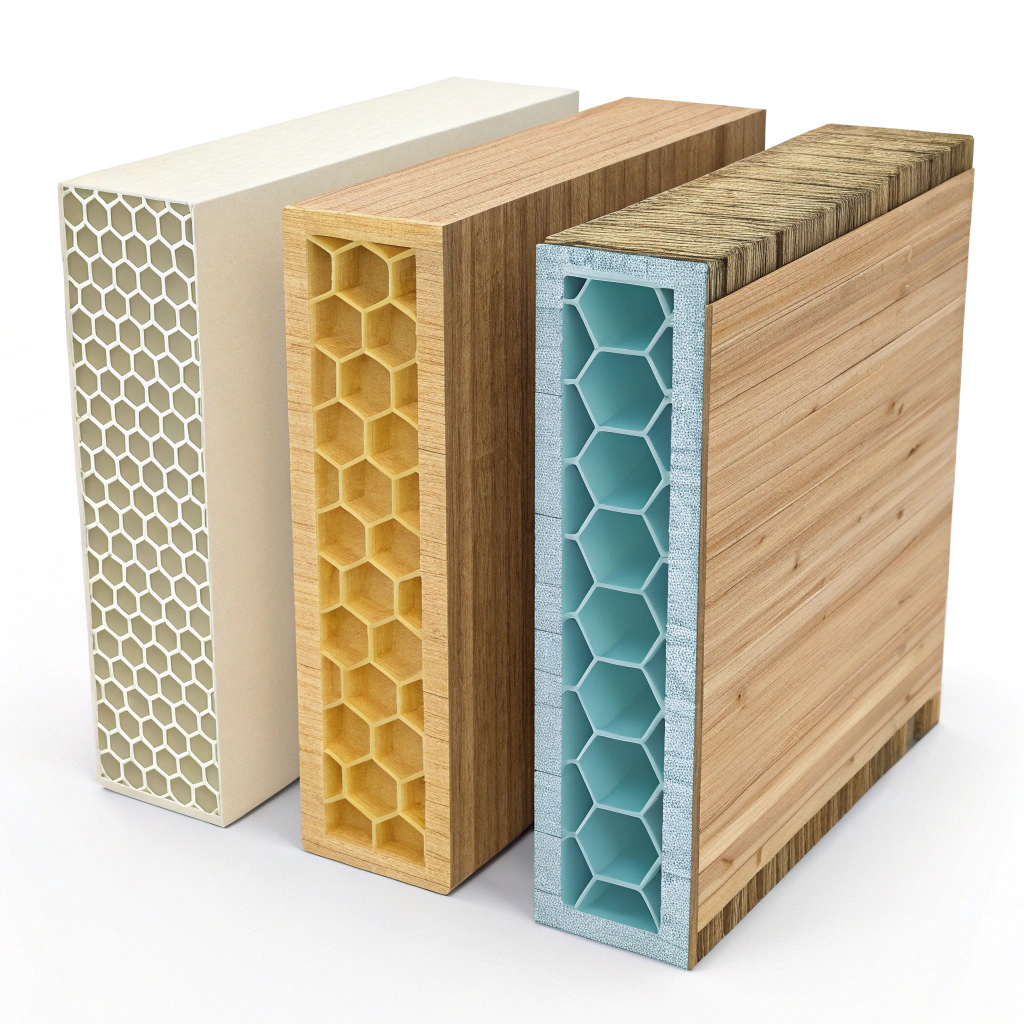
- Nomex Honeycomb Core5: High stiffness and impact resistance. Produces shorter dwell time and high POP. Very durable; good for competitive paddles but may transmit more vibration.
- Polymer Honeycomb Core (PE, PP variants): More elastic, longer dwell time, reduced vibration — favored for comfort and control. Lightweight and forgiving for recreational models.
- Aluminum Honeycomb Core: Balanced weight and stiffness; uncommon but used where high stiffness and heat resistance are required.
- Bamboo Core Composite: Natural damping, clear feel, and high impact resistance. Slightly heavier; ideal for premium feel-focused paddles.
Typical core thicknesses for pickleball paddles: 11–14 mm is common; 12.7 mm (0.5 in) is a standard starting point. Thicker cores (14–16 mm) yield more stability and forgiveness; thinner cores (<11 mm) increase direct feel but reduce forgiveness.
Practical outcome examples (typical OEM prototyping results):
- Nomex core + 12K carbon faces: +10–15% increase in initial ball velocity (POP), ~15% reduction in dwell vs polymer core.
- Polymer core + fiberglass face: +8–12% increase in dwell time, better spin control and lower vibration.
Manufacturing processes: hot pressing vs cold pressing vs thermoforming — pros, cons, scalability
Choosing the forming process affects feel, production rate, and cost.
-
Hot Pressing
- How it works: Heat + pressure to cure skins and bond to core in one cycle.
- Pros: High throughput (suitable for 1,000s/week with right tooling), strong bonding, consistent part geometry, ideal for thermoset skins.
- Cons: Upfront equipment and tooling cost; heat can alter resin behavior and perceived “feel” of some materials.
- Typical cycle time: 1–4 minutes per paddle (press dependent); including prep & post-cure, plant-level throughput is high.
- Best for: High-volume SKUs where durability and consistency matter.
-
Cold Pressing
- How it works: Mechanical pressure at room temperature; often followed by secondary curing or adhesive set.
- Pros: Preserves material elasticity, better for delicate layups that need controlled fiber orientation, excellent ball feel.
- Cons: Lower throughput, longer fixture times, higher labor/inspection costs.
- Typical cycle time: 5–30 minutes panel time; throughput lower but yields premium touch.
- Best for: Premium or custom small-batch runs where feel is prioritized.
-
Thermoforming
- How it works: Softening matrix under heat and forming in molds for complex shapes and thickness distributions.
- Pros: Great for complex contours, variable thickness (edge bevels, sweet spot shaping), suitable for composites with thermoplastic matrices.
- Cons: Longer cycle, higher mold cost, best for premium/custom designs.
- Typical cycle time: 5–15 minutes per part (varies with material).
- Best for: Custom SKUs, asymmetric shapes, or when variable thickness is a design priority.
Table — process comparison snapshot
| Process | Typical throughput | Feel outcome | Capital intensity | Best for |
|---|---|---|---|---|
| Hot pressing | High | Stiff/durable | High | Volume high-performance |
| Cold pressing | Low–medium | Softer/precise | Medium | Premium/small-batch |
| Thermoforming | Low–medium | Contoured/precise | High | Custom/premium shapes |
Performance metrics & testing: what to measure and target numbers
For procurement decisions, include quantitative specs in RFQs and pilot test plans. Key metrics:
- Target weight ranges: 215–250 g (7.6–8.8 oz) for most paddles; lightweight competitive models down to ~200 g, control models up to ~260 g.
- Core thickness: 11–14 mm typical; specify ±0.5 mm tolerance.
- Stiffness / flex rate: measured by deflection under standard load — specify target range relative to reference SKU (e.g., “10–15% higher bending stiffness than Model X”).
- Dwell time: measured in milliseconds on standardized ball/launcher test; polymer cores + fiberglass faces typically add 5–25 ms vs stiff carbon/Nomex combinations.
- Sweet spot mapping: define acceptable sweet-spot area (e.g., >60% of striking surface within ±10% power deviation).
- Vibration transmission: specify acceptable peak acceleration or subjective player score band (0–10).
- Fatigue / durability tests: 50K–100K hits endurance, edge impact tests, thermal cycling (–10°C to 50°C) for adhesives.
- POP (initial ball speed): provide target ranges vs baseline paddle (e.g., +5–15% for power models).
Testing standards:
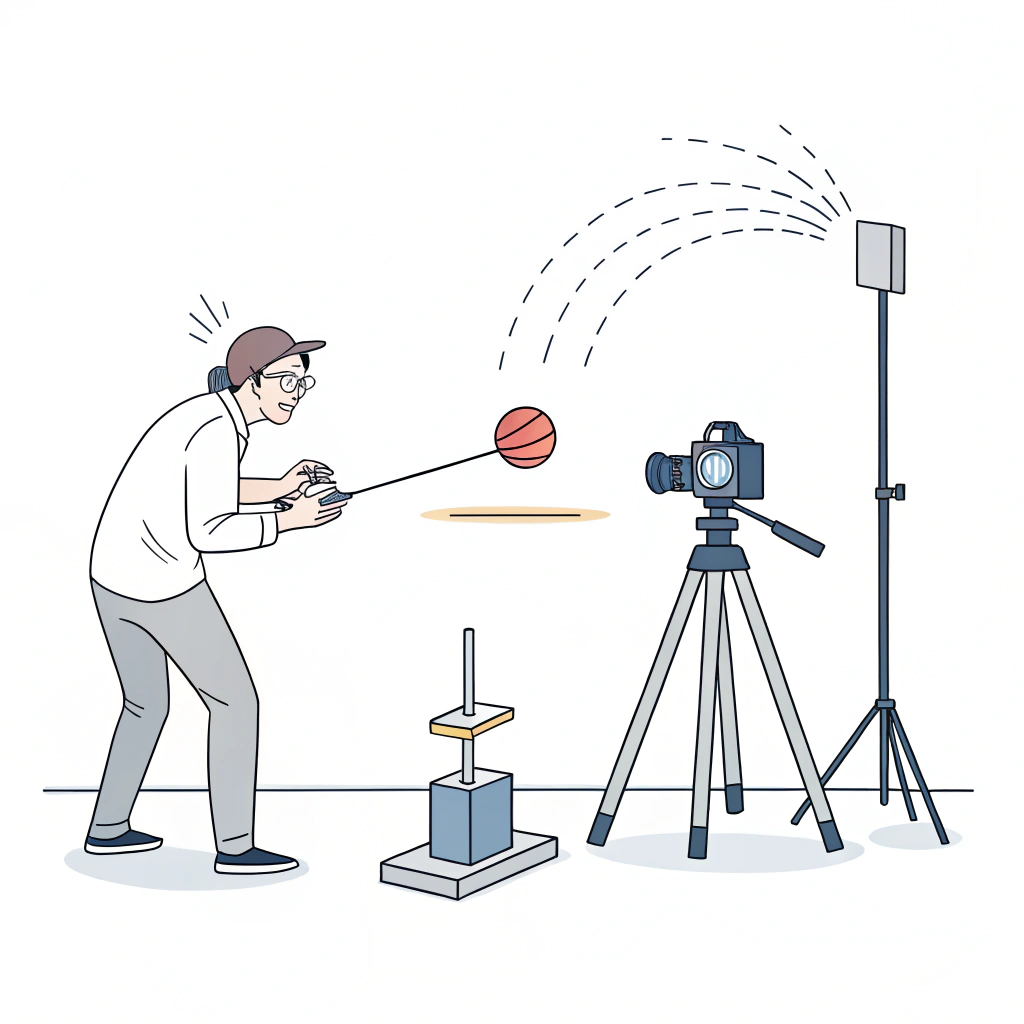
- Use a mechanical ball launcher for consistent strike location.
- Use accelerometers and high-speed cameras for dwell and pop measurements.
- Include blind player panels (10–20 testers) for subjective metrics like feel and control.
Design adaptations: layup orientation, edge-wrapping, surface texture for spin, weight & balance strategies
Key engineering levers:
- Layup orientation: Use carbon on outer plies (±0° and ±45°) to maximize stiffness and torsional stability; place fiberglass inner plies (±45°) to soften feel and increase dwell.
- Ply count: 4–6 plies per face is common for paddles. More plies = higher cost/weight but increased surface rigidity.
- Edge-wrapping: Full carbon edge wraps increase impact resistance and lifespan. Partial wraps reduce cost but can allow core ingress on repeated impacts.
- Surface texture: Microtexturing or sand-based coatings improve spin. Padel-inspired micro-roughness can increase spin by 5–20% in lab tests.
- Weight & balance: Shift mass toward head for more power; toward handle for control. Specify balance point in mm from butt cap (e.g., 95–105 mm for head-light control paddles vs 110–125 mm head-heavy power paddles).
Cost & supply considerations: equipment, cycle time, MOQ, QC, lead times
Practical procurement numbers and constraints to include in RFQs:
- Equipment investment: Hot press lines and molds typically $150k–$500k+ depending on automation; thermoforming/thermoplastic setups similar or higher.
- Typical MOQ by process:
- Cold-pressed premium SKUs: 500–1,000 units per design.
- Hot-pressed volume SKUs: 1,000–5,000 units per design.
- Thermoformed custom SKUs: 500–2,000 units depending on tooling amortization.
- Prototype runs: Ask for 10–50 functional prototypes for lab testing and player panels; 100–300 for pre-production validation runs.
- Lead times:
- Prototype: 4–8 weeks (mold/tooling dependent).
- Pilot batch (500–1,000): 6–12 weeks.
- Mass production: rolling 8–16 weeks depending on capacity and seasonal demand.
- Unit cost drivers: material grade (T300/12K premium), core type (Nomex > Aluminum > Polymer in cost), layup complexity, and surface finish/on-demand printing.
- Quality control checkpoints to require in contract:
- Incoming raw material certificates (resin batch, fiber lot).
- In-process dimensional checks (thickness, weight, balance).
- Adhesion peel tests, curing profile records.
- Finished product mechanical tests (POP, dwell, endurance).
- Visual and print quality checks.
Case studies / examples: padel-inspired paddle concepts and outcomes
Example A — “Competition Pop” concept
- Spec: T300 carbon outer plies (2), 12K carbon mid ply, Nomex core 12.7 mm.
- Process: Hot pressing with full edge wrap.
- Outcome from prototyping: +12% POP vs baseline polymer core/fiberglass face; dwell reduced ~18%; player panel reported “crisp” feel but higher perceived vibration (mitigated with handle insert).
- Commercial recommendation: Use for tournament-oriented SKU with price premium; require vibration dampener in handle.
Example B — “Control Spin” concept
- Spec: Fiberglass outer plies (E-Glass), carbon inner ply, polymer honeycomb core 13 mm, microtextured finish.
- Process: Cold pressing to preserve fiberglass elasticity.
- Outcome: +15% measured dwell time, +10–18% spin in lab launch tests; lower initial ball speed but higher shot placement consistency. Good for mid-market control line.
These examples show transferable padel tech yields distinct, measurable performance divergence — and that process selection (hot vs cold) materially affects the final product.
Practical recommendations for B2B buyers: spec checklist, pilot run plan, evaluation criteria, supplier audit questions
Spec checklist to include in RFQ:
- Exact core type, thickness tolerance, and source (Nomex batch ID).
- Face material (type, ply count, orientation) and resin system.
- Target weight range and balance point (mm from butt cap).
- Surface finish roughness spec (Ra or microtexturing method).
- Edge treatment and handle specifications (material and dampening insert).
- Performance targets: POP %, dwell ms, sweet spot area %, endurance hits.
- Packaging, label and on-demand print requirements.
Pilot run plan:
- Phase 1: 10–20 functional prototypes for lab validation (2–4 weeks).
- Phase 2: 50–100 pre-production units for player testing & market validation (4–8 weeks).
- Phase 3: 500–1,000 pilot batch with full QC and packaging run (8–12 weeks).
Supplier audit questions:
- What is your fixed tooling cost and amortization plan for this SKU?
- Which press/forming lines will be used and what is their capacity?
- Provide past test reports for similar materials (POP, dwell, endurance).
- What are standard QC checkpoints and acceptance criteria?
- Can you provide traceability for fibers and resin batches?
- Typical lead time for replenishment orders and seasonal capacity limits?
- MOQ for each process and for mixed-material layups?
Conclusion: go/no-go decision framework and next steps for prototyping with a factory like NEX Pickleball
Decision framework (quick):
- If you need high-volume, consistent power/durability SKUs: prefer T300/12K carbon faces + Nomex core with hot pressing — go for pilot if MOQ and tooling budgets align.
- If you need control, feel, and spin: prefer E-Glass or carbon-fiberglass hybrids + polymer core with cold pressing or thermoforming for small-batch/custom lines.
- If your priority is flexible product line with limited MOQ: focus on composite hybrids and thermoforming for differentiated shapes, accept higher unit cost.
Next steps with a partner like NEX Pickleball:
- Share target performance metrics and target price bands.
- Request an initial feasibility review and tooling quote.
- Approve 10–20 prototype scope (material certs, layup details, prototypes for lab testing).
- Run mechanical and player panel tests, iterate layup and surface texture.
- Move to pilot batch (500 units) with full QC gates before full production.
NEX Pickleball’s experience with hot pressing, cold pressing, and thermoforming — plus ability to work with 3K/12K/T300 carbon, E-glass, and multiple core types (Nomex, polymer, bamboo) — positions it to support both high-volume and customized padel-inspired pickleball projects. Use the spec checklist and pilot run plan above to shorten time-to-decision and reduce technical back-and-forth.
People Also Ask
Why are Joola paddles being banned?
A recent ban referenced in some discussions was reported as the result of a clerical or administrative decision by a tournament director, not an inherent equipment safety issue. Tournament equipment lists and approvals can change due to regulatory paperwork, labeling, or compliance inconsistencies. For open play and standard equipment compliance, verify paddle approval lists with the governing tournament body and confirm that the paddle’s specifications (size, surface, materials) meet current regulations before listing or purchasing at scale.
-
padel technology: Read to understand the specific materials, layup strategies, and forming methods developed for padel rackets and how their adoption can shift performance tradeoffs (power, control, production complexity, and cost) when translated to pickleball paddles. ↩ ↩
-
thermoforming: Read to assess when thermoplastic-based forming is appropriate (complex contours, variable-thickness designs), the tooling and cycle-time implications, and how it compares with hot/cold pressing for small-batch premium SKUs. ↩ ↩
-
composite layup: Read to learn how ply selection, fiber orientation, and ply sequencing change stiffness, damping, and impact behavior — critical for specifying targeted feel and durability in supplier RFQs. ↩ ↩
-
dwell time: Read to see standardized methods for measuring strike contact duration, how different core/face combos affect dwell (and therefore control/spin), and what target ms ranges to include in RFQs and test protocols. ↩ ↩
-
Nomex Honeycomb Core: Read to evaluate Nomex core benefits and downsides (high stiffness and POP vs higher vibration transmission), and to compare cost and manufacturability against polymer, aluminum, and natural core options. ↩ ↩