Skip to content

Short answer (quick answer to the title):
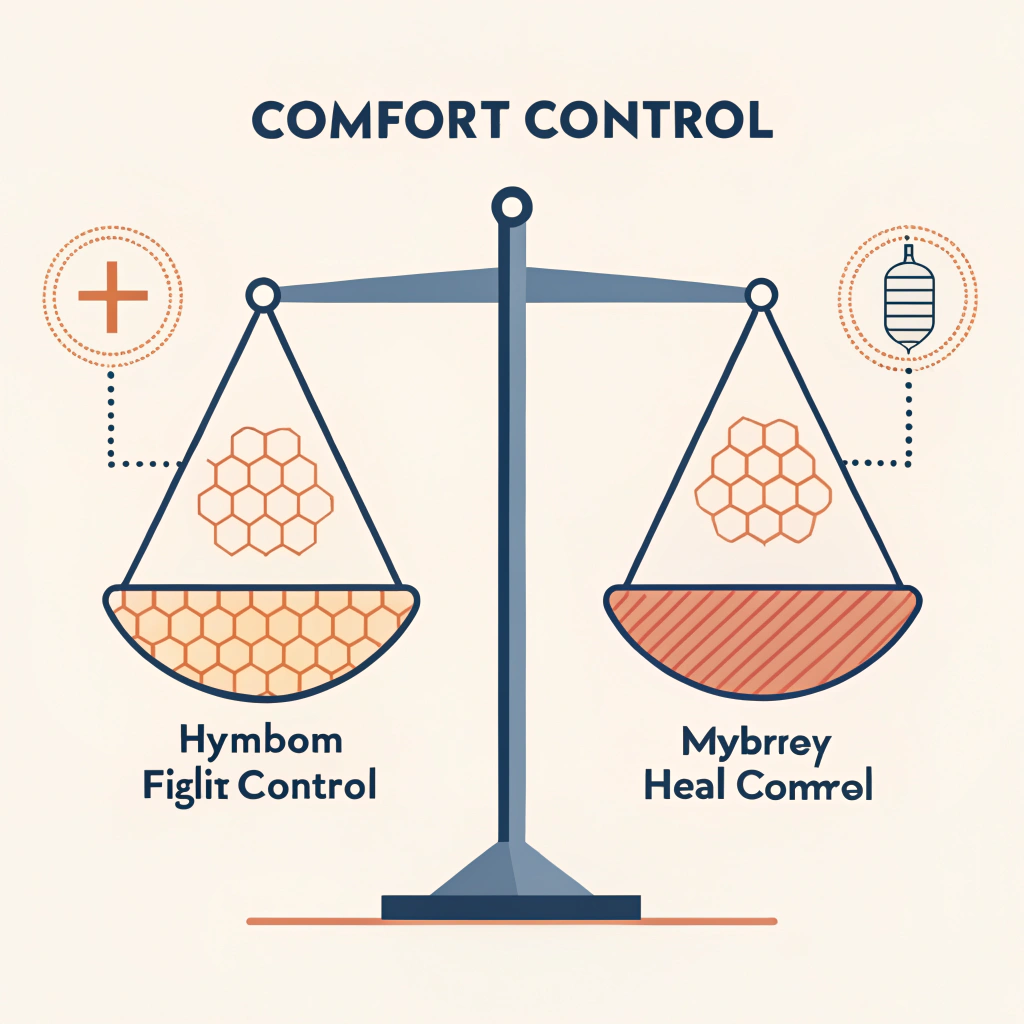
For the best balance of comfort and control, choose a paddle with a polymer honeycomb1 or thicker core, paired with a compliant face such as fiberglass or a carbon–fiberglass composite, a middling weight (about 7.6–8.4 oz) and a grip that matches hand size (typically 4.0–4.25" for most adults). Prefer cold-pressed2 or thermoformed3 paddles for preserved material feel and consistent thickness; require supplier QC data for deflection, dwell time4, and vibration damping, plus clear MOQ5, lead time, and on-demand print options.
Why this decision matters (the buying dilemma)
Procurement managers and merchandisers face a common trade-off: paddles that prioritize power and speed often feel harsh and reduce touch, while those tuned for comfort can sacrifice pop and court-feeding depth. Your goal in procurement is to shortlist paddle constructions that maximize player comfort and control for your target customer segments (recreational players, club members, or advanced players) while also meeting supplier commercial needs (MOQ, lead time, customization, testing).
This guide compares the key materials and manufacturing decisions that impact comfort and control, shows how to specify meaningful test metrics, and provides supplier selection criteria tailored for B2B buying.

Core differences that drive comfort vs control
The paddle core is the primary determinant of vibration damping, dwell time (how long the ball stays on the face), and perceived comfort.
- Nomex honeycomb core: very rigid and durable; favors power and fast ball rebound but transmits more vibration — less comfortable for long sessions.
- Aluminum honeycomb core: mid-stiffness; balanced power and control; heavier than polymer options in some constructions.
- Polymer (PP/PE) honeycomb core: more elastic, offers longer dwell time, better shock absorption, and softer feel — usually best for comfort and control.
- Thicker core vs thinner core: thicker cores (commonly 14–16 mm) provide a plush feel and easier control; thin cores (12–13 mm) feel stiffer and give faster ball speed.
First use of terms bolded: core, Nomex, polymer honeycomb, dwell time.
Face materials: stiffness, sweet spot, and feedback
Face material determines stiffness, responsiveness, and the surface interaction for spin.
- Carbon fiber (3K, 12K, T300): high stiffness, excellent energy return, superior power and fast response. 3K gives more flex than 12K; T300 is high tensile strength for competitive paddles. Carbon faces tend to reduce dwell time and transmit more vibration.
- Fiberglass (E-glass): more compliant, wider sweet spot, softer feedback—good for touch, control, and spin at moderate speeds.
- Composite faces (carbon + fiberglass): aim to combine control and power. The layer order and resin system strongly affect feel.
- Surface texture and roughness: micro-textures increase spin and control on soft hits.
Trade-off rules of thumb:
- Choose fiberglass or carbon–fiberglass composites for comfort/control.
- Choose carbon-only faces for high-power models aimed at advanced players.
Manufacturing processes and how they change feel
How a paddle is made matters as much as what it’s made of.
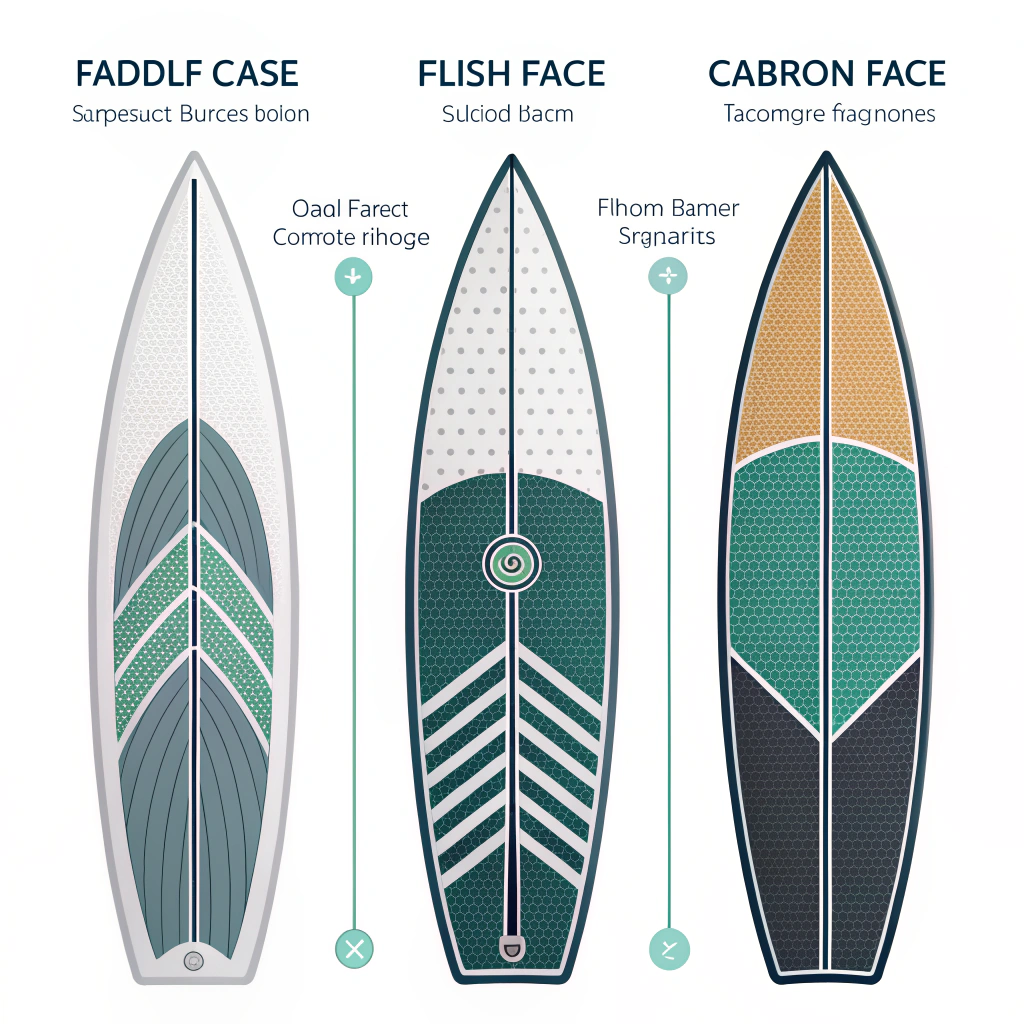
- Hot pressing: high temperature + pressure, fast cycles, consistent bonding. Produces durable paddles with strong structure but can change composite resin cure and reduce flexibility (firmer feel).
- Cold pressing: forms at room temperature under pressure; preserves material elasticity and provides a livelier, more responsive feel with better ball feedback. Lower throughput but preferred when player feel is priority.
- Thermoforming: heats to soften and forms complex shapes; excellent for variable thickness and ergonomic designs; useful for premium or custom-run paddles.
For comfort/control: cold pressing or thermoforming with a polymer core + fiberglass face is commonly preferred.
Comparison table: core + face + process — recommended specs for comfort/control
| Construction element | Typical spec for comfort/control | Performance impact | Supplier notes |
|---|---|---|---|
| Core type | Polymer honeycomb (13–16 mm) | Longer dwell time, better shock absorption | Ask for core density, compression test results |
| Face material | Fiberglass or Carbon–Fiberglass composite | Softer feel, wider sweet spot, better touch | Request resin type and layup details |
| Face thickness | 0.6–1.0 mm (varies) | Thicker face = more durability; thinner = more feedback | Measure face hardness (Shore) |
| Overall weight | 7.6–8.4 oz (215–240 g) | Middle range balances maneuverability & stability | Offer multiple SKU variants for different players |
| Balance | Slightly head-light to even | Head-light improves control; even balance aids drives | Provide weight tolerance ±3 g |
| Grip size | 4.0–4.25 in circumference | Correct grip reduces wrist strain & improves control | Offer 3 grip-size SKUs |
| Surface texture | Mild microtexture | Improved spin without harsh feel | Include spin-profile data |
| Manufacturing | Cold pressing or Thermoforming | Better preserved feel; precise thickness control | Check cycle time, capacity, tooling cost |
Testing metrics to request from suppliers
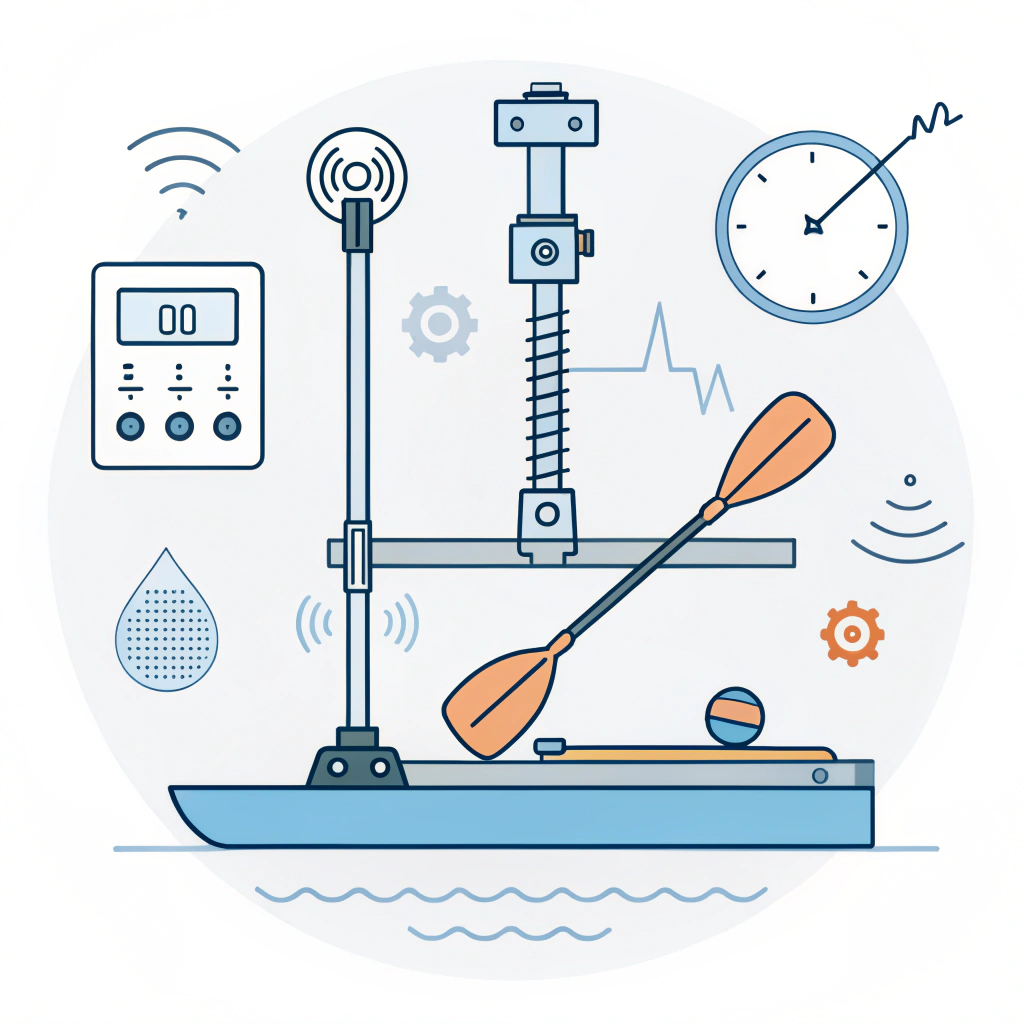
Require measurable QC and performance data rather than subjective claims. Minimum tests to request:
- Core compression/elasticity (N/mm or % deflection under standard load)
- Dwell time / ball contact testing (milliseconds) — comparative data across models
- Vibration damping (acceleration in g under impact)
- Paddle stiffness/flex (N·m or deflection under load)
- Face hardness (Shore D or Rockwell)
- Weight distribution and balance point (mm from butt cap)
- Durability: edge guard pull test, face delamination after x cycles
- Compliance with safety and materials standards (if required)
Ask suppliers for sample test reports and arrange independent third-party testing during sample runs.
MOQ, lead time, customization, and pricing considerations
Commercial factors that affect procurement choices:
- MOQ: For standard SKUs, reliable manufacturers often set MOQ at 300–1,000 units. For custom branding (on-demand print), MOQ may be lower with higher per-unit cost.
- Lead time: Cold-pressed and thermoformed processes can lengthen manufacturing time—expect 45–90 days depending on order size and tooling needs.
- Tooling and molds: Thermoforming and custom shape require upfront tooling costs—clarify amortization across orders.
- On-demand print: Ask about UV or sublimation printing options, color accuracy, artwork templates, and proof timeline.
- Pricing drivers: face material (carbon > composite > fiberglass), core type (Nomex > aluminum > polymer in cost), and process (hot press cheaper per unit at scale).
Practical procurement clause examples:
- Request price tiers for 500 / 1,000 / 5,000 units.
- Include sample approval run (10–20 units) before full production.
- Define weight and balance tolerances and penalty clauses for out-of-spec batches.
How to shortlist and validate suppliers (practical steps)
- Pre-qualification: Evaluate supplier manufacturing capabilities — do they offer hot pressing, cold pressing, and thermoforming? Ask for production capacity and lead times.
- Sample order: Order 3–5 prototype paddles covering the main construction options (polymer+fiberglass cold-pressed, polymer+composite thermoformed, carbon face thick-core hot-pressed).
- Lab testing: Require the numeric tests listed above; supplement with independent lab reports if available.
- Field trials: Distribute samples to target player segments (recreational, club, advanced) and collect structured feedback (metrics: control rating, comfort rating, perceived dwell time).
- Quality assurance: Review QC documentation, failure rates, and production inspection plans.
- Compliance & communication: Confirm IP protection, on-demand print SOP, packaging specs, and after-sales policy.
Checklist for supplier meetings:
- Production processes & capacity
- Material traceability (face and core)
- MOQ and pricing tiers
- QC metrics and sample test reports
- On-demand printing & artwork workflow
- Lead times and logistics
- References from other B2B clients
Use cases and recommended constructions
- Club program (comfort & durability): Polymer honeycomb core (14–16 mm) + fiberglass face, cold-pressed; weight 7.8–8.2 oz.
- Retail “control” line for novices: Polymer core (13–14 mm) + carbon–fiberglass composite face; thermoformed for predictable thickness; weight 7.6–8.0 oz.
- Advanced/competitive model (control with strong response): Thinner polymer core (12–13 mm) + T300 carbon face; cold-pressed for preserved fiber properties; weight 7.4–7.8 oz.
- All-day teaching paddle (comfort & low vibration): Thicker polymer core + fiberglass face + cushioned grip; even balance; weight 8.0–8.4 oz.
Negotiation levers and risk mitigation
- Start with a small pilot run and define acceptance criteria tied to numeric QC metrics.
- Negotiate incremental price breaks tied to cumulative volumes.
- Ask for tooling amortization schedules and reuse rights.
- Specify packaging and logistics terms (cartons per pallet, pallet weight).
- Require on-site inspections or third-party inspection before shipment.
Supplier highlight (how NEX Pickleball supports these needs)
NEX Pickleball manufactures paddles via hot pressing, cold pressing, and thermoforming, with experience in 3K/12K/T300 carbon, E-glass fiberglass, and multiple core options (Nomex, aluminum, polymer honeycomb). We offer:
- Customization and on-demand print services (full artwork support).
- MOQ tiers with pilot sample runs.
- Detailed QC reports for compression, dwell time proxy tests, vibration damping, and balance/tolerance.
- Flexible production for retail or club programs and capability for private-label OEM for brands such as Joola and Selkirk.
Action steps for procurement managers
- Define target player profile and prioritize comfort vs control ratio (e.g., 70% comfort / 30% power).
- Request 3 construction samples from shortlisted suppliers spanning the recommended constructions above.
- Require numeric QC test reports and a small field trial (20–50 players).
- Compare landed cost per unit at multiple volume tiers and confirm lead times.
- If you want vendor help, request NEX Pickleball’s sample and QC package.
People Also Ask
Q: Are thicker pickleball paddles better for control?
A: Generally yes—thicker cores increase dwell time and create a softer, more plush feel, which helps with touch shots like dinks, drops, and resets. A thicker paddle tends to slow the ball slightly on contact, making fine-control shots easier. However, too much thickness or a very soft face can reduce power and responsiveness, so balance thickness with face material and overall weight.
-
polymer honeycomb:Read to understand how polymer (PP/PE) cores differ in elasticity, density, and shock absorption compared with Nomex or aluminum; useful for specifying core compression, expected dwell time improvements, and durability trade-offs when contracting suppliers. ↩ ↩
-
cold-pressed:Read to understand the process advantages and capacity implications of cold pressing, its effects on resin cure and player feel, and what QC and lead-time language to include in supplier contracts. ↩ ↩
-
thermoformed:Read to learn when thermoforming is the preferred manufacture route for variable-thickness designs and custom shapes, tooling cost considerations, and expected cycle times for B2B orders. ↩ ↩
-
dwell time:Read to learn standardized methods to measure ball contact time, how dwell time affects player-perceived control and shot accuracy, and how to request comparable millisecond data from suppliers or labs. ↩ ↩
-
MOQ:Read to get guidance on typical manufacturer minimum order quantities, strategies to negotiate lower pilot-run MOQs, and how MOQ impacts unit cost, lead time, and inventory planning. ↩ ↩