Skip to content

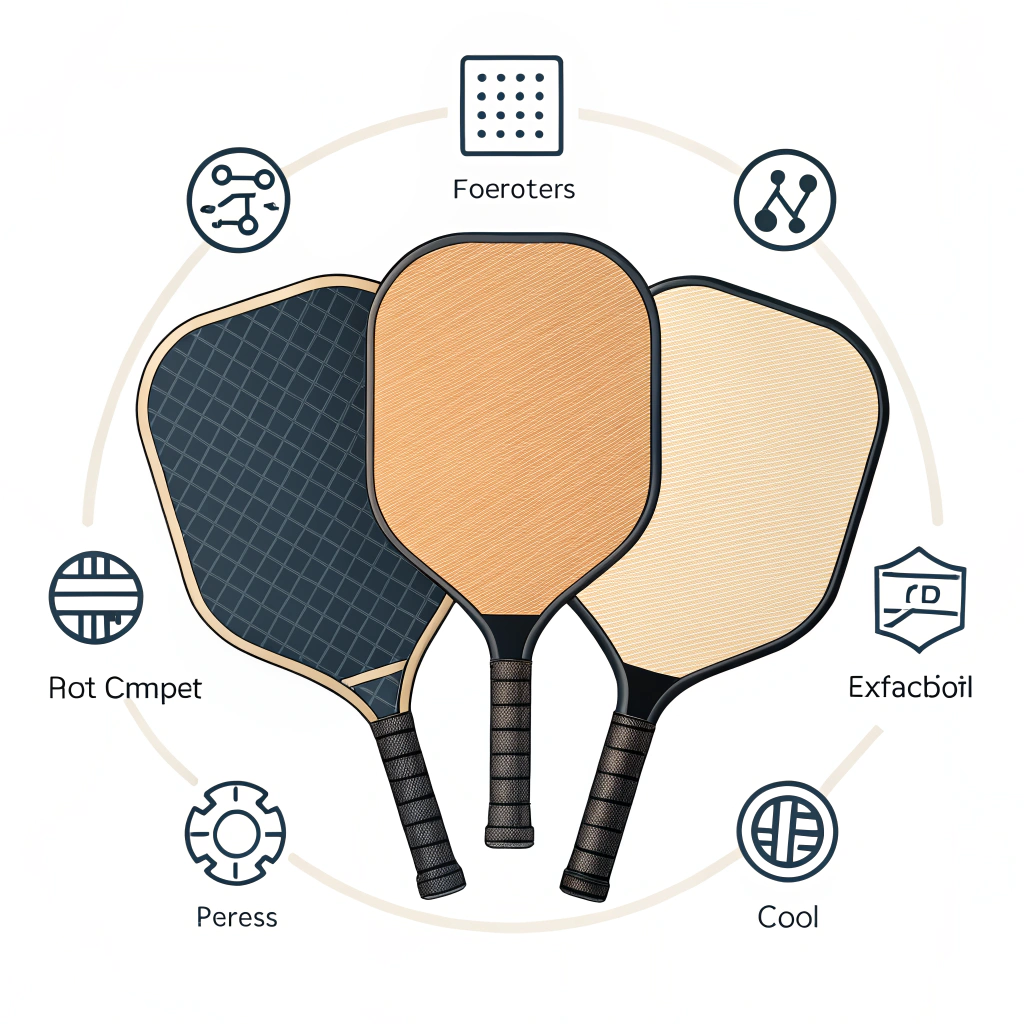
Carbon-fiber-faced paddles typically deliver higher power, tighter stiffness, and better spin potential than fiberglass faces, but they add manufacturing complexity, higher material cost, and different durability trade-offs — for OEMs the choice should be driven by targeted player level, margin targets, and manufacturing method (hot press, cold press, or thermoforming1).
Why this decision matters for a procurement or product manager
A paddle’s face material is the single biggest determinant of on-court performance and a major driver of cost, supplier capability requirements, lead time, and quality control. When you specify a face material — carbon fiber, fiberglass, or a hybrid composite — you are also locking in a set of trade-offs across power vs control, manufacturing processes, durability, and unit cost. Below is a practical, procurement-oriented comparison and checklist geared to help you choose and to prepare clear OEM specifications.
Core technical differences (brief)
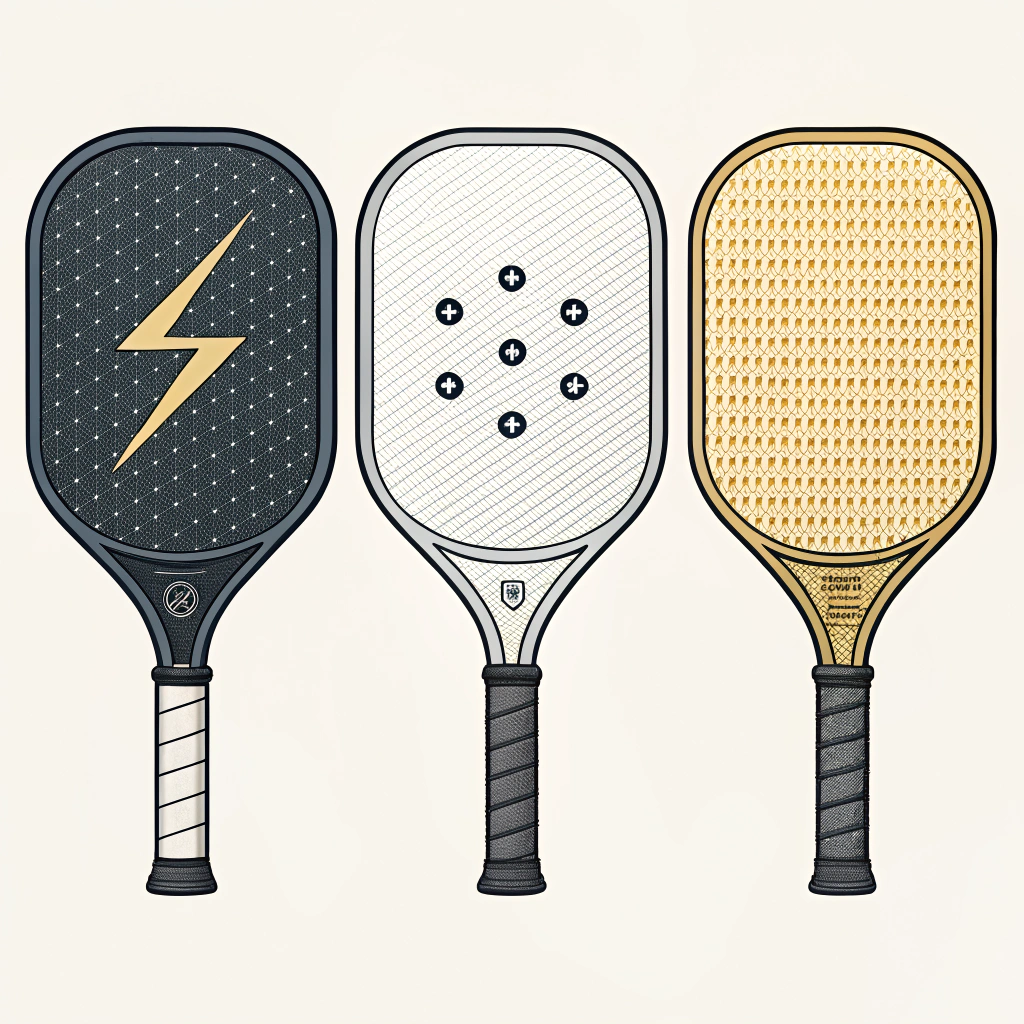
- Carbon fiber faces (3K/12K/T300 variants2) are stiffer and transfer more energy to the ball — that’s why they produce more power and crisp responsiveness. They also allow finer surface finishes for spin.
- Fiberglass faces (E-Glass3) are more flexible, usually provide a softer feel and more forgiveness, and are lower in raw material cost.
- Hybrid composites (carbon + fiberglass, or carbon + bamboo core combinations) aim to find a middle ground: tuned stiffness, improved sweet spot, and potentially better durability for impact-prone use.
How this translates for buyers
- Performance: Carbon → power + spin; Fiberglass → comfort + control.
- Cost: Carbon (higher raw material and processing cost) > Hybrid > Fiberglass.
- Manufacturing: Carbon benefits from precision pressing and surface control; fiberglass is easier to process at scale.
- QC and returns: Carbon faces can reveal delamination or ply issues under stress — QC must be tighter.
Detailed multi-dimensional comparison
| Dimension | Carbon Fiber Face (3K/12K/T300) | Fiberglass Face (E-Glass) | Carbon + Fiberglass Hybrid |
|---|---|---|---|
| Power | High | Medium | Medium-High |
| Sweet spot & spin | Large, high spin potential | Smaller sweet spot, less spin | Tunable |
| Stiffness / Flex | High stiffness (less flex) | More flex, softer feel | Tunable |
| Durability (impact) | Very good (12K/T300 best) but brittle under edge impact if not protected | Good resilience to flex fatigue | Good, with balanced failure modes |
| Weight control | Excellent (thin plies) | Slightly heavier for same strength | Moderate |
| Cost (materials & processing) | Higher (material + tooling) | Lower | Mid |
| Manufacturing complexity | High (requires controlled layup and press) | Low-medium | Medium-high |
| Recommended pressing method | Cold press or hot press with tight cycle control | Hot press / cold press | Depends on target feel |
| QC demands | High (ply adhesion, resin cure, surface finish) | Medium | High |
(Use this table to align product tier to retail price point and expected margin.)
Manufacturing process implications (what procurement should care about)
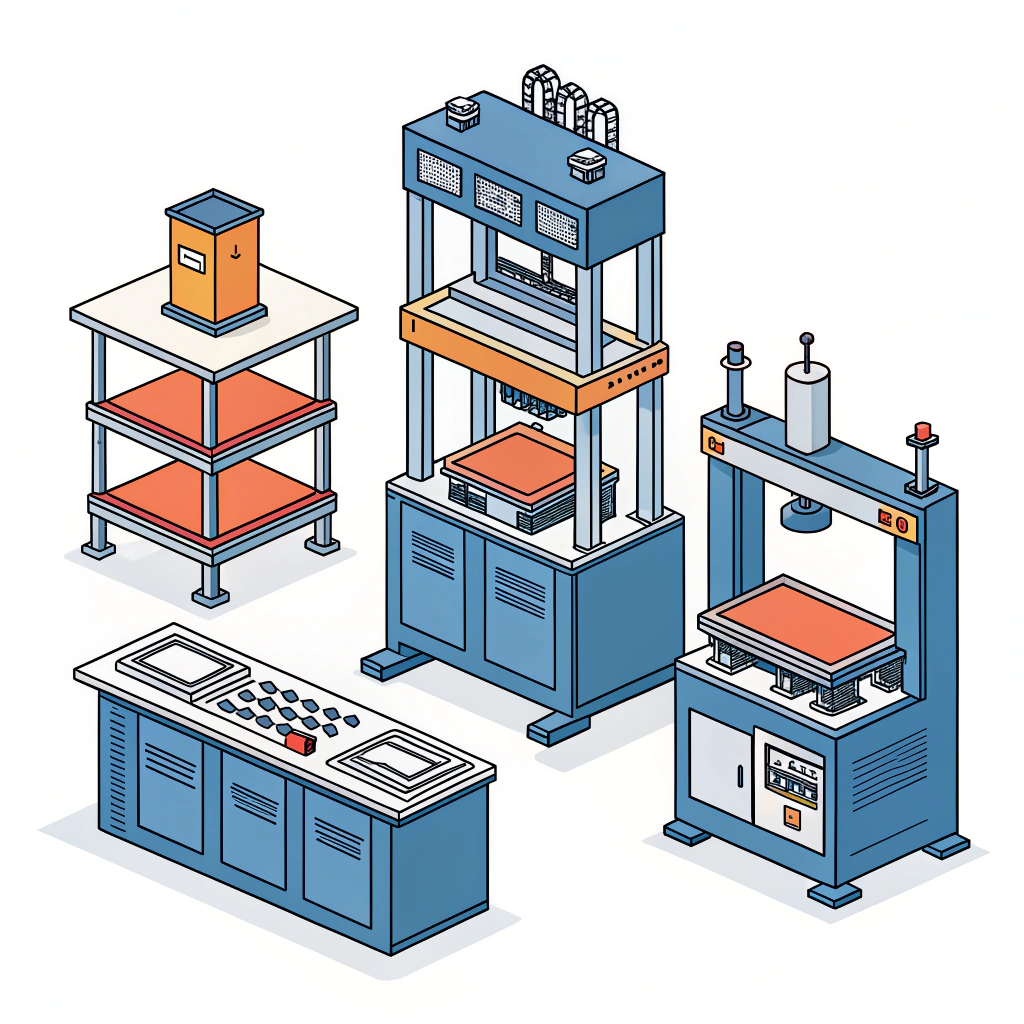
- Hot pressing: fastest for high volume. Good for carbon faces when process parameters are stable; may slightly alter resin properties (important for feel). Choose hot pressing if you need high throughput and consistent shape.
- Cold pressing: preferred when you want to preserve the original material feel and maximize ball touch. Slower cycles and higher equipment precision needed — higher labor or lower throughput.
- Thermoforming: best for complex shapes, variable thickness, or integrated edge features. Higher tooling cost and cycle time; ideal for premium or niche SKUs.
Which to choose?
- If your line targets recreational players and volume SKU with tight cost control → fiberglass with hot pressing.
- For premium, competitive lines where brand claims emphasize power, spin, and elite play → carbon fiber with cold pressing or carefully tuned hot press.
- For a balanced mid-tier SKU: hybrid faces produced by hot press or thermoforming depending on complexity.
Material specifics and how they affect specification
- 3K Carbon: Fine weave, good balance of strength and flexibility — good for controlled power and feel.
- 12K Carbon: Denser weave, higher hardness and impact resistance — favored in high-impact competition paddles.
- T300 Carbon: Higher tensile strength per weight — useful when you need stiffness without weight penalty.
- E-Glass Fiberglass: Good elasticity and ball feel; less costly, but usually heavier for similar stiffness.
Specify these in your tech pack:
- Face material: (e.g., 12K carbon, plain weave, 200g/m2)
- Resin system: (e.g., epoxy vs vinyl ester4 — epoxy preferred for stiffness and adhesion)
- Ply count and orientation: (e.g., 2 plies unidirectional + 1 ply woven)
- Surface treatment: (sandpaper grit, micro-texture level, coating for spin)
- Target face weight and total paddle weight tolerance (e.g., 225g ±3g)
- Balance point (handle-to-head distance or mm from top)
Production, lead time and MOQ considerations
- Typical MOQ5 ranges: 300–1,000 units for new OEM SKUs; carbon faces often require higher MQO for economic material purchase and tooling amortization. Ask suppliers for tiered pricing based on 500, 1,000, 5,000+.
- Lead time: For an existing mold/process expect 4–8 weeks; for new tooling and custom surface/text printing expect 8–16 weeks. Carbon paddles with specialized finishing and QC steps often push towards the higher end.
- Tooling and setup costs: Carbon and hybrid paddles commonly require higher initial setup (molds, press tooling, and curing profiles). Factor amortized tooling cost into unit price at low volumes.
Cost drivers to quantify in supplier RFP
- Raw material cost (carbon vs fiberglass fabric & resin)
- Labor per cycle (more complex layups increase labor)
- Press cycle time and throughput (affects per-unit cost)
- Surface finishing (micro-texture, painting, pad printing, on-demand print)
- QC and testing (impact testers, CLT tests, weight sorting)
- Packaging (edge protection and return rate control)
Quality control checklist for procurement
- Ply adhesion / delamination checks (visual & ultrasonic spot checks)
- Ball rebound and power consistency tests across batch
- Flexural stiffness testing across sample set
- Weight and balance tolerance (± specified grams, balance point mm)
- Surface texture consistency (Rz/Ra metrics or standardized sandpaper grit)
- Impact resistance (edge impact and corner drop tests)
- Cycle fatigue testing on honeycomb cores
- Environmental testing (temperature/humidity exposure if selling across climates)
OEM and branding: what matters beyond materials
- On-demand printing: Ensure the supplier supports your artwork specs, color profiles, and variable data printing if you plan to offer small-batch customization.
- Packaging and UPC: Decide whether paddles ship assembled in retail-ready packaging. This affects unit cost and lead time.
- Traceability: Request batch-level traceability for resin lots and face plies for warranty and failure analysis.
- Certifications: While there’s no universal “pickleball standard” like ASTM for paddles, ask for lab reports on resin cure, ply adhesion, and core density consistency.
- Warranty & returns: Carbon-faced premium paddles often carry different warranty expectations. Clarify acceptable damage modes (edge chips vs delamination) and return thresholds.
Practical procurement checklist (ready to paste into an RFP)
- Target product tier: (Entry / Mid / Premium)
- Face material and weave (3K / 12K / T300 / E-Glass)
- Core material (Polymer honeycomb / Aluminum honeycomb / Nomex)
- Desired press method and expected batch size
- Target weight and balance spec with tolerances
- Surface finish and spin texture spec (and test method)
- MOQ scenarios with unit pricing at 500 / 1,000 / 5,000 units
- Sample schedule and lead time (proto → pre-production → bulk)
- QC checkpoints and acceptance criteria
- Printing and packaging needs (including mock-ups)
Case examples (how choices map to SKUs)
- High-end competition paddle: 12K carbon face + polymer honeycomb core, cold-press cycle, tighter weight tolerance (±2g), higher surface micro-texture for spin, MOQ 1,000, lead time 12–16 weeks.
- Mid-tier balanced paddle: Carbon + fiberglass hybrid face + aluminum honeycomb core, hot-press, weight tolerance ±3g, MOQ 500, lead time 8–12 weeks.
- Entry/recreational paddle: Fiberglass face + polymer core, hot-press, looser tolerance ±5g, MOQ 300, lead time 6–10 weeks.
Final recommendation and action plan
- Map target consumer: Define whether SKU is for recreational, intermediate, or competitive players. Let that define the material baseline.
- Build an RFP using the procurement checklist above and ask for tiered pricing and sample schedules.
- Request specific test reports and agree QC metrics (weight tolerance, adhesion tests, impact tests).
- Run a 100–300 unit pilot to validate process variability before scaling.
- Negotiate tooling amortization into price tiers and clarify on-demand print costs.
Choosing a face material is not just a technical decision — it establishes your brand’s promise and affects supply chain cost, liability, and production flexibility. If your product strategy emphasizes premium performance and you can accept higher upfront costs and tighter QC, carbon fiber is the logical choice. If your priority is low unit cost, consistent throughput and forgiving feel for mass-market buyers, fiberglass or hybrid constructions are likely more suitable.
People Also Ask
Is carbon fiber pickleball paddle better?
Carbon fiber faces generally provide more power, higher stiffness, and better spin potential than fiberglass. That makes them preferable for competitive or performance-focused paddles. However, they cost more and require tighter manufacturing controls; for players seeking softer feel and lower price, fiberglass or hybrid faces may be better.
What is the best face material for pickleball paddles?
There is no single “best” material — it depends on the target player and product tier. Carbon fiber is common in higher-end paddles for power and spin. Fiberglass is cost-effective and delivers a softer, more forgiving feel for recreational players. Hybrids combine traits and are useful for mid-tier SKUs.
-
thermoforming: Review thermoforming guidance to evaluate tooling cost, shape capabilities, and cycle times versus hot/cold pressing — helps decide whether complex paddle geometries or integrated edges are worth the premium. Back to thermoforming1 ↩ ↩2
-
3K/12K/T300 variants: Read to understand how weave count and specific carbon grades (3K vs 12K vs T300) affect stiffness, impact resistance, and tactile feel — critical for specifying face layups and predicting manufacturing behavior. Back to 3K/12K/T300 variants2 ↩ ↩2
-
E-Glass: Reading about E-Glass explains its mechanical and cost properties versus carbon, and what to expect in processing, weight, and player-perceived feel — useful when justifying material selection for volume SKUs. Back to E-Glass3 ↩ ↩2
-
epoxy vs vinyl ester: A comparison of resin systems clarifies differences in stiffness, cure behavior, adhesion, and cost — informing your resin spec in the tech pack and expected QC challenges. Back to epoxy vs vinyl ester4 ↩ ↩2
-
MOQ: Learn how minimum order quantities impact unit pricing, tooling amortization, and supplier willingness to support custom specs — essential for constructing realistic RFPs and pricing tiers. Back to MOQ5 ↩ ↩2