Skip to content

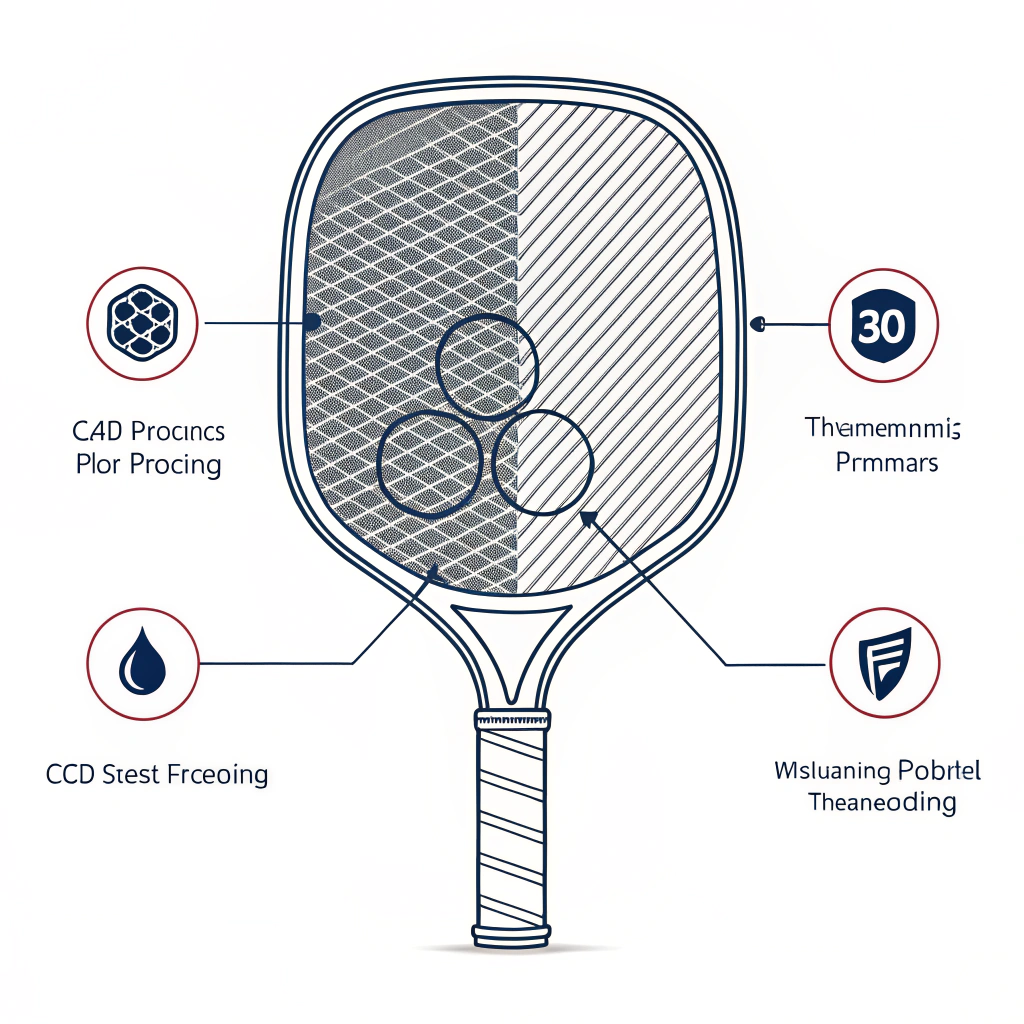
In today’s competitive sports equipment market, understanding how to balance high-performance, durability, and cost in pickleball paddle manufacturing is essential. Carbon fiber1 paddles, crafted through advanced production techniques, offer unparalleled power, control, and responsiveness that cater to both professional and amateur players.
For procurement managers and product developers, selecting the ideal pickleball paddle set involves multiple considerations. The key decision factors include:
• Material composition: ensuring optimal stiffness, lightweight properties, and durability.
• Manufacturing techniques: determining the appropriate process to match performance and cost objectives.
• Cost-effectiveness: balancing premium materials, such as carbon fiber, with budget constraints.
B2B buyers are particularly challenged by the complexity of choosing between different grades of carbon fiber—3K, 12K, and T300—as well as deciding which production process (hot pressing, cold pressing, or thermoforming) delivers the best performance outcome without escalating costs.

To simplify decision-making, consider the three main types of carbon fiber used in high-performance paddles:
| Carbon Fiber Type | Key Properties | Typical Applications |
|---|---|---|
| 3K Carbon Fiber | Strong, flexible, excellent impact resistance | Paddles needing high rebound force for fast-paced play |
| 12K Carbon Fiber | Higher thread density, smoother surface, increased hardness | Paddles required for extreme strength and impact resistance, ideal for competitive play |
| T300 Carbon Fiber2 | Exceptional tensile strength, high performance/light weight balance | Paddles that demand precise control and power |
Each carbon fiber grade delivers unique benefits. For instance, 3K carbon fiber is highly effective in reducing vibration, making it great for intermediate players, while 12K carbon fiber provides a premium, high-end feel suitable for elite competition. T300 carbon fiber strikes a balance, offering both strength and lightweight characteristics that ease handling.
When it comes to production, manufacturers have several methods at their disposal. Each technique targets specific performance and production efficiency criteria:
Hot pressing involves heating the selected material and applying pressure to achieve the desired paddle shape and structural integrity.
-
Advantages:
• High production efficiency making it ideal for large-scale manufacturing.
• Generates strong paddles with excellent impact resistance.
• Maintains structural integrity important for high-performance sports. -
Disadvantages:
• The high-temperature process may alter material properties, impacting paddle feel.
• Requires significant investment in specialized equipment.
Cold pressing is a method where the paddle material is shaped at room temperature with mechanical pressure. This method is best when a more precise control over the paddle's thickness and structure is required.
-
Advantages:
• Greater precision in controlling material distribution and thickness.
• Preserves the inherent properties of the raw materials, leading to enhanced ball response.
• Improves overall control due to better material retention. -
Disadvantages:
• Production cycles are longer compared to hot pressing.
• Demands high-quality machinery to control pressure accurately.
In thermoforming, the material is heated to a softening point and then shaped using custom molds, which allows for intricate designs and uniform material distribution.
-
Advantages:
• Enables creation of complex paddle designs with precise material placement.
• Helps maintain stability and enhances performance consistency.
• Well-suited for manufacturing premium products and custom paddle options. -
Disadvantages:
• Involves longer production times and higher equipment expenditures.
• Best applied for high-end products or specialized manufacturing requirements.
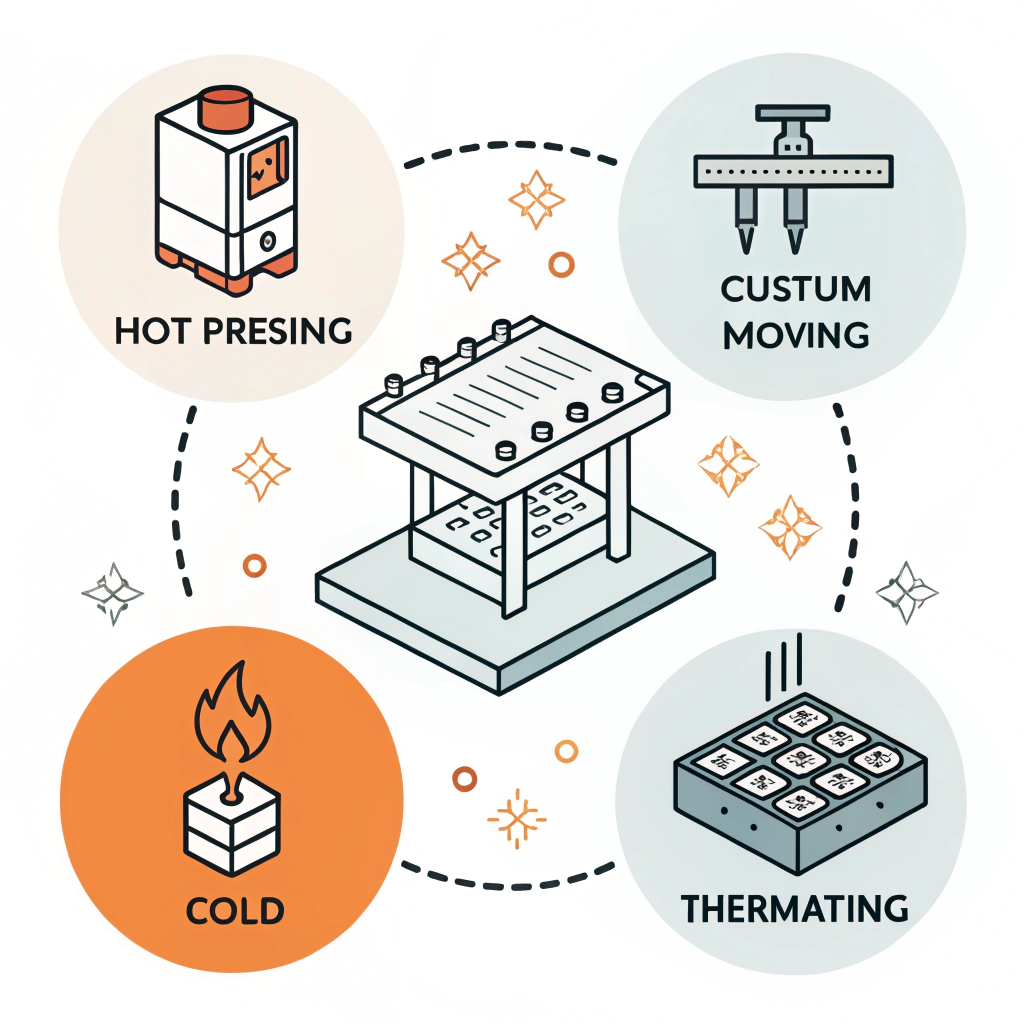
For B2B buyers, understanding cost implications is as crucial as technical performance. The factors influencing cost include:
• Material Costs: Premium materials such as 12K carbon fiber or T300 have a higher cost per unit than more basic grades like 3K carbon fiber.
• Process Efficiency: Manufacturing methods vary; hot pressing offers higher production volume but may compromise on nuanced paddle feel, whereas cold pressing ensures material integrity but at slower production speeds.
• Equipment and Operational Costs: Investments in specialized machinery for thermoforming or controlled cold pressing can drive up production costs, affecting final product pricing.
| Production Process | Production Speed | Material Integrity | Initial Investment | Ideal Usage |
|---|---|---|---|---|
| Hot Pressing | High | Moderate | High | Large scale manufacturing with durability focus |
| Cold Pressing | Moderate | High | Medium | Precision work where control is key |
| Thermoforming | Low | High | Very High | Premium and customized paddle designs |
The table above provides a side-by-side comparison for decision-makers. In scenarios where a high volume is required — such as fulfilling large orders for storefronts or sports clubs — hot pressing might be preferable. Alternatively, for niche markets or performance-driven paddle sets, cold pressing or thermoforming can be more appropriate choices.
Based on performance needs:
- For High-Power, Fast-Paced Gameplay: Opt for paddles made with 3K Carbon Fiber due to its excellent rebound capability and durability.
- For Elite and Competitive Environments: 12K Carbon Fiber provides the necessary rigidity and refinished surface quality to withstand more aggressive play.
- For a Balanced Approach: T300 Carbon Fiber integrates strength with a lighter paddle design, which can be crucial for both seasoned pros and evolving players.
When selecting a production method, consider the following:
- If your business model prioritizes volume and cost-efficiency over minute performance variations, hot pressing is the optimal choice.
- If delivering superior precision and optimal material characteristics is critical, cold pressing offers the fidelity required.
- For premium offerings where paddle aesthetics and customized performance features are paramount, thermoforming provides the versatility needed to differentiate your products in the market.
No matter which manufacturing process is chosen, a rigorous quality control regime ensures paddle performances remain consistent across batches. This includes:
• Pre-production material testing
• In-process quality checkpoints to monitor temperature and pressure accuracy
• Final performance testing to validate design specifications
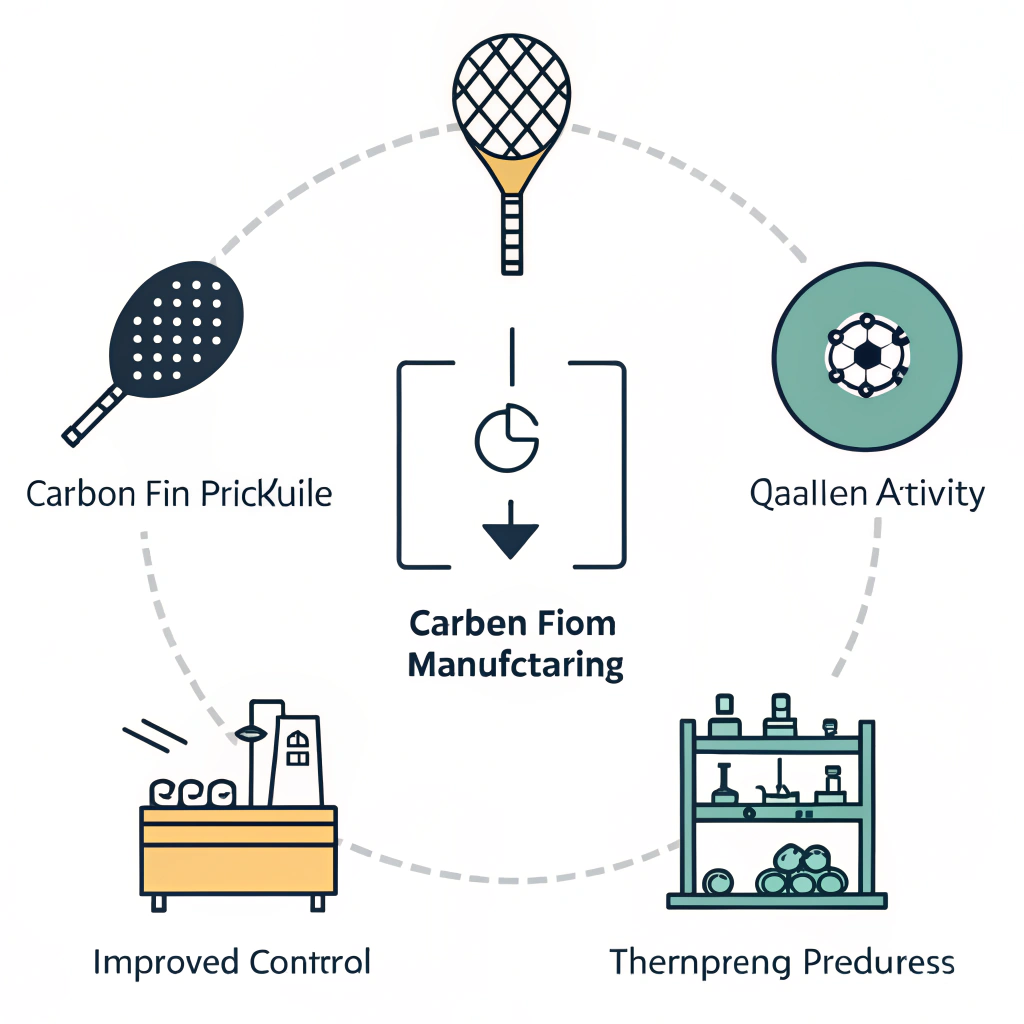
A leading distributor recently opted for a hybrid approach by combining cold pressing with a selective use of thermoforming technology. Their objective was to produce paddles that delivered both precise control and premium aesthetics. By investing in quality control and engaging closely with raw material suppliers for T300 carbon fiber, they managed to cut production waste by 20% while enhancing the paddle performance, ultimately capturing a niche market segment.
Table below summarizes their production adjustments and outcomes:
| Metric | Before Optimization | After Optimization |
|---|---|---|
| Production Cycle Time | 10 days | 7 days |
| Material Waste | 15% | 12% |
| Paddle Performance Satisfaction | 85% | 93% |
| Unit Production Cost | Medium | Slightly Higher due to investment |
This case underscores how aligning material choices with precise manufacturing techniques not only improves product performance but also optimizes production efficiency—an essential insight for B2B buyers striving for a competitive edge.
In conclusion, selecting high-performance pickleball paddles for your product lineup involves a careful analysis of both material quality and production processes. By understanding the differences between 3K, 12K and T300 carbon fiber and correlating each with appropriate manufacturing techniques—whether it be hot pressing, cold pressing, or thermoforming—B2B buyers can strategically target cost optimization and product excellence.
Actionable steps for your procurement decision:
- Review your target market’s performance expectations to determine the optimal carbon fiber grade.
- Align your manufacturing process based on required production volume versus paddle performance nuance.
- Collaborate with manufacturers who provide transparent quality control measures to ensure sustained product performance.
- Consider pilot orders to validate manufacturing methods and material choices before scaling up.
- Leverage comparative data and case studies to negotiate better terms with your manufacturing partners.
Taking these steps will ensure that your product offerings not only meet market demands but also maintain competitive pricing—key to building long-term partnerships and achieving sustained success in the sporting goods market.
• Are carbon fiber pickleball paddles worth it?
Carbon fiber paddles are valued for their stiffness and lightweight nature, delivering excellent power and responsiveness. They offer a significant performance advantage for intermediate to advanced players by reducing vibration and providing quick rebound.
• How much should a good pickleball paddle cost?
Pickleball paddles vary significantly in price, ranging from approximately $30 for entry-level models to $100 for more performance-oriented options. The right paddle will balance quality features and budget constraints, depending on the target user.
• How much does a professional pickleball paddle cost?
Professional-grade pickleball paddles, like those from established brands, are typically priced between $150 to $250. These paddles are engineered with advanced materials and production techniques to meet the demands of elite tournament play.
-
Carbon fiber: Click to explore an in-depth guide on carbon fiber properties, its applications in sports equipment, and how its integration can enhance product performance and durability. ↩
-
T300 Carbon Fiber: Click to read more about T300 carbon fiber, its unique balance of strength and lightweight properties, and its role in optimizing high-performance paddle design. ↩
-
Hot Pressing: Click to learn about the hot pressing manufacturing process, its benefits in high-volume production, and the technical nuances that affect material performance. ↩
-
Cold Pressing: Click to discover how cold pressing works, its advantages for achieving precision in material shaping, and why it’s preferred for maintaining material integrity. ↩
-
Thermoforming: Click to understand the thermoforming process, including its capability to create complex designs and its impact on production timelines and equipment investments. ↩