Skip to content

Customized pickleball balls bring together innovative production technology, high-quality materials, and precise customization options to create sports equipment that not only meets branding requirements but also enhances on-court performance. In this article, we address the challenges of producing personalized pickleball balls, explain the key production processes and material selections, and offer actionable insights on how procurement managers can partner with a reliable manufacturer like NEX Pickleball for optimal results.
For sports retailers and event organizers, ordering customized pickleball balls is more than just a branding exercise. It’s about delivering high-performance equipment that reflects quality and reliability. As the market becomes increasingly competitive, customized sports equipment offers dual benefits: enhanced visibility for your brand and improved performance on the court. Procurement managers need equipment that not only conforms to regulatory standards but also integrates advanced manufacturing techniques while being adaptable to various promotional and specialist event needs.
Key Consideration: High-quality customization relies on the synergy between design creativity, technical production processes, and strict quality control1.
Before diving into the technical aspects, it is essential to understand the typical problems encountered when sourcing customized products:
-
Material Selection and Consistency:
Achieving consistent ball performance requires precision in material selection. This includes ensuring that the outer shell is durable and responsive under different play conditions. Coordination between material properties such as elasticity, impact resistance, and surface texture is critical. -
Production Process Limitations:
The methods used to produce pickleball balls must maintain the integrity of each component. Issues such as inconsistent pressure application or uneven heating can affect ball weight, bounce, and durability. -
**Customization and On-Demand Printing2:
Incorporating personalized logos, sponsor messages, and colors demands high-precision printing processes. Ensuring these details remain intact during rigorous play conditions is a complex engineering challenge. -
Quality Control and Regulatory Compliance:
Every ball must adhere to industry standards. This entails rigorous inspection during production to guarantee that the customized details do not compromise performance.
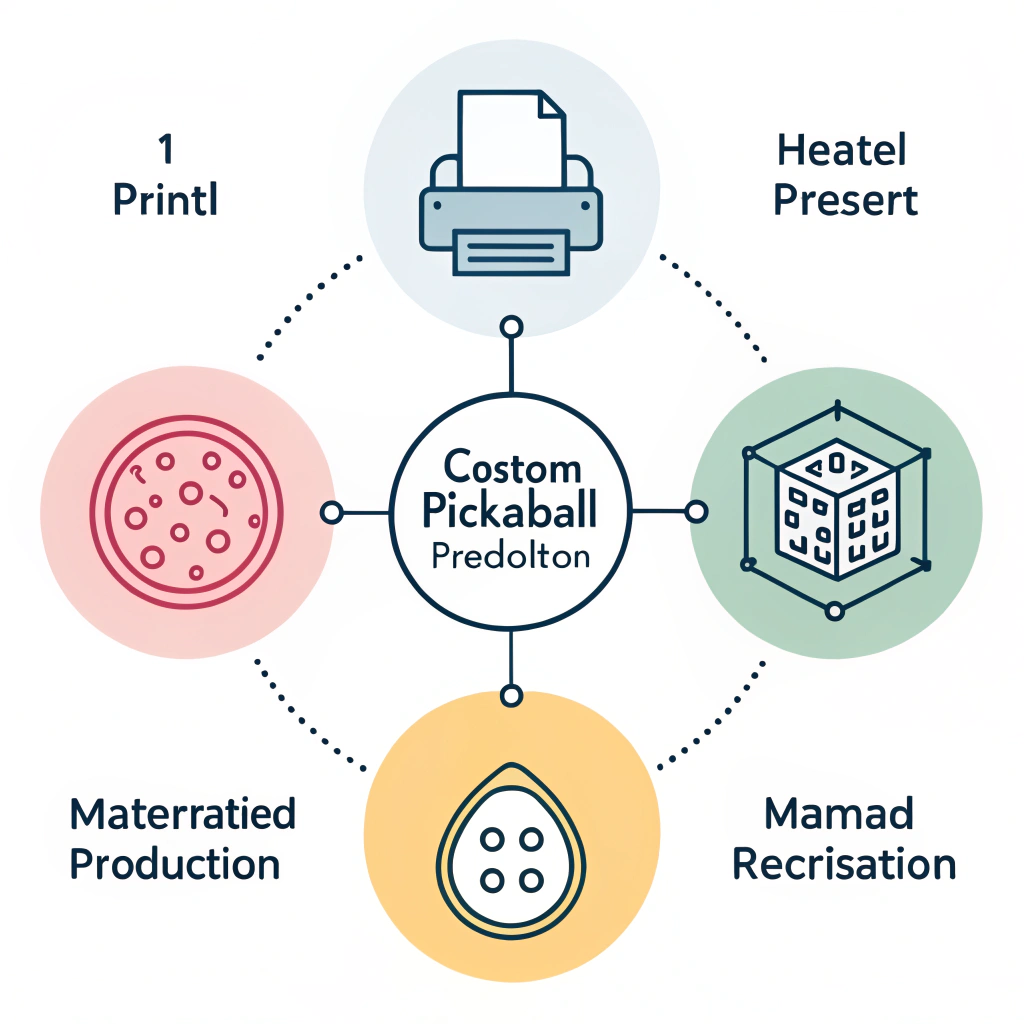
At NEX Pickleball, we leverage advanced production techniques to address the challenges of custom pickleball ball production. Each method has its benefits and limitations, which we analyze to ensure quality and performance:
Process Overview:
Hot pressing involves heating raw materials and applying pressure to form the ball's outer surface. This is a well-established method that ensures high strength and impact resistance.
Advantages:
- Provides robust structural integrity
- Increases durability through enhanced bonding of materials
- Suitable for large-scale manufacturing, making it cost-effective
Disadvantages:
- May slightly alter material properties, affecting the tactile feel
- Requires significant energy and high-end equipment
Process Overview:
In cold pressing, the components are shaped at room temperature using mechanical pressure. This method isolates the natural properties of the materials, preserving their original characteristics.
Advantages:
- Offers precise control over formation and consistency
- Maintains natural elasticity and tactile feedback
- Ensures better customization capability due to less material alteration
Disadvantages:
- Production cycles are longer, reducing efficiency
- High precision pressure control is crucial, increasing the risk of production bottlenecks
Process Overview:
Thermoforming involves heating the material to a pliable state before molding it into shape. This process supports the creation of intricate designs and ensures uniform material distribution.
Advantages:
- Ideal for complex patterns and high-detail customization
- Balances material stability with performance characteristics
- Allows for precise integration of on-demand printing elements
Disadvantages:
- Longer production times and increased equipment costs
- Requires careful temperature management to prevent material degradation
To summarize the differences in these processes, see the table below:
| Production Process | Key Benefits | Limitations | Best For |
|---|---|---|---|
| Hot Pressing | High strength, durability, efficiency | May alter material feel, high energy use | Large-scale production |
| Cold Pressing | Precise formation, natural elasticity | Longer cycles, high precision required | Detailed and high-customization |
| Thermoforming | Intricate designs, uniform distribution | Increased cost, longer production time | Premium, custom designs |
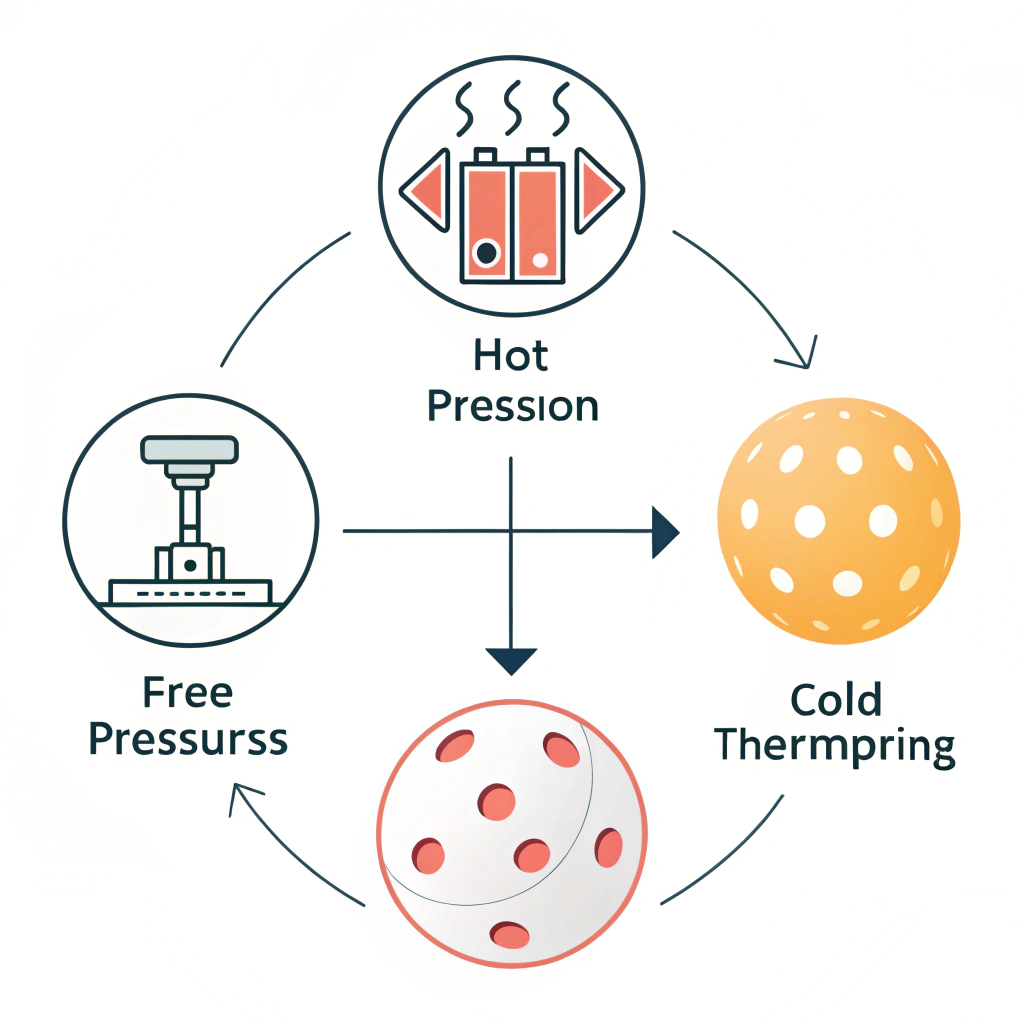
Material selection is paramount when producing custom pickleball balls. Each material contributes distinct properties that affect the ball’s performance, longevity, and aesthetic appeal.
Custom pickleball balls often use advanced polymers that provide excellent shock absorption and durability. These polymers are engineered for long-lasting use, ensuring that the balls maintain their structural integrity even after extensive use.
Composite materials, combining different elements such as carbon fiber and fiberglass, can be tailored to offer a balance between power and control. Although traditionally seen in paddle manufacturing, similar composite principles are applied in ball production to optimize bounce and durability.
Color customization is a strategic tool for sports marketing. Typically, indoor balls are produced in bright yellow for high visibility, while outdoor balls may come in yellow, green, or orange. The choice of color impacts not only aesthetics but also performance factors such as visibility in different lighting conditions and wind resistance. On-demand print technology ensures that even the finest details of logos and branding are rendered accurately, implementing durable printing methods that withstand the rigors of game play.
When ordering customized pickleball balls, procurement managers should look for manufacturers who offer flexible and scalable production options. NEX Pickleball provides on-demand print services that allow for personalized orders in both small and large batches. This capability is essential for sports retailers and event organizers who may need to brand pickleball balls quickly for a product launch or promotional event.
- Print Durability: Ensuring that the custom print remains intact during heavy use.
- Color Accuracy: Maintaining vibrant colors that reflect brand identity.
- Material Compatibility: Verifying that the printing process does not compromise the ball’s performance.
- Lead Time: Offering expedited production options for time-sensitive orders.
Combining advanced production techniques with on-demand customization options guarantees that every order meets the highest standards of quality and performance.
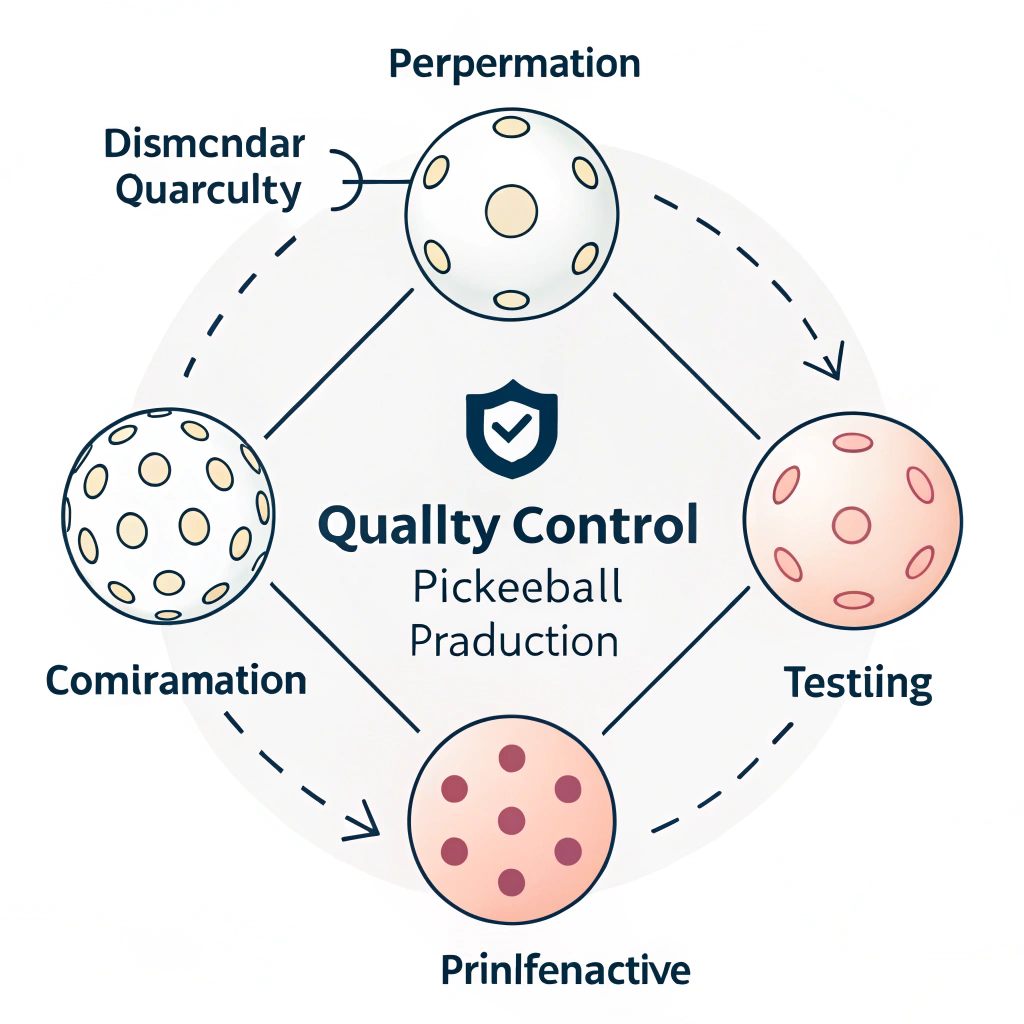
Quality control is an integral part of custom pickleball ball production. At NEX Pickleball, every ball undergoes rigorous testing to verify its performance and durability. Key quality control checkpoints include:
- Material Inspection: Confirming that the selected materials meet industry standards for elasticity and durability.
- Dimensional Accuracy: Ensuring each ball is manufactured with precise size and weight specifications.
- Performance Testing: Simulating actual gameplay to assess bounce, impact resistance, and grip.
- Print Inspection: Verifying that on-demand printed details are consistently sharp and durable across production batches.
A robust testing mechanism minimizes production errors and ensures that every customized ball delivers a superior performance during play.
For procurement or marketing managers evaluating suppliers, several factors are crucial in making an informed decision:
Look for manufacturers with proven experience in using advanced production processes such as hot pressing, cold pressing, and thermoforming. A deep understanding of these methods ensures you receive a product that balances performance with customization.
Verify that the manufacturer uses only high-performance materials. The use of premium polymers5 and composite materials can drastically improve the longevity and playability of the balls.
Evaluate the available customization options. The ability to apply on-demand printing and personalized color schemes is essential for creating a product that aligns with your brand identity.
Choose a partner who implements comprehensive quality control procedures. Consistent product quality and regulatory compliance are critical, especially in sports equipment where performance can directly affect player safety and game outcomes.
In planning bulk orders, ensure that the manufacturer has the capacity to meet large-scale demands while maintaining rapid turnaround times. A reliable supply chain minimizes delays in promotional events and retail rollouts.
Customized pickleball balls offer a unique blend of marketing appeal and competitive performance. By leveraging advanced production technologies and utilizing high-performance materials, manufacturers like NEX Pickleball provide products that are not only visually appealing but also built to endure the demands of the game. For procurement managers seeking to elevate their sports marketing efforts, partnering with experts in on-demand customization ensures that every ball reflects both your brand's identity and a commitment to quality.
To recap, the key action steps include:
• Evaluating production processes such as hot pressing, cold pressing, and thermoforming to determine the best match for your needs.
• Emphasizing material quality and printing techniques to guarantee both performance and aesthetic appeal.
• Leveraging comprehensive quality control measures to ensure every customized ball meets the highest standards.
By considering these factors, you can confidently select a manufacturing partner capable of delivering tailored, high-performance sports equipment that amplifies your brand’s message and satisfies the demands of today’s competitive sports market.
People Also Ask
• Is there a quality difference in pickleball balls?
Yes, quality differences exist due to material properties and manufacturing techniques. For instance, outdoor pickleball balls typically use thicker plastic, smaller holes, and slightly increased weight. These design choices enhance durability and performance, ensuring that the ball comes off the paddle with adequate speed and control, regardless of wind or other outdoor factors.
• What do different color pickleballs mean?
Different colors serve both functional and aesthetic purposes. Indoor pickleballs are often bright yellow for high visibility under indoor lighting, while outdoor balls can be yellow, green, or orange to enhance visibility in varying lighting conditions.
-
Quality Control: Learn about the systematic approaches and methodologies used to ensure every product meets rigorous industry standards and performs reliably under demanding conditions. ↩ ↩
-
On-Demand Printing: Reading this article will help you understand how real-time, customizable printing solutions enable rapid production of personalized sports equipment, ensuring precision and durability in branding elements. ↩ ↩
-
Thermoforming: Click here to explore how thermoforming processes use heat to mold materials into intricate designs while balancing performance and creative customization. ↩ ↩
-
Composite Materials: Discover the benefits of combining different materials like carbon fiber and fiberglass to achieve superior strength, durability, and performance in sports equipment. ↩ ↩
-
Premium Polymers: Understand how high-grade polymers are engineered to deliver outstanding shock absorption and durability, significantly enhancing the overall quality and longevity of sports products. ↩ ↩