Skip to content

I. Design and Concept — From the Spark of Inspiration to the Emergence of a Blueprint
At the break of dawn, when the first rays of morning light penetrated the workshop’s glass windows, the designers had already begun quietly envisioning a brand-new pickleball paddle. The old design based on a wooden core had long been surpassed by the trends of the times and technological advancements. Now, the innovative honeycomb core design has become the heart of progress. Owing to its lightweight, high strength, and excellent impact resistance, the honeycomb core material is taking an increasingly important position in high-end sports equipment around the world. With keen insight, the designers captured this trend and combined traditional craftsmanship with modern materials, aiming to create a paddle that is not only outstanding in performance—light and agile—but also visually striking with a unique texture, all through a heat-press integrated process.
During the conceptual stage, each designer passionately discussed the overall shape, weight distribution, balance point, and vibration absorption of the paddle. They debated every detail, taking into account every swing and shot an athlete would make during intense competition. They understood that the paddle is not merely a tool but a companion that accompanies athletes in the pursuit of their dreams. For this reason, every line and curve on the design blueprint is imbued with their love for the spirit of sports and their relentless pursuit of ultimate quality. The design, with its smooth and dynamic lines extending and intersecting, seems to foreshadow the exciting movements on the court and every brilliant moment of play.
In this phase, the team also conducted extensive simulations and calculations on the characteristics of the honeycomb core material. The honeycomb structure not only greatly reduces overall weight but also, during the heat-press process, allows for a perfect combination with multiple layers of materials such as carbon fiber and composites to form a robust yet elastic structure. After numerous verifications and countless calculations, the designers finally decided on using a honeycomb core for the paddle’s inner structure, wrapped by multiple layers of high-performance materials. This design not only addresses the issue of wooden cores being susceptible to ambient humidity but also optimally achieves energy transfer and vibration reduction.
II. Material Selection — The Encounter Between Technology and Nature
Once the design blueprint was set, selecting the right materials became the critical first step. Unlike the traditional reliance on wood, the introduction of the honeycomb core material has injected new life into the paddle. This material, derived from high-tech manufacturing processes, features a precisely engineered honeycomb structure that is both lightweight and exceptionally high in compressive strength—qualities prized in aerospace, automotive, and other high-end fields.
2.1 Advantages of the Honeycomb Core Material
The honeycomb core material utilizes advanced composite technology by combining lightweight foam or paper honeycomb structures with high polymer materials. This process maintains low weight while achieving extraordinary strength and toughness. In the dedicated raw materials warehouse, neatly arranged honeycomb core boards—each rigorously selected and passing through multiple quality inspections—ensure that every board meets international leading standards in cell uniformity, compressive strength, and corrosion resistance.
Craftsmen often remark, “The honeycomb core is like nature’s most ingenious design; every tiny cell holds infinite strength. It is this seemingly simple yet brilliant structure that allows our paddle to remain both lightweight and robust even under fierce impacts.” For this reason, the honeycomb core is regarded as the “heart” of the paddle, playing a dual role in energy transmission and structural support.
2.2 High-Performance Carbon Fiber and Composite Materials
Encasing the honeycomb core, high-performance carbon fiber, glass fiber, and other composite materials form the external structure of the paddle. After precise calculations, the thickness, hardness, and flexibility of each layer are strictly matched, creating a system that works in harmony. Every material is carefully selected and laboratory-tested to ensure that, under high temperature and pressure, it remains stable without deforming or aging—thus ensuring the paddle performs reliably during intense play.
2.3 Special Eco-Friendly Glue
To achieve flawless bonding between layers, the factory uses an eco-friendly glue specifically developed for high-performance sports equipment. During the heat-press process, this glue rapidly cures to form an indestructible adhesive layer that not only decisively bonds the different materials but also helps maintain the paddle’s overall lightness and high strength. Every drop of glue is meticulously adjusted and rigorously tested for adhesive strength and temperature resistance. This seemingly unremarkable glue is a key guarantee for the successful manufacture of the paddle.
III. Pre-Treatment of Raw Materials — Attentive Care to Every Detail
Once all materials are prepared in their optimal condition, the process moves to the pre-treatment stage—a phase akin to finely tuning a masterpiece before a grand performance, where every step requires the utmost concentration and patience from the craftsmen.
3.1 Inspection and Calibration of Honeycomb Core Boards
As the core of the paddle, the quality of the honeycomb core directly influences performance. The factory has a dedicated inspection workshop where every board is subjected to X-ray scanning, ultrasonic testing, and compression tests. Technicians use advanced instruments to carefully assess the uniformity of the honeycomb structure and check for any fractures or bubbles, promptly discarding any substandard materials. After rigorous selection, each honeycomb board is given new life, ready to showcase its unique strength in the next stage.
3.2 Pre-Treatment of Carbon Fiber and Composite Materials
Complementing the honeycomb core, high-performance carbon fiber and composite materials also require meticulous processing. In a clean, dust-free room, craftsmen use high-precision cutting machines to accurately trim each carbon fiber sheet, followed by specialized polishing to achieve perfect smoothness and dimensional accuracy. This ensures seamless integration with the honeycomb core and other materials during the heat-press process. Additionally, the surface of composite materials undergoes chemical treatment to enhance their affinity with the glue, ensuring the best possible bonding.
3.3 Blending and Preheating of Eco-Friendly Glue
Before application, the eco-friendly glue must be strictly blended and pre-treated. The R&D team adjusts the ratio of adhesive components and curing speed according to the characteristics of different batches of materials. Each batch is simulated under heat-press conditions in the laboratory, with its curing effect and temperature resistance repeatedly validated. Only glue that passes these stringent tests is allowed onto the production line, providing a solid foundation for subsequent layered assembly. In the laboratory, scientists and craftsmen collaborate closely to ensure that every drop of glue meets the highest international standards.
IV. Adhesive Bonding and Layered Assembly — The Art Where Details Determine Success
With the raw materials pre-treated, the process enters the most intricate and critical phase of manufacturing: adhesive bonding and layered assembly. Here, every layer is gradually integrated by the skilled hands of the craftsmen into a unified structure that becomes the solid base for the paddle.
4.1 The Exquisite Craft of Uniform Glue Application
Before assembly, craftsmen uniformly apply glue to the pre-treated honeycomb core, carbon fiber, and composite materials according to strict process requirements. This step is akin to a master painter applying bold strokes on delicate rice paper—each stroke must be controlled with precision. Using custom-made scrapers, the craftsmen evenly spread the eco-friendly glue on the contact surfaces, ensuring that the adhesive layer is neither too thick nor too thin. The gluing process is carried out under specific temperature and humidity conditions to avoid any impurities in the air from affecting the bond. That thin adhesive film is the invisible bond that will secure the paddle’s robust structure, with each gentle application reflecting the craftsmen’s relentless pursuit of perfection.
4.2 Precise Layering: Building a Cohesive Whole Through Subtle Dialogue
After the glue application, the materials enter the precise layering phase. The honeycomb core, carbon fiber, and composite materials are stacked in the predetermined order, ensuring each layer aligns perfectly and integrates seamlessly. At the assembly station, the craftsmen work methodically—checking design blueprints while expertly stacking each layer. In that moment, every material seems to take on its own mission: the honeycomb core delivers lightness and resilience, carbon fiber provides rigidity and strength, and the composite material forms a flawless protective outer layer. Bonded together by the glue, the layers create a unified system where every seam reflects deep understanding of sports science and meticulous process control.
4.3 Preliminary Shaping After Layering
After the layering is complete, the semi-finished product takes on an initial form. However, this is only the first step of a long journey. The craftsmen then meticulously inspect the preliminary structure to ensure that there are no bubbles, gaps, or misalignments between layers. Using high-definition cameras and laser distance meters, they precisely measure the thickness, flatness, and bonding quality of each layer. Even the slightest flaw could impact the paddle’s final performance; thus, every data point must meet strict technical standards. Only after passing this series of inspections and adjustments is the assembly deemed ready to enter the heat-press molding process.
V. Heat-Press Molding — The Miracle of Fusion Under High Temperature and Pressure
Once the layered assembly is successfully completed, the process moves into the revered stage of heat-press molding. In this stage, the once separate layers instantly merge under the combined influence of high temperature and high pressure, transforming a collection of disparate materials into an integrated structure.
5.1 Mold Assembly and Preheating
The first step in heat-press molding is to carefully place the assembled semi-finished product into a specially designed mold. This mold, produced with high-precision casting technology, features meticulously designed grooves and projections to perfectly match every angle of the paddle. Inside the mold, evenly distributed heating plates and pressure sensors continuously monitor the temperature and pressure. Workers handle the assembly with utmost care, knowing that even a minor mistake could compromise the final quality of the paddle. Once the mold is set, the entire component enters a preheating chamber where the gradually rising temperature allows the materials to acclimate to high-temperature conditions, preparing them for subsequent curing.
5.2 High Temperature and High Pressure: The Perfect Fusion of Technology and Craftsmanship
After entering the heat press, the machine rapidly starts up. The heating plates uniformly raise the temperature of all material layers to extreme levels, while a high-precision pressure system applies hundreds of kilograms of force onto the mold. At this moment, the micro honeycomb structures within the core and the outer material layers begin to soften under the heat; simultaneously, the glue flows rapidly under the dual influence of pressure and temperature, filling every minute gap. Although this process lasts for several tens of minutes, each second is critical in determining the paddle’s future strength and elasticity. The monitoring system’s data continuously fluctuates, and the craftsmen watch in silence, anxious that even a slight deviation could disrupt the delicate balance achieved.
Within these precious minutes, the molecular structure of the materials subtly changes under high temperature and pressure, forming an unbreakable overall structure. The interfaces between the honeycomb core and the carbon fiber or composite layers—once only bonded by glue—now transform into robust chemical bonds. In that moment, the force of technology and the wisdom of craftsmanship fuse perfectly, composing a moving symphony of strength and aesthetic beauty.
5.3 Parameter Control and Process Monitoring
Throughout the heat-press process, temperature, pressure, and time are all indispensable. After countless experiments and adjustments, the factory has established strict parameter standards: the temperature must remain within a preset range, the pressure is gradually increased to meet design requirements, and the pressing time is controlled down to the second. The monitoring system runs continuously, feeding data to the central control room where technicians adjust the machine parameters in real time, ensuring that every batch of paddles meets the same high standards. Behind these seemingly impersonal data points lie the craftsmen’s unyielding pursuit of perfection and dedication to quality.
Under these extreme conditions, every layer of the paddle undergoes a transformative quenching process. The honeycomb core demonstrates its unparalleled structural stability when tightly bonded with the outer layers, allowing the paddle to achieve both lightness and exceptional impact resistance. This not only provides a strong guarantee for athletic performance but also lays a solid foundation for the paddle’s longevity.
VI. Cooling and Demolding — From Fiery Transformation to Calm Stabilization
After heat-press molding, although the paddle has achieved a complete structure, it remains in a delicate state post high temperature and pressure. The subsequent cooling and demolding processes transform that intense energy into long-lasting, stable strength. At this stage, every action is like the final brushstroke that calmly sets the paddle into a work of art.
6.1 Gradual Cooling: The Gentle Guard of Strength
Immediately after heat pressing, the paddle along with the mold is transferred into a dedicated cooling chamber. Here, the temperature is reduced gradually and uniformly rather than abruptly, allowing the internal structure to slowly return to room temperature. During cooling, the bond between the honeycomb core and the outer layers gradually stabilizes, and the glue completes its final curing in a mild environment. Technicians continuously monitor the temperature to ensure that rapid cooling does not induce excessive internal stress that could compromise the overall structure. Every slow second of cooling seems to demonstrate the craftsmen’s tender care for the material, giving each paddle new life emerging from the intense heat.
6.2 Demolding Operation: A Tender Dialogue Between Craftsmen and Their Masterpiece
Once the paddle’s internal temperature has fully dropped, the demolding process begins. Workers carefully open the mold, each movement filled with ceremony and reverence. Specially designed demolding tools ensure that the paddle’s surface is not damaged. At this moment, the paddle slowly “emerges” from the mold like a reborn work of art, displaying a unique luster and texture in its calm state. Every craftsman present silently hopes that this moment of perfection will forever encapsulate the countless efforts and dreams invested in this exquisite paddle.
6.3 Preliminary Inspection and Adjustment
Even after demolding, the paddle is not immediately flawless; it must then undergo further finishing and surface treatment. However, before that, every paddle is subjected to an initial inspection. High-precision instruments are used to check the surface for any minute cracks, bubbles, or other defects, and the edges are gently adjusted if necessary. Every slight imperfection is recorded and reworked. It is through these nearly stringent inspections that the true essence of “striving for perfection” is realized, ensuring that every product leaving the factory embodies an uncompromising commitment to quality.
VII. Finishing and Surface Treatment — Meticulous Crafting for Timeless Beauty
Although the paddle is essentially formed after demolding, it is still not the final masterpiece. The next stage involves finishing and surface treatment, during which craftsmen use their skilled hands and boundless patience to polish and correct any imperfections, so that the paddle appears in its most flawless form.
7.1 Edge Trimming: Delicate Sculpting in the Details
After demolding, the outer edges of the paddle often have slight burrs or residual material. Craftsmen then use fine carving knives and sandpaper to carefully trim every corner of the paddle. This process demands extreme precision—every cut and every pass must be exact. Their calloused hands move repeatedly over the surface, leaving behind delicate marks that are a testament to their relentless pursuit of perfection. Every smoothed edge embodies the craftsmen’s uncompromising standards, elevating the paddle’s overall tactile quality to unprecedented levels.
7.2 Surface Coating and Decoration: Artistic Touches That Infuse the Paddle with Soul
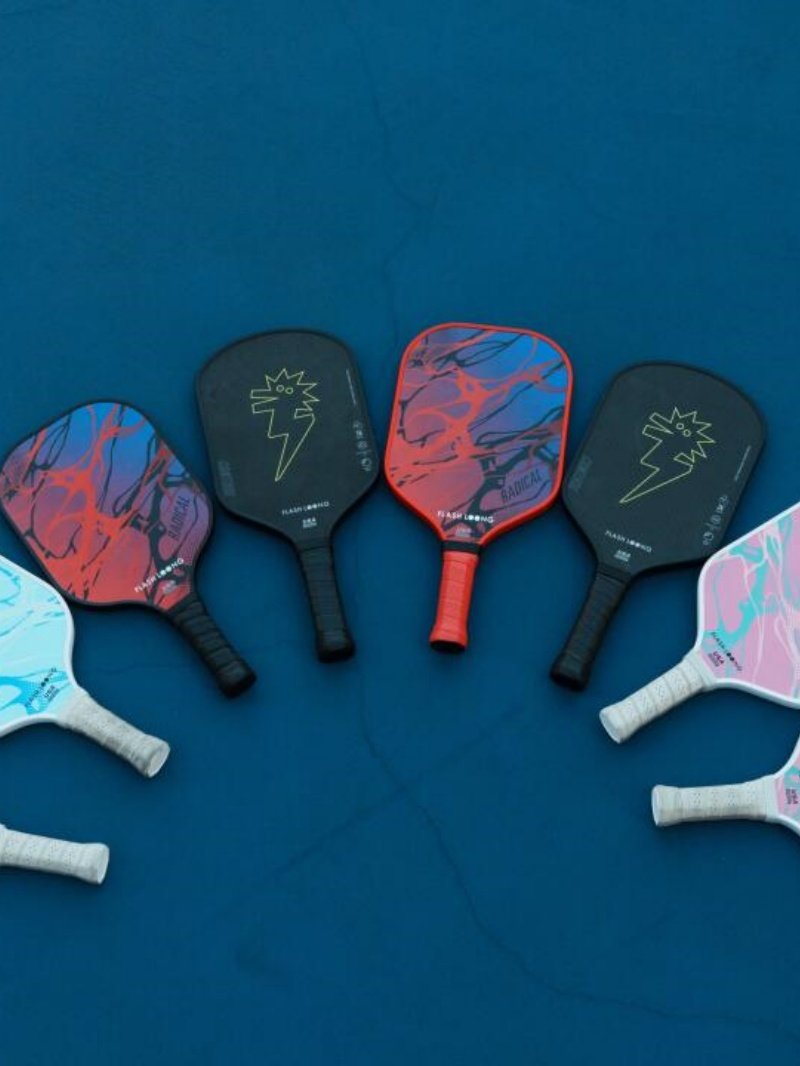
Once the finishing work is complete, the paddle enters the surface coating phase. In a clean workshop, specialized spraying equipment evenly applies eco-friendly paint to the paddle’s surface. The painting process is meticulous, with each layer of paint cured naturally or in a drying chamber until it forms a uniform, vibrant finish. Craftsmen carefully inspect the paint film to ensure there are no bubbles, runs, or color inconsistencies. In addition, the paddle is adorned with brand logos, personalized patterns, and other decorative elements. This not only elevates the aesthetic appeal but also embodies the spirit of sports and the philosophy of craftsmanship. Every design detail and color is refined repeatedly until the final appearance exudes both modern style and traditional charm.
VIII. Quality Inspection and Performance Testing — Rigorous Standards for Superior Quality
After passing through numerous processes, the paddle has finally taken shape—but its qualification is determined by a series of rigorous and detailed quality inspections and performance tests. Every paddle undergoes comprehensive evaluation of its appearance, structure, and athletic performance to ensure it meets the highest international standards in real-world use.
8.1 Comprehensive Appearance Inspection
Firstly, the paddle is subjected to an appearance inspection. In a brightly lit inspection room, evaluators scrutinize every inch of the paddle—from the uniformity of color and the smoothness of the paint film to the evenness of the edges and the precision of decorative patterns. Any minor defect is documented for rework or rejection. Every paddle that passes inspection is a testament to the factory’s relentless pursuit of quality, conveying unparalleled confidence and assurance to consumers.
8.2 Structural Stability Inspection
Beyond appearance, the integrity of the internal structure is equally critical. Using advanced non-destructive testing techniques and the expertise of experienced technicians, the bonding between the honeycomb core and the various material layers is meticulously examined for any voids, bubbles, or delamination. Every data point is recorded to serve as the basis for the product’s final release. Through these stringent inspections, every corner of the paddle is verified to maintain stability under high-intensity conditions.
8.3 Sports Performance Testing
After ensuring the paddle’s appearance and structure are flawless, it then undergoes critical sports performance testing. Professional athletes and testing experts use specialized instruments on standard courts to assess the paddle’s elasticity, balance, vibration absorption, and rebound speed. Through a series of simulated real-game scenarios, every performance metric is recorded and compared against predetermined standards, ensuring that the paddle not only excels in static tests but also delivers top-tier performance in practical use.
8.4 Long-Term Durability Testing
In addition to immediate performance evaluations, the paddle is subjected to long-term durability tests. It is placed in simulated extreme environments—high temperature, low temperature, high humidity—to observe any changes in structure, coating, or protective layers over time. Every test result must meet strict standards, ensuring that only products maintaining outstanding performance under harsh conditions reach the market. As craftsmen often say, “Every durability test result is the best proof of our confidence in our craftsmanship and product quality.”
IX. Packaging and Shipment — Conveying the Spirit of Craftsmanship to Every User
After enduring an arduous series of inspections, each paddle finally receives approval for shipment. The packaging and shipment process is not merely about placing the product in a box; it is a ceremony and a solemn promise to every consumer. Every package is designed to perfectly convey the factory’s years of refined craftsmanship and unwavering passion for the dreams of athletes.
9.1 Professionally Customized Packaging Design
The paddle is packaged in high-end, shock-proof boxes that are custom-designed. Every element—from the exterior design to the inner cushioning—is carefully selected and rigorously tested to ensure maximum protection during transport. The box features exquisite brand logos and product descriptions, with a design that seamlessly blends modern aesthetics with traditional charm, instantly conveying the rich cultural heritage and craftsmanship behind the brand.
9.2 Quality Assurance and User Manual
Each paddle is accompanied by a detailed quality assurance certificate and user manual. The manual outlines all technical parameters, maintenance guidelines, and usage instructions, and also incorporates the brand’s cultural narrative and design philosophy, ensuring that every user feels the deep commitment to quality and user experience from the moment they receive the paddle.
9.3 Final Reinspection Before Shipment
Prior to packaging, the quality control department conducts one final, comprehensive inspection of every paddle. Every aspect—appearance, structure, and sports performance—must meet the strict standards. Only when every criterion is satisfied is the paddle officially boxed, marked with the production date and batch number, serving as the sole traceable record of quality. Every team member understands that this is not just a product but the culmination of years of hard work and meticulous refinement.
9.4 Logistics and Distribution
Finally, the exquisitely packaged paddles are distributed to partners around the world. Every transportation stage is strictly monitored to ensure that the paddle retains its factory-perfect condition upon arrival in the hands of the consumer. No rough handling or adverse weather can shake the craftsmen’s confidence in the product’s quality.
X. Process Innovation and Future Prospects — Constantly Surpassing Through Inheritance
As the revolutionary heat-press integrated pickleball paddle with its honeycomb core begins to yield market success, the factory’s R&D team does not rest. Instead, they take this as a new starting point for further exploration and innovation. In the future, they will continuously introduce cutting-edge materials and high-precision techniques—optimizing structure, energy transfer, and every aspect of user experience—striving to surpass existing boundaries while honoring tradition, and creating more top-tier products that fulfill athletes’ dreams.
10.1 Exploration and Application of New Materials
Today, the honeycomb core material has already demonstrated its unparalleled advantages in many fields, yet its potential in sports equipment manufacturing is far from fully realized. The R&D team is exploring methods to embed micro sensors within the honeycomb core for real-time monitoring of the paddle’s condition; to incorporate nanoparticles to further enhance impact resistance; and to employ intelligent manufacturing techniques to achieve personalized customization for each paddle. Every experiment and test is a bold exploration of future possibilities.
10.2 Continuous Optimization of Process Flows
In the daily operations of every craftsman—from raw material pre-treatment to final packaging—every detail is recorded and analyzed. Data-driven management continuously optimizes process flows. Modern production lines now incorporate robotic automation, ensuring product consistency while freeing craftsmen to focus more on innovation and quality enhancement. Additionally, an information management system tracks the production status of every product in real time, enabling prompt detection and resolution of any quality issues.
10.3 Sustainable Development and Environmental Protection
In an era of growing environmental consciousness, NEXpickleball remains committed to sustainable development. From the procurement of raw materials, the use of eco-friendly glue, to the selection of packaging materials, every aspect strictly adheres to international environmental standards. In the future, the factory plans to introduce more green manufacturing technologies—such as waste heat recovery systems and low-energy equipment—to reduce environmental impact while pursuing peak performance. Every decision and improvement reflects the craftsmen’s deep sense of responsibility and love for our planet.
10.4 User Feedback and Product Iteration
Once the product enters the market, the brand places great emphasis on genuine user experience and feedback. Whether from professional athletes or everyday enthusiasts, their experiences and suggestions become vital data for continual product refinement. Each piece of market feedback is thoroughly analyzed—from design to process improvement to after-sales service—ensuring that the paddle remains an industry leader through constant innovation and iteration.
XI. Conclusion — Craftsmanship Through the Ages, Dreams Forever
Looking back over the entire manufacturing process—from the initial spark of design inspiration, through the careful selection of the honeycomb core, carbon fiber, and composite materials; from the meticulous pre-treatment of raw materials, to the dramatic transformation during adhesive bonding, layering, and heat-press molding; and finally, through cooling, demolding, finishing, coating, and final quality inspection—every step is imbued with the craftsmen’s profound passion for quality and their unwavering pursuit of athletic dreams.
This is not merely the production process of a paddle, but an epic that spans technology, art, and humanistic spirit. Every detail and every operation reflects the spirit of “striving for perfection” and the relentless pursuit of excellence. In the interplay of heat and calm, speed and intricacy, we witness the perfect fusion of technology and art, the rebirth of traditional craftsmanship under modern techniques, and NEXpickleball’s sincere promise to its partners, athletes, dreams, and the future.
When the paddle slowly emerges from the mold, when the smooth, even finish reflects the proud smiles of every craftsman, and when consumers experience an unprecedented lightness and power with every swing, it seems as if one can hear a quiet whisper from deep within the workshop: “All of this is so that you can unleash your passion and energy on the court.”
In the future, NEXpickleball will continue to innovate and exceed expectations while honoring tradition. Every paddle is not merely a piece of sports equipment but a timeless masterpiece infused with technology, art, and emotion—a sincere guardian of every athlete’s dream and an unwavering pursuit of the ultimate sports experience.
May everyone who holds this paddle feel the genuine care refined through countless experiments and improvements; and may it be your most reliable partner on the court, pushing you to surpass your limits and achieve brilliance. Just as the intricate, wise structure of the honeycomb core contains infinite potential, so does every sports enthusiast—awaiting only the moment when a single swing ignites the burning flame of dreams.