Skip to content

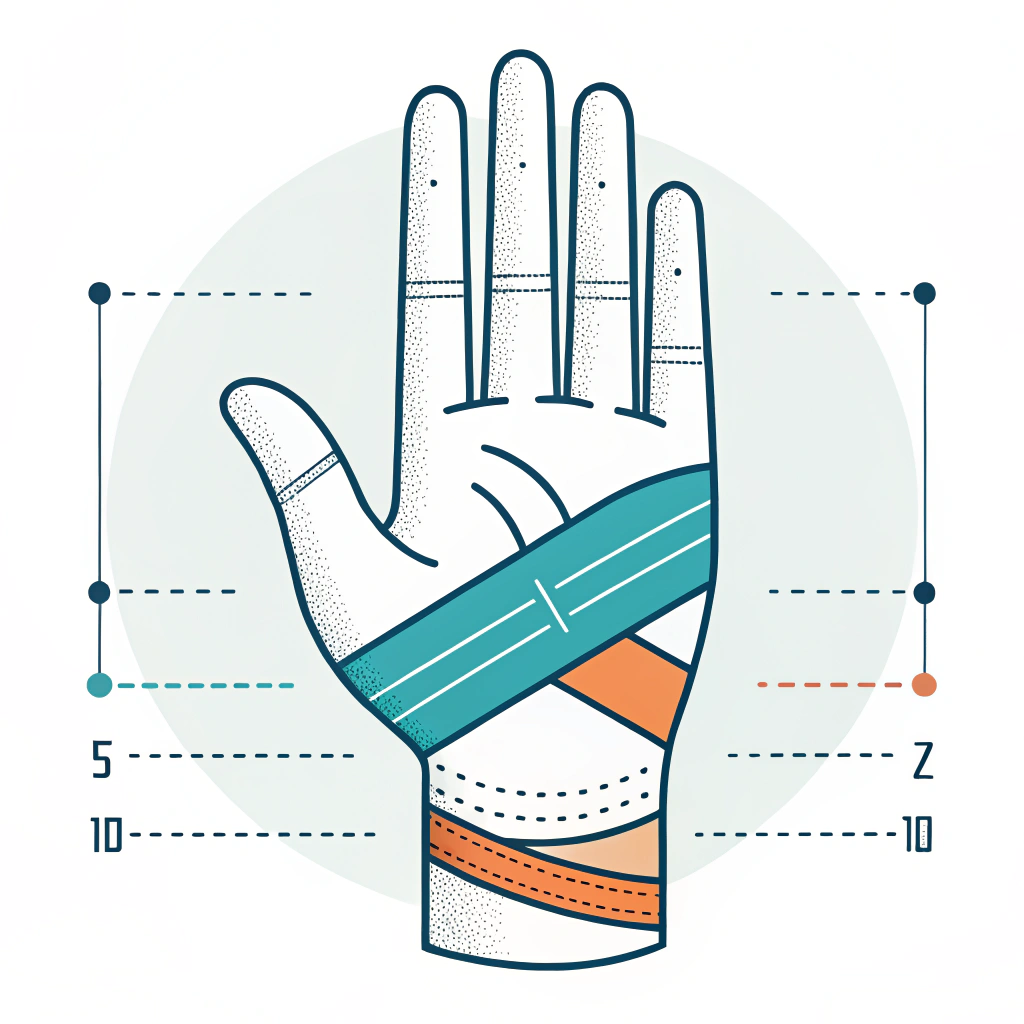
Quick answer — Measure the player's hand circumference1 (around the palm) and the distance from the wrist crease to the tip of the middle finger, then map those measures to a grip circumference chart2 (in inches/cm). For retail/OEM3 assortments, prioritize mid-range grips (4 1/4"–4 3/8") for general consumers, add one smaller and one larger size for coverage, and offer custom grips4 or on-demand grip tape to reduce returns and improve conversion.
Why this guide matters for buyers
- A wrong paddle grip drives higher returns, lower conversion, and poor reviews.
- As a merchandising/product manager you need a reproducible measurement method, clear sizing labels for product pages, and a practical SKU strategy5 that balances inventory cost with shopper fit.
- This guide gives step-by-step measurement, an actionable mapping chart, ergonomic effects of grip/handle length, and SKU+customization recommendations you can implement quickly.
- The problem: why grip sizing causes returns
- Customers report paddles feeling “too small” or “too large,” causing control or wrist strain complaints.
- Many product pages show grip diameter only in inches (e.g., 4 1/4") without explaining how to measure hands — leading to guesswork.
- B2B buyers need a standardized, low-friction approach to reduce returns and simplify product filters.
- How to measure hand for paddle grip (repeatable, retail-friendly)
Step-by-step instructions to display on product pages and in packaging: - Measure palm circumference:
- Wrap a flexible tape measure around the palm at the widest part (just below the knuckles), excluding the thumb. Record in centimeters and inches.
- Measure hand length (optional for handle length guidance):
- Measure from the wrist crease (inside of the wrist) to the tip of the middle finger.
- Record palm width (optional):
- Measure across the base of the fingers at the widest point — useful for some ergonomic handle designs.
Tips for customers (use as product page copy):
- Use cloth tape; if none available, wrap a string and measure the string with a ruler.
- Measure the playing hand (dominant hand).
- If between sizes, recommend the smaller grip for better wrist control, the larger grip for more power and stability.
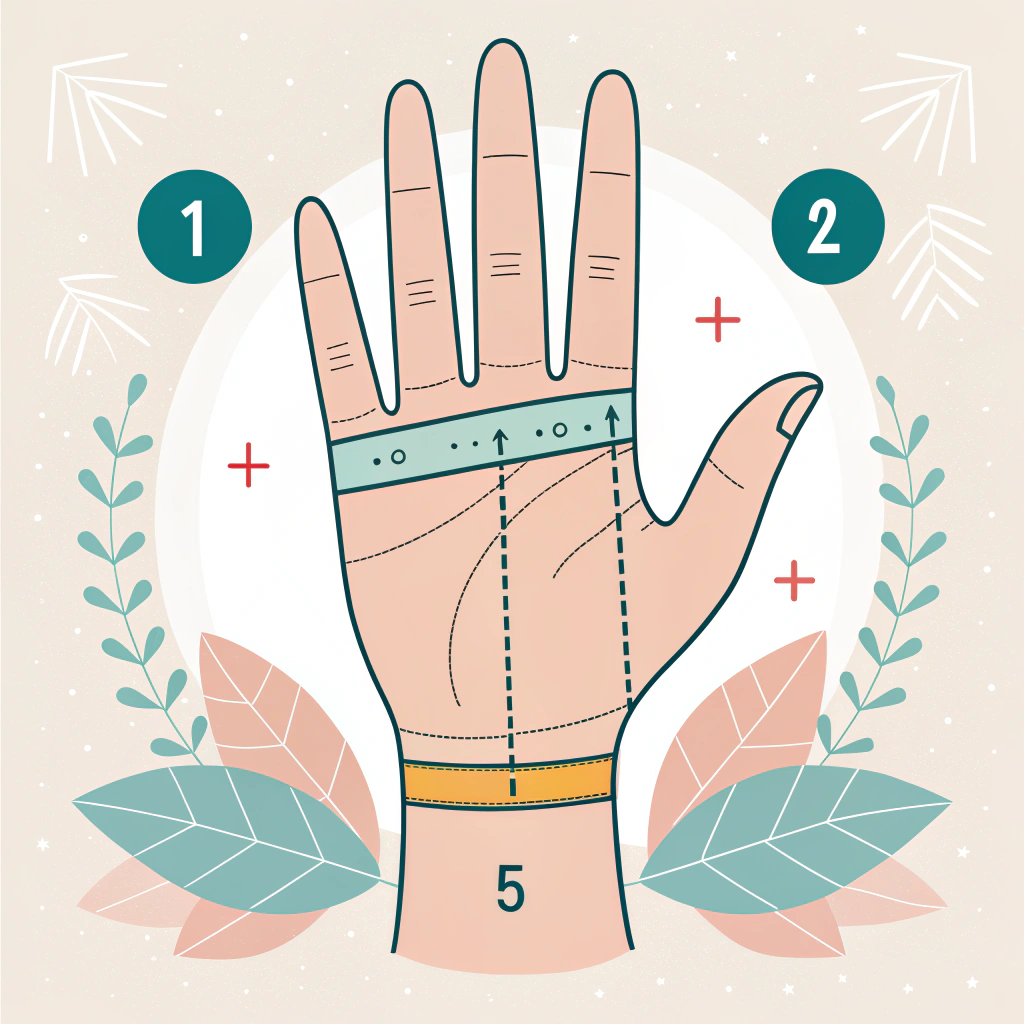
- Grip circumference chart — practical mapping (use on product pages)
Use this standardized chart as your primary conversion tool. Bold the recommended default.
| Hand palm circumference (in) | Hand palm circumference (cm) | Recommended grip circumference (in) | Common label |
|---|---|---|---|
| < 7.0 in | < 18 cm | 4.0 in | Small (S) |
| 7.0–7.6 in | 18–19.5 cm | 4 1/8 in / 4 1/4 in | Small-Medium (S/M) |
| 7.6–8.2 in | 19.5–21 cm | 4 1/4 in / 4 3/8 in | Medium (M) — Default for most consumers |
| 8.2–8.8 in | 21–22.5 cm | 4 3/8 in / 4 1/2 in | Large (L) |
| > 8.8 in | > 22.5 cm | 4 1/2 in / 4 5/8 in | Extra Large (XL) |
Notes:
- Offer both inch and cm values on product pages. Bold the most common “default” grip (4 1/4"–4 3/8") used by most players.
- Many manufacturers also specify handle length6; we cover that next.
- Handle length & how it affects play
- Typical handle length for pickleball paddles: 4.0"–5.5" (10–14 cm). Most retail paddles fall in the 4.25"–5.0" range.
- Shorter handles:
- Pros: Better single-hand control, quicker wrist action, easier for volley and dinking.
- Cons: Harder to switch grips for two-handed backhands or power swings.
- Longer handles:
- Pros: Better leverage for two-handed backhands and power; more contact area for larger hands.
- Cons: Heavier swing arc, can reduce maneuverability at the net.
Recommendation:
- For recreational assortments, specify handle length per model and recommend 4.25"–4.5" for most users.
- For performance/OEM lines, offer at least two handle lengths (standard ~4.25" and long ~5.0") for advanced players.

- How grip size changes performance (control, power, comfort)
- Small grips:
- Increase wrist mobility and feel; better for spin and precise placement.
- Risk: Excessive wrist action may reduce stability on power shots.
- Large grips:
- Increase stability and transfer of power; reduce wrist injury risk for players with larger hands.
- Risk: Reduced wrist snap and spin control.
- Balance with paddle weight:
- Heavier heads + large grip can feel sluggish; light heads + small grip amplify wrist action.
Practical rule:
- Match grip size to play style: control/spin players → smaller grips; power/drive players → larger grips. Always measure the hand first.
- Core material & construction considerations that affect grip choices
- Core material impact (Nomex, polymer, aluminum, honeycomb):
- Harder cores (Nomex) give more power and require better wrist control — pairing with a slightly larger grip can improve stability.
- Softer polymer cores absorb vibration — smaller grips are acceptable for comfort-seeking recreational players.
- Surface materials (Carbon Fiber, Fiberglass, Composite) change feel, but grip circumference effects remain consistent.
- Production process (hot pressing, cold pressing, thermoforming)7 affects paddle stiffness and weight distribution, which interacts with grip comfort. For example, a very stiff T300/T700 surface may transmit more shock; matching with the proper grip size and cushioned grip tape reduces perceived harshness.
- SKU assortment strategy for retail & OEM — reduce returns, optimize inventory
Guiding principle: cover the largest segment with fewer SKUs, use add-ons for edge cases.
Recommended SKU mixes (general retail assortment):
-
Basic 4-SKU mix (cost-efficient):
- 40% Medium (4 1/4" or 4 3/8") — default model
- 25% Small (4.0"–4 1/8") — smaller-hand players
- 25% Large (4 3/8"–4 1/2") — larger-hand players
- 10% Long-handle or XL (4 1/2"–4 5/8") — premium or pro-focused
-
Full 6-SKU mix (higher conversion, more options):
- 30% 4.25" (M)
- 20% 4.38" (M/L)
- 15% 4.0" (S)
- 15% 4.5" (L)
- 10% 4.625" (XL)
- 10% Long-handle versions across 2–3 grips
Table: SKU example for a mid-size retailer
| SKU | Grip (in) | Intended % of stock |
|---|---|---|
| Model-A | 4 1/4 | 30% |
| Model-B | 4 3/8 | 20% |
| Model-C | 4 0 | 15% |
| Model-D | 4 1/2 | 15% |
| Model-E (long handle) | 4 1/4 (5.0" handle) | 10% |
| Model-F (XL) | 4 5/8 | 10% |

SKU tactics to reduce returns:
- Make the grip measurement process front-and-center on product pages with visual diagrams.
- Offer inexpensive grip tape sold alongside the paddle for quick fit adjustments.
- Allow customers to exchange grip sizes within 30 days with a streamlined process.
- For OEM/private label, offer base paddle in 2 grip sizes and provide an easy + on-demand print or grip upgrade.
- Customization & on-demand services (what to offer and why)
- On-demand print customization increases attachment and reduces returns when the buyer personally configures the paddle.
- Offer two forms of sizing customization:
- Multiple pre-built grip sizes per model (recommended for most retailers).
- Custom grip build (for OEM partners): choose grip circumference, handle length, core hardness, and surface material. Use minimum order quantities for full custom runs.
- Add-on services that lower returns: pre-ship a thin overgrip, or include a complementary sizing card/measurement guide.
- Labeling and product page copy — convert measurements into confident buys
Must-haves on the product page:
- Visual measurement tool + conversion chart (cm/inches).
- Short guidance line: “Measure at widest part of palm. If between sizes, choose the smaller grip for more wrist control.”
- Product specs: grip circumference, handle length, paddle weight, balance point, core material, surface material, production method (hot/cold/thermoforming).
- Filterable attributes: grip size, handle length, weight range, play style (control / all-around / power).
- Implementation checklist for product managers (quick action items)
- Add an illustrated measurement guide to all paddle pages.
- Standardize grip size labels and conversion chart across all SKUs.
- Adjust initial SKU mix to include at least one smaller and one larger size beyond the default.
- Offer grip tape or overgrip as an accessory on PDPs.
- For OEM lines, include a “grip customization” option with MOQ and lead time.
- Track returns by grip size monthly and adjust SKU percentages if a pattern emerges.
Summary
A simple, repeatable hand measurement and clear mapping to a grip circumference chart will materially reduce returns and improve conversion for paddle assortments. Prioritize the medium grip as default, support both a smaller and larger option, and offer simple add-ons (overgrip, custom grips) for tight fits. Combine measurements, handle length info, and clear product copy to make purchasing decisions easy for end customers — that’s how you reduce returns and increase customer satisfaction.
People Also Ask
Q: What is the difference between T300/T7008 pickleball paddles?
A: T300 carbon fiber provides a balanced feel with moderate stiffness, favoring control and slightly more shock absorption that can reduce ball speed on powerful shots. T700 carbon fiber is stiffer and stronger, transferring more energy to the ball for higher speed and power—making it better suited for players prioritizing power over dampened feel.
-
hand circumference: Read the article to learn precise measurement points and common mistakes customers make when measuring their palms, so your product pages can reduce guesswork and returns. ↩ ↩
-
grip circumference chart: Reading this will show you a practical mapping table and conversion rules to display on PDPs, helping customers choose the right grip and lowering return rates. ↩ ↩
-
OEM: Click to understand OEM ordering constraints, lead times, and private-label options so you can design assortments and MOQs that work for manufacturing partners. ↩ ↩
-
custom grips: Learn fulfillment options for bespoke grips, on-demand manufacturing trade-offs, and how to present customization choices without exploding SKU counts. ↩ ↩
-
SKU strategy: This resource explains how to set SKU mixes, forecast percentages, and optimize inventory-turn versus conversion for retail assortments. ↩ ↩
-
handle length: Explains how handle length affects play styles and conversion recommendations for standard vs long handles in retail assortments. ↩ ↩
-
production process (hot pressing, cold pressing, thermoforming): Learn how each process affects stiffness, tolerances, and cost—insight that helps you match grip and core specs to player expectations. ↩ ↩
-
T300/T700: A primer on carbon fiber grades and their impact on paddle stiffness, feel, and target player profiles to help spec product lines. ↩ ↩