Skip to content

Quick answer (for snippet): Choose an advanced paddle by prioritizing the combination of face material1, core material2, and weight/balance that matches the player's needs (power, control, or spin). Equally important for B2B buyers are the manufacturer’s production methods3 (hot pressing, cold pressing, thermoforming), MOQ4, lead time, and proven quality control5 — these factors determine feel consistency, durability, and margin on resale.
Choice dilemma: which paddle to shortlist for advanced players
- You’re buying for advanced players who demand precision. They will trade forgiveness for performance. Your procurement decision must balance play characteristics (power vs control vs spin), supplier consistency, customization, and commercial constraints (MOQ, lead time, price, margin, warranty).
- This guide helps you compare face and core materials, manufacturing processes and their effects on feel and durability, and provides a practical procurement checklist and SKU mix to consider.
Core materials — how they shape feel and durability
- The core determines paddle hardness, dwell (time the ball stays on the face), shock absorption, and durability.
- Key cores you’ll encounter:
- Nomex Honeycomb Core: very stiff, low dwell, high durability and power. Favored for power-oriented, competitive paddles. Can be louder and transmits more vibration.
- Aluminum Honeycomb Core: balanced stiffness and weight; good for players who want a mid-point between power and control.
- Polymer Honeycomb Core (polypropylene variants): higher elasticity, more dwell, reduced vibration — preferred for control and comfort, often used in mid-to-high-end recreational and control-focused advanced paddles.
- Bamboo-core composites: lightweight and impact-resistant; good for a natural feel and long-term resilience.
Core comparison (quick reference)
| Core type | Feel / Dwell | Power | Control | Durability | Commercial notes |
|---|---|---|---|---|---|
| Nomex Honeycomb | Low dwell, stiff | High | Moderate | Very high | Premium durability; best for power lines; higher cost |
| Aluminum Honeycomb | Medium-low dwell | High | Good | High | Good balance; slightly heavier |
| Polymer Honeycomb | Higher dwell, softer feel | Moderate | High | Good | Broad appeal; good for recreational/advanced crossover |
| Bamboo Composite | Medium dwell, natural feel | Moderate | High | High | Niche, sustainable story; may command higher price |
Face materials — power, spin, and surface texture
- The face (surface material) controls stiffness, responsiveness, and how much spin you can generate.
- Important face materials:
- 3K Carbon Fiber: balanced weave; flexible enough for rebound and a warm touch. Good for players who want power with a forgiving touch.
- 12K Carbon Fiber: denser weave, harder surface, less flex — excellent for durability and a crisp, fast response. Tends to offer more rigidity and power.
- T300 Carbon Fiber: engineered for high tensile strength and lightness; good balance of power and weight.
- E-Glass Fiberglass: more flexible than carbon; larger sweet spot, softer feel, great for control and spin when combined with textured surfaces.
- Carbon-Fiberglass Composites: blend stiffness and forgiveness to tune sweet spot and feel.
Face comparison (summary)
| Face material | Stiffness | Spin potential* | Best for |
|---|---|---|---|
| 3K Carbon Fiber | Medium | Medium | Power/control mix |
| 12K Carbon Fiber | High | Medium-high | Power, tournament play |
| T300 Carbon Fiber | Medium-high | Medium | Strength + lightness |
| E-Glass Fiberglass | Low-medium | High | Control, larger sweet spot |
| Composite (C+F) | Tunable | Tunable | Custom-balanced models |
*Spin depends on surface texture/roughness plus material.
Manufacturing method — consistency, feel, and cost implications
- Production method significantly affects the paddle’s final properties, and should be a major procurement filter.
Hot pressing
- Process: high heat + pressure; often used for high-volume production.
- Performance impact: can densify and harden face materials and adhesives, yielding strong, durable paddles with consistent structural integrity.
- Pros: high throughput, good long-term durability, cost-efficient at scale.
- Cons: heat can change resin properties and subtle feel; tooling and equipment cost higher.
- Commercial: suited for bulk SKUs where consistency and durability are selling points.
Cold pressing
- Process: room-temperature pressure forming.
- Performance impact: preserves material resin properties better; often yields more sensitive touch and control.
- Pros: better ball feel, precise control of thickness and fiber alignment.
- Cons: longer cycle times, more expensive per unit.
- Commercial: good for premium, feel-sensitive lines where margins support lower volumes.
Thermoforming
- Process: heating to soften, then forming into molds — good for complex shapes and material distributions.
- Performance impact: enables unique thickness profiles, edge contours, and targeted stiffness zones.
- Pros: excellent for premium/custom designs, consistent geometry.
- Cons: higher tooling and labor; slower.
- Commercial: best for flagship models, white-label custom orders, and brand-differentiated SKUs.
Manufacturing comparison (high-level)
| Method | Consistency | Feel | Unit cost (relative) | Best use |
|---|---|---|---|---|
| Hot pressing | High | Firmer | Low (scale) | Core catalog, durable models |
| Cold pressing | Medium-high | Sensitive/fine-tuned | Medium-high | Premium feel models |
| Thermoforming | High (complex shapes) | Tunable | High | Custom/premium models |
Weight, balance, and sweet spot — tunable trade-offs
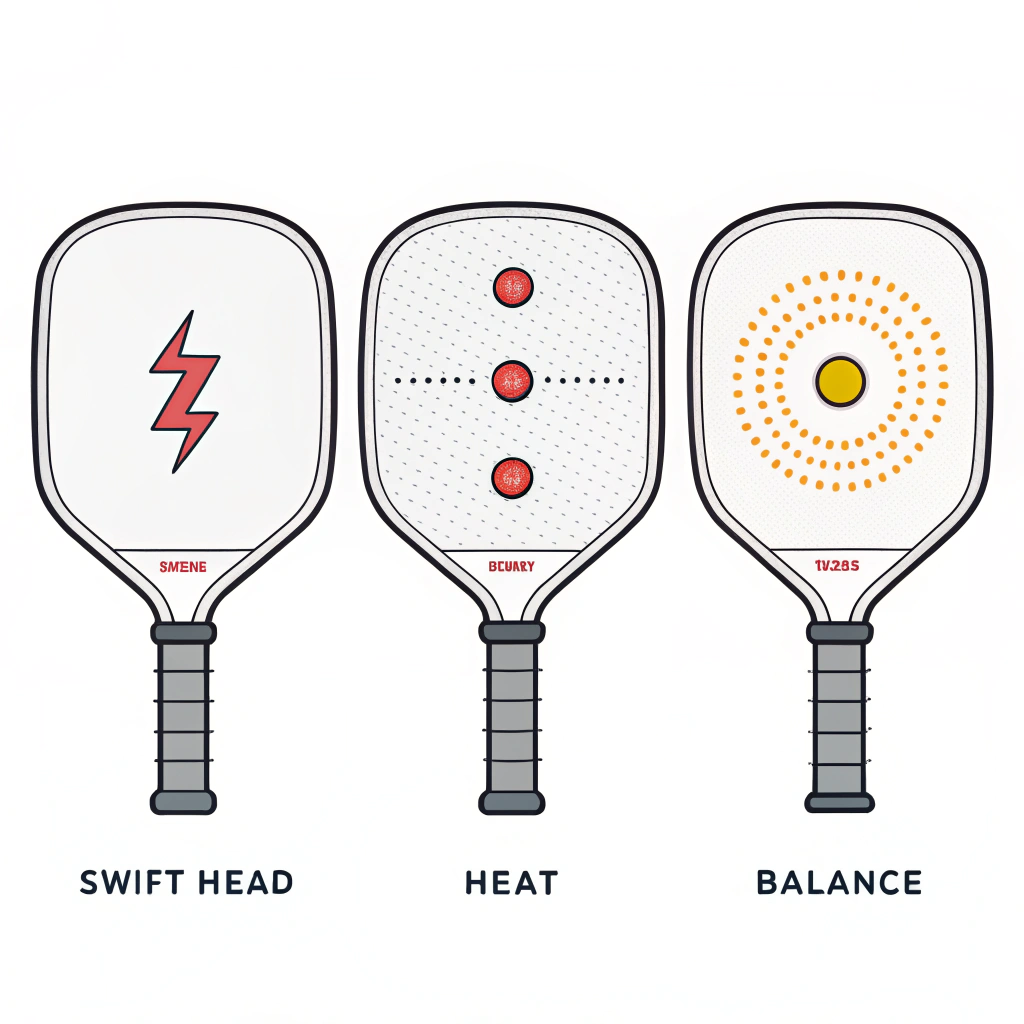
- Weight: advanced paddles typically range 7.2–8.8 oz (204–249 g). Lower weights favor maneuverability and reaction time; higher weights add momentum and power.
- Balance: head-heavy = more power; handle-heavy = more control and faster wrist action. Balance point is often expressed in mm from butt cap.
- Sweet spot: affected by face stiffness and core construction. Carbon faces with Nomex cores often give a smaller but extremely powerful sweet spot; fiberglass faces with polymer cores create larger, more forgiving sweet zones.
- Recommendation for advanced players: offer 2–3 weight/balance variants per model (e.g., 7.6–7.9 oz control, 8.0–8.3 oz all-around, 8.4+ oz power).
Surface texture and spin
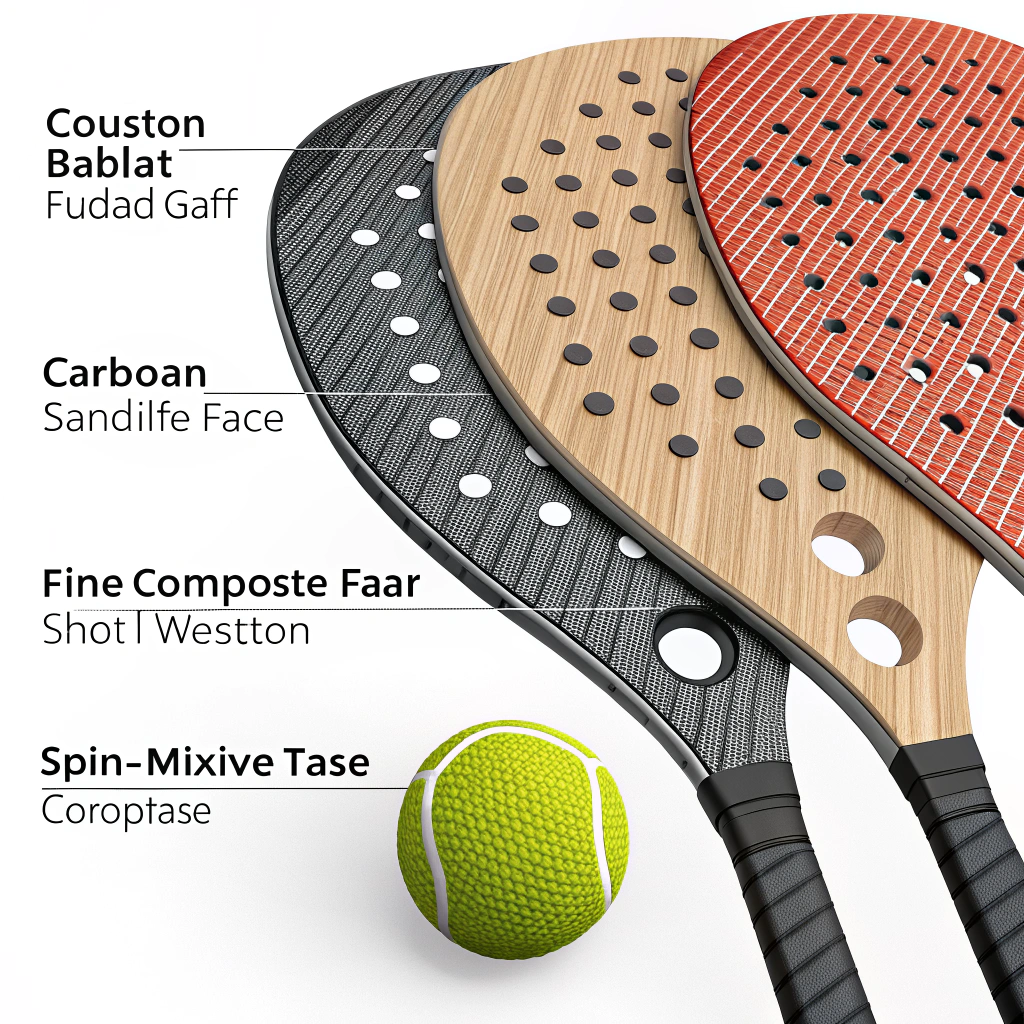
- Spin is not just material — it’s surface roughness and micro-texture. Manufacturers can offer different surface finishes: smooth, medium-grit, or aggressive sandblast/carbon weave texturing.
- For advanced players, provide models with at least one high-spin variant (textured carbon or glass) and one lower-spin power/control variant.
Customization & OEM considerations for buyers
- MOQ: typical OEM MOQs vary by method and customization level. Expect:
- Standard catalog color/print with hot pressing: lower MOQ (1k–3k pcs).
- Custom tooling, thermoformed shapes, or specialized cores: higher MOQ (2k–5k+).
- Lead times:
- Off-the-shelf hot-pressed runs: 6–10 weeks including printing and QC.
- Cold-pressed or thermoformed premium runs: 10–16+ weeks.
- Tooling and die costs: thermoforming and unique molds require upfront tooling fees — amortize tooling across initial production to calculate unit economics.
- Quality control: insist on per-batch mechanical testing (stiffness, weight tolerance ±2g, impact/durability tests), cosmetic checks, and random play-testing reports. Ensure supplier does serialized sample approval and pre-shipment inspection.
- On-demand print services: useful for quick reorders and retail personalization; be clear on print durability (UV coating, abrasion resistance) and colorfastness.
SKU mix suggestions for retailers/distributors
- For advanced player assortment, a recommended starter catalog (6 SKUs):
- Carbon power (12K + Nomex) — 8.4 oz head-heavy — tournament hitters
- Carbon control (3K + Polymer) — 7.8 oz even-balance — touch/control players
- Hybrid spin (T300 + fiberglass composite + textured face) — 8.0 oz — spin specialists
- Lightweight maneuver (T300 + polymer) — 7.4 oz handle-light — quick doubles play
- Durable outdoor (12K + aluminum core) — 8.2 oz — club/resort use
- Premium thermoformed flagship (tunable thickness zones) — custom weight/balance — brand showcase
Margin and pricing hints
- Positioning: premium advanced paddles should aim for MSRP that supports 40–60% gross margin for retailers after wholesale pricing. Cost of goods (COG) varies widely (materials, process), but expect mid-to-high-end COG in ranges that allow a wholesale markup of 2–3x over manufacturer net price.
- Negotiate tiered pricing by volume, and include conditional rebates for hitting sales volume to protect your margin through the season.
Procurement checklist (actionable)
- Technical:
- Confirm material specs: face weave type (3K /12K/T300), core formulation, thickness distribution.
- Request mechanical test reports and sample play-test videos.
- Check tournament-legal specs: USAPA/IFP compliance (paddle size, edge wrap, surface roughness if applicable).
- Commercial:
- MOQ, sample cost and lead time, tooling fees, payment terms.
- Warranty terms, defect rates, replacement policy.
- Lead time for reorder, capacity in peak season.
- Quality:
- Weight tolerance per batch, face adhesion testing, drop/impact/delamination tests.
- Pre-shipment inspection arrangements and third-party QC if needed.
- Marketing:
- Available SKUs, custom-print options, packaging, UPC/labeling support.
Final recommendations
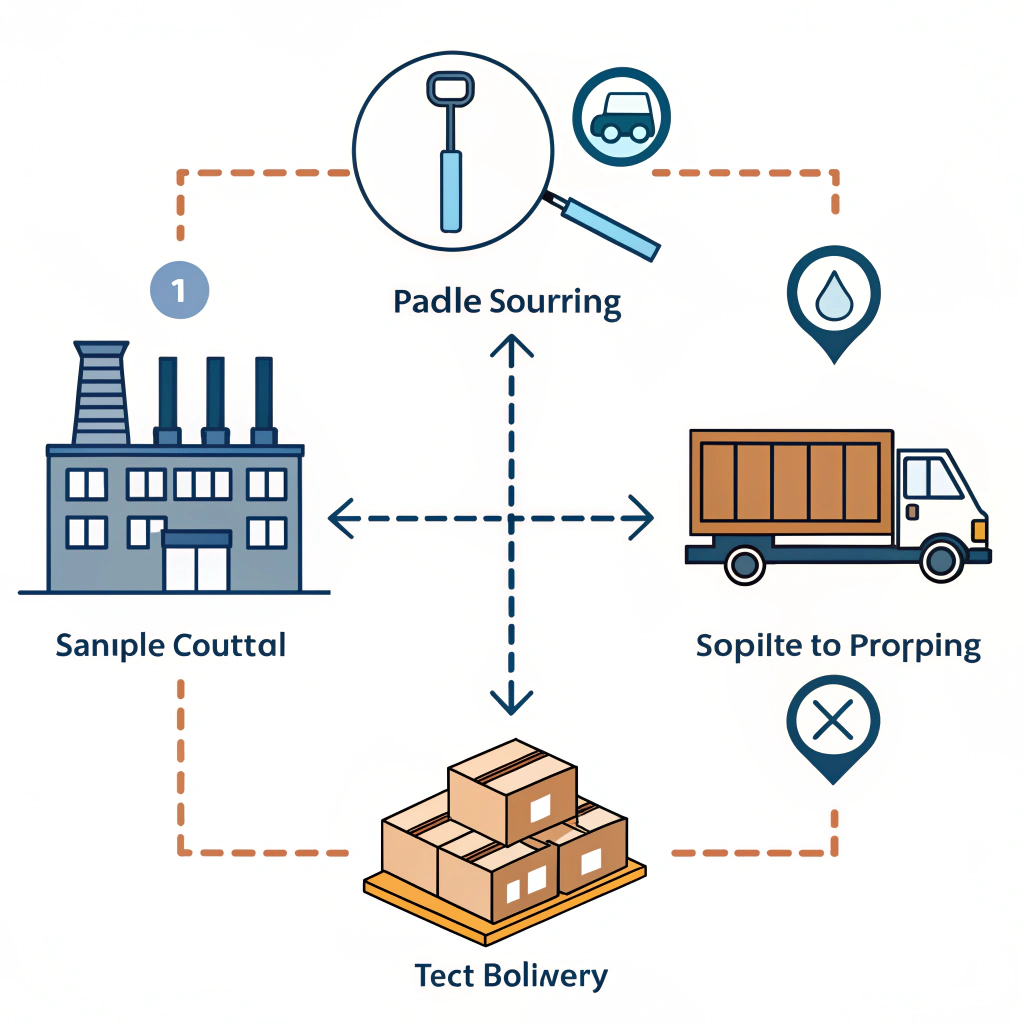
- Shortlist suppliers that can demonstrate: consistent production across chosen method (hot/cold/thermoforming), transparent QC data, flexible MOQ options for mixed SKU launches, clear sample/prototype process, and on-demand print capability.
- Start with a focused SKU set (3–6 paddles) that covers the core play styles (power, control, spin) and expand based on sell-through and player feedback.
- Insist on play-tested samples and batch mechanical test reports before full production sign-off. Factor in tooling amortization and seasonal lead times when calculating reorder cadence.
People Also Ask
Q: What is the difference between beginner and advanced pickleball paddles?
A: Beginner paddles emphasize a larger sweet spot and forgiveness — they use softer cores and more flexible faces to minimize off-center penalties. Advanced paddles are specialized: their combinations of face (carbon, fiberglass, composites), core materials (Nomex, aluminum, polymer), weight, and balance are tuned for specific outcomes (maximum power, precise control, or high spin). Advanced paddles require better technique but deliver higher performance for skilled players.
-
face material: Read to learn how face materials (carbon types, fiberglass, composites), weave counts, and coatings affect stiffness, spin potential, and durability — and what technical specs and supplier test data you should request to match player profiles. ↩︎ ↩
-
core material: Reading will clarify how different core chemistries and constructions (Nomex, aluminum, polymer, bamboo hybrids) change dwell, shock transmission, and longevity — critical for specifying boards that meet performance and warranty targets. ↩︎ ↩
-
production methods: Learn the pros/cons of hot pressing, cold pressing, and thermoforming at scale — including throughput, tooling costs, and how each method alters feel and failure modes, to align supplier selection with your SKU strategy. ↩︎ ↩
-
MOQ: Understanding typical OEM MOQs and how customization or tooling choices drive minimums helps you model inventory risk, unit economics, and negotiate staged launches or lower-risk pilot runs. ↩︎ ↩
-
quality control: A supplier’s QC protocols (mechanical batch testing, weight tolerance, adhesion/delam tests, pre-shipment inspection) directly impact return rates and brand reliability — read to get a checklist of required reports and acceptance criteria to include in contracts. ↩︎ ↩