Skip to content

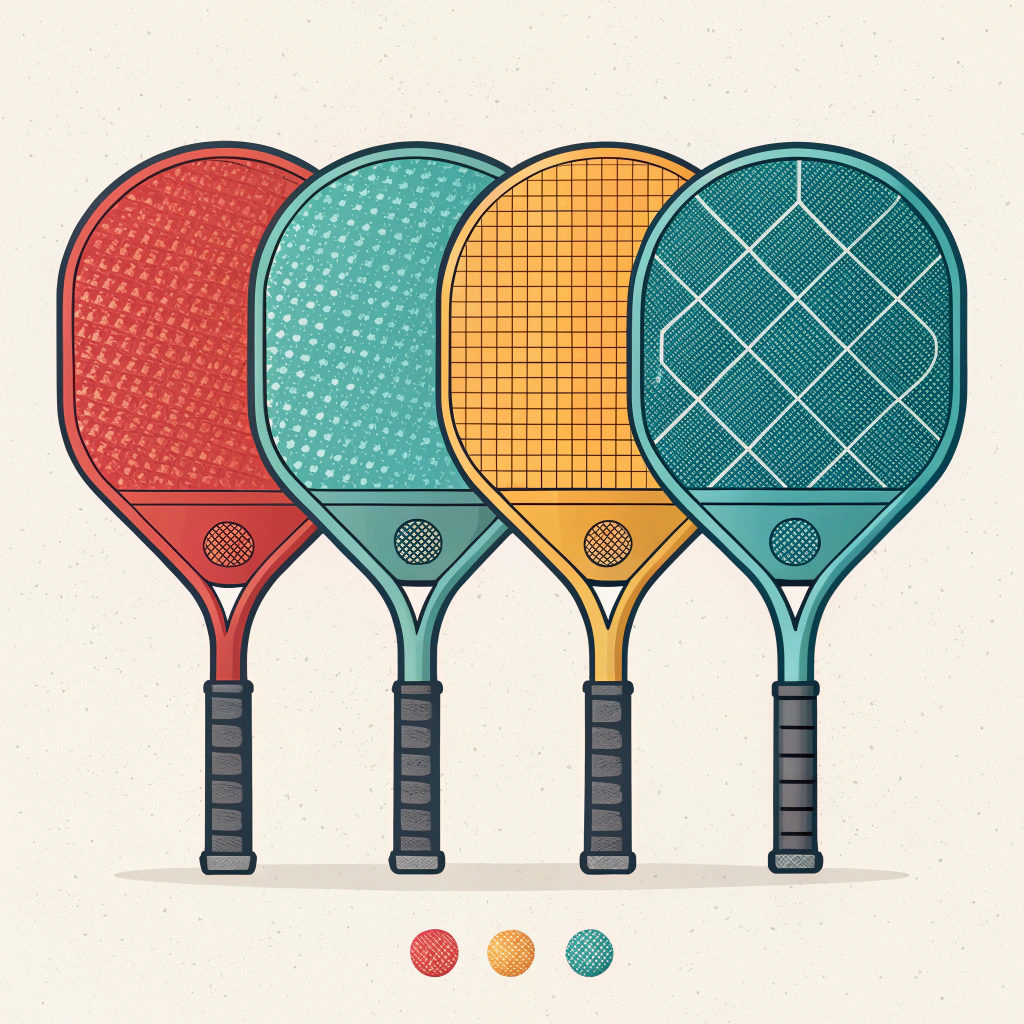
Choosing a pickleball paddle based on playing style means matching materials, core, thickness, weight, shape, and manufacturing process to how the end user actually plays.
For power players, prioritize stiff carbon fiber1 faces, thinner (13–14 mm) cores, higher swing weight, and thermoformed or hot-pressed constructions.
For control and soft-game players, choose thicker (16 mm) polymer cores, softer layups (fiberglass2 or mixed composites), midweight paddles, and shapes with a large sweet spot.
For all-round and recreational players, build balanced specs: 14–16 mm polymer cores, hybrid carbon/fiberglass faces, midweight, and standard or widebody shapes.
The rest of this guide translates playing styles into specific OEM configuration options you can take straight to your factory.
Most private-label and brand buyers start from price, then pick a few generic SKUs3. The result:
- Product descriptions that all sound the same
- Confused consumers (especially on Amazon)
- High returns from mismatch: “too dead”, “too lively”, “harsh on the arm”
If you reverse the thinking and start from playing style, you can:
- Build a clear product matrix: power / control / all-round / beginner
- Communicate benefits in simple language: “more spin”, “bigger sweet spot”, “easier on your arm”
- Talk with your manufacturer using specs instead of vague adjectives
In this article, we’ll map four main user types to clear configurations:
- Power / aggressive baseliner
- Control / soft-game / defensive
- All-round / intermediate
- Beginner / recreational & casual
Then we’ll connect each style to:
- Face material (carbon fiber vs fiberglass vs composite)
- Core type (polymer / Nomex / aluminum honeycomb4)
- Thickness (13 mm / 14 mm / 16 mm)
- Weight & balance
- Shape & handle
- Manufacturing process (hot press / cold press / thermoforming)
Use this as a high-level roadmap for your product planning.
| Playing Style / Segment | Face Material | Core Type & Thickness | Weight Range | Shape & Handle | Process Focus |
|---|---|---|---|---|---|
| Power / Aggressive | 12K / T300 carbon, raw or textured CF | 13–14 mm polymer or Nomex | 8.0–8.5 oz | Elongated, longer handle | Thermoformed / hot press |
| Control / Soft-Game / Defensive | 3K carbon or fiberglass / hybrid | 16 mm polymer honeycomb | 7.7–8.2 oz | Standard or widebody, standard handle | Cold press / controlled hot |
| All-Round Intermediate | Carbon + fiberglass composite | 14–16 mm polymer honeycomb | 7.8–8.3 oz | Standard / slightly elongated | Any, focus on consistency |
| Beginner / Recreational | Fiberglass or entry carbon composite | 15–16 mm polymer honeycomb | 7.6–8.0 oz | Widebody, larger sweet spot | Hot press (cost-effective) |
You can design 4–6 SKUs around this table and cover 80–90% of player types.
The honeycomb core is the engine of the paddle. It controls:
- Power vs control
- Vibration and comfort
- Durability and sound
The three main core options:
| Core Type | Key Traits | Best For Playing Style |
|---|---|---|
| Polymer honeycomb | Soft, quiet, good shock absorption | Control players, all-round, beginners |
| Nomex honeycomb | Hard, loud, very responsive | Power/aggressive players, advanced hitters |
| Aluminum honeycomb | Crisp, good touch, but can dent | Niche control paddles, touch-focused players |
For most modern brands, polymer honeycomb is the core of choice because it:
- Offers a comfortable, muted feel
- Reduces vibration (arm comfort is a big selling point)
- Is widely accepted in USA Pickleball compliant paddles
Power-focused SKUs can optionally use Nomex in a thinner profile for a very “hot” feel, but this is more niche and often targeted at advanced or ex-tennis players.
Thickness strongly affects power, control, and forgiveness:
- Thinner (13–14 mm)
- More power & pop
- Smaller sweet spot
- Less forgiveness and shock absorption
- Thicker (16 mm)
- More control & touch
- Larger sweet spot and more stability
- Softer feel, better for beginners and control players
For new players, a 16 mm polymer core is often easier because it forgives off-center hits and helps with soft shots and dinks, which are hard to learn.
For an OEM line, a simple mapping is:
- Power line: 13–14 mm
- Control / beginner lines: 16 mm
- All-round: 14–16 mm depending on your brand positioning
At NEX Pickleball, we routinely produce 13 mm, 14 mm, and 16 mm cores and can fine-tune the feel through cell size and wall thickness, not just the nominal thickness.
The paddle face influences power, spin, and durability.
We work with several carbon fiber types, each with a different “feel”:
-
3K Carbon Fiber
- Good balance of strength and flexibility
- Slightly softer feel than higher-density carbon
- Suits control and all-round paddles
-
12K Carbon Fiber
- Higher thread density, stiffer and more durable
- Great for power and advanced competitive paddles
- Stable on hard hits, helps with consistency at high pace
-
T300 Carbon Fiber
- High tensile strength, light and strong
- Fits high-performance, pro-style paddles where players need quick swings and solid impact
Carbon fiber vs fiberglass in simple terms:
| Face Material | Power | Control / Feel | Spin Potential | Durability | Typical Use Case |
|---|---|---|---|---|---|
| Carbon fiber | Medium | High | High (with texture) | Very high | Control / spin / pro-level paddles |
| Fiberglass (E-Glass) | High | Medium | Medium | High | Power / recreational / “fun” feeling paddles |
For a clear product line:
-
Power paddle:
- 12K or T300 carbon fiber face
- Aggressive surface texture for spin
-
Control paddle:
- 3K carbon fiber or carbon + fiberglass composite
- Focus on dwell time and softer feedback
-
Beginner paddle:
- Fiberglass or carbon-fiberglass composite
- Eye-catching graphics, forgiving feel
Common weight ranges:
-
Lightweight (7.3–7.7 oz)
- Faster at the net, easier on the arm
- Less stability on hard shots
-
Midweight (7.8–8.3 oz)
- Best balance for most players
- Works for almost all styles
-
Heavy (8.4–8.8+ oz)
- Max power and stability
- Can cause fatigue or arm issues if poorly matched
For most B2C lines:
- Default to midweight for all-round and control paddles
- Offer one slightly heavier power model for advanced players
- Keep beginner paddles in the lighter-mid range to avoid arm strain
Two paddles can weigh the same but feel very different if the weight is distributed differently.
-
Head-heavy balance
- Higher swing weight
- More power, more plow-through
- Better for baseline hitters and aggressive players
-
Head-light / neutral balance
- Easier maneuverability at the kitchen
- Favours defense, blocks, and quick hands
When you talk with your manufacturer, specify not only total weight, but also your target balance point or playing style so we can tune the internal layup and edge guard.
Main shapes and their behavior:
| Shape Type | Features | Best For Playing Style |
|---|---|---|
| Standard | Balanced length/width, central sweet spot | All-round, control, most players |
| Widebody | Wider face, larger sweet spot | Beginners, defensive players, casual users |
| Elongated | Longer face, narrower width | Power, reach, spin-focused advanced players |
- Elongated paddles
- More reach and potential power
- Smaller sweet spot, more demanding
- Widebody paddles
- High forgiveness and stability
- Perfect for newcomers or “I just want to have fun” buyers
A good OEM structure:
- Power SKU → elongated
- Control / beginner SKU → standard or widebody
- All-round SKU → standard, with maybe a slightly stretched profile
Handle choices influence both two-handed backhands and comfort:
-
Longer handle (5.5"+)
- Better for two-handed backhands
- Popular among tennis converts and aggressive baseliners
-
Standard handle (4.9"–5.3")
- Common for most rec and all-round paddles
Grip size:
- Thinner grips give more wrist action and spin
- Thicker grips can be more stable and comfortable for large hands
As an OEM supplier, we can provide different grip diameters and overgrip options, which is an easy way to differentiate SKUs without changing the core construction.
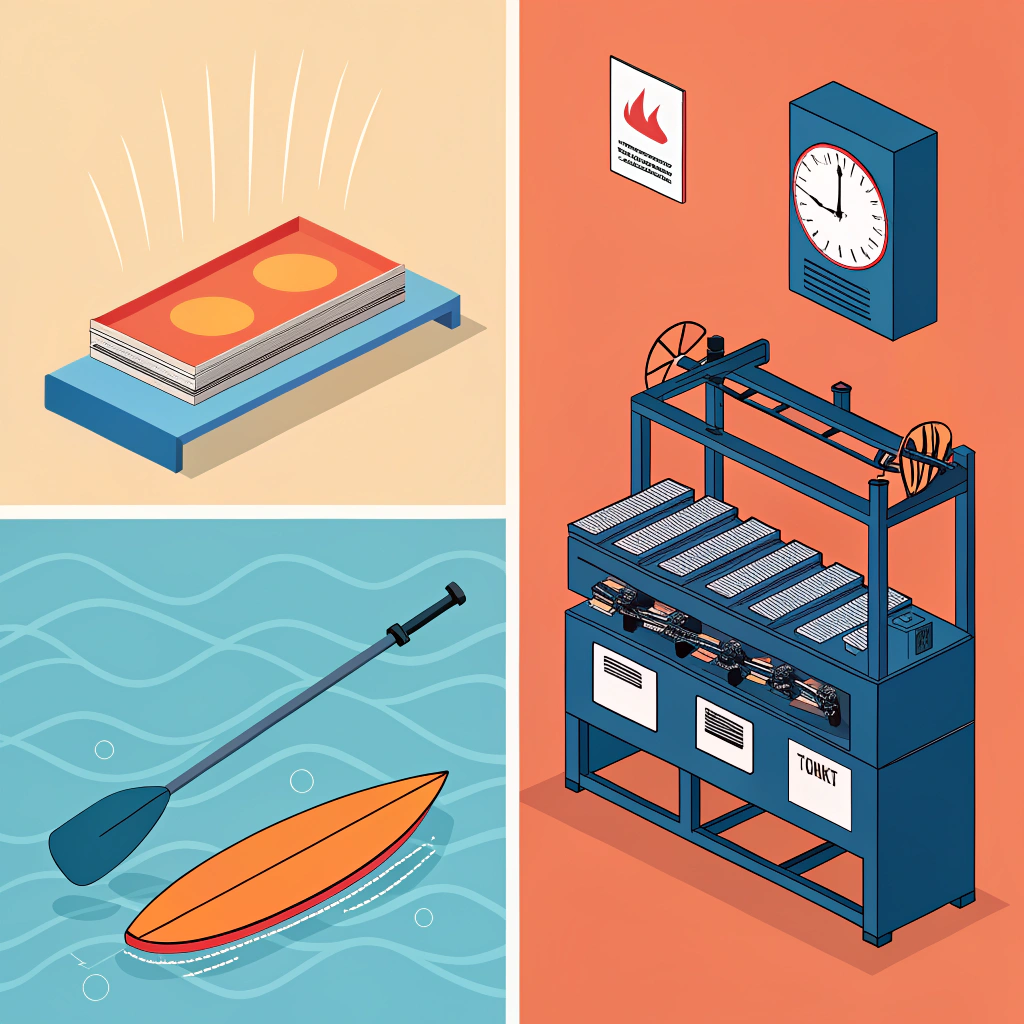
Different production methods create different feel, durability, and cost profiles.
Hot pressing uses heat and pressure to bond the layers.
- Pros:
- High efficiency, good for volume
- Strong, durable bond
- Cons:
- Some materials may feel slightly “harder”
Best for:
- Entry-level and mid-range paddles
- Large retail orders where consistent quality and price matter
Cold pressing shapes the paddle at room temperature with precise pressure.
- Pros:
- Preserves material characteristics
- Excellent control and feel, more “connected” to the ball
- Cons:
- Slower, more demanding process
Best for:
- Control-oriented or premium feel paddles
- Players who prioritize touch and soft game
7.3 Thermoforming5
Thermoforming heats materials to a softening point and forms them in complex molds.
- Pros:
- Very stable edges, enhanced durability
- Enables high-performance, pro-style paddles with precise thickness distribution
- Cons:
- Higher tooling and process cost
Best for:
- Top-end power/control hybrids
- Advanced and competitive players who demand consistency and edge strength
At NEX Pickleball, we use all three processes and can propose the best match for each SKU segment based on your price point and target buyer.
Below are sample configurations you can adapt directly in your RFQs or product spec sheets.
Target user: Ex-tennis players, advanced competitors, heavy hitters.
Key spec template:
- Face: 12K or T300 carbon fiber, raw or textured
- Core: 13–14 mm polymer honeycomb or Nomex for extra pop
- Thickness: 13–14 mm
- Weight: 8.0–8.5 oz, slightly head-heavy
- Shape: Elongated, longer handle (for two-handed backhands)
- Process: Thermoformed or high-quality hot press
- Selling points: Power, spin, reach, “pro feel”
Target user: Players focused on dinks, blocks, resets, and consistency.
Key spec template:
- Face: 3K carbon or carbon + fiberglass composite
- Core: 16 mm polymer honeycomb
- Thickness: 16 mm
- Weight: 7.8–8.2 oz, neutral balance
- Shape: Standard, large sweet spot
- Process: Cold press (for feel) or carefully controlled hot press
- Selling points: Touch, forgiveness, arm comfort
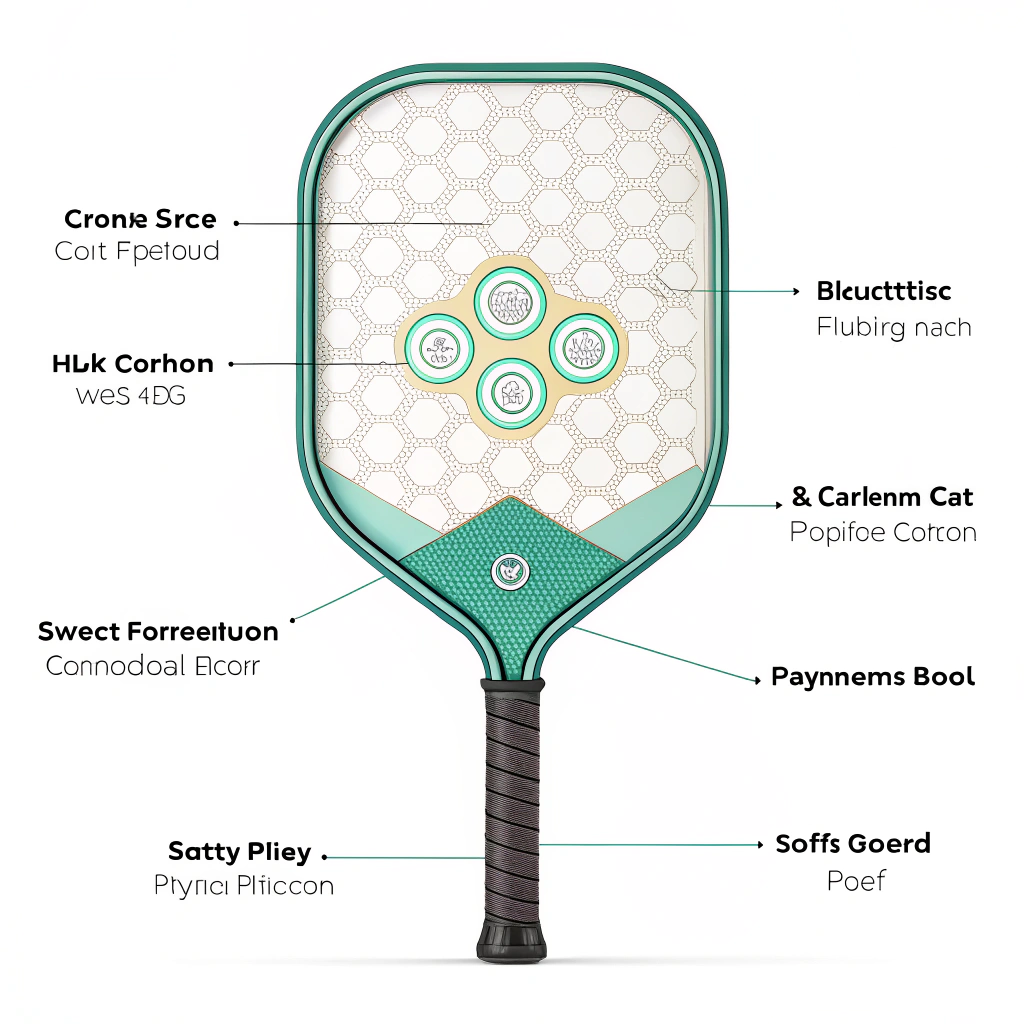
Target user: Club players, improving intermediates, “I want one paddle for everything.”
Key spec template:
- Face: Carbon + fiberglass composite
- Core: 14–16 mm polymer honeycomb
- Thickness: 14 mm (slightly more power) or 16 mm (more control)
- Weight: 7.8–8.3 oz
- Shape: Standard or slightly elongated
- Process: Flexible – choose based on price vs performance targets
- Selling points: Balanced power and control, versatile
Target user: New players, casual users, corporate / club bulk orders.
Key spec template:
- Face: Fiberglass (E-Glass) or entry-level carbon composite
- Core: 15–16 mm polymer honeycomb
- Thickness: 16 mm for maximum forgiveness
- Weight: 7.6–8.0 oz, slightly head-light
- Shape: Widebody, large sweet spot
- Process: Hot press (cost-effective and durable)
- Selling points: Easy to play, forgiving, comfortable
When you brief a private label5 manufacturer like NEX Pickleball, translate “power paddle” or “control paddle” into clear specs:
-
Playing style & target level
- “Intermediate control player, mostly doubles”
- “Advanced singles player, ex-tennis, power-focused”
-
Prioritized performance keywords
- Power / Control / Spin / Comfort / Durability / Price point
-
Preferred spec ranges
- Face material (e.g., 12K carbon, 3K carbon, fiberglass)
- Core type (polymer / Nomex / aluminum) and thickness (13/14/16 mm)
- Target weight range and balance feel
- Shape and handle length
-
Budget and positioning
- Entry, mid, or premium price segment
From there, we can:
- Propose two or three construction options for each style
- Provide sample runs using hot press, cold press, or thermoforming
- Ensure USA Pickleball compliance where needed
- Offer on-demand print services for branding and fast iteration
This approach reduces trial-and-error, speeds up time to market, and ensures each SKU has a clear story your customers can understand.
A 16 mm paddle is usually better for beginners because the thicker core provides more forgiveness, stability, and a softer feel. It creates a larger sweet spot and helps with control on dinks, drops, and soft shots, which are the hardest skills for new players.
A 14 mm paddle offers more power but is less forgiving, so it suits players who already have good timing and ball control.
Choose the paddle shape based on your priorities:
- Widebody / standard shape: Best for most players. It offers a larger sweet spot, more forgiveness, and is ideal for beginners, control players, and doubles.
- Elongated shape: Longer and narrower, with more reach and potential power. It suits advanced players, singles specialists, and those who want extra spin and leverage.
For a broad consumer base, brands typically lead with standard or widebody paddles and add elongated models as a performance upgrade option.
-
Carbon fiber: Reading the linked article helps you understand different carbon weaves, stiffness, and surface treatments so you can tune power, control, and durability in your paddle line. ↩
-
Fiberglass: The external resource will clarify fiberglass grades, layup strategies, and how this material affects feel and power, guiding better spec decisions for recreational vs. performance SKUs. ↩
-
SKUs: The explanation will show how to structure and name product SKUs strategically, improving catalog clarity, inventory management, and marketplace SEO for your paddle range. ↩
-
Honeycomb: The linked content will detail honeycomb geometry, cell size, and wall thickness, showing how each factor changes sound, vibration, and performance for different player types. ↩
-
Thermoforming: The external resource will walk you through the thermoforming process, cost implications, and why it matters for edge durability and “pro” feel, helping you decide where it fits in your lineup. ↩ ↩2