Skip to content

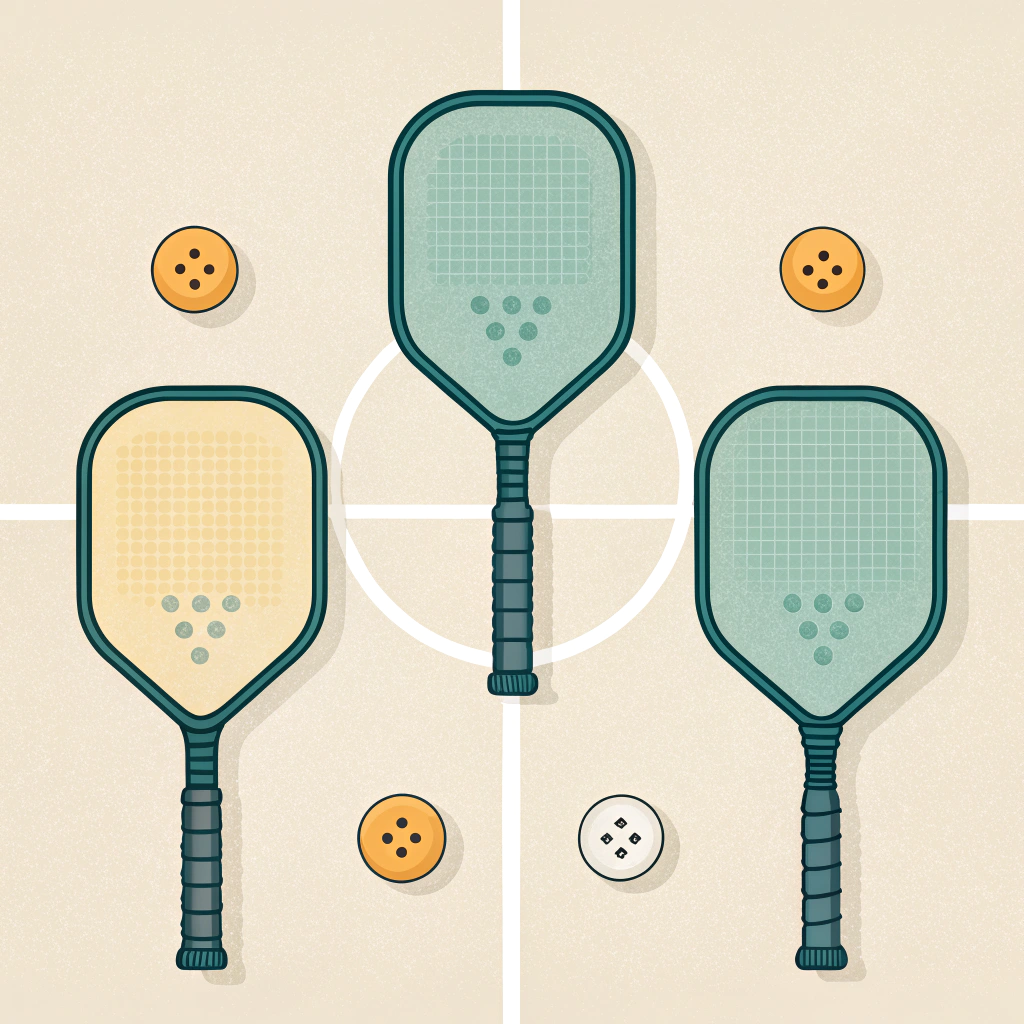
Short answer (snippet-style): Pick the paddle shape that matches the player profile and SKU role — elongated for reach and extra power but higher swing weight, wide‑body for forgiveness and control at the same weight, teardrop for a high, forward sweet spot and aggressive power, and midshape for balanced play and broad market appeal. Ask suppliers for measurable specs (surface area, weight tolerance, MOI, balance point, core thickness) and require sample testing (swing weight, rebound, sweet‑spot mapping) before production.
Why this guide
- Audience: product or sourcing managers at sporting‑goods brands, distributors, and private‑label buyers who must pick paddle geometries for SKUs.
- Goal: provide measurable trade‑offs, manufacturing implications, test metrics, and SKU recommendations you can give to OEMs like NEX Pickleball.
Key terms (first use bolded)
- Paddle shape: the overall face profile (elongated, wide‑body, teardrop, midshape).
- Sweet spot: preferred hit area for consistent power and feel.
- MOI (Moment of Inertia)1: rotational resistance around the handle axis; higher MOI = more stability but slower swing.
- Balance point: position of the center of mass measured from the butt end (mm or cm).
- Surface area: playing face measured in square inches (sq in).
- Core thickness: internal core depth (mm), typically 13–16 mm in modern paddles.
Direct comparison — at a glance
Below is a concise table you can use when deciding SKUs.
| Shape | Typical surface area | Typical length/width | Power vs Control | Sweet spot location | MOI | Ideal player / SKU role | Manufacturing notes |
|---|---|---|---|---|---|---|---|
| Elongated | 70–75 sq in | Length 16.7–17.5", Width 7.0–7.4" | Power ↑, control ↓ | Higher and narrower | Higher (swing heavy) | Advanced players; market: competitive | Requires tighter QC for balance; affects thermoforming tooling |
| Wide‑body | 80–90 sq in | Length 15.5–16.3", Width 8.0–8.5" | Control ↑, power moderate | Lower and wider | Lower (easier to swing) | Beginners/recreational; value SKUs | Easier to hit mass‑market tolerances; edge guard larger |
| Teardrop | 73–80 sq in | Length 16.0–17.0", Width 7.3–7.8" | High power, good pop | High and centered | Mid–High | Power‑oriented; transitional players | Needs precise face contouring for consistent sweet spot |
| Midshape | 75–82 sq in | Length 15.8–16.5", Width 7.6–7.9" | Balanced | Centered | Mid | All‑round SKU; flagship lines | Best for cold pressing or hot pressing for consistent feel |
(Values are industry typical ranges; request exact numbers from your supplier.)
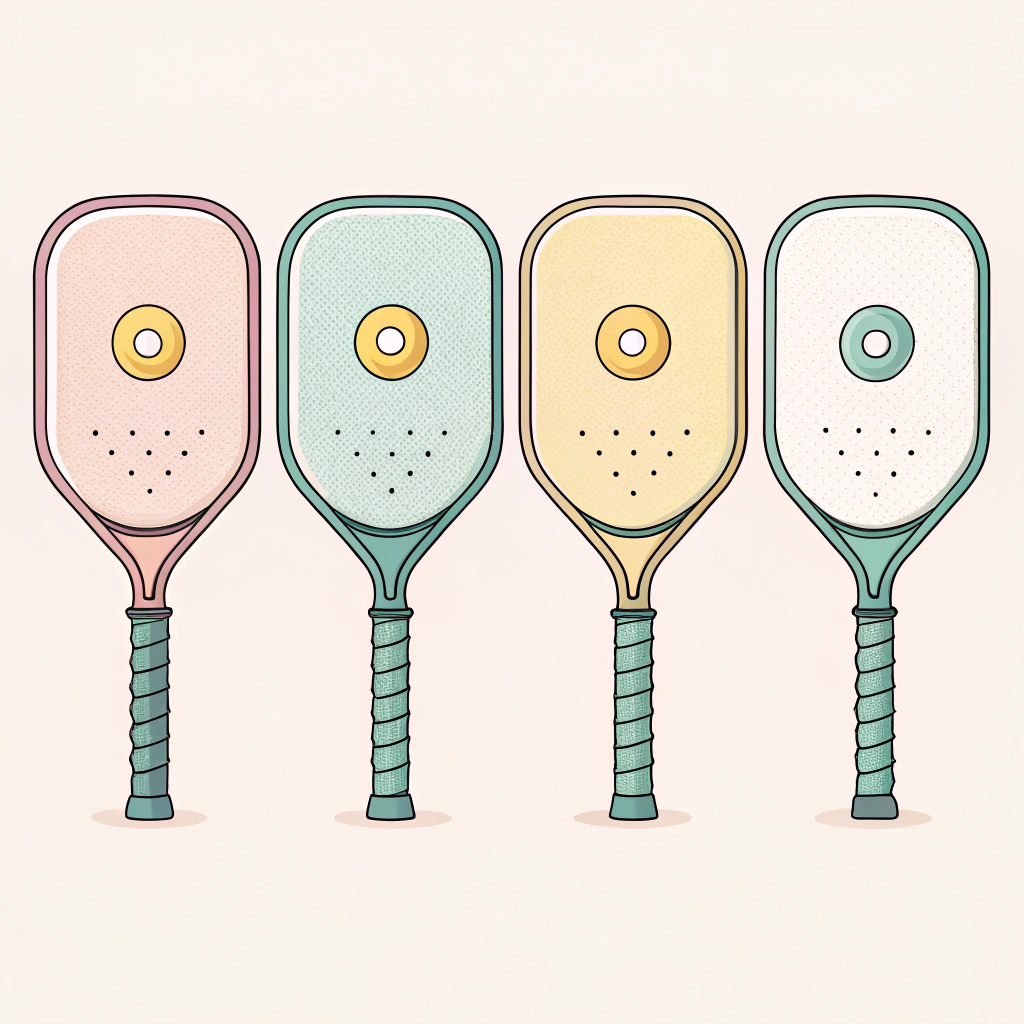
How shapes change performance — measurable mechanics
- Sweet spot distribution
- Elongated: sweet spot is higher up the face and narrower horizontally. Good for deep drives and kitchen‑line reach. Request a sweet‑spot heatmap2 from supplier (force maps or rebound velocity mapping across the face).
- Wide‑body: larger, lower sweet spot; more forgiveness on off‑center hits.
- Teardrop: concentrated high sweet spot with strong rebound in that zone.
- Midshape: even distribution; predictable across multiple strike locations.
- Power vs control and why
- Power ≈ mass × effective lever arm × transfer efficiency. Shape affects the lever arm and MOI. An elongated face moves mass further from the handle axis, raising MOI — more stored angular momentum and perceived power on full swings, but the paddle resists rapid directional changes.
- Control depends on face stiffness, core thickness, and sweet spot width. Wider faces increase margin for error (control), thinner cores transmit more energy (more pop).
- Weight and swing weight
- Absolute weight (grams) affects power: heavier paddles impart more momentum.
- Swing weight (rotational inertia) is what competitors feel. Two paddles of same mass but different mass distribution will swing differently; elongated shapes increase swing weight even at equal grams.
- Core thickness and stiffness
- Thinner cores (≤13 mm) are stiffer and typically yield higher ball exit velocity — more power. Thicker cores (14–16 mm) dampen energy, improving control and touch.
- Combine core thickness spec with face material (carbon vs fiberglass) to predict response.
Manufacturing and procurement implications
- Production process fit
- Hot pressing: high throughput, consistent cure for carbon fiber faces. Good for high‑volume elongated or teardrop paddles where face stiffness is critical.
- Cold pressing: better for precise thickness and tactile feel — useful for midshape or wide‑body premium control paddles.
- Thermoforming3: ideal if you need complex curvature or specific thickness maps across the face — helps control sweet‑spot location for teardrop or custom designs.
- Tooling and tolerances
- Elongated and teardrop shapes demand tighter balance point tolerances (±3–5 mm) to maintain consistent swing weight.
- Wide‑body shapes often need larger edge‑guard tooling and stronger bonding processes.
- Cost drivers
- Face material: 12K carbon4 and T300 are more expensive than E‑Glass. Price jump is substantial; specify exact fiber type.
- Core: Nomex5 is pricier than polymer honeycomb; polymer cores offer lower cost and softer feel.
- Process: thermoforming > cold press > hot press (in cost; depends on complexity).
- Cosmetic and print considerations
- On‑demand print (ODM) is possible, but expect higher per‑unit cost for low MOQ custom graphics.
- Edge guard type and color matching can affect cycle time and yield.
Testing metrics to request from suppliers (practical checklist)
Ask your OEM to provide values and measurement methods for:
- Net weight (g) ± tolerance
- Balance point (mm from butt)
- Swing weight / MOI (g·cm²) measured with method described (provide or request method)
- Surface area (sq in)
- Core thickness (mm) and tolerance
- Rebound velocity or COR (coefficient of restitution) under standardized drop test
- Sweet‑spot mapping (heatmap of rebound or force vs location)
- Surface roughness (Ra) for spin potential and the grit used
- Edge guard adhesion and tensile peel test
- Durability: cycles to failure under ASTM‑like loading or equivalent
Sample requirement: require first‑article sample then 50 pre‑production samples for batch testing (spin, rebound, delamination, weight variance).
SKU recommendations and specs you can send to OEM
Below are four SKU templates targeted at common market segments. Adjust materials and process based on price point.
- Recreational / Value (Wide‑body)
- Shape: Wide‑body
- Surface area: 84–88 sq in
- Weight: 220–240 g (midweight)
- Core: Polymer honeycomb, 14 mm
- Face: E‑Glass fiberglass
- Process: Hot press (lower cost)
- Benefit: Forgiving, broad market appeal
- All‑round / Flagship (Midshape)
- Shape: Midshape
- Surface area: 78–80 sq in
- Weight: 200–215 g
- Core: Polymer or aluminum honeycomb, 14–15 mm
- Face: T300 carbon composite
- Process: Cold press or hot press for consistent quality
- Benefit: Balanced control/power for broad retail segment
- Advanced Power (Elongated)
- Shape: Elongated
- Surface area: 72–75 sq in
- Weight: 205–225 g (prefer midweight to manage swing weight)
- Core: Nomex or stiff polymer, 13–14 mm
- Face: 3K or 12K carbon fiber
- Process: Hot press or thermoforming (for exact thickness mapping)
- Benefit: Reach and top‑end power; competitive player SKU
- Spin/Power Hybrid (Teardrop)
- Shape: Teardrop
- Surface area: 74–78 sq in
- Weight: 200–210 g
- Core: Polymer honeycomb, 13–14 mm
- Face: Carbon‑fiberglass composite for balanced grip and rebound
- Process: Thermoforming recommended to shape sweet spot
- Benefit: High sweet spot + controlled feel for aggressive play
Testing protocol suggestions (quick)
- Swing weight/MOI: measure with standardized pendulum or rotational rig — report in g·cm².
- Rebound mapping: use a robotic arm to strike locations across the face at fixed speed; record ball exit speed and spin.
- Durability: repeated impact test (e.g., 10k impacts at 3 m/s) and thermal aging for adhesives.
- Visual: ensure paint/print adhesion and edge guard bonding survive 100 cycles.
Procurement tips and red flags
- Red flag: supplier cannot provide balance point or MOI data — these are essential for consistent player feel.
- Negotiate sample rounds and tolerances into the contract (e.g., weight ±3 g, balance ±4 mm).
- MOQ vs tooling amortization: thermoformed/complex shapes may require higher MOQs — plan SKUs accordingly.
- Confirm raw material grade: “carbon fiber” is not specific enough; require 3K/12K/T300 designation.
- Include acceptance tests and failure rates in supplier agreement.
Decision flow for selecting shapes
- Define target player profile and price tier.
- Choose primary shape based on primary trade‑off (power vs control).
- Set measurable specs (surface area, weight, core thickness, MOI target).
- Request sample testing with specified protocols.
- Iterate with supplier (adjust core thickness, face layup, balance point).
- Lock tooling and MOQs only after validated sample passes tests.
Conclusion
Shape matters because it directly changes sweet‑spot distribution, MOI, and how a paddle feels in play. For B2B sourcing, move beyond names and require quantifiable specs and test results from manufacturers. Use the SKU templates and test checklist above to make a defensible, repeatable selection for your product line.
People Also Ask
Q: Does the shape of a pickleball paddle matter?
A: Yes. Paddle shape changes the size and location of the sweet spot, swing weight (MOI), and how the paddle distributes energy on impact. Elongated shapes concentrate power higher on the face and increase MOI; wide‑body shapes increase forgiveness by enlarging the sweet spot and lowering MOI; midshape and teardrop balance those traits. For procurement, ask suppliers for a sweet‑spot map and MOI numbers to compare shapes quantitatively.
Q: Does a heavier pickleball paddle give you more power?
A: Generally yes — more mass increases momentum and can produce more ball speed on full swings. However, perceived power also depends on mass distribution (swing weight): a moderate overall weight with mass pushed forward or toward the head can feel more powerful than a heavier but evenly balanced paddle. Specify both net weight and swing‑weight/MOI when evaluating power expectations.
Q: Why do thinner pickleball paddles have more power?
A: Thinner cores (e.g., 13 mm and below) are often stiffer and absorb less impact energy, so more energy is returned to the ball, producing higher exit velocity. Thinner cores also reduce material damping. For buyers, pairing a thinner core with a stiffer face (carbon) increases power; thicker cores provide more damping and control.
-
MOI (Moment of Inertia): Read to learn how MOI is defined and measured, why it’s the engineering proxy for swing weight, what units and test rigs suppliers should use, and how to write MOI targets into specs and acceptance tests for consistent player feel. ↩ ↩
-
Sweet‑spot heatmap: Reading will explain mapping methods (force maps, rebound‑velocity grids), how to request heatmaps from OEMs, how to interpret zones for SKU positioning, and what test rigs or robot protocols produce comparable data across suppliers. ↩ ↩
-
Thermoforming: Read to understand the process capabilities, tooling and MOQ implications, how thermoforming enables variable face thickness maps and complex curvature for controlled sweet spots, and what manufacturing evidence (tool trials, samples) to require before tooling sign‑off. ↩ ↩
-
12K carbon: Read to compare fiber counts (3K vs 12K vs T‑series), their impacts on stiffness, surface finish, layup economics, and how to specify fiber type and ply schedule to control feel and cost in supplier contracts. ↩ ↩
-
Nomex: Read to evaluate Nomex honeycomb vs polymer and aluminum cores — differences in density, stiffness, fatigue life, and cost — plus guidance on when Nomex is justified for competitive SKUs and what test metrics (fatigue, delamination) to require. ↩ ↩