Skip to content

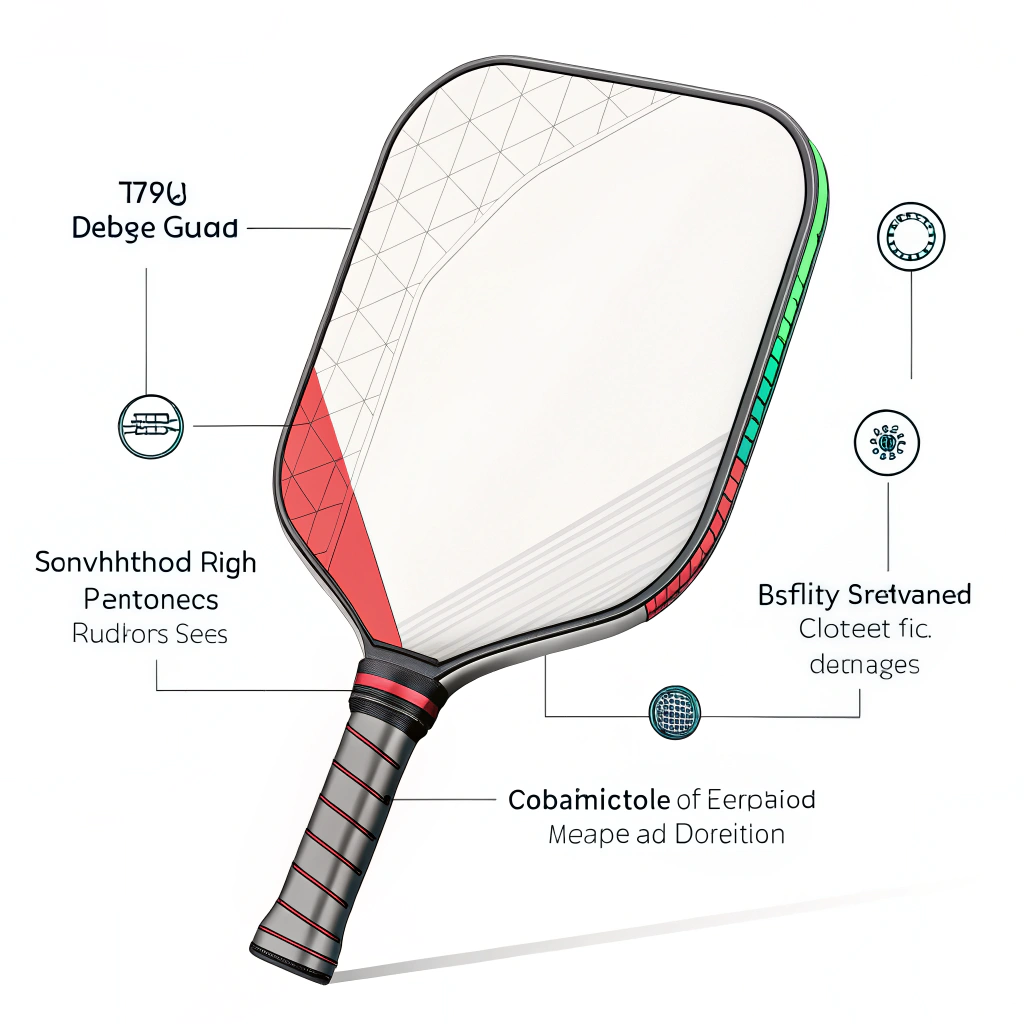
Quick Answer: Custom TPU1 Edge Guard solutions for Pickleball Paddles not only protect products from wear and tear but also offer limitless branding opportunities with custom logos and colors, making them ideal for sports equipment distributors looking for performance and visual appeal.
In today’s competitive sports equipment market, procurement managers and product developers must balance performance, durability, and brand differentiation. One such innovation is the customizable Edge Guard made from TPU (Thermoplastic Polyurethane). This component plays a pivotal role in safeguarding the paddle’s edges against damage while allowing companies to incorporate their unique brand aesthetic through custom logos and color choices.
The requirement for this advanced accessory arises from two main challenges:
- The need to protect high-performance paddles, which often use advanced materials like carbon fiber, fiberglass, or specialized composite materials2.
- The desire to enhance product differentiation in a crowded market, where having branded and visually appealing products can drive sales and brand loyalty.
Manufacturers and distributors face ongoing issues with paddle durability, especially under high-impact conditions. Repeated use on hard courts can lead to chipping, cracks, or edge deformation. Additionally, companies are increasingly looking for ways to merge functional protection with branding opportunities. Traditional design approaches often leave little room for customization, forcing procurement managers to choose between standard quality and the potential for product differentiation in a saturated market.
For example, many Pickleball Paddle manufacturers offer basic models with minimal branding options. However, with the rise of competitive play and consumer demand for personalized sporting equipment, an opportunity has emerged. By integrating a high-quality TPU Edge Guard, manufacturers can protect their products while providing a canvas for adding custom logos and color schemes, meeting both performance and marketing needs.
The problems stem primarily from two factors:
- Material Vulnerability and Surface Damage: Paddle edges are susceptible to damage from repetitive impacts during play. Materials like 3K Carbon Fiber and 12K Carbon Fiber offer tremendous performance but require complementary protective solutions to maintain integrity over time.
- Lack of Customization in Standard Production: The inability to customize components has long limited the ability of brands to tailor their products to specific market segments or promotional needs. Traditional edge guards made from lower-grade materials lack both the performance attributes required during intense play and the flexibility for branding.
To address these issues, companies must select materials and production processes that balance high-performance needs with aesthetic customization. TPU is an excellent material for this, as it offers flexibility, durability, and is highly amenable to both hot and cold forming processes, making it ideal for designed customization.
The solution to these challenges is the adoption of a high-performance, TPU Edge Guard. This innovative component offers several advantages that make it the go-to option for sporting goods distributors:
- Enhanced Durability: TPU is renowned for its resistance to abrasion and impact, ensuring that the paddle’s edge remains intact even after extended use. Its shock absorption capacity means that it can reduce vibrations during play, contributing to a better on-court experience.
- Customization Options: One of the standout features of TPU is its ability to be easily molded into complex shapes and then painted with custom colors or logos. For companies looking to bolster brand recognition, having a customizable edge guard provides an excellent platform for bespoke design.
- Cost-Effectiveness: Despite its high-performance features, TPU is a cost-effective material, making it suitable for OEM manufacturing. It helps companies manage production costs while still offering a premium product to their clients.
- Versatility in Production: With multiple production processes available (hot pressing, cold pressing3 and thermoforming4), TPU Edge Guards can be produced to meet specific design criteria. This versatility allows manufacturers to fine-tune the product according to performance requirements and aesthetic preferences.
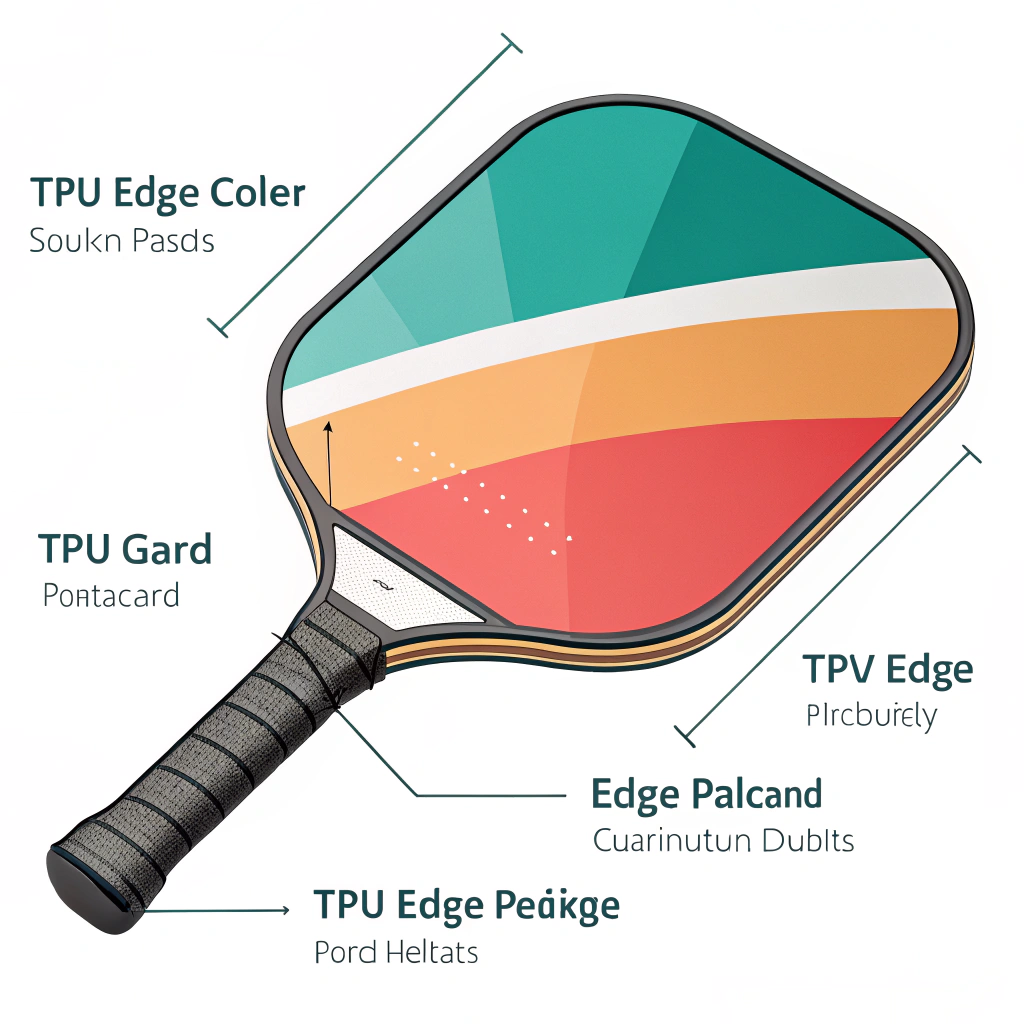
To better illustrate why TPU is the material of choice for a customizable edge guard, consider the following comparison table:
| Aspect | TPU Edge Guard | Standard Rubber Edge Guard | Non-Customizable Plastic Edge Guard |
|---|---|---|---|
| Durability | High impact resistance; excellent shock absorption | Moderate impact resistance; less shock absorption | Lower durability; prone to cracks |
| Customization | Easily customized with logos and colors | Limited customization options | Generally fixed design |
| Manufacturing Flexibility | Suitable for hot pressing, cold pressing, and thermoforming | Primarily molded using standard processes | Less adaptable processing methods |
| Cost-Effectiveness | Economical for premium performance | Often lower upfront cost, but may require replacement | Low initial cost, but higher long-term costs due to wear |
| Branding Impact | Provides high-quality area for brand details | Minimal brand visibility | Does not support branding |
This table clearly demonstrates that TPU offers a competitive edge by combining both functional and aesthetic benefits, making it suited for distributors focusing on both performance and market differentiation.
The customization process for TPU Edge Guards involves several steps to ensure both durability and branding prominence:
- Design Input: The procurement team provides design specifications such as logo placement, color codes, and specific dimensions. This collaborative process ensures that the final product aligns with branding guidelines.
- Material Selection: Based on the performance requirements, TPU is selected for its unique properties. This material is ideal for applications that require a balance between flexibility and strength.
- Prototype Development: Manufacturers produce prototypes using cold pressing or thermoforming.
- Quality Testing: Each prototype undergoes rigorous testing to ensure that the edge guard not only protects the paddle but also maintains the aesthetic quality over its lifespan. Tests include impact resistance, elasticity, and surface retention of applied logos and colors.
- Mass Production: Once the design meets all performance criteria, the product transitions into full-scale production. Advanced production techniques ensure consistent quality and timely delivery.
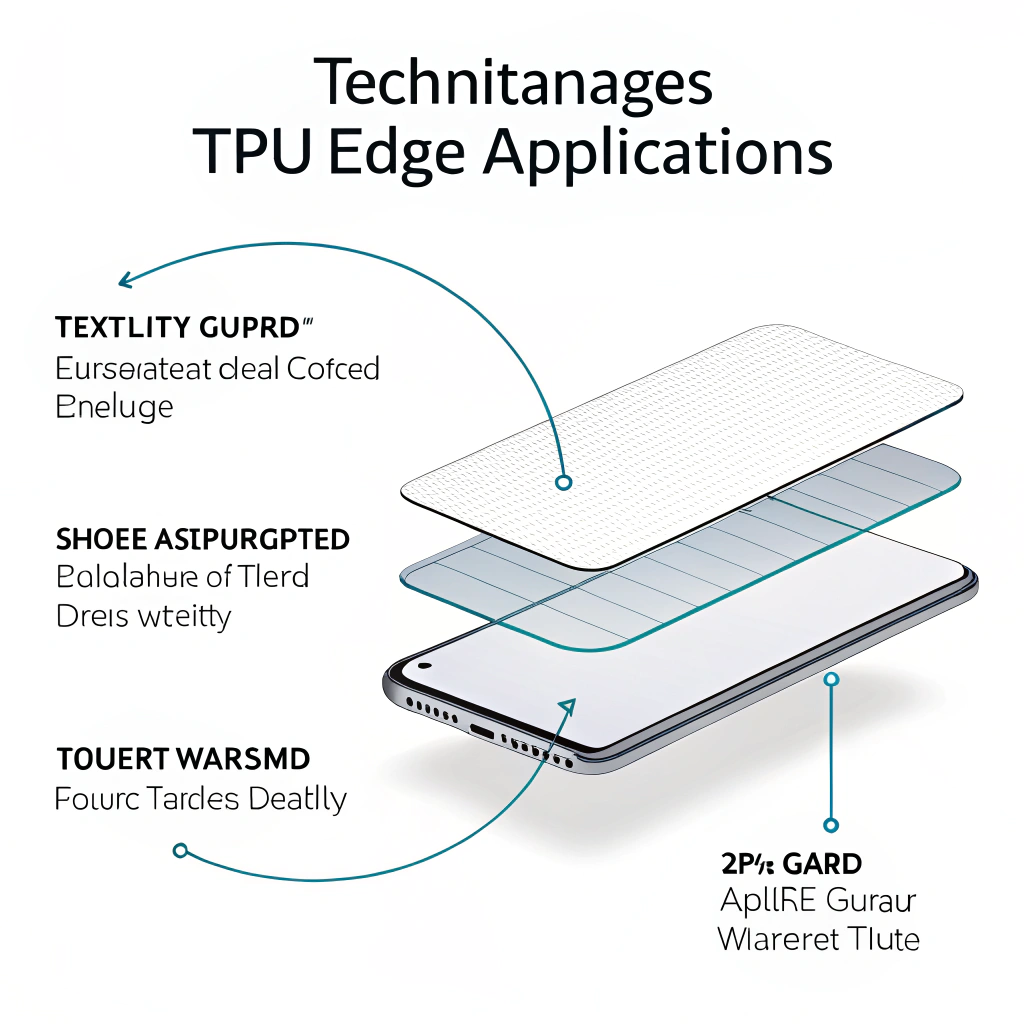
Thermoplastic Polyurethane (TPU) is ideally suited for edge guard applications because it offers:
- High Elasticity: TPU can absorb shocks well, reducing stress at the paddle edges during high-impact play.
- Surface Adaptability: TPU surfaces can be easily treated to adhere customized inks or paints, ensuring that custom logos remain vibrant and durable.
- Chemical and Abrasion Resistance: This makes TPU more resilient than many conventional materials even under heavy use.
- Temperature Stability: TPU maintains its properties across a wide range of temperatures, ensuring consistent performance regardless of environmental conditions.
These technical advantages provide a compelling argument for the adoption of TPU Edge Guards for new, high-performance Pickleball Paddle product lines.
One of our high-profile clients, a leading sports equipment distributor, recently integrated custom TPU Edge Guards into their pickleball paddle product line. Facing intense competition, they sought a solution that would not only boost the durability of their paddles but also allow them to stand out in the market.
The client worked closely with our design team to tailor each paddle to their brand specifications. They adopted:
- Cold pressing techniques to maintain exact design tolerances,
- Custom bamboo core composite paddles with Nomex Honeycomb Cores5 for enhanced shock absorption,
- A vibrant, brand-specific color scheme on the TPU edge.
After implementation, the paddle’s market performance improved significantly:
- Return rates due to structural damage dropped by over 30%.
- Brand engagement increased as the custom edge details were frequently highlighted in promotional campaigns.
- End-user feedback emphasized the added aesthetic appeal and functional benefits during gameplay.
This case study demonstrates that investing in a TPU Edge Guard not only solves practical durability issues but also creates a unique selling point in a crowded market.
When considering transitioning to or incorporating TPU Edge Guards into your product portfolio, keep in mind the following:
- Production Equipment: Ensure your manufacturing facility is equipped for precision cold pressing and thermoforming. Upgrading equipment might be necessary to maintain quality standards.
- Supplier Partnerships: Work with suppliers who have a proven track record in supplying high-grade TPU. This ensures consistency in material performance.
- Design Software Integration: Modern CAD tools allow for detailed simulation of stress tests and customization effects on the paddle. Integrate these tools to fine-tune your product design before mass production.
- Cost vs. Benefit Analysis: Although advanced production techniques might increase upfront costs, the long-term benefits of reduced wear and increased brand value often outweigh the initial investment.
Manufacturers can also consider small-scale pilot runs to gauge consumer response before committing to full-scale production. This agile approach can save both time and financial resources, minimizing risks associated with new product launches.
To sum up, the integration of a custom TPU Edge Guard for Pickleball Paddles offers multiple benefits. It addresses the critical needs of protecting high-performance equipment while enhancing brand recognition through customizable design options. For procurement managers and product developers, this means:
- A significant enhancement in paddle durability and performance.
- Increased opportunities for product differentiation in competitive markets.
- A cost-effective manufacturing process that meets high-quality standards.
In today’s dynamic sports equipment market, adopting an innovative and customizable edge protection solution can distinguish your brand from competitors. We encourage you to evaluate your current production process and consider the benefits of integrating TPU-based customization. By doing so, you can ensure that your products not only perform exceptionally on the court but also stand out on the shelves.
For further consultation and detailed product specifications, feel free to reach out to our technical team. Let’s work together to elevate your product line while reinforcing your brand’s market presence.
People Also Ask
Q: Can you paint a pickleball paddle?
A: Yes. One can customize a pickleball paddle’s face by painting it using acrylic or spray paints formulated for sports equipment. This method allows for creative designs; however, for durability and consistent color retention, advanced customization on components like the TPU edge guard is also an effective option.
Q: Do more expensive pickleball paddles make a difference?
A: Higher-end pickleball paddles often incorporate advanced materials such as carbon fiber and fiberglass that enhance control, power, and spin. While performance can improve, using well-designed custom accessories like a TPU edge guard can also enhance a paddle’s performance and durability without necessarily opting for the priciest options.
Q: What is the life expectancy of a pickleball paddle?
A: The life expectancy of a pickleball paddle generally ranges from 1 to 3 years, depending on the frequency of use and the play conditions. High-quality protective elements, like customizable TPU edge guards, can help extend the paddle’s performance by reducing surface wear and impact damage.
-
Thermoplastic Polyurethane (TPU): Read the article to understand its unique properties including flexibility, durability, and its suitability for high-performance sports equipment applications. ↩ ↩
-
Composite Materials: Delve into the composition and benefits of composite materials and their role in enhancing the performance and durability of sports equipment. ↩ ↩
-
Cold Pressing: Discover insights on this manufacturing process that shapes materials without high heat, ensuring precision and preserving material properties. ↩ ↩
-
Thermoforming: Learn about this heat-assisted molding technique used to produce custom components with high aesthetic and functional quality. ↩ ↩
-
Nomex Honeycomb Cores: Explore the benefits of using Nomex Honeycomb Cores for enhanced shock absorption and lightweight yet strong structural support in composite designs. ↩ ↩