Skip to content


Quick Answer: High-performance pickleball sets require a careful balance of material selection and advanced production processes. By evaluating options such as carbon fiber variants, fiberglass, composite materials1 and core technologies alongside methods like hot pressing, cold pressing, and thermoforming2, procurement managers can optimize durability, control, and cost-effectiveness while ensuring superior performance for their players.
In today’s competitive sports equipment industry, manufacturers and distributors must address growing demands for high-quality, performance-enhancing pickleball sets. For B2B buyers, the evaluation goes beyond simple cost comparisons. It requires a comprehensive understanding of the technical factors behind paddle performance and durability. Key challenges include selecting the right materials, choosing a production process that best suits the design, and ensuring customization options that meet specific market needs.
Every component in a pickleball set plays a role in overall performance. The most critical element is the paddle, since it directly affects the game dynamics. Material selection and production process not only dictate the paddle's strength and durability but also impact aspects such as vibration reduction, weight balance, and player comfort. Below, we break down key factors:
- Material Quality: High-grade carbon fiber (3K, 12K, T300), fiberglass, and various composite materials1 each contribute different benefits. For example, 3K carbon fiber offers great strength and flexibility, while 12K provides smoother surfaces and improved hardness suitable for competitive play.
- Core Structures: Core materials, such as Nomex3, aluminum honeycomb, and polymer, determine the paddle's shock absorption and balance. These materials help control vibrations and ensure precision during gameplay.
- Manufacturing Process: Methods like hot pressing4, cold pressing5 and thermoforming each influence the final product’s structural integrity, production efficiency, and customization ability.
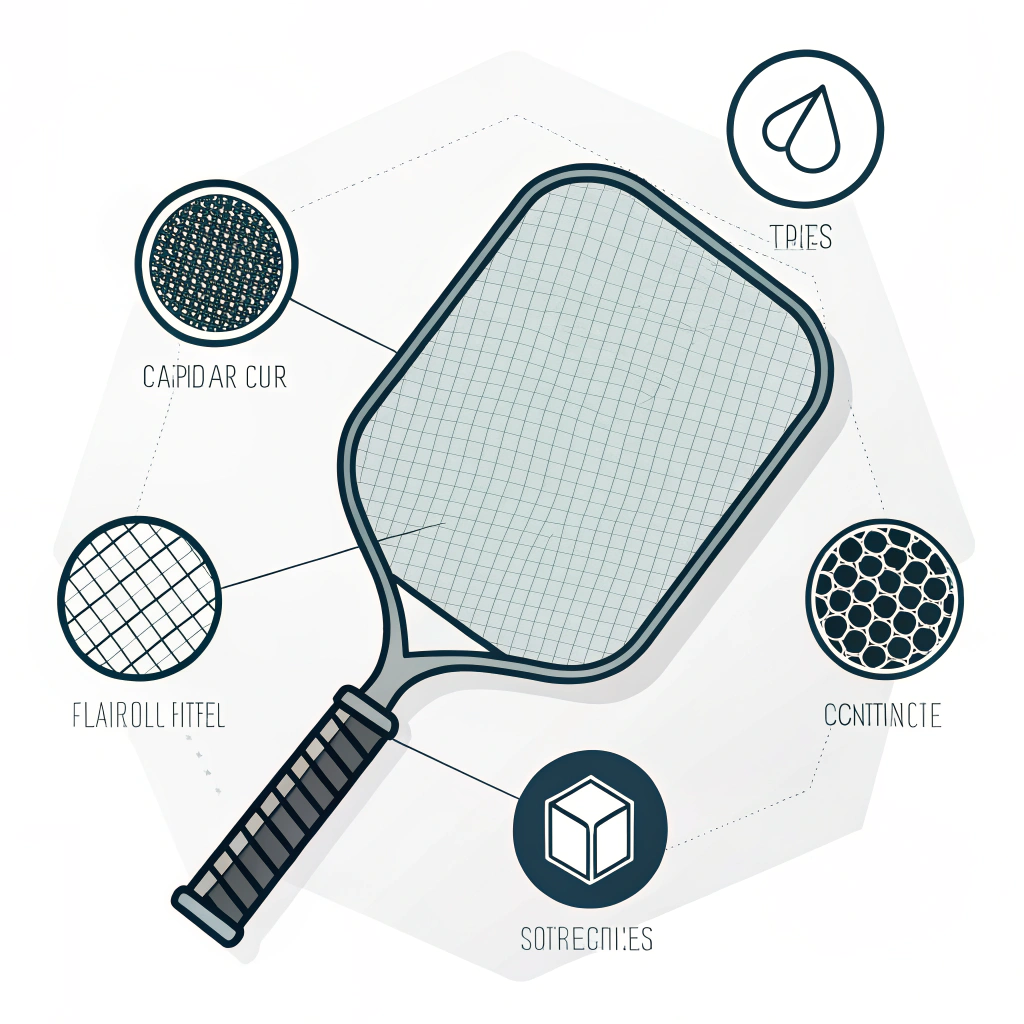
Understanding the manufacturing processes is crucial for optimizing a paddle’s performance. Each process has its advantages and limitations, which are summarized in the table below.
| Production Process | Advantages | Disadvantages |
|---|---|---|
| Hot Pressing | High production efficiency; strong impact resistance; excellent structural integrity for high-performance use | High equipment investment; potential alteration of material properties affecting tactile feel |
| Cold Pressing | Precise control over thickness and structural consistency; maintains original material properties for better responsiveness | Longer production cycles; requires high-precision equipment to manage pressure effectively |
| Thermoforming | Suitable for intricate designs; improved material distribution; stable final product | Longer production time; higher equipment costs; best suited for premium or custom orders |
Each technique plays a role in balancing performance and cost. For instance, hot pressing is ideal for large-scale manufacturing and durability, while cold pressing provides a softer feel for players who value precise ball control. Thermoforming offers unique customization and complex design capabilities.
The choice of materials greatly influences a paddle’s performance. The following sections detail the primary materials used in modern pickleball paddle manufacturing:
3K Carbon Fiber:
- Provides excellent strength and flexibility.
- Enhances rebound force and reduces vibration during play.
- Often utilized for paddles where a mix of power and durability is needed.
12K Carbon Fiber:
- Features a higher thread density, resulting in a smoother surface and increased hardness.
- Offers superior impact resistance, making it a top pick for competitive settings requiring robust performance and longevity.
T300 Carbon Fiber:
- Known for its balanced performance of high tensile strength and reduced weight.
- Ideal for paddles where an optimal balance of power, control, and lightness is essential.
E-Glass Fiberglass:
- Provides a good balance between power and control.
- Ensures extensive sweet spot coverage and superior vibration dampening.
- Favored for players who need excellent ball control without compromising durability.
Combining materials can harness the strengths of each:
-
Carbon Fiber + Fiberglass Composite:
- Delivers a balance between lightness, strength, and flexibility.
- Ideal for paddles that require rapid reaction speeds while maintaining durability.
-
Bamboo Core Composite:
- Offers a lightweight design with high impact resistance.
- Provides a distinct feel ideal for long-lasting play and enhanced durability.
-
Honeycomb Core:
- Utilizes high-density polymers to reduce vibration and improve shock absorption.
- Critical for maintaining paddle stability during high-speed exchanges.
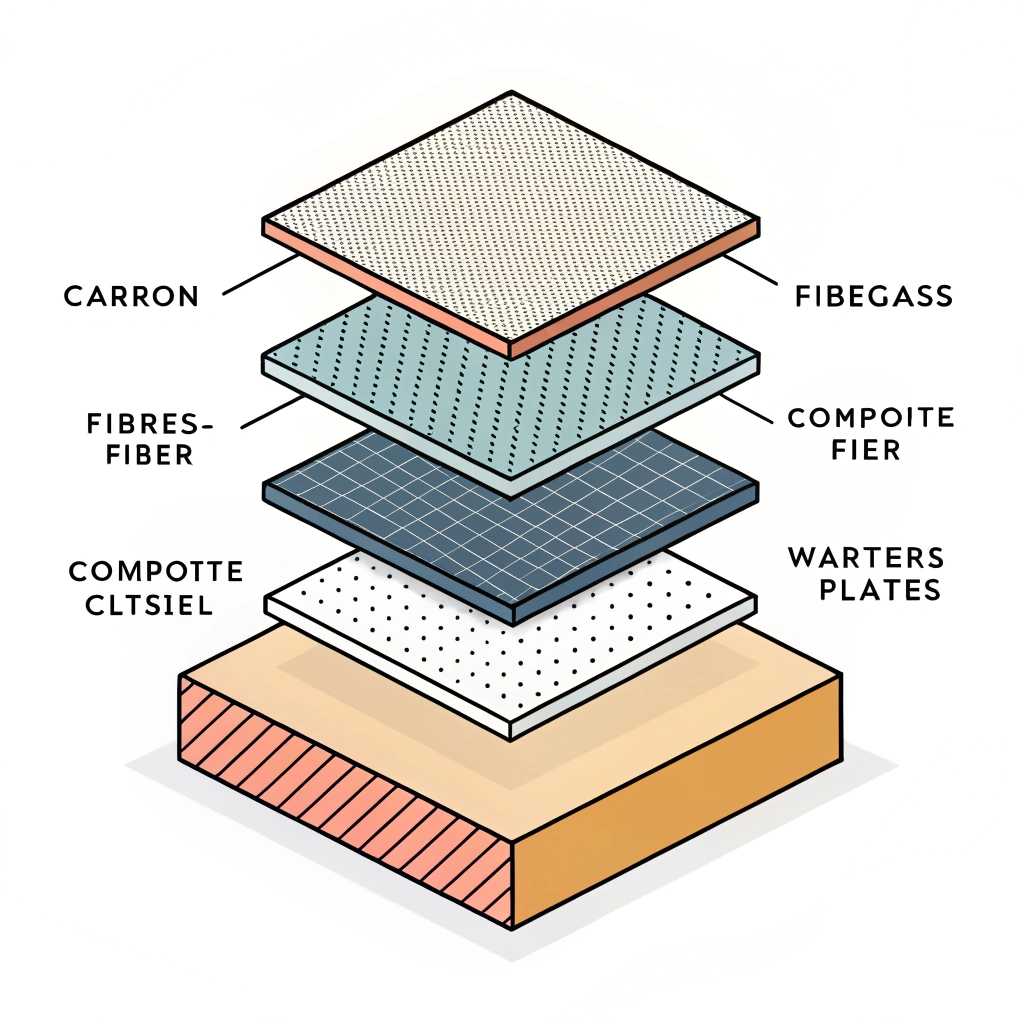
The paddle’s core is where performance meets precision. Using different core materials shapes the hitting feel and overall control of the paddle:
-
Nomex Honeycomb Core:
- Known for excellent shock absorption and longevity.
- Provides stability ideal for competitive play where the paddle endures frequent, high-impact contact.
-
Aluminum Honeycomb Core:
- Offers a balanced weight conducive to consistent power, merging strength with delicate control.
-
Polymer Honeycomb Core:
- Reduces overall vibration and provides a more comfortable hitting experience.
- Preferred by recreational players or those seeking an ergonomic design that minimizes arm fatigue.
Another major consideration for B2B buyers is the ability to customize and ensure consistent quality:
-
Customization:
Clients can specify unique design attributes, including paddle weight, balance, grip size, and surface texture. This ensures that every product not only meets industry standards but is also tailored to the end-user’s preferences—whether for personal use, team branding, or retail distribution. -
Quality Control Measures:
At our facility, NEX Pickleball, we implement rigorous testing at each stage of the manufacturing process. This includes checking structural integrity, impact resistance, and overall performance consistency. Advanced production techniques, such as controlled hot pressing and precise cold pressing, ensure that every paddle meets the highest expected standards. -
Innovative Technologies:
Incorporating techniques like thermoforming allows us to experiment with complex designs and material distributions. While the method can require longer production times and higher equipment costs, the resulting product offers unmatched customization and performance, often seen in premium markets.
When selecting a supplier for a high-performance pickleball set, consider the following steps:
-
Evaluate Material Options:
- Determine whether the benefits of carbon fiber (3K, 12K, T300) outweigh the slightly higher cost compared to fiberglass.
- Consider composite materials, which can offer synergistic benefits. Use a combination strategy to strike a balance between power and control.
-
Assess Production Processes:
- For large-volume orders focusing on strength and durability, hot pressing may be the preferred process.
- If precision and tactile feedback are priorities, cold pressing might deliver the responsiveness needed.
- For custom or premium paddle designs, thermoforming offers the flexibility required to meet unique specifications.
-
Customization and Quality Assurance:
- Engage with suppliers who provide on-demand print services and extensive customization options.
- Ensure that the supplier maintains rigorous quality control protocols, including material testing and performance verification.
-
Cost Versus Performance Analysis:
- Use detailed tables and side-by-side comparisons (as provided above) to weigh the advantages and disadvantages of each production method.
- Consider long-term performance benefits that justify initial investments in higher-quality materials and processes.
-
Leverage Case Studies and Data:
- Request real-world performance data and case studies from potential suppliers to validate manufacturing claims.
- Analyze user feedback and industry benchmarks to make an informed decision.
Building a high-performance pickleball set involves navigating complex technical decisions that directly impact final product quality and user satisfaction. By understanding the nuances of material properties and production techniques, procurement managers can make smarter, data-driven decisions that ensure both durability and playability.
Our extensive experience at NEX Pickleball, backed by leading-edge manufacturing technologies and rigorous quality standards, positions us as a trusted partner for B2B buyers in the sports equipment industry. We continuously strive to provide products that not only meet global standards but also offer the customization and performance capabilities essential for today’s competitive sports market.
We invite procurement managers and distributors to reach out for comprehensive consultations, detailed technical specifications, and further insights into how our operations can help you create the ultimate pickleball set. Evaluating the full spectrum of material and process options now will pave the way for a more innovative and successful partnership in the future.
People Also Ask
Q1: What impact do material choices have on pickleball paddle performance?
A1: Material choices such as carbon fiber, fiberglass, and composites directly influence a paddle’s strength, durability, vibration reduction, and balance. For example, 12K carbon fiber provides a smoother surface and superior hardness, while E-Glass fiberglass offers enhanced elasticity and control.
Q2: How do production processes like hot pressing, cold pressing, and thermoforming compare?
A2: Hot pressing provides high-efficiency manufacturing with strong impact resistance, though it may alter some material properties. Cold pressing maintains precise control and material integrity for better responsiveness with longer production cycles, while thermoforming allows intricate, custom designs at the expense of longer production times and higher costs.
Q3: What customization options are available for high-performance pickleball sets?
A3: Customization options include specifying paddle weight, balance, grip size, and surface texture, as well as on-demand print services for unique branding. These allow businesses to tailor the paddles to specific performance needs, ensuring both competitive advantages and enhanced user experience.
-
composite materials: Reading this article will explore how composite materials combine different fibers and matrices to deliver balanced performance, strength, and durability in sports equipment. ↩ ↩ ↩2
-
thermoforming: Reading this article will provide insights into how thermoforming as a manufacturing process enables intricate design customization and optimal material distribution in high-performance sports equipment. ↩ ↩
-
Nomex: Reading this article will explain the properties and benefits of Nomex honeycomb cores, including superior shock absorption and stability crucial for competitive paddle performance. ↩ ↩
-
hot pressing: Reading this article will delve into the hot pressing process, its impact on production efficiency, and how it enhances the structural integrity of high-performance paddles. ↩ ↩
-
cold pressing: Reading this article will explain the cold pressing method, focusing on its advantages in preserving material properties and providing precise manufacturing for superior ball control. ↩ ↩