Skip to content

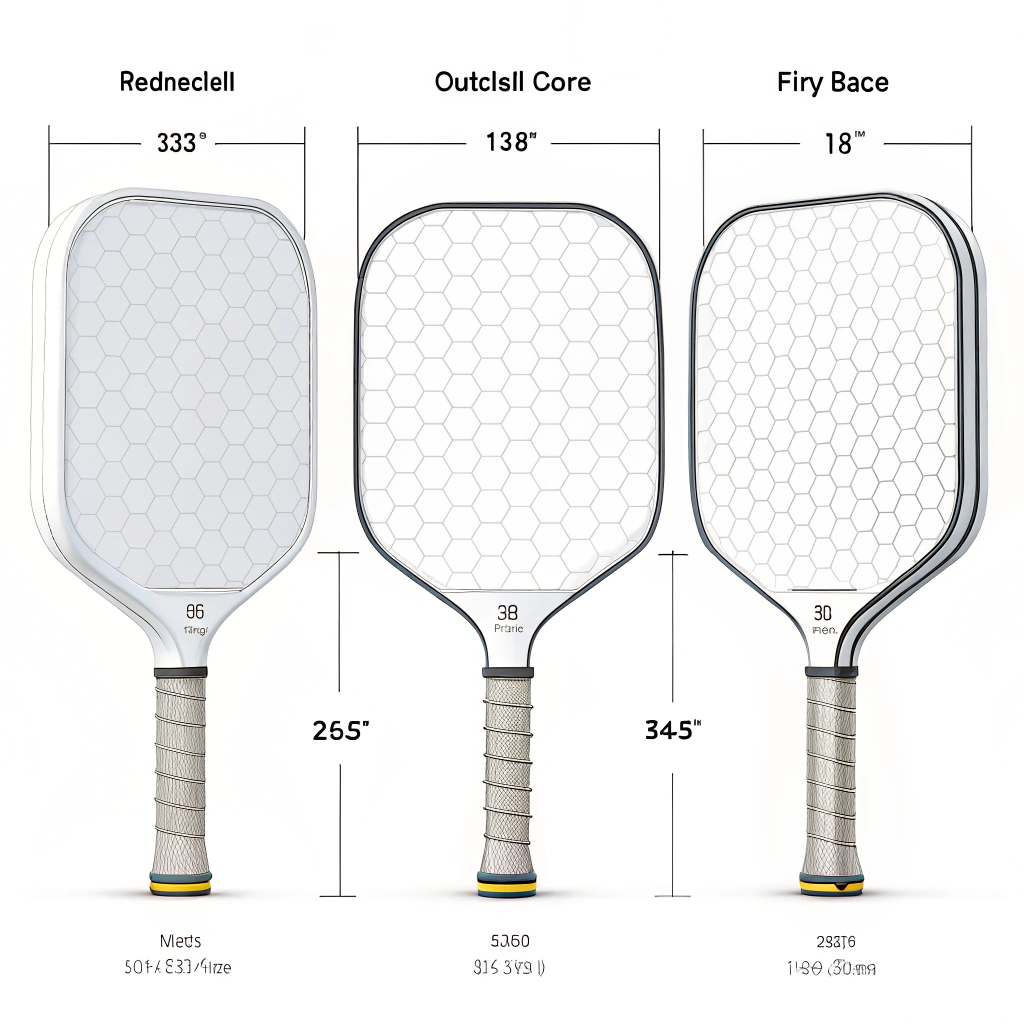
Quick answer (snippet): Handle comfort—defined by grip circumference, length, taper, and surface material/tackiness—directly affects player control, fatigue, and return rates. Specify 2–3 grip sizes, one wrapped or PU tacky finish, and objective acceptance tests (Shore A, COF1, abrasion cycles, player panel) in RFPs to reduce returns and improve sell-through; NEX Pickleball can prototype, test, and scale these options.
Why handle comfort matters commercially
- Players vote with purchases and returns. Minor discomfort in handle size or tackiness is a leading cause of early returns and negative reviews in paddle retail.
- For retailers and brands, improved handle comfort reduces return rates, increases repeat purchase, and lowers warranty claims tied to "poor feel".
- From procurement perspective: specifying ergonomics up front reduces expensive reworks, protects brand reputation, and raises conversion rates on product pages.
Common commercial impact (industry benchmarks)
- Return rate target for paddles: <2% for comfort-related returns when multiple grip sizes are offered; single-size SKUs can see 3–6% returns depending on market.
- Conversion lift: offering two grip-size SKUs can lift buyer confidence and conversion by 8–15% on e-commerce listings.
Anatomy & ergonomic principles: what buyers must know
Key terms first, for specs:
- Grip circumference (commonly 4.0"–4.75" for pickleball): primary determinant of how comfortably the player holds the paddle.
- Handle length (short / standard / long): affects two-handed backhand, leverage, and perceived sweet spot.
- Taper & bevels (gradual vs abrupt taper): change how the hand locks on the handle and influence wrist motion.
- Butt cap & flare: prevent slipping and affect wrist stop.
How each element affects performance and complaints
- Grip circumference too small: more wrist movement, higher perceived control but increased risk of over-grip and fatigue; complaints: slippage, wrist strain.
- Grip circumference too large: reduced finger wrap, decreased wrist snap, less spin; complaints: poor feel, inability to adjust grip quickly.
- Handle length too long: better for two-handed backhand and leverage but reduces hitting surface leverage and can make paddle feel head-light.
- Material finish (tacky PU vs rubber wrap): tackiness improves control but may collect sweat and abrade faster; wraps are replaceable and appeal to casual players.
Quick sizing guidance (use in product pages and sample labeling)
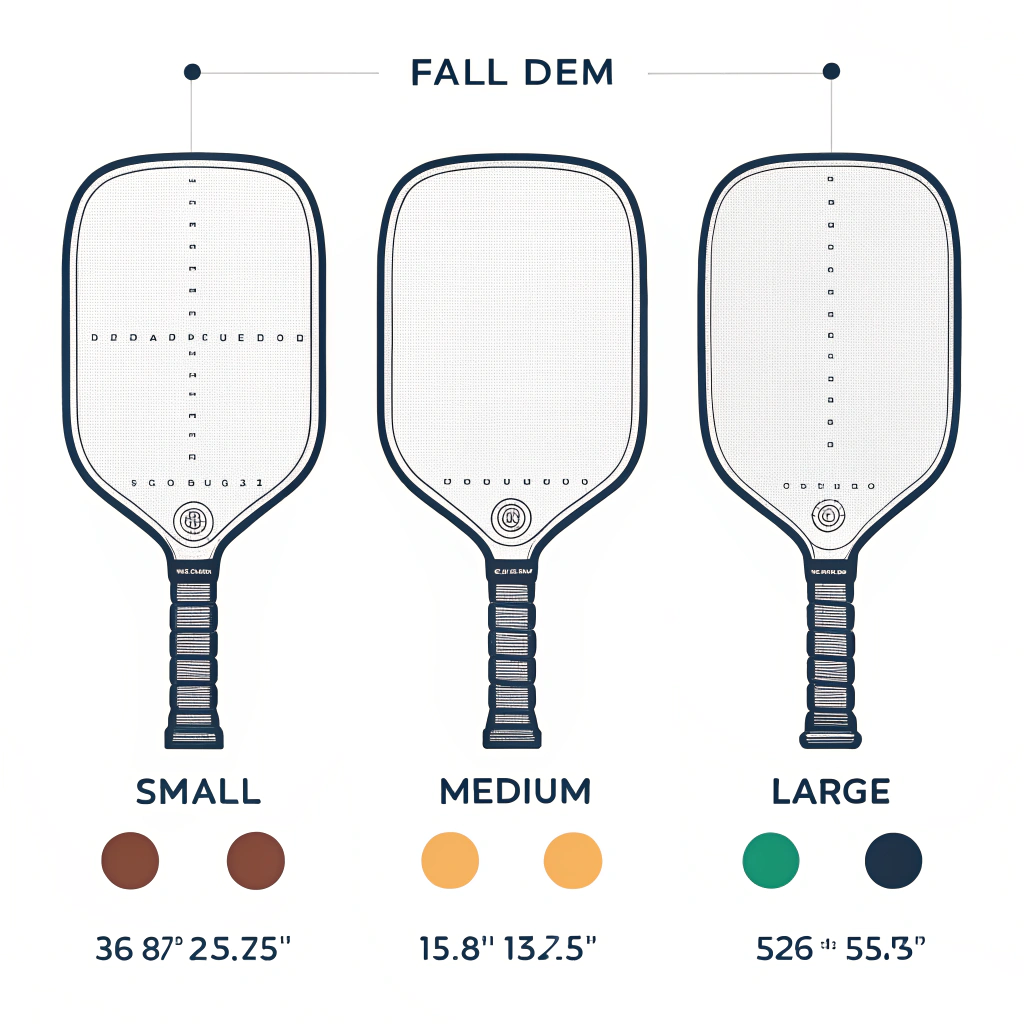
- Small: 4.0"–4.25" (100–108 mm) — players with small hands, preference for quick wrist action
- Medium: 4.25"–4.5" (108–115 mm) — best default SKU for mixed audiences
- Large: 4.5"–4.75" (115–120 mm) — players who need stability and larger grip
Material comparisons: feel, durability, and supply implications
Primary grip surface options
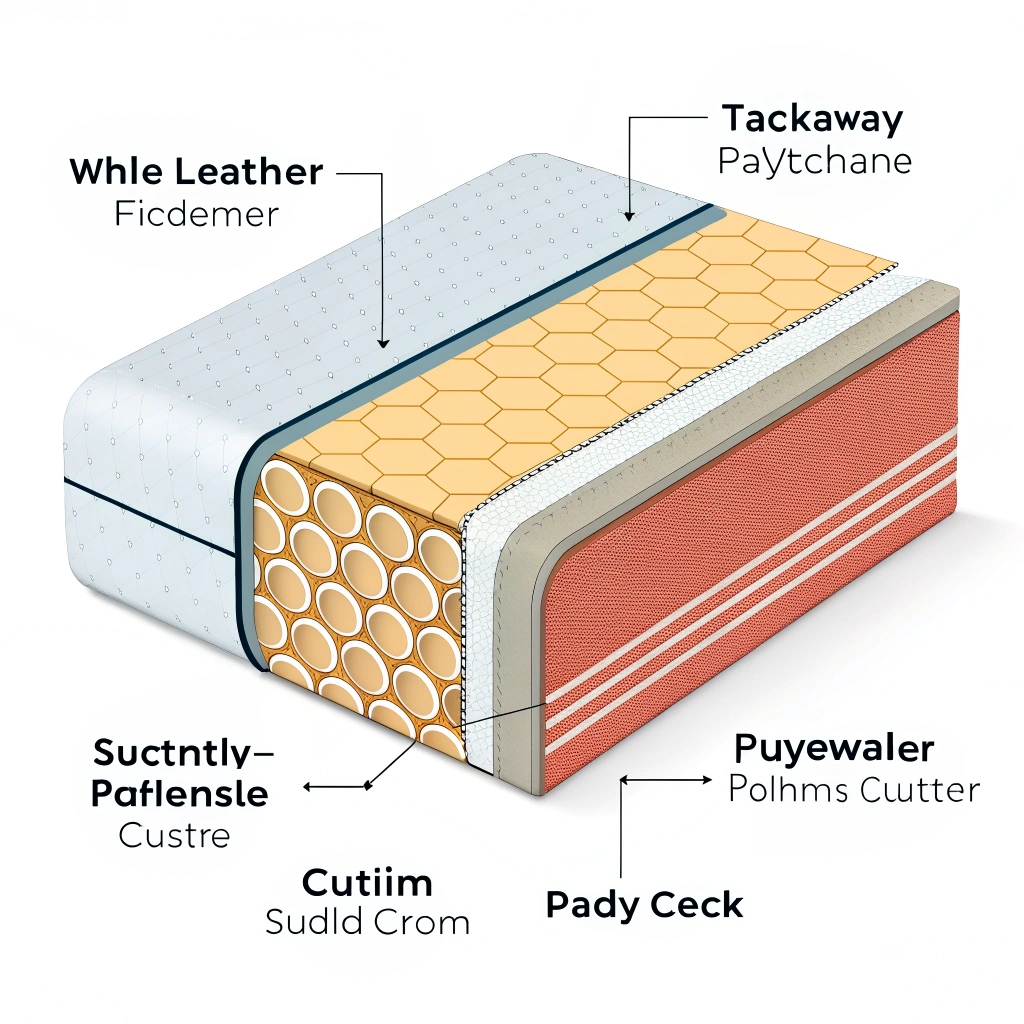
- PU (Polyurethane) tacky coating: high initial tack, good feel and thin profile. Pros: premium feel, good ball control. Cons: can abrade over time; sweat reduces tack—specify COF1 and abrasion cycles.
- Wrapped (synthetic or real leather wrap): textured, replaceable. Pros: swappable after wear, familiar to recreational players. Cons: thicker stack height, slightly dampened feedback.
- Rubberized grips / foam cores: higher shock absorption and comfort for casual players; foam may compress over time and change grip circumference.
Core and bonding considerations
- Grip comfort is not only the outer layer: the underlying handle core, tapering, and adhesive layer change perceived hardness.
- NEX Pickleball’s paddle core options (e.g., honeycomb core, Nomex2, polymer) affect vibration transmission into the handle—choose core material in the spec to match your target player profile.
Trade-offs summary
- Power/control players (competitive): often prefer thinner, tackier PU over strong core (carbon fiber face + polymer or Nomex core) for crisp feedback.
- Recreational/end-user comfort: favor thicker foam or wrapped grips with higher shock absorption (polymer honeycomb core recommended).
Manufacturing impact on feel: hot pressing vs cold pressing vs thermoforming3
How process changes feel and repeatability
- Hot pressing
- Effect: can alter resin flow and compress grip/handle materials slightly; produces consistent curvature and firm feel.
- Advantage: high throughput and consistent thickness across large batches.
- Buyer implication: slight increase in perceived hardness—compensate with softer grip material or foam insert if target is comfort.
- Cold pressing
- Effect: retains material properties better, enabling softer, more flexible handles with better tactile response.
- Advantage: better ball/handle feel; preferred for paddles positioned for control and comfort.
- Buyer implication: longer cycles and higher per-unit cost; specify thickness tolerances and bonding strength.
- Thermoforming
- Effect: excellent for complex ergonomic contours and integrated grip shapes.
- Advantage: allows custom contouring for taped-in ergonomic grips or flared designs.
- Buyer implication: ideal for premium SKUs and small-batch custom runs.
Supplier questions to include in RFP
- Which pressing process will you use for my SKU, and how does it affect the handle Shore A hardness4?
- What adhesion method is used between core and handle wrap; provide peel strength (N/cm).
- Can you supply grip prototypes in each process within X weeks? Provide sample lead times and costs.
- What are the achievable thickness and taper tolerances (± mm)?
Testing and validation: how to specify acceptance criteria
Objective tests (lab)
- Shore A hardness4 for grip surface: recommended acceptance range 35–55 Shore A depending on target feel. Lower = softer (more comfort); higher = firmer (more control).
- Coefficient of Friction (COF): static COF target 0.6–0.85 for tacky PU surfaces to balance grip and wear. Measure per ASTM D1894-style test adapted for grips.
- Abrasion resistance: specify cycles to failure (e.g., 10,000 cycles on Taber abrader5 with CS-10 wheel at X load) or equivalent. Acceptance: visible wear but no stone-through backing before 10k cycles for primary SKU.
- Peel strength: >5 N/cm between grip and handle substrate recommended to avoid early delamination.
- Vibration transmissibility: measure acceleration at handle with standardized impact (e.g., impact test hitting ball at fixed speed); acceptance: peak acceleration reduction ≥15–25% compared to baseline industrial reference.
Field tests (player panel)
- 12–20 players covering target demographics (age/handsizes); blind A/B test two grip sizes/materials.
- Metrics: perceived comfort (1–10), sustained session fatigue (minutes until discomfort), control rating, and sweat-handling rating.
- Acceptance: median comfort >=7/10 and at least 70% of panel preferring the chosen grip size for the target demographic.
Practical testing workflow to include in contract
- Prototype 3 grip sizes & 2 materials.
- Lab tests for hardness, COF, abrasion, peel.
- 2-week player panel with quantitative scoring.
- Final adjustments and signed sample approval (PSA) before bulk.

Commercial considerations: MOQ, cost, warranty, and SKUs
- MOQ planning: ergonomics SKUs multiply SKUs—avoid inventory bloat by selecting 2–3 grip sizes per model depending on target market. Recommended MOQ per SKU depends on process: hot-pressed standard SKU MOQ 2,000–5,000; thermoformed/custom grips higher (5k+).
- Cost delta: adding softer foam core or PU tacky finish typically increases BOM by $0.50–$3.00 per unit depending on volumes and process.
- Warranty/return clauses: define comfort-related return window (30–60 days). Require manufacturer to accept returns only for documented manufacturing defects; include a quality acceptance sampling plan to reduce disputes.
- Replacement grips & aftersales: offer replaceable wrapped grips as accessory SKUs or sell grip replacement packs—this increases LTV and reduces product returns for surface wear issues.
- Branding/on-demand printing: specify print areas, UV vs heat transfer capabilities, and minimum order for custom printed grips.
Recommended spec checklist for B2B buyers (use in RFP)
| Field | Recommended values / notes |
|---|---|
| Grip circumference options | 4.0", 4.25", 4.5" (offer at least Medium + one adjacent size) |
| Handle length | Short: 4.0–4.5"; Standard: 4.5–5.25"; Long: 5.25"+ (specify per SKU) |
| Taper profile | Provide CAD cross-sections; tolerance ±0.5 mm |
| Surface material | PU tacky OR wrapped synthetic leather; state COF target |
| Shore A hardness | 35–55 (specify exact target and tolerance ±3) |
| COF (static) | 0.6–0.85 |
| Abrasion resistance | ≥10,000 Taber cycles (or equivalent) |
| Peel strength | ≥5 N/cm |
| Vibration reduction | ≥15% vs baseline reference |
| MOQ | Process-dependent (state expectation) |
| Sample lead time | X weeks (state required) |
| On-demand printing | CMYK / Pantone tolerance, MOQ per print run |
Implementation & next steps (procurement playbook)
- Phase 1 (2–6 weeks): Order instrumented prototypes (3 sizes × 2 materials). Lab and player panel testing.
- Phase 2 (4–8 weeks): Finalize molding/pressing method and acceptance criteria. Sign PSA.
- Phase 3 (bulk production): First lot with AQL sampling and shipping inspection; plan replacement grip SKUs to support aftersales.
Closing recommendation
Specify at least two grip sizes and a clear objective acceptance testing protocol in every RFP. For premium paddles, prefer cold pressing or thermoforming plus a tacky PU finish; for high-volume mainstream SKUs, hot pressing with wrapped grips balances cost and durability. NEX Pickleball can produce prototypes across all three processes, run lab tests, manage player panels, and scale production while maintaining strict QC.
Call to action
Work with NEX Pickleball to define target player profiles, receive 3-prototype options (size × material), and a complete test report suitable for your product spec file and marketing claims.
People Also Ask
Is a longer handle better in pickleball?
Longer handles help players who use a two-handed backhand or need additional leverage for power and spin. However, a longer handle reduces the effective sweet spot area and can change perceived balance. For most general players, a standard-length handle with the correct circumference performs best. Specify the intended play style in your RFP and offer a long-handle variant only if target players require it.
What is the advantage of a short handle pickleball paddle?
A short handle increases the effective hitting surface and centers the sweet spot for finesse play. It helps players who rely on wrist control and quick maneuvering at the net. Short handles are commonly recommended for beginners and players prioritizing control over reach or two-handed strokes.
What is the best handle length for a pickleball paddle?
There is no single "best" length—choose based on hand size and play style. Use this rule-of-thumb:
- Players with hand length <4" — consider 4.0–4.5" handle
- Average players — 4.5–5.25" handle (standard)
- Players who prefer two-handed strokes or extra leverage — 5.25"+ handle
Include 2–3 length/size options in your product line and validate with player panels to determine which performs best for your target customers.
-
COF (Coefficient of Friction): Read to learn how static and dynamic COF are measured for grip surfaces, test methods (ASTM adaptations), and how to set COF targets that balance tacky grip with wear resistance in RFPs. ↩ ↩2
-
Nomex: Read to understand Nomex honeycomb core construction, stiffness and vibration characteristics versus polymer cores, and manufacturing/lifecycle trade-offs for selecting a core material. ↩
-
Thermoforming: Read to understand thermoforming process capabilities, tooling and design freedom for ergonomic contours, cost/lead-time considerations, and when to specify it for premium or custom SKUs. ↩
-
Shore A hardness: Read to get guidance on Shore A durometer testing, interpreting hardness numbers for grip comfort versus control, test procedures, and setting acceptance tolerances in contracts. ↩ ↩2
-
Taber abrader: Read to see how Taber abrasion testing is run (CS-10 wheel, loads, cycle counts), how lab cycles correlate to real-world wear, and how to specify equivalent abrasion criteria for acceptance testing. ↩