Skip to content

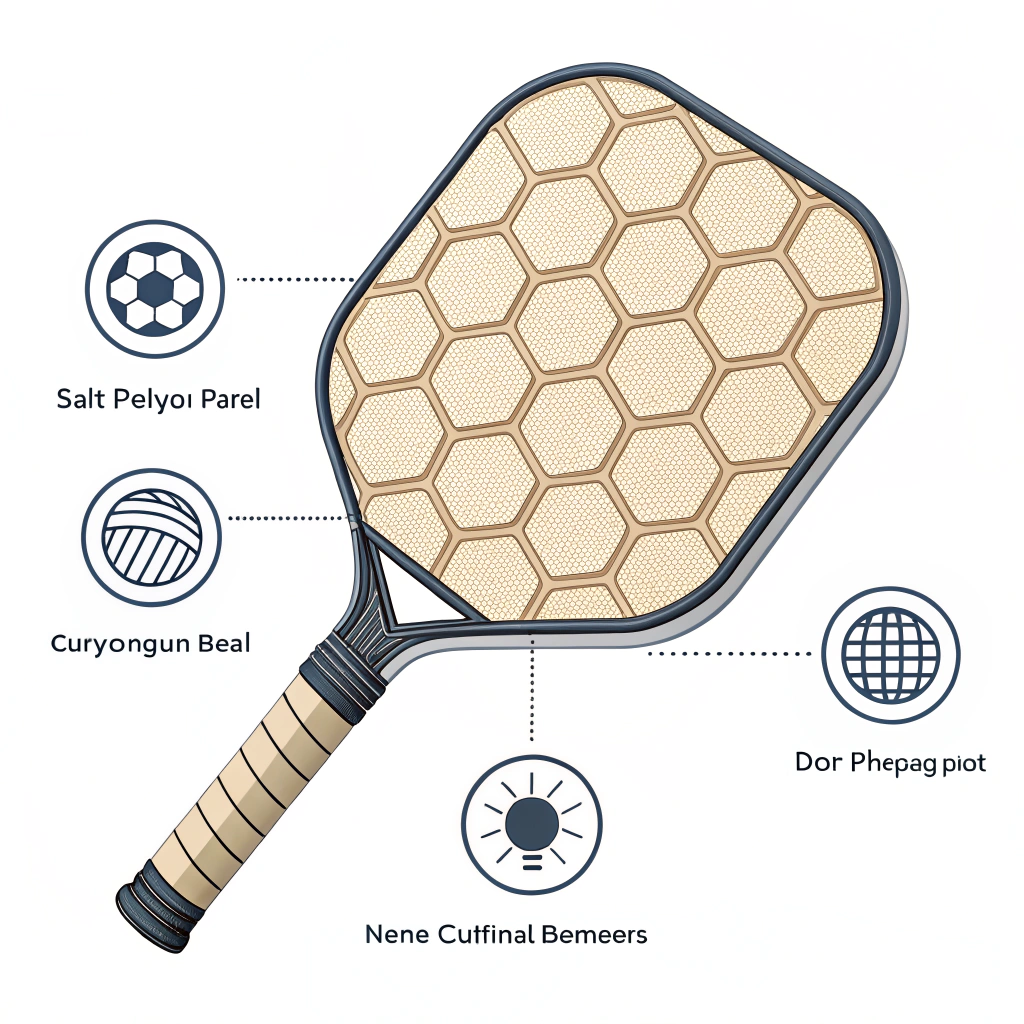
Short answer: For most OEM paddle lines, choose polymer honeycomb1 (poly) for balanced control, durability, and cost-effectiveness; choose Nomex honeycomb if you need maximum power and long-term structural stability for competitive paddles; choose aluminum cores when you want extra stiffness and a crisp power feel but accept higher weight and noise; choose bamboo cores when lightweight, natural feel, and sustainable positioning matter. Core thickness, surface material, and the production method (hot pressing2, cold pressing, thermoforming) shift each core's real-world performance — so pick the core material together with target weight, sweet spot, and manufacturing process rather than in isolation.
Why this comparison matters (quick buyer framing)
- Product managers and sourcing leads must match a core to a target player profile, retail price, and production model.
- The core controls stiffness, energy return, vibration damping, weight distribution, and durability — all central to the paddle’s perceived power and control.
- Manufacturing choices (hot/cold press, thermoforming), QC tolerances, and per-unit cost change depending on the core selected.
Core-by-core comparison (executive summary)
| Core Type | Performance Profile | Weight & Balance | Durability | Manufacturability | Typical Use |
|---|---|---|---|---|---|
| Polymer honeycomb | Balanced power/control, higher damping (softer feel) | Light–medium; easy to tune balance | High resistance to delamination; good lifespan | Excellent for hot & cold pressing; forgiving to lamination | Recreational → mid/high retail SKUs |
| Nomex honeycomb | High stiffness & energy return (powery) | Very light; tends to produce a hard feel | Very durable; resists crushing under impact | Best with hot pressing; needs tight QC | Competitive/performance paddles |
| Aluminum honeycomb | Very stiff, crisp response, excellent energy return | Medium–heavier; shifts balance forward | Good; can be prone to audible noise & core-face wear | Requires precise lamination; thermal mismatch management | Power-focused competitive paddles |
| Bamboo (composite) | Natural feel, good vibration damping, clear hitting feel | Ultra-light to light; easy to achieve head-light | Good shock resistance; depends on resin & lamination | Thermoforming and cold press workable; longer cycle | Lightweight / eco-conscious premium lines |
Bold entries in the first column are introduced above.
How core properties translate to player experience
- Stiffness (Young’s modulus): Higher stiffness → more energy returned to the ball → more power and a firmer feel. Nomex and aluminum are at the stiff end; polymer is more compliant.
- Damping: Higher damping → softer feel and less hand vibration → better control and comfort. Polymer and bamboo excel here.
- Density & weight: A lighter core helps you achieve lower swing weight for faster reaction. Nomex and bamboo cores tend to be lighter; aluminum can be heavier.
- Sweet spot size: Thicker, more compliant cores (polymer) can increase forgiveness; thinner/stiffer cores can concentrate the sweet spot.
- Acoustic signature: Some cores (aluminum, Nomex) create a sharper “pop”; polymer and bamboo produce muted sounds.
Manufacturing implications (pressing method and yield)
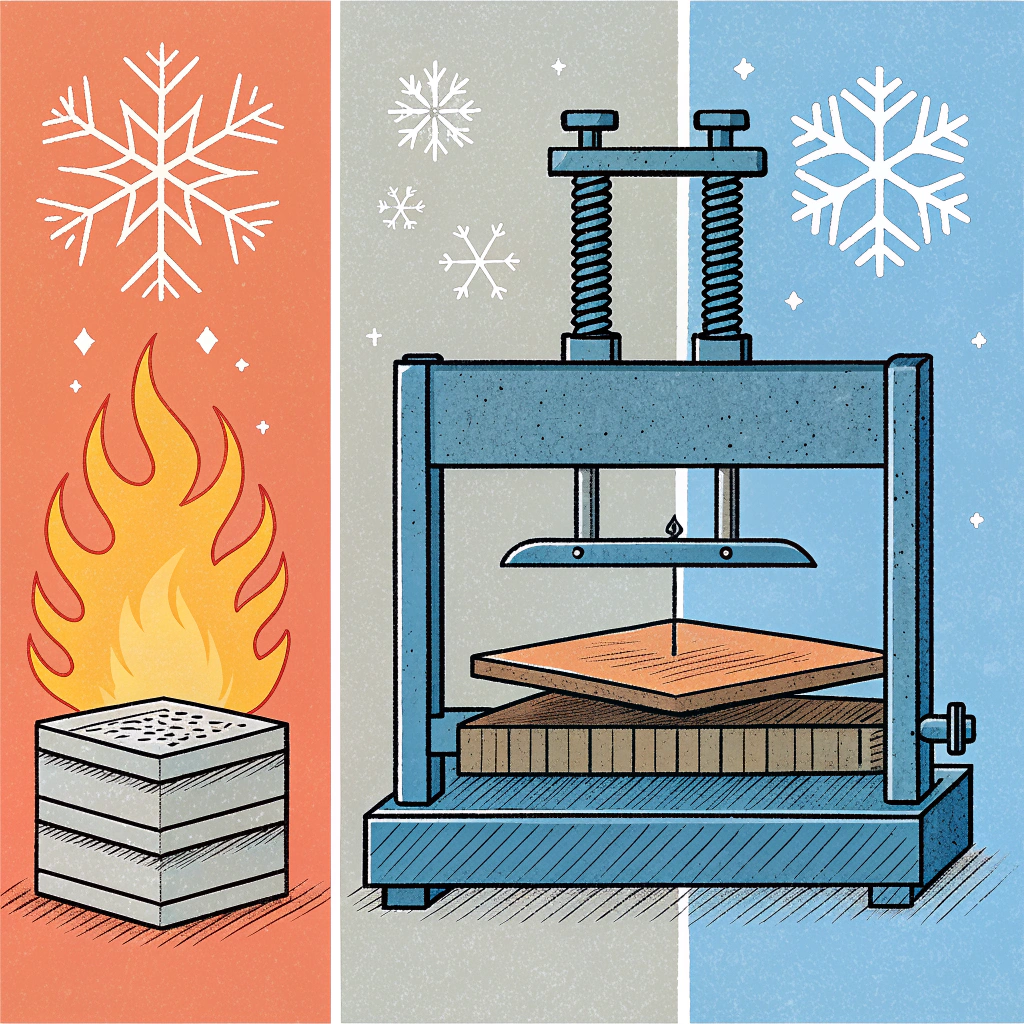
- Hot pressing: Great for Nomex and high-performance carbon/fiber layups. Yields excellent bond strength and consistent cure but requires higher equipment CAPEX and tighter safety controls. Best for high-volume, performance SKUs.
- Cold pressing: Preserves material properties for polymer cores and some bamboo composites, giving a softer feel. Runs longer cycles and demands precise pressures and jigs to control thickness tolerances.
- Thermoforming: Useful when you need complex contouring or variable thickness across the face (e.g., engineered sweet spots). Often used with composites and bamboo layers; slower and more costly.
Production trade-offs to consider:
- Cycle time vs feel: Hot press reduces cycle times but can slightly harden some face materials. Cold press gives superior feel but costs more per unit.
- Lamination compatibility: Aluminum requires special adhesives and thermal management to avoid delamination; polymers bond more readily with standard adhesives.
Quality control and testing you must require from your OEM
Specify clear acceptance criteria in the contract and test the pilot batch. Key QC metrics:
- Dimensional tolerances: core thickness ±0.1–0.3 mm depending on SKU; overall paddle thickness tolerance ±0.5 mm.
- Bond peel strength3: measure adhesive peel (e.g., N/mm) between core and face layers.
- Compression/impact test: repeated ball strike cycles (e.g., 10k–50k cycles) to check for core crushing or face separation.
- Flexural stiffness test: measure deflection under specified load to confirm stiffness targets.
- Ball rebound/energy return test: consistent ball speed measurement under standardized strike energy.
- Acoustic and hand vibration: subjective player panels plus accelerometer readings when needed.
- Environmental aging: thermal cycling and humidity exposure to evaluate delamination or warp.
- Cosmetic & printing quality: for on-demand print paddles, inspect print adhesion and abrasion resistance.
Ask suppliers for test reports and request to witness pilot tests. Require sample retention protocols and failure analysis reports if your batch has delaminations or crushing.
Cost and supply-side considerations
- Material cost: Polymer cores are generally the most cost-effective at scale. Nomex is more expensive but yields performance advantages. Aluminum sits between polymer and Nomex for material cost but may increase processing cost. Bamboo costs vary with sourcing.
- Tooling & process cost: Hot press tooling and high-temperature presses increase upfront costs. Thermoforming molds are expensive but needed for complex shapes.
- MOQ4: Expect higher MOQs for specialty cores (Nomex, aluminum) if tooling is dedicated. Negotiate pilot runs (200–1,000 units) before mass production.
- Lead times: Custom cores and custom laminate stacks add 4–12 weeks for sampling and tooling. Plan for 12–20 weeks for first mass-run lead time depending on process complexity.
- Sustainability & marketing: Bamboo gives a sustainability narrative. Polymer cores can be recycled in some programs but check lifecycle claims.
Recommendations by buyer need (practical)
- Retail/recreational SKU (price-sensitive, broad market): Polymer honeycomb. Reason: low cost, forgiving feel, robust bonding, lower returns.
- Mid-tier performance SKU (mix of control & power): Polymer with a stiffer face (carbon) or carbon/fiberglass composite over a polymer core.
- High-performance competitive SKU (power and durability): Nomex honeycomb with hot press process and a high-modulus carbon face.
- Power-first designs (smash, drive emphasis): Aluminum honeycomb with tuned face layup; expect to tune balance and add vibration-damping handle design.
- Lightweight / premium eco SKU: Bamboo core composite, thermoformed or cold pressed with natural-finish face options.
Actionable procurement spec example (to give to OEM)
- Core type: Polymer honeycomb (open-cell PP)
- Core thickness: 12 mm nominal (tolerance ±0.2 mm)
- Target paddle weight: 7.9–8.2 oz (224–232 g)
- Deflection under 10 N load: X mm (define based on your lab values)
- Adhesion: Peel strength ≥ Y N/mm (define threshold)
- Environmental: No delamination after 1000 hours 40°C/90% RH
- Process: Cold press preferred; hot press acceptable if tests match feel targets
- MOQ4: 1,000 units per SKU for first production; pilot 200 units

Procurement checklist before sign-off
- Request physical prototypes (not only mass-produced samples).
- Validate swing-weight and feel with players of your target segment.
- Require full QC test reports for pilot batches (impact, peel, aging).
- Lock tolerances and rejection criteria into the purchase order.
- Confirm on-demand print compatibility if you’ll have variable graphics.
- Agree on failure remediation terms and sample retention periods.
Summary and recommended next steps
- Map each SKU to a target player profile and price band.
- Shortlist 2–3 core options per SKU (e.g., poly + optional Nomex for pro line).
- Run a focused prototype program (200–500 units) with the chosen pressing method.
- Define clear QC tests and acceptance criteria in the contract.
- Use pilot feedback to finalize lamination stacks and process parameters before scaling.
Choosing a core is rarely about a single material — it’s about matching core, face material, thickness, and production method to your player target and P&L. If you need, we can help define a spec sheet and pilot program tailored to your SKU lineup and projected volumes.
People Also Ask
Q: What does core thickness do for a pickleball paddle?
A: Core thickness changes sweet-spot size, feel, and power. Thicker cores generally increase forgiveness and can make the sweet spot feel larger. They also affect sound and vibration transmitted to the hand — thicker or more compliant cores (like polymer) usually produce a softer, quieter feel, while thin/stiff cores produce a firmer, louder response. Finally, thickness alters power: a stiffer thin core can return more energy for speed, while a thicker compliant core can dampen impact and reduce perceived power.
Q: What is the best core material for pickleball paddles?
A: There is no single "best" core for every use. For broad retail and recreational lines, polymer (polypropylene) honeycomb offers the best balance of cost, durability, and forgiving feel. For maximum power and competition-grade durability, Nomex honeycomb is preferred. Aluminum gives a crisp, powerful response for players who want that feel, while bamboo provides a lightweight, natural-feel alternative for premium or eco-focused models. Choose based on player target, production process, and cost constraints.
Q: Does pickleball paddle material matter?
A: Yes. Both face and core materials strongly influence performance. Face materials affect how much energy is returned and how much spin you can generate; the core determines stiffness, damping, weight distribution, and sweet-spot behavior. The combined laminate — face + core + adhesive + pressing method — defines the paddle’s real-world characteristics, so specify materials and processes together rather than separately.
-
polymer honeycomb: Read to learn about polymer (often polypropylene) honeycomb construction, its damping characteristics, bonding behavior, cost profile, recyclability options, and how core cell size and wall thickness affect feel and durability — useful for selecting retail-focused SKUs and setting QC/adhesive specs. ↩
-
hot pressing: Read to understand process requirements (temperature, pressure, cycle times), CAPEX trade-offs, safety and labor implications, cure consistency and bond strength benefits, and when hot pressing is necessary for high-modulus face laminates — critical for sourcing and process selection. ↩
-
thermoforming: Read to see when thermoforming is preferred for complex contours or variable-thickness sweet-spot designs, required tooling and material constraints, lead-time and cost impacts, and practical limits on materials and laminate stacks. ↩
-
Bond peel strength: Read to understand standardized peel tests, units (N/mm), acceptable thresholds for different adhesive/core/face combinations, common failure modes (cohesive vs adhesive), and how to specify test methods in contracts to avoid ambiguous acceptance criteria. ↩ ↩2