Skip to content

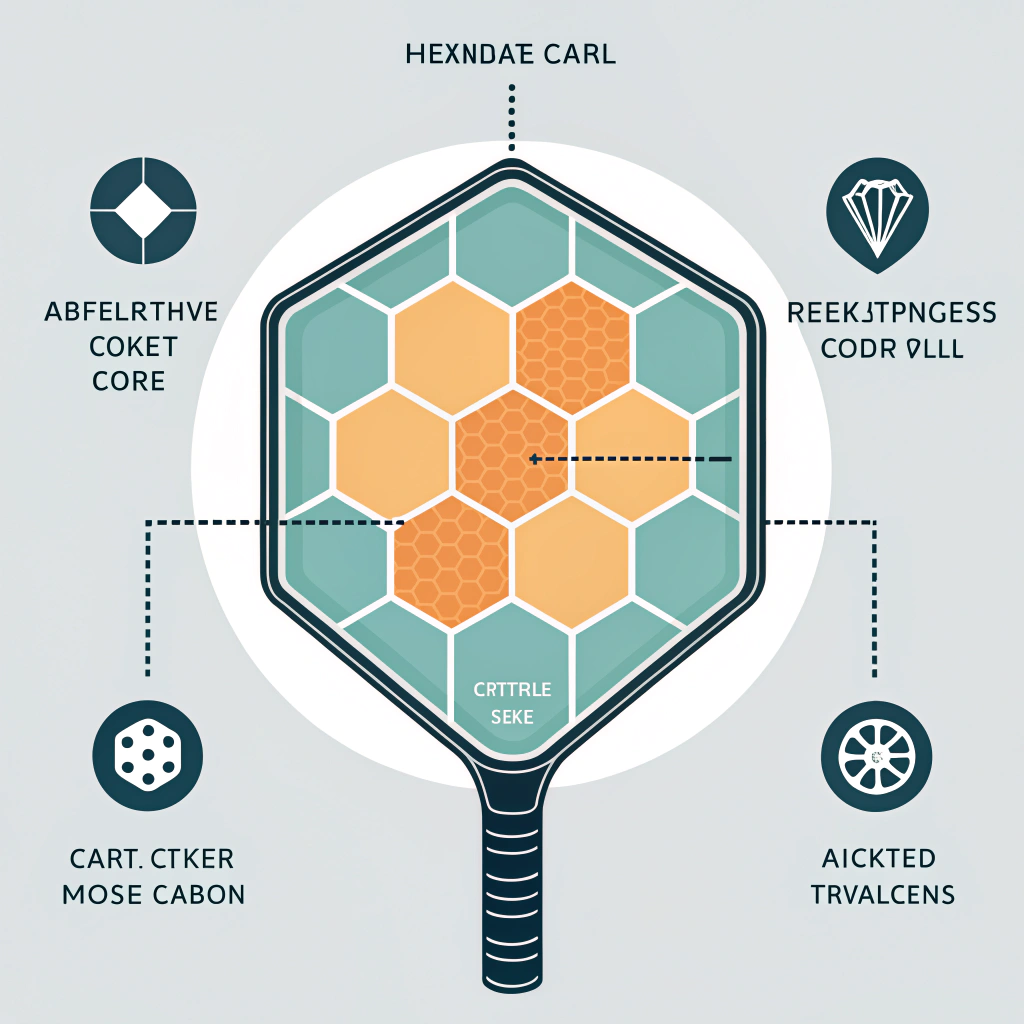
Short answer — For most brands and OEMs, a polymer honeycomb core1 is the pragmatic default: it delivers consistent feel and vibration damping, easier scale-up and lower scrap rates than Nomex2 or aluminum, and it meets the needs of both recreational and many competitive player segments when matched with the right face material and core thickness. Choose alternatives (Nomex, aluminum, bamboo) only when you need extreme stiffness, unique weight distribution, or a specific acoustic/power signature.
Why this decision matters right now
- You are shortlisting core materials for a new paddle line or a refresh. Core choice drives feel, vibration, durability, manufacturing yield, cost per unit, and USAPA compliance3.
- Suppliers and production processes amplify material traits — the same core will play differently depending on face layup, pressing method, and QC controls.
This guide gives a vendor-ready comparison across the main cores, practical manufacturing implications, and an actionable supplier checklist so you can finalize prototypes and place orders with confidence.
Core choice overview: the common options
- Polymer honeycomb core1 (polypropylene or other polymer foam honeycomb): widely used across mid-to-high tier paddles. Known for elasticity, reduced vibration, and manufacturing consistency.
- Nomex honeycomb core: a phenolic-based aramid (Nomex) core. Very stiff and durable; historically used in high-end paddles that prioritize power.
- Aluminum honeycomb core: high stiffness, high strength-to-thickness ratio; delivers a crisp, powerful response but can transmit more vibration.
- Bamboo / wood-based cores (less common): offer a distinct acoustic and feel; heavier but durable and eco-friendly options for niche lines.
Note: Face material (carbon fiber, fiberglass, composites) and core thickness are equally decisive. A polymer core with a stiff carbon face can feel closer to Nomex in power, for example.
Quick comparison table (practical procurement lens)
| Dimension | Polymer Honeycomb | Nomex Honeycomb | Aluminum Honeycomb | Bamboo / Composite |
|---|---|---|---|---|
| Feel | Softer, more forgiving; lower vibration | Very stiff; “pop” and power | Very crisp and powerful; higher feedback | Warm, natural feel; heavier |
| Vibration damping | High | Low | Low–medium | Medium |
| Consistency (lot-to-lot) | High | Medium | Medium | Low |
| Durability / fatigue | High (after proper bonding) | Very high | High (risk of corrosion if not treated) | Good (susceptible to moisture if untreated) |
| Manufacturing yield | High | Medium–low (brittle cores can crack) | Medium (precision bonding) | Low–medium |
| Typical use-case | Recreational → competitive balanced paddles | Power-focused competitive paddles | Power-oriented models | Specialty / eco or niche products |
| Cost per unit (material + process) | Low–medium | Medium–high | High | Medium |
| Compliance / USAPA | Generally compliant | Compliant | Compliant (depends on final weight/thickness) | Compliant (depends on construction) |
Bold takeaway: polymer cores offer the best combination of feel, damping, and scalable manufacturing economics for most product lines.
How core mechanics translate to player experience
- Elasticity and rebound: Polymer cores compress and return energy more slowly than Nomex, giving more controlled rebound. That reduces “pop” but improves placement and control.
- Vibration damping: The polymer matrix absorbs high-frequency vibration, lowering perceived sting at the wrist/arm — attractive for recreational players and those sensitive to vibration.
- Weight distribution and balance: Polymer cores tend to be lighter for the same volume, allowing designers to tune head-light or even weight distribution with face thickness and edge tape.
- Durability: Polymer cores resist moisture and maintain performance over longer cycles when properly bonded, lowering returns and warranty repairs.
Core thickness and player targeting
- Typical thickness range: 10–16 mm.
- Thinner cores (10–14 mm): more “pop” and power; suitable for aggressive, advanced players or power-oriented models.
- Thicker cores (14–16 mm): better control, softer feel, preferred by many recreational players and several top players who value control (Paddle models vary).
Procurement note: Specify core thickness tolerances (±0.2 mm) and target paddle weight range (e.g., 7.8–8.2 oz) in your tech pack.
Manufacturing method matters — process trade-offs
Overview of three main processes:
- Hot pressing4
- Pros: high throughput, strong bonding between faces and core, good for large runs.
- Cons: can alter face resin cure profile and slightly change material feel; requires higher capex.
- Best when: volume production and consistent cycle time are priorities.
- Cold pressing
- Pros: preserves core elasticity and face layup characteristics; better tactile feel control.
- Cons: longer cycle times and requires precise pressure control.
- Best when: feel and fine control are priority (higher-end or performance paddles).
- Thermoforming
- Pros: enables complex shapes, variable thickness distributions, and premium designs.
- Cons: longer time, higher tooling cost; best for premium or custom batches.
- Best when: custom geometry, molds, or small-lot premium lines.
Which to pick for polymer cores?
- Polymer honeycomb is compatible with all three. For larger OEM runs, hot pressing typically maximizes throughput and yield. For performance or signature lines where feel is paramount, cold pressing often yields more consistent ball feel and responsiveness. Thermoforming is ideal for custom shapes or thick-to-thin transitions.
Factory-level implications (what procurement managers must verify)
- Yield & scrap: Ask suppliers for historical scrap rates by process and core type. Polymer cores generally yield higher (lower scrap) vs Nomex.
- Cycle time & throughput: Confirm cycle time per press and number of presses. Hot-press lines can cut cycle time significantly; adjust lead-time estimates accordingly.
- QC controls: Ensure in-line thickness gauges, bond-strength tests, and batch tracing. Request SPC5 (statistical process control) reports.
- Environmental & safety needs: Thermal processes may require specific ventilation and resin-handling procedures; factor into lead-time and supplier capacity.
- Post-processing: Edge finishing, grip adhesion, and custom printing add time. Confirm ability for on-demand printing and pad placement tolerances.
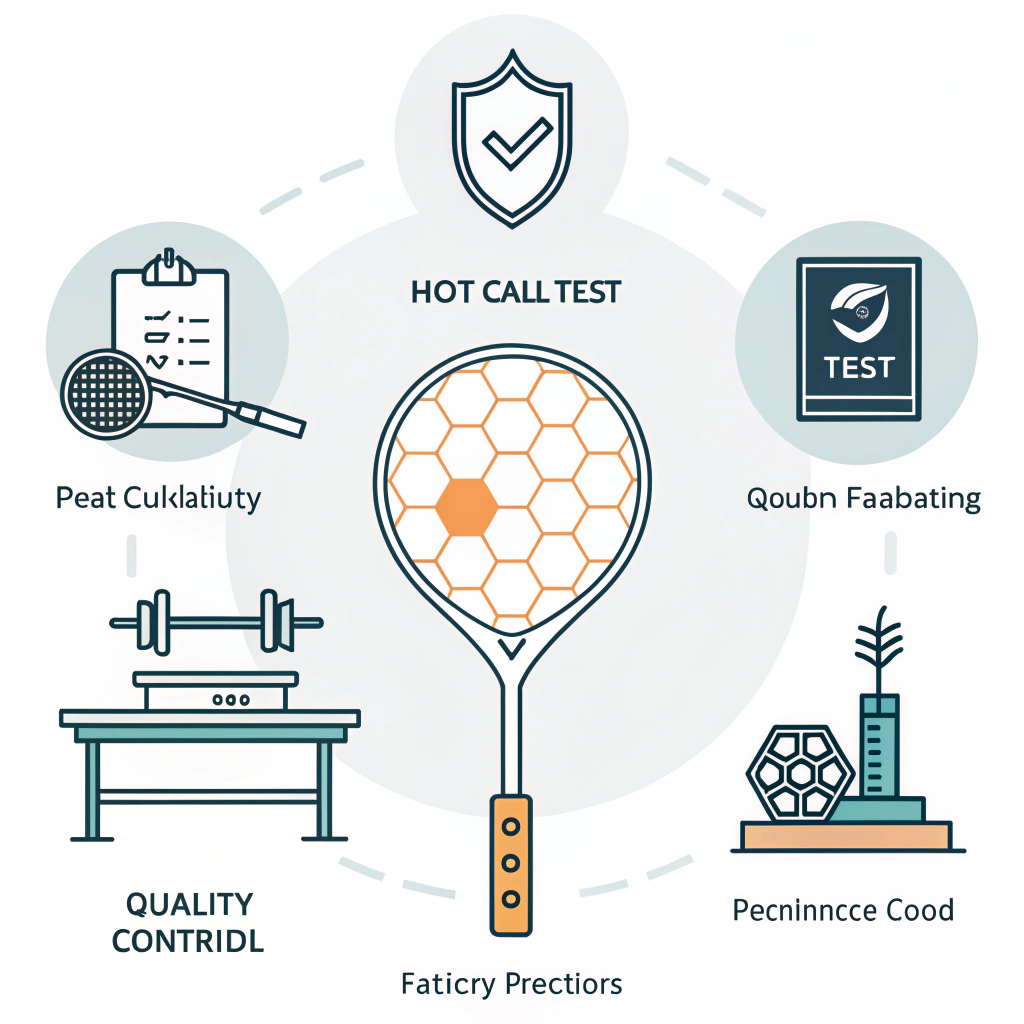
Quality & compliance checklist (must-haves in your RFP)
- Material specs: polymer grade, density, cell size of honeycomb, supplier batch certificates.
- Core thickness and tolerance: e.g., 14.0 mm ±0.2 mm.
- Bond strength test: peel/shear strength values for face-to-core bonding.
- Fatigue testing: number of cycles to failure at defined load.
- Vibration / damping metrics: lab measurements (e.g., accelerometer profiles) if available.
- Weight distribution reports: center-of-mass and moment of inertia data.
- USAPA testing: supplier must support or provide documentation for USAPA legalization testing where required.
- Traceability: batch IDs, production date, QC logs.
- MOQ, lead time, sample policy: clear commercial terms.
- On-demand print capabilities: CMYK/PMS accuracy, print placement tolerance, durability testing (scratch/UV).
Cost & scalability: practical numbers to negotiate
- Unit cost drivers: core material cost, press cycle time, labor per unit, post-processing (painting, pad printing), packaging, and duty/logistics.
- Expect polymer-based paddles to have lower per-unit raw material and scrap costs than Nomex or aluminum equivalents. If a supplier offers a large variance in quoted per-unit price for the same spec, drill into their assumed pressing method and scrap allowance.
- Negotiate tiered pricing for volume (e.g., price break at 2k/5k/10k units) and carve out sample/validation runs that allow you to evaluate prototype feel without locking large MOQ.
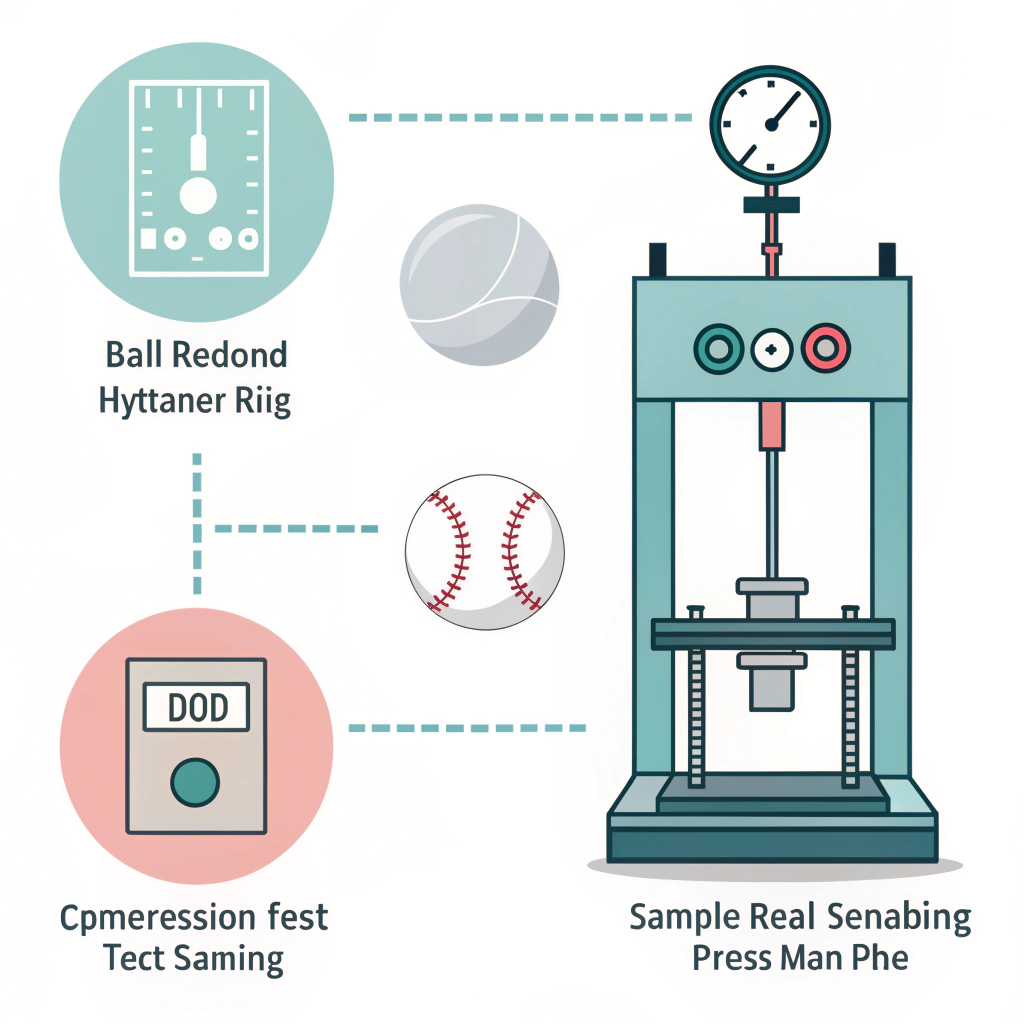
Testing you must require before PO
- Ball rebound and control testing (lab or in-field).
- Compression/creep tests on core samples (to detect long-term deformation).
- Bond adhesion (ASTM-equivalent peel tests).
- Environmental aging: heat/humidity cycling and salt-spray (if aluminum is used).
- USAPA compliance testing if you intend to sell tournament-legal paddles.
Ask for test reports and request witness testing or third-party lab validation when possible.
When to choose Nomex / Aluminum / Bamboo instead
- Choose Nomex if you want maximum stiffness and long-term dimensional stability for a power-first competitive model — accept higher scrap and potential vibration.
- Choose Aluminum for ultra-crisp, high-impact paddles where weight and stiffness trade-offs are acceptable, and you can control bonding and corrosion risks.
- Choose Bamboo when positioning a paddle on sustainability or a distinct feel, or for a niche line where premium price points justify lower yield.
Supplier questions & negotiation checklist (practical RFP items)
- Which core materials do you stock and what are typical lead times per core type?
- Which press methods do you use for polymer-core paddles? Provide typical cycle time and monthly capacity.
- Historical scrap rates by core type and pressing method.
- Sample policy: cost and lead time for functional samples and pilot batches.
- Testing: provide recent bond strength, fatigue, and USAPA test reports.
- Custom printing: max resolution, color control, minimums and proofs process.
- MOQ, tooling fees, payment terms, shipping timelines, and warranty policy.
- After-sales support: replacement rates, defect handling, and root-cause analysis capability.

Conclusion — a procurement-ready recommendation
- For most product lines targeting a mix of recreational and competitive players, specify a polymer honeycomb core with a well-defined thickness (choose 14–16 mm for control-focused models and 10–14 mm for power models) and pair with the appropriate face layup (carbon for power, fiberglass for balanced control).
- Insist on supplier-provided QC metrics (bond strength, fatigue, SPC) and process transparency (press method, cycle times, scrap rates).
- Use the RFP checklist above to shortlist vendors and ask for pilot runs to validate feel, weight distribution, and USAPA compliance before committing to full production.
People Also Ask
-
Are polymer pickleball paddles good?
- Yes. Polymer honeycomb cores are widely adopted because they provide a balanced combination of vibration damping, consistent feel, and good durability. They are easier to manufacture at scale with lower scrap than Nomex or aluminum cores, making them a practical choice for both recreational and many competitive paddles. Match the polymer core with the right face material and thickness to get the desired power/control balance.
-
What pickleball paddles do most pros use?
- Professional players favor paddles that match their style: some use carbon-faced, thin-core paddles for maximum power, while others prefer slightly thicker cores for control. Brands and models change as player preferences evolve; the important procurement point is to understand the target player profile (power vs control) and then select core/face combinations that deliver that performance. Many pro-level paddles still use polymer cores when designers want control plus damping, but some signature pro models use Nomex or other high-stiffness constructions for maximum pop.
-
What is the best core thickness for a pickleball paddle?
- There is no single “best” thickness; it depends on player goals. Thinner cores (about 10–14 mm) typically deliver more power and “pop.” Thicker cores (about 14–16 mm) offer more control, a softer feel, and better vibration damping. For many OEM product lines, 14–16 mm polymer cores are a safe default for general-market control-oriented paddles; specify tolerances and test prototypes to confirm the final feel.
-
polymer honeycomb core:Read to learn which polymer grades, cell sizes, and bonding methods deliver the best trade-offs for damping, consistency, and low scrap — essential for scaling OEM production and writing material specs. ↩ ↩2
-
Nomex:Read to understand the aramid-based Nomex honeycomb’s stiffness advantages, failure modes, bonding challenges, and when its higher scrap/yield risk is justified for power-focused models. ↩
-
USAPA compliance:Read to get the tournament-legal testing requirements, documentation vendors must provide, and how USAPA limits (size, weight, surface) affect procurement and validation plans. ↩
-
Hot pressing:Read to compare press technologies: how hot pressing changes cure profiles, bonding strength, cycle time, CAPEX needs, and why it often reduces per-unit costs at volume. ↩
-
SPC:Read to see which statistical process control metrics (Cp/Cpk, control charts, lot-traceability) suppliers should provide so you can ensure lot-to-lot consistency and reduce warranty risk. ↩