Skip to content


A doubles-optimized paddle should prioritize fast maneuverability and touch at the net: aim for a 7.2–7.6 oz (204–215 g) paddle with a balanced or slightly head‑light feel, a Polymer honeycomb core1 for softer touch, and a face material that favors control (fiberglass or a carbon/fiberglass composite) — these choices reduce swing inertia, increase reaction speed, and improve soft‑game control required in doubles net exchanges.
Why this guide matters
- You are buying paddles in bulk for clubs, retailers, or teams. Your priorities are: consistent on-court performance for doubles play, supplier reliability, and clear procurement terms.
- This guide gives technical recommendations, a comparison of materials and production methods, supplier checklist (MOQ, lead time, QC), and negotiation tips tailored to B2B buyers choosing paddles for doubles.

Doubles play: key performance priorities (short answer)
- Quick reaction and maneuverability at the net — low moment of inertia2 matters.
- Soft touch and control for dinks and blocks — core material and face flexibility matter more than raw power.
- Consistent sweet spot and predictable feedback — manufacturing process and QC determine consistency.
- Durability and low return rates — material and pressing method influence longevity.
Recommended paddle spec ranges for doubles (practical starting point)
- Weight: 7.2–7.6 oz (204–215 g). Lighter paddles (7.0–7.2 oz) increase speed but may reduce stability; heavier (7.8–8.4 oz) add power but slow reactions.
- Balance: Balanced or slightly head‑light (balance point 5–12 cm from handle end). Head‑heavy paddles give extra power but reduce quick net maneuverability.
- Core: Polymer honeycomb core1 (for touch and vibration damping) or aluminum honeycomb (for balanced power/control). Nomex core favors durability and power but is stiffer — less ideal for dink control.
- Face material: Fiberglass or carbon/fiberglass composite for a wider sweet spot and forgiving feel. Full carbon fiber faces are crisp and powerful but can be less forgiving at the net.
- Grip size: 4 1/8"–4 3/8" (small to medium) typical for doubles players who need wrist movement for quick volleys. Offer multiple grip sizes in bulk SKUs.
- Surface texture: medium texture for spin without being overly abrasive (enhanced spin is useful for serving/return but not primary in doubles net play).
Materials and production methods: what affects doubles performance
- Face materials:
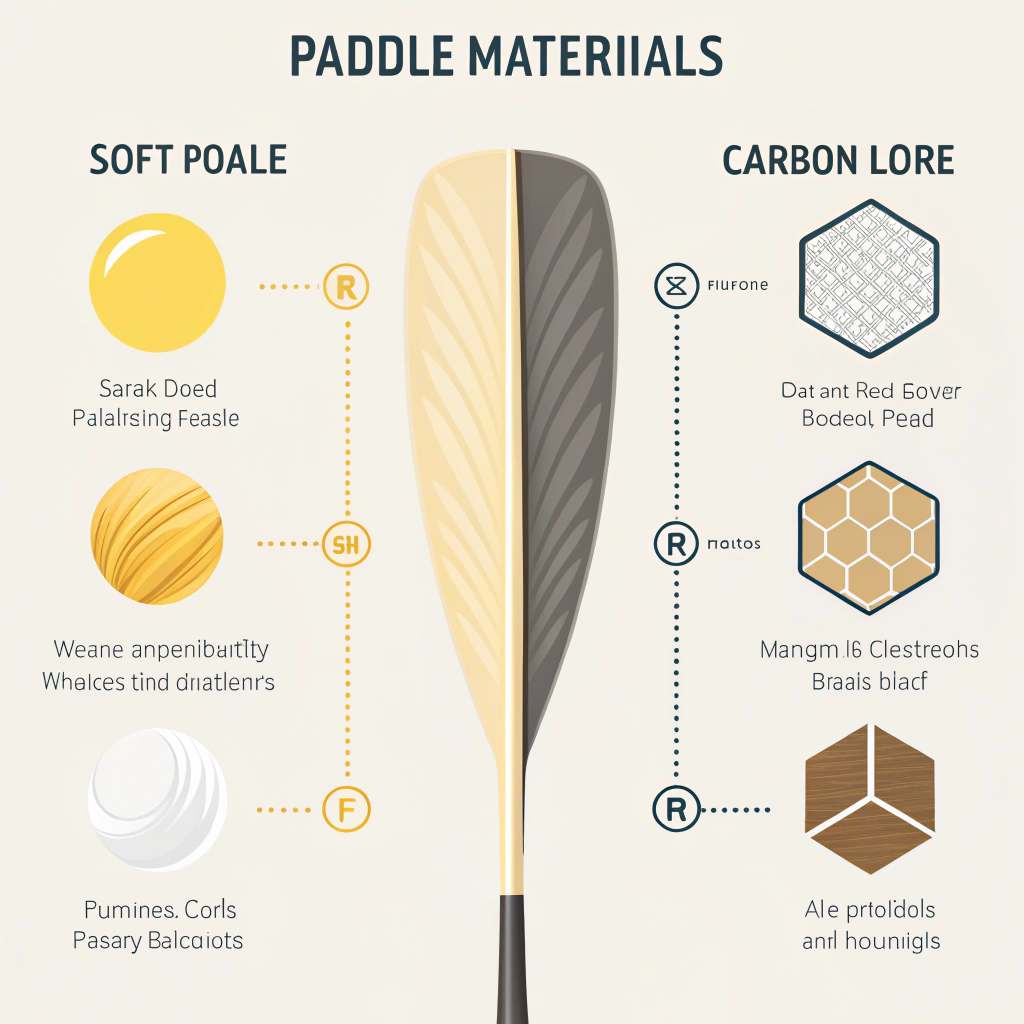
- Carbon fiber: high stiffness, fast ball rebound, tight sweet spot, greater power and responsiveness. Best for aggressive baseline or mixed play but can feel harsh in delicate net play.
- Fiberglass: more flexible, larger sweet spot, softer feel—often preferred for control and touch at the net.
- Composite (carbon + fiberglass): aims to balance crispness and forgiveness.
- Core materials:
- Polymer honeycomb core1: elastic, lower vibration, softer touch—excellent for dinks and soft control.
- Aluminum honeycomb core: stronger, slightly firmer feel — good for players who want crispness and some power.
- Nomex honeycomb core: stiff and durable, used in power-oriented paddles; less suited for net touch.
- Production processes:
- Hot pressing: fast, cost-effective for volume; generates stiff, durable paddles but may alter some material feel.
- Cold pressing3: preserves material properties and offers better feel/control; longer cycle times and higher per-unit cost.
- Thermoforming: best for complex shapes and premium customization; higher cost and longer lead times but excellent for tailored balance and material distribution.
Quick materials/process decision guide (table)
| Decision point | If you prioritize control/touch (doubles) | If you prioritize power/competitive baseline |
|---|---|---|
| Face material | Fiberglass or carbon/fiberglass composite | Carbon fiber (12K or T300) |
| Core | Polymer honeycomb or aluminum core | Nomex or firm aluminum core |
| Balance | Balanced or head‑light | Even or slightly head‑heavy |
| Production | Cold pressing or controlled thermoforming (smaller runs) | Hot pressing for consistent high-volume |
Manufacturing and QC details buyers must insist on
- Weight tolerance: ±0.1–0.2 oz (±2.8–5.7 g) per paddle. Specify target and acceptable variance.
- Balance point tolerance: ±3–5 mm. Request balance jig reports for each batch.
- Impact/durability testing: specify cyclic impact tests, edge durability tests, and surface adhesion tests. Ask for lab reports or independent test certificates.
- Surface friction/spin metric: measure with standardized spin test if spin performance is important for your customer base.
- Visual and dimension inspection: report by SKU with photos of first 5–10 samples and a sample inspection during production.
- Random sampling: pre-shipment inspection (AQL4) standard — recommend AQL 2.5 for major defects, AQL 4.0 for minor ones.
- Traceability: lot numbers, material certificates (for carbon/fiberglass), and production dates.
Procurement checklist for OEM/Bulk orders
- Sample stage
- Request functional samples (at least 2–3 paddle variants: control, balanced, power).
- Test: weight, balance, grip size, play tests with club players; request lab/durability results.
- MOQ5 and pricing
- Typical OEM MOQs: 300–1,000 units per SKU depending on customization and production method. Thermoforming/premium lowers MOQ flexibility.
- Ask for tiered pricing (e.g., 300, 1,000, 5,000 units) and tooling/setup costs.
- Lead times
- Samples: 10–30 days depending on complexity.
- Production: 30–90 days. Hot pressing and standard designs are faster; thermoforming/custom shapes longer.
- Customization
- Printing: on-demand print services available; verify print method (UV, pad, or sublimation) and color fidelity.
- Weight/balance tuning: confirm whether the supplier can tune weight with internal weights or core density adjustments.
- Packaging and labeling
- Options: individual retail boxes, bulk boxes, hang tags, barcodes/UPC printing.
- Include user manual / warranty card if needed.
- Warranty and returns
- Define warranty period and defect definitions. Request RMA process and replacement terms for first year.
- Logistics
- Get FOB and CIF quotes, shipping windows by sea/air, and seasonality impacts.
- QC and acceptance
- Pre-shipment inspection agreement, sample retention for future disputes, and photographic evidence.

Supplier selection: negotiation levers and red flags
- Levers to negotiate:
- Volume discounts and multi-SKU bundling.
- Shared sample/tooling costs for recurring orders.
- Agreed lead times with penalties for late delivery on large orders.
- Inventory consignment or JIT delivery for clubs with fluctuating demand.
- Red flags:
- Unwillingness to provide consistent sample specs (weight/balance reports).
- No lab data or refusal for AQL pre‑shipment inspections.
- MOQ or lead times that do not match your sales cycle without justification.
- No clear warranty or RMA process.
Case scenarios: two buyer profiles and what they should order
- Club owner focused on doubles league play
- Order: polymer core + fiberglass face, 7.2–7.6 oz, balanced, 2 grip sizes.
- MOQ: start 300 units; buy more SKUs after trial with players.
- Rationale: tactile touch at net, lower vibration for long sessions, reduced return rate.
- Retail category manager for sporting goods chain
- Order: two SKUs — a control paddle (polymer/fiberglass) and a performance paddle (T300 carbon).
- MOQ: 1,000–5,000 across SKUs to hit retail price tiers.
- Rationale: offer a clear choice to consumers (doubles-oriented and power-oriented), manage inventory by sell-through.
Summary and action steps
- For doubles play prioritize maneuverability (7.2–7.6 oz), balanced/head‑light balance, and polymer or aluminum honeycomb cores with a fiberglass or composite face for superior net control.
- Ask suppliers for strict tolerances on weight and balance, independent durability tests, sample play feedback, and clear MOQ/lead-time terms.
- Use the procurement checklist above during RFQ and insist on pre-shipment AQL inspections and sample traceability.
- If you’d like a starting BOM for a doubles-focused SKU mix (sample specs, packaging, estimated MOQ tiers), prepare a short RFQ and request sample timelines from NEX Pickleball or your chosen OEM.
People Also Ask
Q: What is the best paddle for doubles pickleball?
A: The best paddle for doubles emphasizes quick reaction and touch rather than maximum power. Look for paddles in the 7.2–7.6 oz range with balanced or slightly head‑light balance, a polymer or aluminum honeycomb core for softer feel, and a fiberglass or carbon/fiberglass composite face to increase the sweet spot and control. Brand‑level “best” picks vary by player style, but these technical specs fit most doubles needs.
Q: How do I know which pickleball paddle is right for me?
A: Match paddle specs to playing style and role. For quick net play (doubles), prioritize low swing weight and control (light to mid weight, soft core, forgiving face). For baseline power, choose stiffer faces (carbon), firmer cores (Nomex or aluminum), and slightly heavier weights. Test samples for weight tolerance, balance, grip comfort, and on‑court feel to confirm suitability.
Q: What is the 10 second rule in pickleball?
A: The 10‑second rule requires the server to start the serve within 10 seconds after the score is announced. It’s designed to keep play moving and is especially enforced in competitive match settings.
-
Polymer honeycomb core: Read to learn how polymer cores deliver vibration damping and softer touch, and what performance trade-offs to expect versus aluminum or Nomex cores when selecting bulk SKUs. ↩ ↩2 ↩3
-
moment of inertia: Read to understand how swing weight affects paddle rotation and reaction speed; useful for specifying swing-inertia targets and balance points when sourcing doubles-focused paddles. ↩
-
cold pressing: Read to compare manufacturing methods and see why cold pressing can produce better feel/control (at higher cost and longer lead times), important for premium control-oriented paddles. ↩
-
AQL: Read to understand Acceptable Quality Level sampling plans and how to specify AQL thresholds in your pre-shipment inspection terms to control defect risk in large orders. ↩
-
MOQ: Read to get guidelines on minimum order quantities, tiered pricing strategies, and negotiating sample/tooling terms to align supplier production with your retail or club demand. ↩