Skip to content


Quick answer: Choose paddle weight by matching target player profiles and SKU roles—lightweight (≈184–213 g) for maneuverability and beginners seeking reduced arm strain; midweight (≈213–233 g) for balanced control and power (best seller for retail); heavyweight (≈233–250+ g) for stable, power-focused paddles for advanced players. Specify both static weight tolerance (±2–4 g), swingweight (MOI)1 targets, and a balance-point2 range on your OEM spec sheet to guarantee consistent player feel across production runs.
Why weight matters for procurement
- Paddle weight is the single most important spec that dictates perceived power, control, and player fatigue.
- For B2B buyers deciding SKU ranges or private-label specs, weight interacts with balance, core material, and face material to create very different player experiences.
- A clear weight strategy reduces returns, shortens test cycles, and simplifies warehouse SKUs.
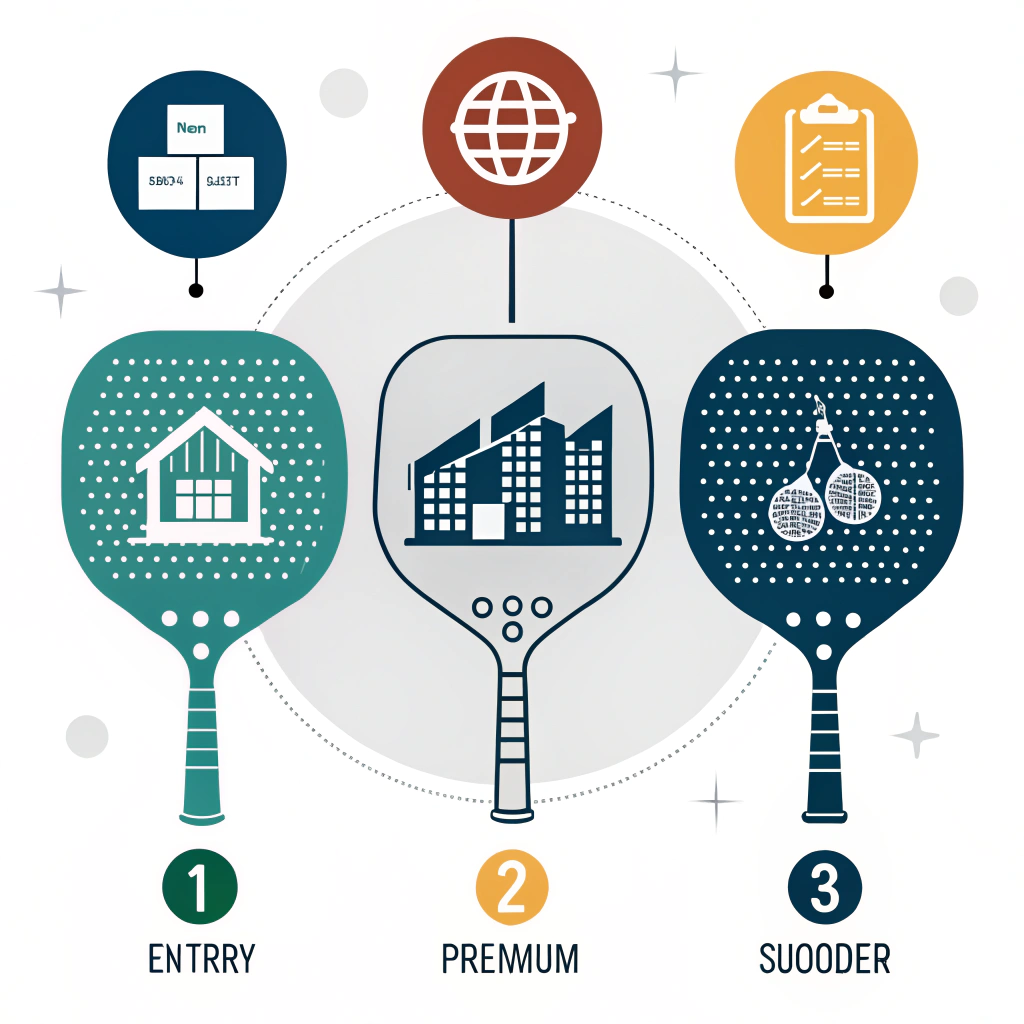
Comparison framework: what procurement teams must decide first
- SKU role: entry-level, mid-market, or premium performance.
- Target player: beginner (comfort, low fatigue), intermediate (balanced play), advanced/competitive (power/stability).
- Manufacturing constraints and cost: heavier faces or denser cores increase cost and complexity (adhesives, pressing cycles).
- Quality tolerance: decide acceptable weight variance and inspection frequency.
Core technical concepts (short, actionable)
- Paddle weight (grams) — static mass measured with grip and edge guard, typically in grams.
- Swingweight / Moment of Inertia (MOI) — how heavy the paddle feels when swung; higher MOI = slower swing but more power/stability.
- Balance / head-heavy vs head-light — distribution of mass along the paddle; head-heavy increases MOI and power, head-light improves maneuverability.
- Dwell time / sweet spot — influenced by core type and face stiffness; affects control and spin.
How materials and processes affect final weight and feel
- Face material:
- Carbon fiber (3K / 12K / T300): more rigid and can be lighter for same stiffness. Allows lower weight with high power.
- Fiberglass (E-Glass): slightly heavier and more flexible, improving dwell time and control.
- Core:
- Polymer honeycomb: lighter, more elasticity, lower vibration — useful for lighter paddles aimed at comfort.
- Nomex honeycomb3: denser, higher stiffness, better for power-focused paddles but heavier.
- Aluminum honeycomb: midweight with high stability.
- Process:
- Hot pressing4: high efficiency, stable lamination; may yield slightly denser boards. Best for large runs of consistent, power-oriented paddles.
- Cold pressing: preserves material feel—preferred when precise thickness/feel is prioritized (slightly longer cycle times).
- Thermoforming: ideal for complex shapes and custom weight distribution but higher cost and lead time.
Practical weight ranges and target MOI guidance (for SKU planning)
| SKU role | Static weight (g) | Balance tendency | Swing feel (general) | Recommended core/face |
|---|---|---|---|---|
| Lightweight / Comfort | 184–213 | Head-light to neutral | Fast hands, low fatigue | Polymer core + fiberglass face |
| Midweight / All-round | 213–233 | Neutral | Balanced power/control | Polymer or aluminum core + carbon or composite face |
| Heavyweight / Power | 233–250+ | Neutral to head-heavy | More power, higher MOI | Nomex/aluminum core + carbon face |
Notes:
- These ranges are industry-aligned and practical for retail and OEM lines.
- For private label, offering one SKU per band minimizes confusion while covering broad customer segments.
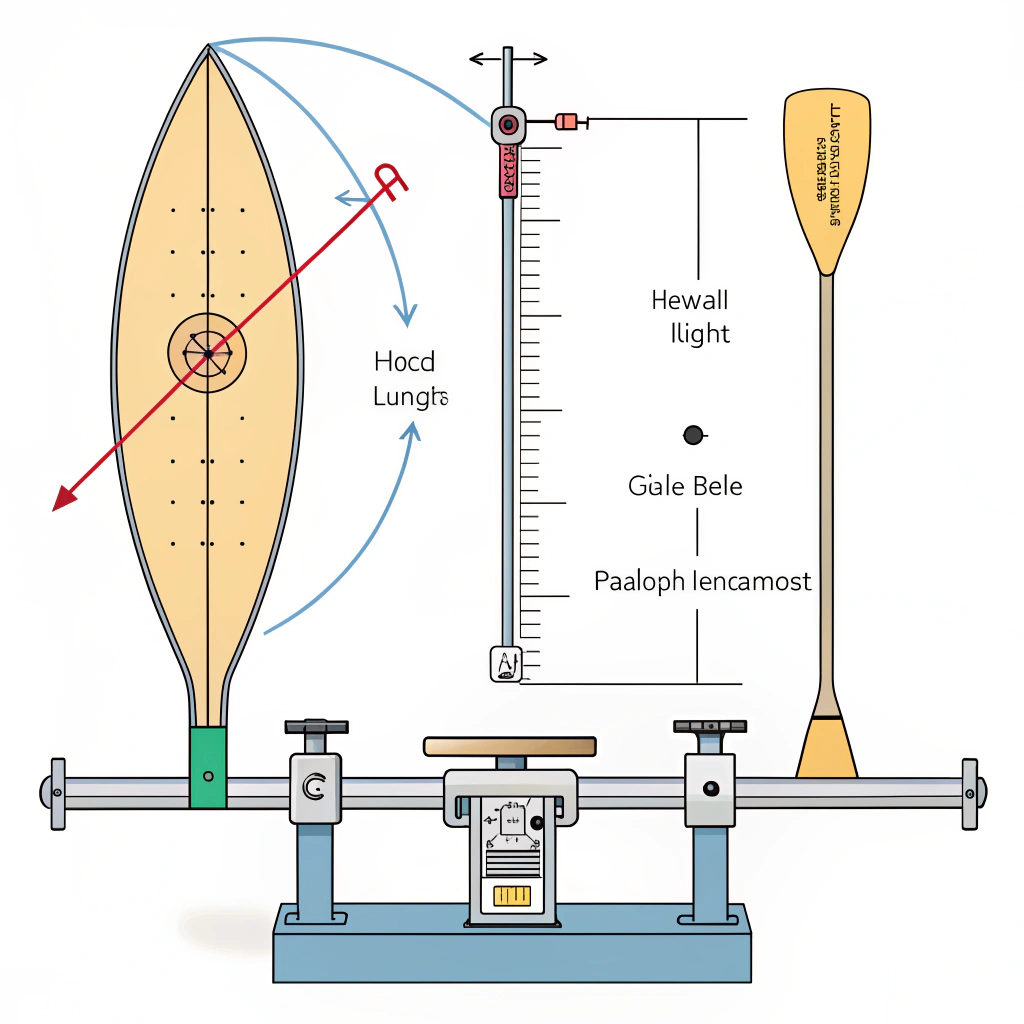
Balance point and how to specify it
- Define balance as distance from butt end to center of mass or as percentage of paddle length.
- Recommendation: specify balance range on OEM sheet. Example:
- Head-light: balance ≤ 48% of length
- Neutral: 48–52%
- Head-heavy: ≥ 52%
- For consistency, require measurement method (balance jig with 0.5 mm resolution) and reporting format (mm from butt + % of full length).
Swingweight (MOI): why include it on the spec sheet
- Two paddles with identical grams can differ dramatically in feel if weight distribution differs. MOI captures that.
- Request a relative MOI band rather than absolute numbers if the factory lacks MOI rigs (e.g., Low / Medium / High or target ±5%).
- If you can measure, ask suppliers for a swing test (robotic or pendulum) reporting relative swing time or rotational inertia.
Quality tolerances and testing procedures (practical for procurement)
- Static weight tolerance:
- Premium: ±2 g
- Standard mass production: ±3 g
- Cost-sensitive runs: ±4–5 g
- Balance point tolerance: ±2 mm
- Swingweight tolerance: ±5–8% (where measured)
- Test frequency: initial run 100% check on weight/balance; then AQL-based sampling5 (e.g., 1% or 1 in 50) for ongoing runs.
- Required instruments: 0.1 g precision scale, balance jig, calipers for thickness, and optional swingweight pendulum or robotic arm.
Sample OEM spec sheet (concise)
| Field | Example value |
|---|---|
| SKU name | NEX-PL-ALPHA-LW |
| Static weight (including grip & edge) | 200 g ±2 g |
| Balance | Neutral; 50% ±2% of length |
| Swingweight (MOI) | Medium (factory baseline sample required) |
| Core | Polymer honeycomb, 10 mm ±0.3 mm |
| Face | 3K carbon fiber, 2 layers |
| Pressing method | Cold press |
| Edge guard | 3.2 g ±0.5 g |
| Grip | PU cushion, 4.6 g ±0.5 g |
| QC tests | Weight, balance, face adhesion, finish, random swing test |
Manufacturing levers to hit your weight targets
- Reduce face ply count or select lighter carbon weave (T300) for lower weight SKU.
- Adjust core thickness or use polymer instead of Nomex for lighter weights.
- Choose cold pressing when you need precise thickness; hot pressing for high-volume consistency.
- Thermoforming for custom center-of-mass manipulations (e.g., slightly head-heavy profile without adding mass).
Messaging and packaging considerations
- Communicate weight and balance in product descriptions clearly: "200 g ±2 g — Neutral balance for all-round play."
- Provide recommended player type and benefit: "Lightweight (184–213 g) — reduced fatigue, faster reactions."
- Include small comparison chart on pack or online to reduce returns.
QA checklist for incoming batches
- Check 10% of pallets for static weight within tolerance.
- For each sampled paddle: measure weight, balance point, visual quality, core-surface bond test.
- Run mechanical durability tests on a 1% sample: impact, edge guard adhesion, and grip tensile test.
- Keep retention samples (5 per SKU per production lot) for future validation.
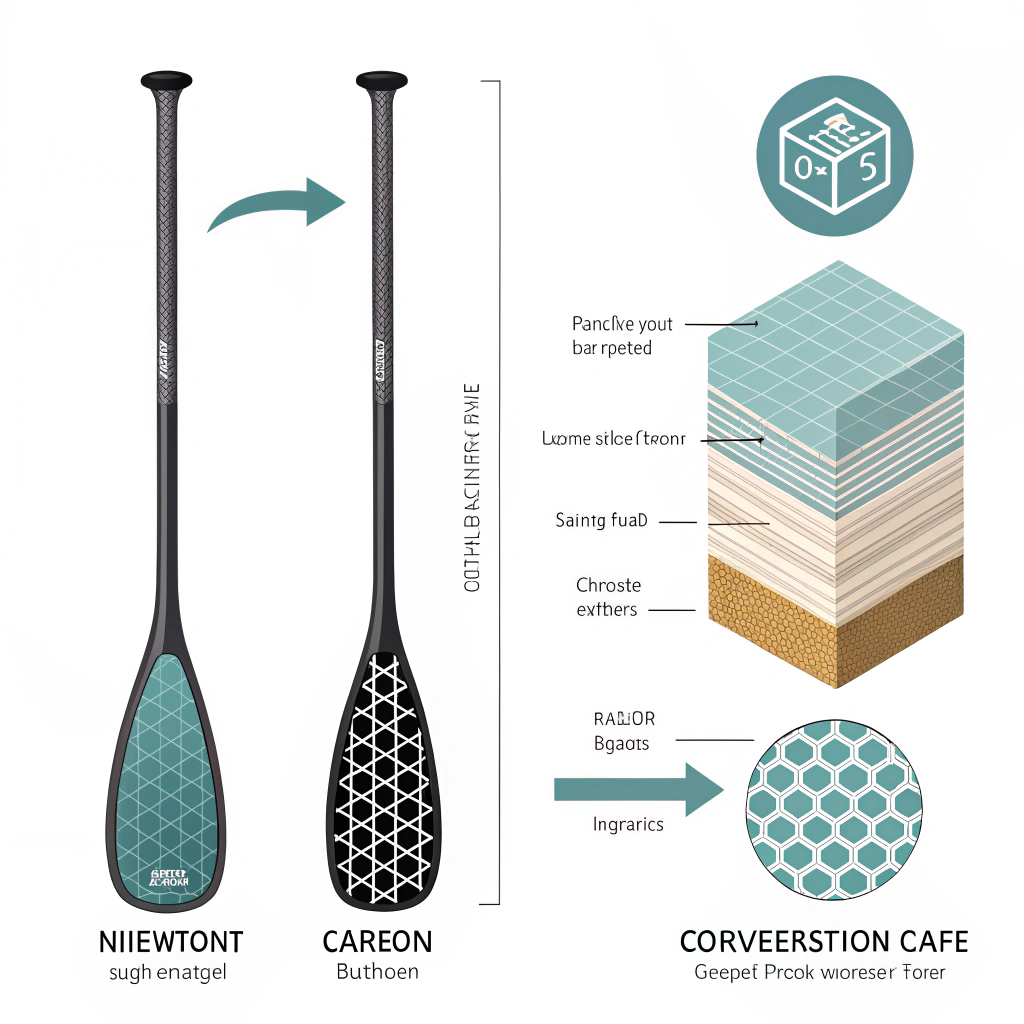
Case example — converting a midweight design to a lightweight SKU
- Problem: target 210 g from existing 225 g design.
- Steps:
- Replace one carbon ply with E-Glass composite to cut ~6–8 g.
- Switch from aluminum honeycomb to polymer core (saves ~6–10 g depending on thickness).
- Reduce edge guard thickness slightly and use lighter grip tape (2–3 g saving).
- Rebalance by slightly shortening butt cap to maintain neutral feel.
- Outcome: target weight reached while retaining similar MOI—validated by swing test.
Actionable recommendations (what to order next)
- Define 3 SKU weight bands for your initial line: Lightweight (184–213 g), Midweight (213–233 g), Heavy (233–250 g). Include MOI class and balance band for each.
- On the OEM spec sheet demand: static weight ±2–3 g, balance tolerance ±2 mm, and one production sample with swingweight test for approval.
- Insist on production-stage weight checks and AQL sampling. Reserve retention samples for every lot.
- For private-label premium SKU, specify cold pressing and carbon face + polymer core to hit lower weight while keeping stiffness.
- Request a production time and cost delta for each manufacturing change (hot vs cold vs thermoforming) to budget correctly.
Summary
Choosing the right paddle weight mix is a decision that reaches into product positioning, manufacturing method, and long-term quality assurance. By pairing clear static weight bands with balance and swingweight targets—and by specifying tolerances and testing protocols—you prevent variability that hurts sales and returns. Use the sample OEM spec and QC checklist above to brief suppliers quickly and move from pilot samples to consistent production.
People Also Ask
How does swing weight affect pickleball paddle?
Swing weight (MOI) determines how heavy a paddle feels in motion. Higher swing weight slows your swing but adds power and stability at contact—good for drives and blocking. Lower swing weight makes the paddle easier to maneuver and faster for quick reactions and soft touch, but it typically reduces raw power. For procurement, pair swingweight class with static weight and balance so paddles deliver the expected feel across production.
Is it better to have a heavier pickleball paddle?
It depends on the player and use case. Heavier paddles offer more stability and potential power but can increase arm fatigue and reduce finesse. Lighter paddles improve maneuverability and reduce injury risk, making them better for beginners and recreational players. For product lines, offer both: lightweight for comfort-focused SKUs and heavier models for players seeking power, with clear weight and balance specs so buyers can choose consistently.
-
swingweight (MOI): Read to learn how Moment of Inertia (MOI) is measured and used to predict in-play feel—so you can specify MOI bands or swing tests that ensure paddles with identical static weight feel consistent in production. ↩
-
balance-point: Read to understand balance measurement methods (mm vs % of length), why balance affects MOI and swing feel, and how to set tolerances so head-heavy vs head-light SKUs perform predictably. ↩
-
Nomex honeycomb: Read to compare Nomex to polymer and aluminum cores—covering density, stiffness, durability, and manufacturing trade-offs—so you can choose cores that meet performance and cost targets. ↩
-
Hot pressing: Read to see how hot pressing differs from cold pressing and thermoforming in cycle time, lamination consistency, and material behavior—helpful for choosing processes that match your volume and feel requirements. ↩
-
AQL-based sampling: Read to understand Acceptable Quality Level (AQL) sampling plans, how to set lot sizes and sample rates (e.g., 1% or 1 in 50), and how AQL ties into your incoming inspection strategy and supplier agreements. ↩