Skip to content

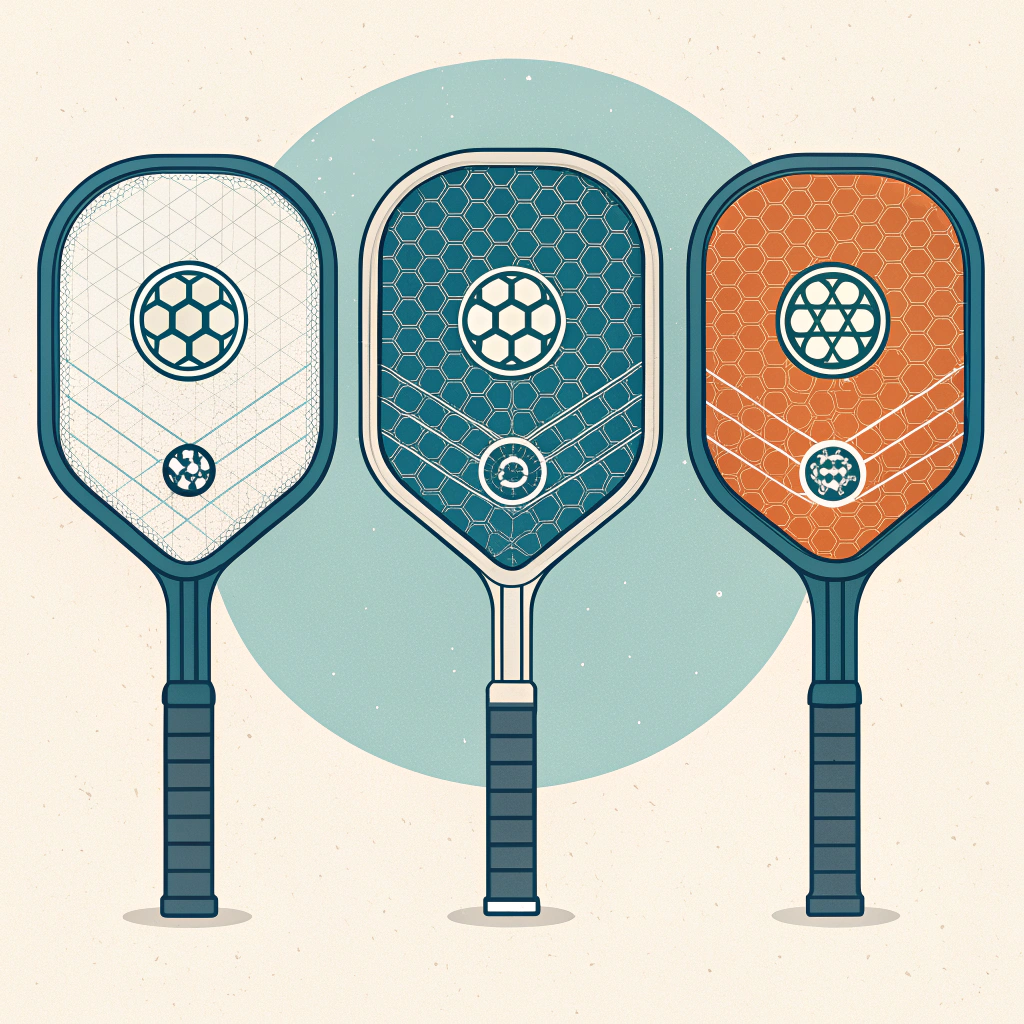
Quick answer: For SKU selection, choose widebody, classic (teardrop/diamond), and elongated shapes to cover market demand—widebody for beginner/recreational users who want a larger sweet spot1 and forgiveness; classic/teardrop for balanced control-power and broad retail appeal; elongated for advanced players seeking extra reach and point-winning spin/power. Match each shape to specific face materials (carbon vs fiberglass), core choices (polymer/honeycomb, aluminum, Nomex2), and a suitable production method (hot press, cold press, thermoforming) to balance cost, feel, and manufacturability. Below is a practical, factory-aware decision guide to help procurement managers finalize SKUs, prototyping plans, and MOQ3 expectations.
Why this matters now
- Buyers must pick shapes early: shape drives player fit, perceived value, and tooling choices.
- Shape affects production complexity (mold tooling, pressing, edge-guard routing) and cost per unit.
- Shapes also influence compliance with USAPA4 tournament limits and retail returns if player expectations don’t match play feel.
Who this guide is for
- Product managers, procurement leads, and wholesalers choosing OEM/ODM paddle lines.
- You need side-by-side trade-offs of play feel, manufacturing constraints, cost, and compliance to shortlist prototypes and set MOQ.
Core selection dilemma
- You can’t cover every player with one shape. Typical retailer SKU strategies:
- Cover all segments with 3 shapes (widebody, teardrop/classic, elongated).
- Or specialize (e.g., focus on recreation with multiple widebody variations).
- Decision drivers: target user skill, margin targets, production capacity, and branding needs (custom graphics/on-demand print).
Quick shape-performance summary (one-line)
- Widebody paddle: large surface area → bigger sweet spot, more forgiveness, easier control → best for beginners/recreation.
- Classic / Teardrop / Diamond: balanced sweet spot and control → best mass-market and mid-level players.
- Elongated paddle: longer face, smaller sweet spot, more reach and leverage → best advanced players seeking power/spin.

Detailed comparison: shape vs performance vs manufacturing
| Shape | Typical face area (sq in) | Play feel / player fit | Manufacturing notes | Cost & tooling impact |
|---|---|---|---|---|
| Widebody | 100–110+ | Large sweet spot, more forgiveness, lower precision | Slightly shorter handle, wider throat/edge guard; molds easier for thermoforming or hot press; edge-guard routing larger radius | Moderate — slightly higher material per paddle but simpler QC for face defects |
| Classic / Teardrop / Diamond | 95–105 | Balanced control & power; broad market fit | Standard molds; good for most pressing methods; typical choice for polymer or aluminum cores | Lowest cost per unit at scale due to standard tooling |
| Elongated | 85–95 (longer length) | More reach, higher top-end power and spin, smaller sweet spot | Requires longer tooling, careful balance point; more sensitive to core thickness tolerance—cold pressing can help control thickness | Higher tooling cost; slower QC and higher sample rejection risk |
Notes:
- Surface area numbers are approximate; your brand may set target ranges. Sweet spot location shifts with head shape and core distribution.
- Moment of inertia5 increases with wider heads; that can improve stability but reduce maneuverability.
Material and process pairing (practical recommendations)
-
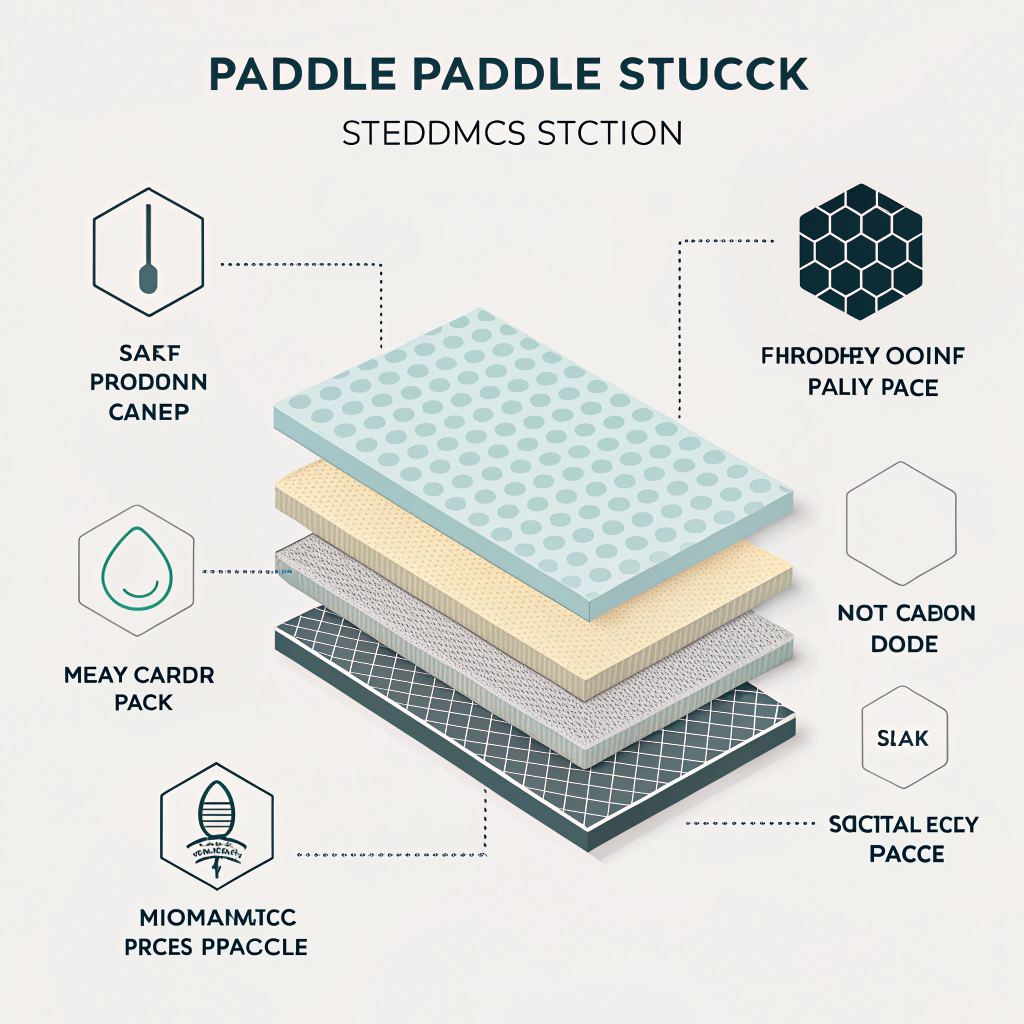
Faces
- Carbon fiber (3K / 12K / T300): Best for power, crisp feel, and premium positioning. Use for elongated and pro-targeted teardrop models. Hot pressing or thermoforming preferred to bond multi-layer carbon skins.
- Fiberglass (E-glass): More control oriented and forgiving; use on widebody and beginner models. Cold pressing can preserve fiberglass feel.
- Carbon + Fiberglass composite: Balanced path—carbon for pop, fiberglass for sweetness. Good for mid-tier classic paddles.
-
Cores
- Polymer honeycomb: Softer feel, lower vibration → excellent for recreational widebody paddles.
- Aluminum honeycomb: Firmer, better energy transfer → suited for hybrid teardrops where weight distribution matters.
- Nomex honeycomb: High durability and stiffness → use in competition-grade elongated paddles.
-
Production process fit
- Hot pressing: High throughput, strong bonds — ideal for carbon-heavy, competitive paddles. Watch for feel changes due to heat; design lamination stack accordingly.
- Cold pressing: Best for delicate material properties (fiberglass feel); slower but gives consistent face thickness and feel—favored for control-oriented lines.
- Thermoforming: Allows complex contours and precise material distribution—good for proprietary shapes, edge transitions, and premium SKUs. Higher cycle time and costs.
Manufacturing constraints & QA you must plan for
- Tooling: Elongated requires longer molds and possibly custom blades for edge trimming; tooling costs scale with complexity.
- Thickness control: Elongated paddles are more sensitive—spec ±0.2 mm can change balance significantly.
- Edge guard and throat design: Wider heads need broader edge guards and may affect laminate wrap; ensure supplier samples show consistent wrap and no delamination at throat.
- Graphics & on-demand print: Thermoforming and hot-pressed surfaces accept direct skin prints; cold-pressed faces may require additional adhesive skins.
- Batch testing: Define acceptance criteria for weight variance, balance point (mm from handle), face flatness, and bounce/deflection curves.
- Compliance testing: Ensure paddles meet latest USAPA equipment specifications (confirm current published limits before production sign-off).
Cost, MOQ, and lead-time expectations
- Prototype: 4–8 weeks depending on tooling and material lead times. Elongated prototypes may take longer for mold adjustments.
- MOQ typical ranges:
- Standard classic/widebody: 500–1,000 per SKU for mid-range pricing.
- Custom elongated or premium carbon models: 1,000–2,000 due to higher rejection rates and preset lamination processes.
- Unit cost drivers:
- Material: Carbon faces + Nomex core = highest cost.
- Process: Hot press = higher capex but lower per-unit cost at scale; cold press = higher labor/time per unit.
- Custom graphics and on-demand print: add per-unit cost for film/ink; consider centralized printing to reduce tooling per design.
- Quick cost-sensitivity rules:
- Reduce variants per shape to lower MOQ burden.
- Use the same core across 2 shapes to reduce tooling and inventory complexity.
- Reserve carbon faces for top-tier SKU only.
Recommended SKU strategy (for typical sporting-goods brand)
- Starter pack (3 SKUs): Widebody (fiberglass + polymer core), Classic (composite + polymer/aluminum core), Elongated (carbon face + aluminum/Nomex2) — note: second occurrence not re-marked.
- Price tiers: Entry (fiberglass), Mid (carbon+fiberglass composite), Pro (full carbon + Nomex).
- Colors & graphics: offer 2 base graphics per SKU + on-demand print for small-batch customization (MOQ 200–500).

Prototype plan & supplier checklist before placing MOQ
- Prototype goals: weight ±3g, balance point target, face feel (power/control), edge integrity.
- Request from supplier: lamination stack sheet, core density spec, pressing temperature/time (if hot press).
- QC tests: weight, balance point, face deflection (x Newtons), surface flatness, edge-guard pull test.
- Regulatory: copy of USAPA compliance test or supplier certification, and plan for independent testing if targeting tournament market.
- Timeline: initial prototype 4–8 weeks, PM sign-off, pilot run 2–4 weeks, full production depending on MOQ and press capacity.
Trade-offs summary (short checklist for decisions)
- Want mass retail appeal + low cost → choose classic/teardrop, fiberglass or composite face, polymer core, cold press.
- Want beginner-friendly product → widebody, fiberglass face, polymer core, lower cost, larger graphics area.
- Want high-margin pro product → elongated or teardrop with full carbon face, Nomex core, hot-press/thermoforming; higher MOQ.
- Want quick SKU personalization → negotiate on-demand print runs and flexible skin supply with supplier.
Actionable next steps (for procurement manager)
- Define target players and price points for each SKU (entry/mid/pro).
- Select 3 shapes to prototype: widebody, classic, elongated.
- Specify material stacks for each prototype with target weight and balance point.
- Request supplier to produce one prototype per material variant and one pilot batch (50–200 units) to validate processes and yields.
- Ensure contractual clauses for QC parameters, rejection rates, and rework before signing full MOQ.
People Also Ask
Q: What are the three types of pickleball paddles?
A: The three common paddle shape categories are Elongated, Classic (also called teardrop or diamond), and Widebody. Elongated paddles are longer to provide extra reach and leverage for power and spin; classic/teardrop shapes balance control and power with a mid-face sweet spot suitable for broad market appeal; widebody paddles have larger face area and broader sweet spots, making them forgiving and well suited for beginners and recreational play.
-
sweet spot: Read to understand how sweet-spot size and location affect forgiveness, power, and perceived play feel, and how face and core choices shift its position—useful when defining SKU play targets and consumer claims. ↩ ↩
-
Nomex: Read to learn why Nomex honeycomb cores offer high stiffness-to-weight and durability, their manufacturing handling (heat/pressure), and trade-offs vs polymer or aluminum cores for performance and cost. ↩ ↩ ↩2
-
MOQ: Read to get practical guidance on Minimum Order Quantity impacts on unit cost, inventory commitments, sampling strategies (pilot runs), and negotiation levers with OEM/ODM suppliers. ↩ ↩
-
USAPA: Read to confirm current tournament equipment rules, test methods, and certification requirements so you can plan compliance testing and avoid costly rework for tournament-market SKUs. ↩ ↩
-
Moment of inertia: Read to see how head-width and mass distribution change rotational stability vs maneuverability, and how that informs balance-point targets and handle/face design trade-offs. ↩ ↩