Skip to content

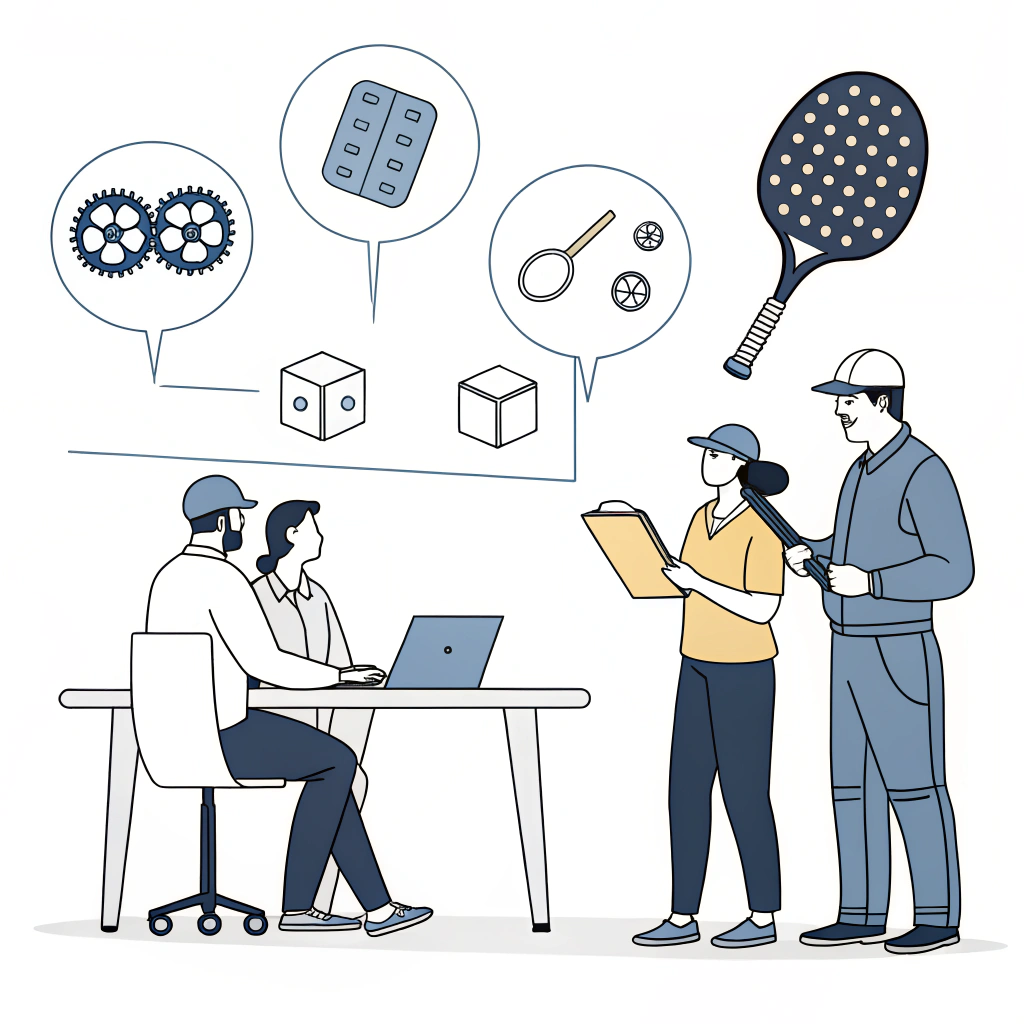
Quick Answer: Ordering custom pickleball paddles from an OEM manufacturer like NEX Pickleball is simple and straightforward. By exploring available customization options, selecting the best production process, and following a clear, step-by-step procurement guide, you can secure high-performance paddles tailored to your business needs.
In today’s fast-growing pickleball market, distributors and retailers are increasingly looking to differentiate themselves with custom, high-performance paddles. With our extensive expertise in OEM manufacturing1 and advanced production techniques, NEX Pickleball offers an end-to-end solution for companies seeking to expand their product line. This comprehensive guide provides detailed ordering guidelines, customization options, and insights into our production process to assist you in making an informed procurement decision.
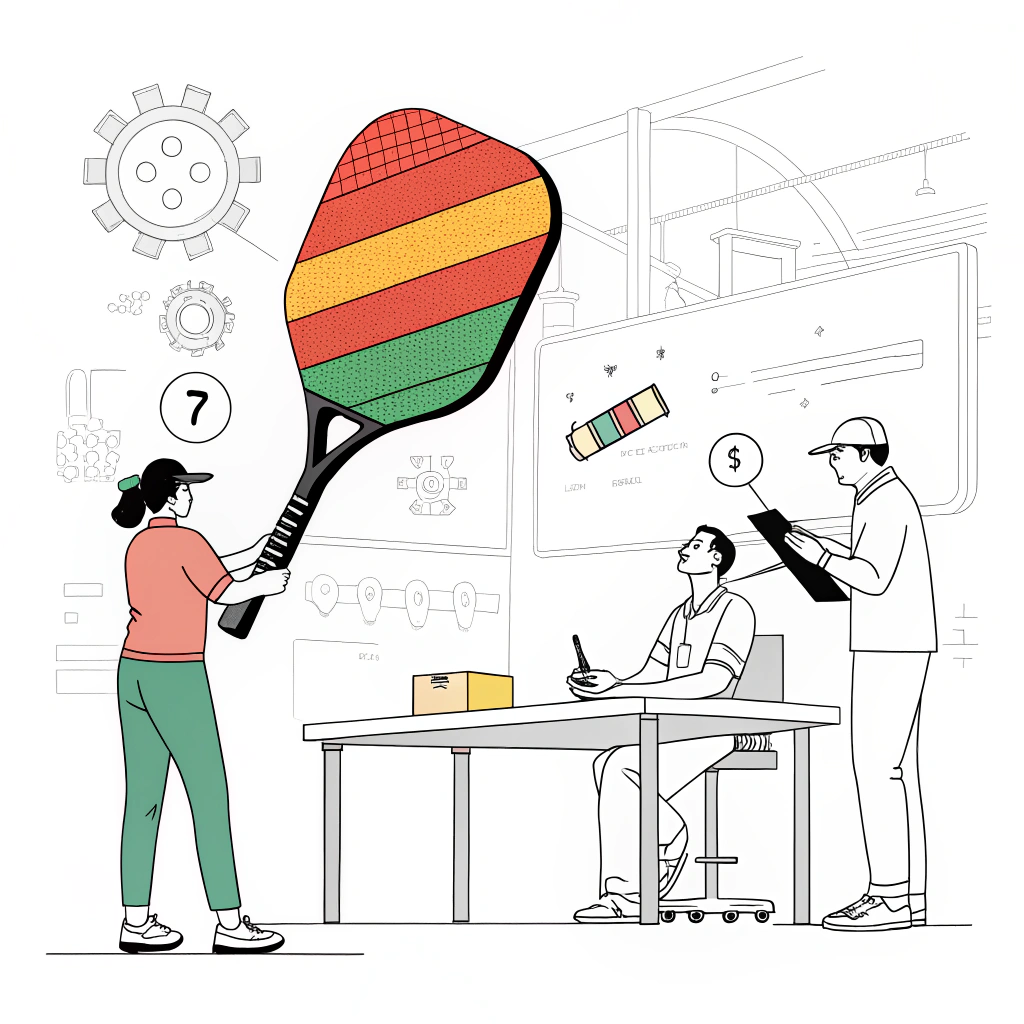
Procurement specialists and business development managers face a challenge: ensuring that the custom pickleball paddles they purchase not only meet high standards of quality and performance but also reflect their brand in a unique way. When evaluating potential suppliers, decision makers are looking for a partner who can provide precision manufacturing, reliable supply chains, and scalable customization options.
Key issues include:
- Understanding the production process used to manufacture high-performance paddles.
- Knowing how to choose the right customization options for your target market.
- Assessing the quality control measures to ensure durability and optimal performance.
- Evaluating turnaround times and pricing structures to maintain competitive advantage.
The need for custom pickleball paddles stems from several important factors:
- Market Differentiation: In a highly competitive sports equipment market, branded and custom-designed paddles help companies stand out.
- Performance Requirements: High-performance paddles made from premium materials like carbon fiber2, fiberglass, and composite materials are essential for competitive play and recreational enjoyment.
- Customization Demand: With consumers increasingly expecting personalized products, offering options such as custom graphics, unique grip sizes, and tailored weight distribution becomes a critical sales tool.
- Consistent Quality Assurance: In B2B procurement, constant quality control and efficient production processes are necessary to build trust and ensure long-term partnerships.
The ordering process for custom pickleball paddles can be broken down into several key stages. Each stage is designed to ensure that the final product meets both performance expectations and brand identity requirements.
The process starts with a thorough consultation:
- Stakeholder Discussion: Engage with your internal stakeholders to determine the desired specifications, including paddle weight, balance, grip size, and design features.
- Customization Options: Decide on the customization elements – this can include personalized graphics, custom text, or specific colors that align with your brand identity.
- Volume Requirements: Identify your order volume and any seasonal variations in demand to optimize production planning.
During this stage, it is crucial to clearly communicate your quality standards and performance expectations. This helps in aligning the production process with your business goals.
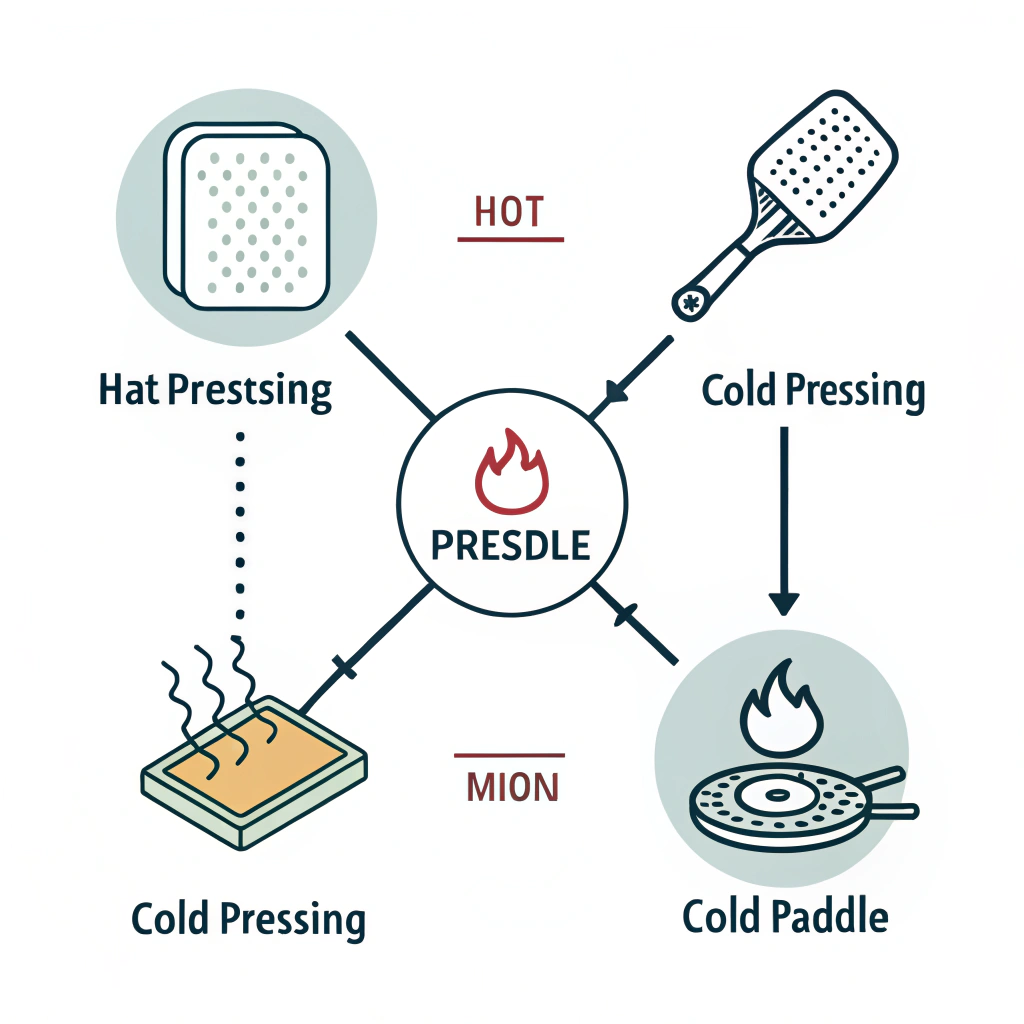
At NEX Pickleball, we employ three main production processes to manufacture our paddles: Hot Pressing, Cold Pressing, and Thermoforming3. Each method has specific advantages and is selected based on the project’s requirements.
Below is a comparison table outlining the three processes:
| Production Process | Advantages | Disadvantages | Ideal For |
|---|---|---|---|
| Hot Pressing | High production efficiency; excellent impact resistance; strong structural integrity. | May alter some material properties; high initial equipment investment. | High-volume orders requiring strong, durable paddles. |
| Cold Pressing | Maintains material’s properties; offers precise control over thickness and structure; excellent ball feel. | Longer production cycle; demands precise control equipment. | Designs prioritizing control and responsiveness. |
| Thermoforming | Suitable for complex designs; precise material distribution; enhances paddle stability. | Longer production time; higher equipment costs. | Premium, custom-made paddles with intricate designs. |
By evaluating these processes, you can decide which production technique best suits your order requirements and target market.
Our advanced manufacturing techniques allow you to tailor your paddles using various premium materials:
-
Carbon Fiber2 Options:
- 3K Carbon Fiber: Offers excellent durability and flexibility, reducing vibration during play.
- 12K Carbon Fiber: Provides a smoother surface with enhanced hardness, ideal for competitive play.
- T300 Carbon Fiber: Known for its optimal balance of strength and lightweight performance.
-
Fiberglass:
- E-Glass Fiberglass: Ensures great elasticity and ball control, giving players a wider sweet spot.
-
- Carbon Fiber and Fiberglass Composite: A balanced mix of both worlds, promising superior performance.
- Bamboo Core Composite: Offers a lightweight feel with high impact resistance.
- Honeycomb Core: Reduces vibration and improves durability for sustained play.
-
Core Materials:
- Nomex Honeycomb Core: Excellent for shock absorption, ensuring long-lasting durability.
- Aluminum Honeycomb Core: Balances weight with power and control.
- Polymer Honeycomb Core: Provides better elasticity and comfort while reducing vibrations.
Your customization can also extend to aesthetic decisions. For example, if you wish to feature custom branding, our customization process lets you upload images or personal text, ensuring that the finished paddle truly reflects your brand. This personalization option is similar to clicking the “Customize Now” button on many online platforms, where you can adjust your design elements until it is perfect.
To streamline your order and ensure nothing is overlooked, follow this checklist:
-
Requirement Gathering:
- Define paddle specifications (weight, balance, and grip size).
- Choose customization elements (design, branding details, and colors).
-
Material and Production Process Selection:
- Choose between carbon fiber, fiberglass, or composite materials based on performance expectations.
- Decide on the production process: hot pressing for high-volume, cold pressing for precise control, or thermoforming for premium products.
-
Drafting a Detailed Order:
- Include detailed technical specifications.
- Provide customization artwork or design instructions.
- Confirm order volume and estimated delivery timelines.
-
Quality Assurance and Testing:
- Inquire about the quality control measures in place.
- Request sample testing results or undergo a sample order cycle if necessary.
-
Final Order Confirmation:
- Review the final order details, including cost estimates and turnaround times.
- Sign off on the production schedule and delivery plan.
Quality control is critical in manufacturing custom pickleball paddles. At NEX Pickleball, each paddle undergoes rigorous testing. Our Quality Assurance5 process focuses on:
- Structural Strength Testing: Ensuring the paddle can withstand high-impact play.
- Vibration Reduction: Verifying that the chosen core material effectively minimizes vibrations.
- Ergonomic Testing: Evaluating the grip design and weight distribution for player comfort.
- Custom Verification: Confirming that all branding and design customizations are accurate and meet your standards.
The thorough testing protocols ensure that every paddle not only reflects your brand identity but also meets the high standards expected by competitive players and recreational users alike.

- Engage in Detailed Consultation: Begin by setting up a consultation session with our manufacturing experts to outline your specific needs and discuss customization options in detail.
- Compare Material and Process Options: Utilize the production process table above to match your performance and customization requirements with the ideal manufacturing approach.
- Leverage Quality Assurance: Prioritize quality by requesting sample products and detailed testing reports. This assurance can help mitigate risks and solidify confidence in your procurement decision.
- Plan for Future Demand: Considering the scalability and on-demand printing services offered, align your order volumes to meet both current and future market demands.
- Finalize Custom Designs: Work closely with our design team to perfect your order’s custom imagery, ensuring every paddle highlights your unique brand identity.
By following this step-by-step guide, you can confidently order custom pickleball paddles that provide exceptional performance, tailored design, and unwavering quality – all critical factors for gaining a competitive edge in your market.
People Also Ask
Q: Can you customize a pickleball paddle?
A: Yes, you can customize a pickleball paddle by selecting personalized design options such as uploading custom images, adding text, and choosing unique colors to reflect your brand identity. The customization process is integrated into our ordering system, ensuring that each paddle meets your specific requirements.
Q: How to know what size pickleball paddle to buy?
A: Paddle sizing can be determined using a height-based test: players below 5'3" might use a 4-inch grip circumference, those between 5'3" to 5'8" could use a 4.25-inch grip, and players above 5'8" may require a 4.5-inch grip to ensure optimal control and comfort during play.
Q: What is the best company for pickleball paddles?
A: While various reputable brands exist in the market, NEX Pickleball stands out as a leading OEM manufacturer that provides high-performance, custom-designed paddles with advanced production techniques and strict quality assurance, making them an excellent choice for businesses and competitive players alike.
-
OEM manufacturing: Read more to understand how original equipment manufacturing enables businesses to produce custom products efficiently by outsourcing production processes while maintaining brand control. ↩ ↩
-
Carbon Fiber: Discover the benefits of carbon fiber, including its strength-to-weight ratio and durability, which make it an ideal material for high-performance sports equipment. ↩ ↩ ↩2
-
Thermoforming: Click to learn about thermoforming, a process that uses heat to shape materials into custom designs, offering precision and complexity for premium products. ↩ ↩
-
Composite Materials: Learn about composite materials, which combine multiple constituents to leverage the best properties of each, resulting in enhanced performance and durability in manufacturing. ↩ ↩
-
Quality Assurance: Explore quality assurance practices that ensure products meet rigorous standards for performance, reliability, and safety, which are essential in B2B manufacturing. ↩ ↩