Skip to content


To meet USAPA1 standards for pickleball paddles, manufacturers must ensure that every paddle meets specific dimensional, surface, and performance criteria by utilizing precision production techniques and rigorous quality assurance2 processes. In this article, we explain the customization process and examine production innovations that enable USAPA compliance while ensuring optimal performance and durability.
USAPA certification is more than a regulatory formality—it establishes the playing field by ensuring all equipment meets precise standards for fair play. For pickleball paddles, key requirements include:
• Dimension Limits: The paddle’s overall dimensions must not exceed 24 inches in total combined length. This regulation ensures that the paddle is not overly large, maintaining balance and fairness during matches.
• Surface Quality: The paddle’s surface needs to be smooth. It must be free of textures that might provide an unfair spin or alter ball trajectory unexpectedly.
• Performance Consistency: Consistency in rebound and ball control is critical to meet performance standards during competitive play.
By adhering to these requirements, manufacturers can deliver products that not only comply with regulatory standards but also enhance user performance on the court.
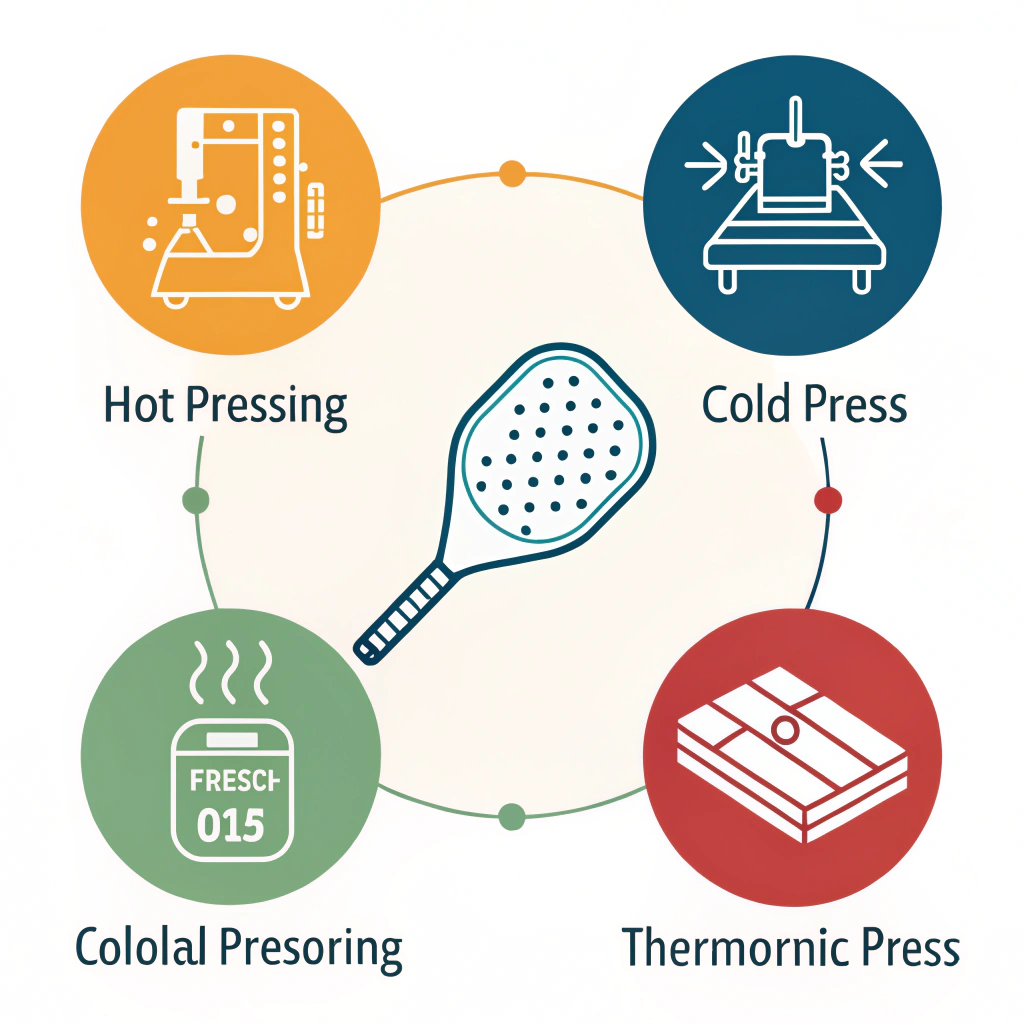
One of the core reasons to invest in a customization process for USAPA-approved paddles is the diverse array of production techniques available. Each method of production—hot pressing, cold pressing, and thermoforming3—brings unique benefits and challenges to the manufacturing process. At NEX Pickleball, we have honed our processes to meet the rigorous standards required by regulatory bodies.
Below is a table summarizing the three main techniques we utilize:
| Production Method | Advantages | Disadvantages |
|---|---|---|
| Hot Pressing | - High efficiency in large-scale manufacturing |
- Strong impact resistance and structural integrity | - Potential alteration of material properties, affecting paddle feel
- Requires high capital investment in equipment |
| Cold Pressing | - Precise control over paddle thickness - Preserves original material properties for better ball feel and responsiveness | - Longer production cycles
- Requires high-precision equipment and pressure control |
| Thermoforming | - Allows complex shapes and controlled material distribution - Enhances overall paddle stability | - Longer production time
- Higher equipment costs, best suited for premium products |
Each process is chosen based on specific design requirements and desired performance outcomes. For instance, when a paddle’s surface finish is critical to meet USAPA’s smoothness guidelines, thermoforming may provide the necessary precision, whereas cold pressing can better maintain the intrinsic qualities of the composite materials used.
When designing a paddle that meets USAPA standards, the customization process begins with selecting ideal components—both core and face materials—to achieve the required performance characteristics. Our customization process is a blend of material science and precision engineering.
At the heart of a high-performance pickleball paddle is the selection of premium materials that deliver on power, control, and durability. Some of our key materials include:
• Carbon Fiber:
- 3K Carbon Fiber: Known for its strength, flexibility, and excellent rebound force.
- 12K Carbon Fiber: Provides a smoother surface finish and enhanced durability, ideal for high-impact scenarios.
- T300 Carbon Fiber: Offers balanced strength with minimal weight, ensuring a responsive and agile paddle.
• Fiberglass:
- E-Glass Fiberglass: Known for its elasticity and tensile strength, this material provides excellent control and a wide sweet spot range.
• Composite Materials:
- Carbon Fiber and Fiberglass Composite: Combines the benefits of both for an optimal balance of power and control.
- Bamboo Core Composite: Offers lightweight properties with high impact resistance, ideal for extended play.
- Honeycomb Core4: Provides superior shock absorption while reducing vibrations during play.
• Core Materials:
- Nomex Honeycomb Core: Provides excellent shock absorption and durability.
- Aluminum Honeycomb Core: Balances weight distribution for optimal power and control.
- Polymer Honeycomb Core: Enhances elasticity and minimizes vibration for a comfortable play experience.
Below is a table that outlines these materials along with their benefits:
| Material Type | Key Benefits | Ideal For |
|---|---|---|
| 3K Carbon Fiber | High strength and flexibility | Rebounding, high-frequency play |
| 12K Carbon Fiber | Smoother finish and enhanced durability | Competitive high-impact scenarios |
| T300 Carbon Fiber | Optimal strength-to-weight ratio | Balanced performance in tournaments |
| E-Glass Fiberglass | Excellent elasticity and control | Recreational and training play |
| Composite (Carbon Fiber + Fiberglass) | Optimal blend of power and precision | Versatile performance |
| Bamboo Core Composite | Lightweight with high impact resistance | Long-duration play environments |
| Honeycomb Core (Various) | Superior shock absorption and reduced vibration | Manufacturers demanding quality assurance |
Once the materials are selected, the customization process focuses on achieving precision during production. Here’s a step-by-step guide to the process:
-
Design and Material Integration:
- Begin with an accurate design blueprint that adheres to USAPA guidelines.
- Integrate selected materials into the design, ensuring compatibility between layers and cores.
- Use CAD and simulation software5 to predict material performance and identify potential weak points.
-
Selection of Production Process:
- Decide whether to use hot pressing, cold pressing, or thermoforming based on design needs.
- Adjust parameters such as pressure levels, temperature, and duration to optimize results.
- For paddles requiring an exceptionally smooth surface, special finishes may be applied during thermoforming.
-
Quality Control Checks:
- Throughout production, rigorous testing is conducted to ensure dimensional accuracy.
- Surface quality is inspected under high magnification to detect any rough textures that could impact ball spin.
- Testing protocols involve both automated and manual quality control processes to ensure consistency.
-
Customization Adjustments:
- If a paddle does not meet the required specifications, adjust variables in the production process.
- Use feedback from test runs to fine-tune material ratios and process times.
- This iterative approach helps in achieving a product that meets both performance and regulatory demands.
By following these steps, manufacturers can produce paddles that not only perform at high levels but also satisfy strict USAPA compliance standards.
In the competitive world of pickleball equipment, quality assurance is non-negotiable. Every paddle manufactured must undergo stringent tests that verify its compliance with USAPA guidelines. Our process includes:
• Dimensional and Surface Verification:
- Using high-precision tools to measure paddle dimensions.
- Employing surface analysis tools to ensure the paddle’s finish is smooth and even.
• Durability and Performance Testing:
- Simulated play conditions to observe paddles under stress.
- Rebound and vibration tests to validate impact resistance and shock absorption features.
• Regulatory Certification Support:
- Detailed documentation of production processes that can be audited.
- Collaboration with independent labs to certify that the paddles meet USAPA standards.
- Continuous monitoring and improvements based on both internal testing and external feedback.
Quality assurance in our production process is a critical component not only for regulatory adherence but also for winning the trust of our B2B partners. Consistent quality helps foster long-term relationships with distributors, sports organizations, and equipment retailers.
For product managers, R&D engineers, and procurement specialists involved in sports equipment manufacturing, here are some practical tips to ensure successful implementation of USAPA-approved paddle production:
• Invest in Advanced Production Technology:
- Equip your facility with high-precision tools for both design and production.
- Consider integrating robotics and AI-driven quality control systems to minimize human error.
• Continuous Training and Process Optimization:
- Train your technical teams in the nuances of hot pressing, cold pressing, and thermoforming.
- Implement regular process reviews and process optimization strategies to continuously improve product quality.
• Material Testing and Supplier Collaboration:
- Collaborate with suppliers to guarantee the quality and consistency of critical materials like carbon fiber and honeycomb cores.
- Establish strong quality benchmarks and require material certifications from your vendors.
• Documentation and Traceability:
- Maintain comprehensive records of production parameters and quality control outcomes.
- Traceability helps in troubleshooting and in meeting regulatory audits with confidence.
• Customer-Centric Customization:
- Engage with your end users to understand their specific performance needs.
- Customize paddle designs based on feedback from athletes and regulatory bodies, ensuring that the products remain competitive on the market.
By incorporating these tips into your production strategy, you can significantly enhance the performance and regulatory compliance of your pickleball paddles, while positioning your company as a leader in sports equipment manufacturing innovation.
In conclusion, the customization process for USAPA-approved pickleball paddles is an intricate balance of advanced production techniques, premium material selection, and rigorous quality assurance. Manufacturers must continuously adapt and fine-tune their processes to meet the evolving standards of both performance and regulatory compliance.
At NEX Pickleball, our commitment to precision manufacturing and innovation ensures that every paddle we produce meets the highest quality standards. Whether you are a product manager, procurement specialist, or R&D engineer, embracing these advanced manufacturing techniques will empower you to deliver cutting-edge products that support fair play and competitive excellence.
We invite you to explore our comprehensive range of customization options and discuss how our innovative production processes can help you achieve your USAPA compliance goals. Partner with us to elevate your products and set new benchmarks in the sports equipment industry.
A USAPA-approved pickleball paddle must meet strict criteria, including having overall dimensions that do not exceed 24 inches in total combined length and a surface that is smooth and free from rough textures. These specifications ensure fair play by maintaining consistent ball rebound and minimizing unintended spin during matches.
-
USAPA: Click to learn more about the United States of America Pickleball Association standards, which govern paddle specifications and ensure fair competition. ↩
-
Quality Assurance: Click to read about quality assurance systems that ensure products meet stringent performance and regulatory benchmarks in manufacturing. ↩
-
Thermoforming: Click to explore detailed insights on how thermoforming processes are used in manufacturing to create complex shapes with high material precision. ↩
-
Honeycomb Core: Click to understand the engineering behind honeycomb core materials that optimize weight, strength, and shock absorption in paddle design. ↩
-
CAD and Simulation Software: Click to discover how computer-aided design and simulation software help in predicting material performance and fine-tuning product designs. ↩