Skip to content


Quick Answer: Selecting the right pickleball paddle involves balancing advanced materials, precise production processes, and performance optimization that aligns with an advanced player's needs. In this article, we compare different manufacturing techniques and material compositions to help procurement managers and product developers make informed decisions for competitive and recreational markets.
In today’s competitive sporting goods landscape, high-performance pickleball paddles have become essential for advanced players who demand precision, durability, and superior control. At NEX Pickleball, we understand that the key to optimal performance lies not only in the material composition1 of the paddle but also in the production process that ensures consistency and quality. This article outlines the critical factors procurement managers should consider, from advanced Carbon Fiber2 types to innovative production methods such as hot pressing, cold pressing, and thermoforming.
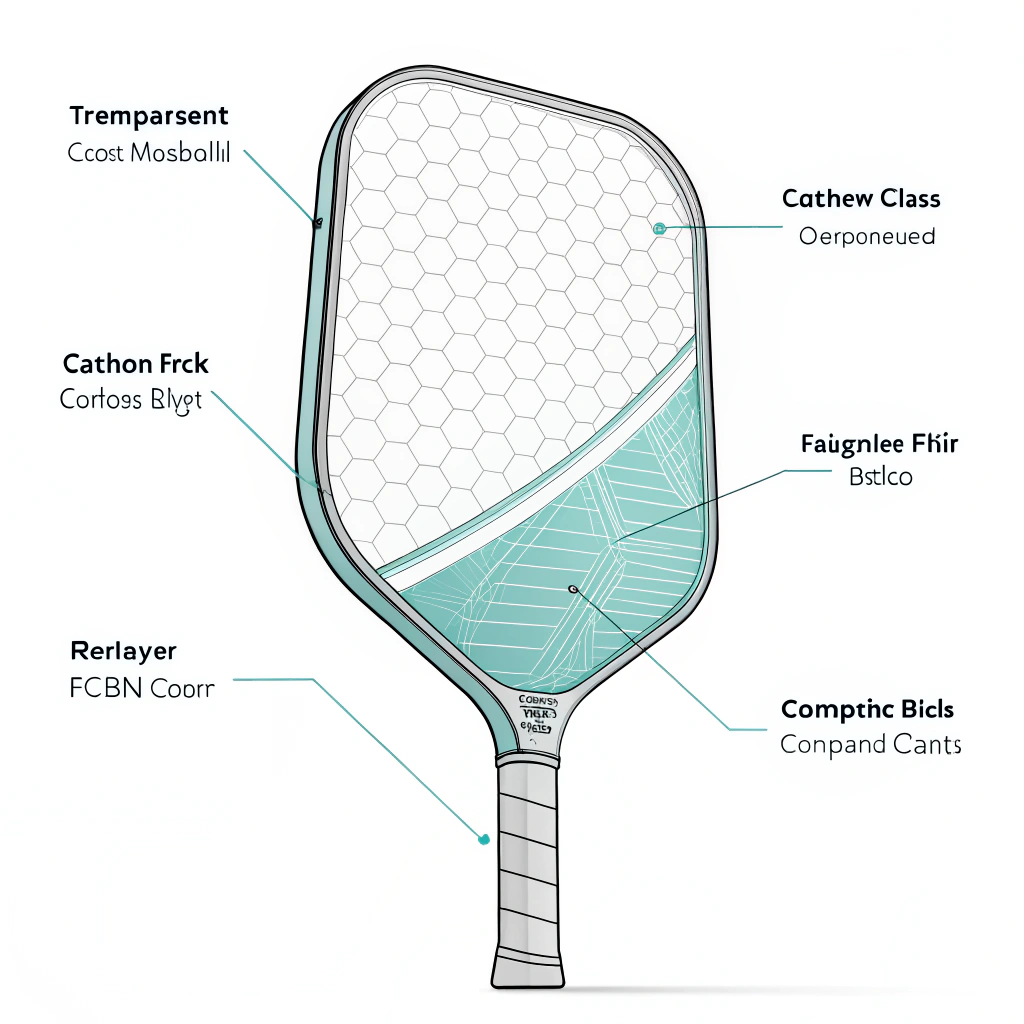
An advanced pickleball paddle must deliver a harmonious blend of power, control, and comfort. One of the primary considerations is the choice of material used in the paddle's construction. Modern paddles incorporate premium materials like Carbon Fiber2, Fiberglass, and various Composite Materials, each bringing specific performance advantages:
-
- 3K Carbon Fiber is prized for its strength and flexibility, offering high rebound force while reducing vibration.
- 12K Carbon Fiber provides a smoother surface and greater hardness, ensuring exceptional durability and strength ideal for competitive play.
- T300 Carbon Fiber strikes a balance by delivering impressive tensile strength with a lightweight feel, making it a top choice for advanced players.
-
Fiberglass:
- Often used to create paddles with a large sweet spot, fiberglass combines flexibility with excellent ball control, catering well to varied playing styles.
-
Composite Materials:
- Carbon Fiber and Fiberglass Composite: This blend leverages the strengths of both materials to offer an ideal balance of power, control, and lightweight handling.
- Bamboo Core Composite: Offers an excellent clear hitting feel with high impact resistance, ensuring a long-lasting playing experience.
- Honeycomb Core variants, using high-density polymer or pulp, provide superior shock absorption while reducing vibrations during play.
The choice of material directly impacts performance on the court. For advanced players, paddles constructed with premium Carbon Fiber variants or well-engineered composites ensure that performance hurdles, such as unexpected vibrations or poor ball response, are minimized.
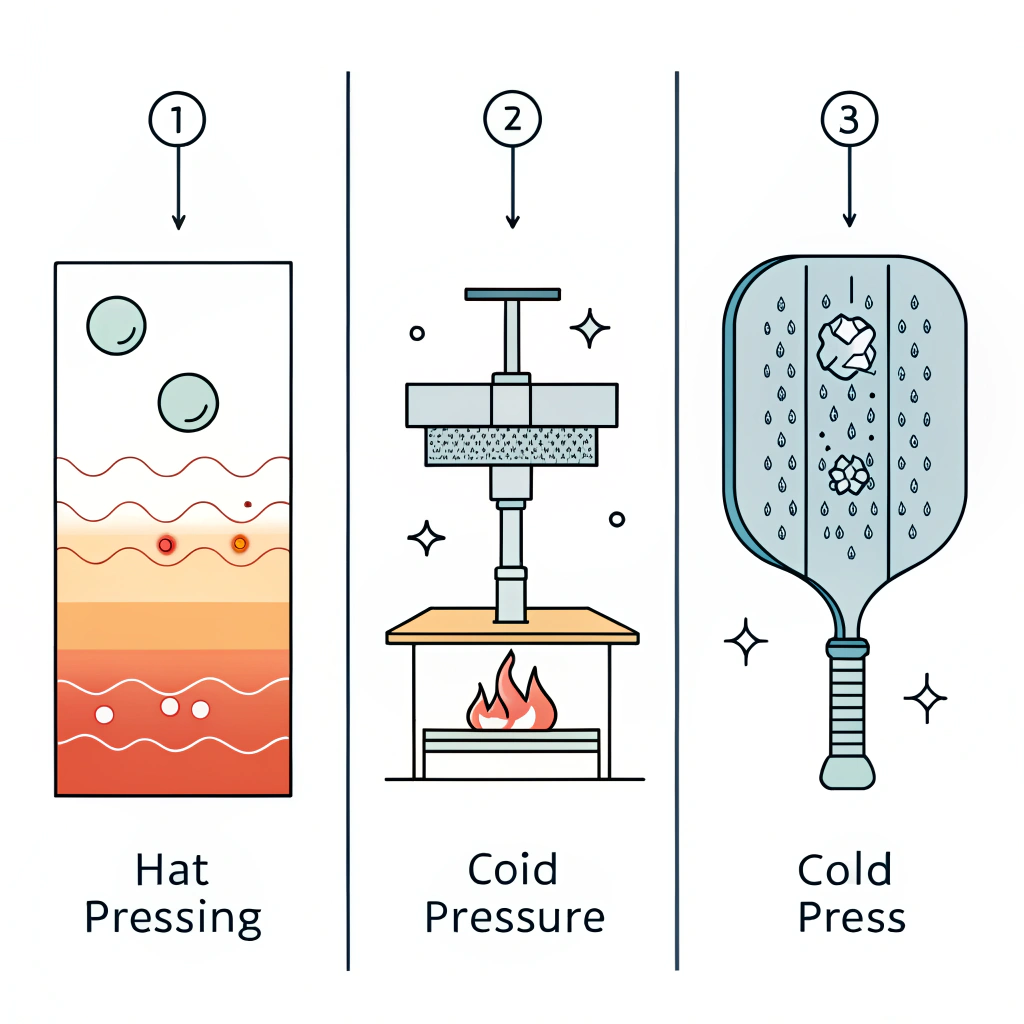
Advanced production techniques are as important as the choice of materials in achieving the ideal paddle performance. At NEX Pickleball, we employ three primary production processes:
-
Hot Pressing3
Hot pressing involves the application of heat and pressure to fuse materials. This method is highly efficient and suitable for large-scale production, making it ideal for paddles where structural integrity and impact resistance are fundamental. -
Cold Pressing4
In contrast, cold pressing shapes the paddle materials at room temperature under mechanical pressure, maintaining the inherent qualities of the base material. This process offers precise control over the paddle’s structure, ensuring enhanced ball feel and responsiveness, attributes that are highly favorable for advanced players preferring finesse over brute force. -
Thermoforming5
Thermoforming entails heating the material to a soft state before molding it into shape. This technique is perfect for creating paddles with intricate designs while ensuring precise thickness and balanced weight distribution. Although thermoforming requires longer production times and more expensive equipment, it is optimal for crafting premium, custom paddles that need to meet the high demands of professional play.
To provide a clearer comparison, consider the following table:
| Production Process | Key Advantages | Limitations | Recommended For |
|---|---|---|---|
| Hot Pressing | High production efficiency; strong impact resistance; excellent structural integrity | May alter material properties; high equipment cost | High-performance paddles requiring durability and strength |
| Cold Pressing | Precise thickness control; preserves material properties; enhanced ball feel | Lengthier cycle times; demands high-quality pressure control | Paddles that need fine-tuning for optimal control and responsiveness |
| Thermoforming | Allows intricate designs; maintains stability; precise material distribution | Longer production cycles; higher equipment costs | Premium, custom paddle designs with complex shapes |
This table serves as a quick reference for procurement managers comparing production methods. Each process contributes differently to the end product's performance, and selecting the right process can optimize the paddle for specific competitive scenarios.
One of the critical aspects procurement managers must consider is how paddle characteristics cater to varying player skill levels. Advanced players typically require a paddle that offers rapid response, precise ball control, and consistent performance, which can be directly influenced by the materials and production methods used.
-
Weight and Balance:
The paddle’s weight and balance play crucial roles in a player's swing and control. Lightweight paddles facilitate maneuverability, but for power shots, a slightly heavier build may be preferred. Our advanced paddles are designed with optimal weight distribution that benefits players needing rapid transitions between offensive and defensive moves. -
Grip Size and Ergonomics:
Advanced paddles also incorporate ergonomic designs to reduce hand fatigue during extended play. Customizable grip sizes ensure that every player experiences maximum comfort, which is essential for maintaining high levels of performance throughout a match. -
Sweet Spot and Surface Texture:
The size of the paddle's sweet spot and the treatment of its surface are vital for achieving superior ball response. Paddles engineered through precise production processes such as cold pressing and thermoforming often provide a more consistent hitting area, enhancing control and shot accuracy.
Implementing advanced quality control measures is another cornerstone of our production process. Every paddle undergoes stringent testing to ensure it meets high performance standards. This rigorous approach guarantees that customers receive a product that not only meets the detailed specification requirements but also stands up to the high demands of professional-level play.
Modern sports equipment procurement increasingly leans towards customization. At NEX Pickleball, our on-demand printing services and custom design options allow each paddle to be tailored to specific client needs. This customized approach addresses several key benefits:
-
Branding Opportunities:
Customized paddles enable sports clubs, teams, and retailers to incorporate their own branding, turning each paddle into a promotional tool as well as a high-performance sports instrument. -
Spec-Specific Production:
Clients have the flexibility to choose from various core materials—like Nomex Honeycomb, Aluminum Honeycomb, or Polymer Honeycomb—to fine-tune the paddle's balance, hardness, and shock absorption. Detailed customization options ensure that the paddle aligns perfectly with an advanced player's technique and style. -
Design Flexibility:
Whether a client is seeking paddles with unique surface textures or specific weight distributions, our production processes support an extensive range of designs. The ability to tailor the paddle’s features to match the player's preference is a significant differentiator in the B2B market.
The customization process is streamlined by our state-of-the-art production techniques. Advanced production methods like thermoforming and cold pressing mean that we can efficiently produce paddles that not only meet the aesthetic requirements of our clients but also uphold the performance standards required by competitive players.
Ensuring product performance does not stop at production. Advanced quality control measures are integrated throughout our manufacturing process. Here’s how we safeguard quality at every step:
-
Raw Material Evaluation:
We begin with comprehensive testing of raw materials such as different types of Carbon Fiber and fiberglass to confirm they meet our high-performance criteria. -
Process Optimization:
Each production method—from hot pressing to thermoforming—is periodically reviewed to maintain consistency. Our state-of-the-art machinery and skilled operators work in tandem to uphold high standards. -
Final Product Testing:
After production, each paddle undergoes rigorous inspection to evaluate parameters like weight distribution, balance, surface consistency, and shock absorption. This final quality assessment ensures that every paddle delivers the necessary performance and durability.
Such quality control protocols not only eliminate the possibility of defects but also build trust with distributors and clubs. This trust is critical, especially in the high-stakes arena of competitive sports, where performance can directly impact the outcome of a match.

Choosing the right pickleball paddle for advanced players goes beyond simple aesthetics and branding—it requires a deep dive into the material science and production methods that define each product's performance. By understanding the differences between Carbon Fiber types, fiberglass options, and composite materials, combined with knowledge of advanced production processes such as hot pressing, cold pressing, and thermoforming, procurement managers can make informed decisions that foster both high performance and long-term durability.
Our detailed comparison reveals that:
- Cold pressing is ideal for maintaining material properties and providing heightened control for advanced players.
- Hot pressing is suited to high-volume manufacture where durability and impact resistance are paramount.
- Thermoforming enables the crafting of complex designs and custom features tailored to specific performance needs.
Furthermore, customization options such as tailored grip sizes, brand-specific designs, and on-demand printing add significant value, making it easier to meet clients' unique demands. Implementing robust quality control throughout every step ensures that the final product not only meets but often exceeds expectations.
For procurement managers and product developers seeking a reliable supplier for high-performance pickleball paddles, partnering with a manufacturer like NEX Pickleball provides the assurance of technical excellence, consistent quality, and innovative customization. This makes it easier to capture market share in the competitive sports equipment sector while ensuring that players—from recreational enthusiasts to professional athletes—receive tools that truly enhance their game.
In summary, when evaluating paddle options, consider the intricate interplay of material quality, production technology, and customization potential. These factors are pivotal in securing a competitive edge in today’s dynamic marketplace.
People Also Ask
Q: How to choose pickleball paddle for advanced players?
A: When choosing a pickleball paddle for advanced players, consider key factors such as the paddle’s weight, grip size, material composition (like 3K, 12K, or T300 Carbon Fiber), and core structure. The production process—whether hot pressing, cold pressing, or thermoforming—also influences the paddle’s performance attributes such as power, control, and ball response.
Q: How do I find the right pickleball paddle for me?
A: To find the right paddle, assess your playing style and preferences. Beginners should look for a paddle with a larger sweet spot, comfortable grip, and a balance of light to medium weight, whereas advanced players may require paddles that offer higher precision and robust materials for maximum performance feedback.
Q: Do more expensive pickleball paddles make a difference?
A: Higher-end paddles often incorporate advanced materials such as premium Carbon Fiber variants and specialized production techniques that enhance durability, control, and performance. However, the most expensive option is not always necessary; the best paddle balances performance with the specific needs and skill level of the player.
-
Material Composition: Reading this article will provide insights into how various material blends can affect durability, power distribution, and overall performance—crucial information for procurement managers evaluating product quality. ↩
-
Carbon Fiber: Explore detailed discussions on Carbon Fiber types and their properties to understand how specific variants can optimize performance in high-demand sporting goods. ↩ ↩2 ↩3
-
Hot Pressing: Learn more about the hot pressing process, including its advantages and limitations, to better appreciate its role in achieving structural integrity and high-volume production efficiency. ↩
-
Cold Pressing: This article offers an in-depth look at cold pressing, explaining how it preserves material properties to enhance ball feel and precise control—key factors for advanced product applications. ↩
-
Thermoforming: Discover the intricacies of thermoforming and how this method enables the creation of complex, custom designs with balanced weight distribution, catering to premium market needs. ↩